If there is one number in India's economy this week that has stayed remarkably, almost defiantly, calm amid weeks of geopolitical turbulence, it is the price displayed on the signboard at your neighbourhood petrol pump. Fuel prices across the country remained unchanged on Tuesday, July 15, marking roughly seven weeks of stability since state-owned Oil Marketing Companies last revised rates on May 25, when petrol prices were raised by ₹2.61 per litre and diesel by ₹2.71 per litre nationwide. That steadiness stands in sharp contrast to what has been happening in global crude oil markets over the same period, where prices have swung through one of the more volatile stretches in recent memory.
In Delhi, petrol continues to retail at ₹102.12 per litre, comfortably above the ₹100 mark that has become something of a psychological threshold for Indian consumers and policymakers alike, while diesel sells for ₹95.20 per litre. Mumbai, which typically carries India's highest fuel prices among major metros owing to a combination of higher state taxes and freight costs, saw petrol holding at ₹111.21 per litre and diesel at ₹97.83 per litre. Chennai and other major cities have likewise held their respective rates steady through the period, consistent with the nationwide pattern of unchanged pump prices since late May.
THE REMARKABLE VOLATILITY HIDING BEHIND A FLAT PUMP PRICE
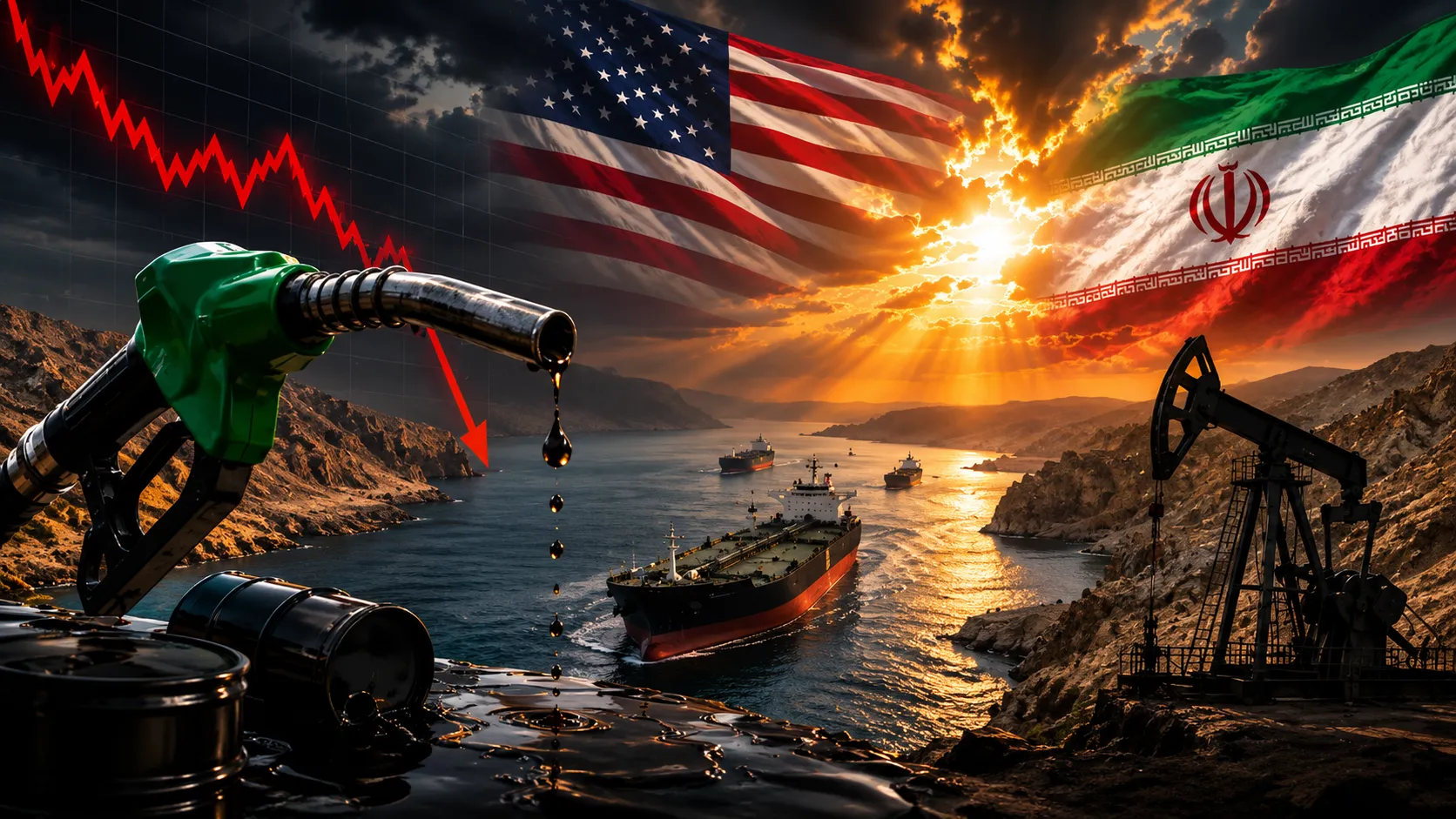
What makes this stretch of price stability genuinely notable is the sheer scale of the swings in the underlying global crude oil benchmark during the same window. Brent crude, the international pricing reference most relevant to India's import-dependent refining sector, has traded through an extraordinary range over the past several weeks, driven almost entirely by the escalating military confrontation between the United States and Iran and its direct impact on shipping through the Strait of Hormuz — the narrow waterway through which a significant share of the world's seaborne oil trade passes.
At the height of the crisis in late April, when fears of a full closure of the Strait first gripped energy markets, Brent crude spiked to more than $120 per barrel — a level that, had it persisted, would almost certainly have forced Indian Oil Marketing Companies into a further round of retail price increases to avoid absorbing unsustainable losses on fuel sales. Since that peak, prices have retreated substantially as tensions periodically eased, only to spike again each time hostilities resumed: Brent surged past $87 a barrel earlier this week after the US signalled it would reinstate a blockade on Iranian vessels using the Strait of Hormuz, before easing back to settle at $76.01 per barrel by the end of last week, down a modest 0.38 percent on the day, as hopes grew that shipping through the critical waterway would eventually normalise despite the ongoing conflict.
This whipsaw pattern — spikes toward $85-90 followed by retreats back into the mid-to-high $70s, repeated multiple times over just a few weeks — has made it exceptionally difficult for Oil Marketing Companies to justify a fresh round of retail price revisions in either direction. Raising prices in response to a spike that partially reverses within days risks triggering public and political backlash for what would appear, in hindsight, an overreaction; but holding prices steady through a genuinely sustained rally risks accumulating losses on the difference between the OMCs' cost of imported crude and the fixed retail price consumers are paying at the pump.

HOW INDIA'S FUEL PRICING MECHANISM ACTUALLY WORKS
India formally moved to a "dynamic fuel pricing" mechanism back in 2017, under which retail petrol and diesel prices are, in principle, meant to be revised daily in line with changes in international crude oil prices and the rupee-dollar exchange rate, mirroring the approach used in many other major economies. In practice, however, Oil Marketing Companies — which remain predominantly state-owned, with Indian Oil, Bharat Petroleum and Hindustan Petroleum together controlling the overwhelming majority of retail fuel distribution — have historically exercised considerable discretion over the actual frequency and timing of price changes, often holding rates steady for extended periods even amid crude price volatility, particularly during politically sensitive periods, before making periodic, sometimes sizeable, adjustments when the underlying cost pressure becomes difficult to absorb further.
The current nearly two-month stretch of unchanged prices fits this pattern closely. The late-May price increase came after a period of accumulated cost pressure, and OMCs appear to have judged that the subsequent volatility in crude prices — even including the sharp spikes toward $87-90 a barrel — has not yet crossed the threshold that would require a further retail price adjustment, particularly given that prices have repeatedly retreated from those spikes within days rather than settling at sustained higher levels. The rupee-dollar exchange rate, which has also moved considerably during this period, breaching the 96-to-the-dollar level for the first time in nearly two months amid the latest bout of crude-driven currency pressure, adds a further layer of complexity to the OMCs' pricing calculus, since a weaker rupee increases the effective cost of dollar-denominated crude imports even when the dollar price of oil itself is unchanged.
THE TAX DIMENSION
Beyond the raw cost of crude oil and currency movements, taxation remains the single largest determinant of the final price Indian consumers pay at the pump, and a significant reason why India's retail fuel prices remain considerably higher than the underlying cost of the refined product itself would suggest. Both the central government, through excise duty, and individual state governments, through value-added tax and other local levies, impose substantial taxes on petrol and diesel — a structure that means the final retail price varies meaningfully from state to state depending on each state's specific tax regime, which explains why otherwise similar cities like Delhi and Mumbai can show retail prices that differ by close to ₹9 per litre for petrol. Transportation costs from refineries to individual retail outlets, along with prevailing local demand-supply conditions, add further layers of variation to the final price a consumer actually sees displayed at any given pump.
WHAT WOULD NEED TO CHANGE FOR PRICES TO MOVE