A Pattern Too Consistent to Be Coincidence
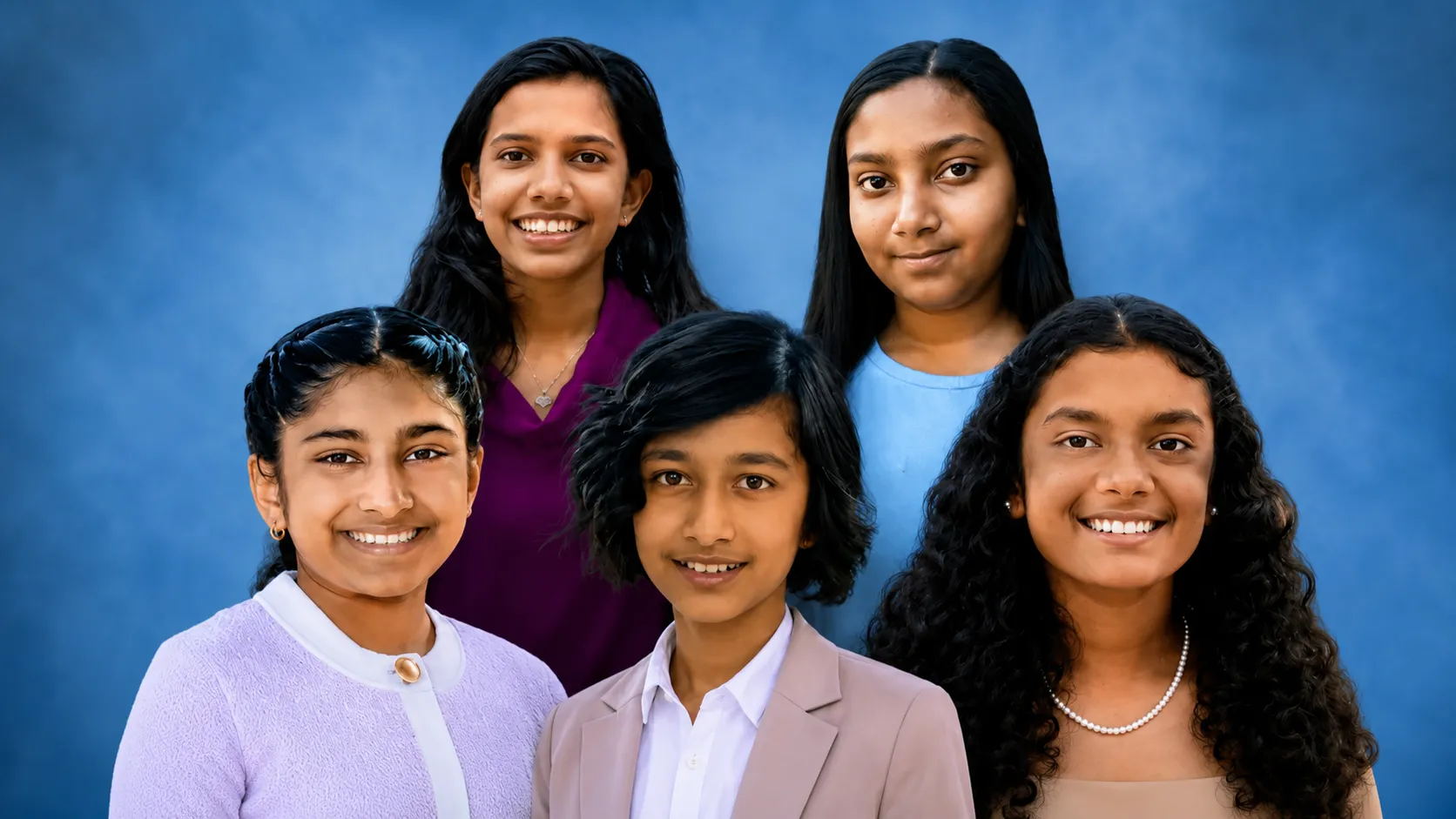
When 3M and Discovery Education announced the ten national finalists for the 2026 3M Young Scientist Challenge on July 6, 2026, the list carried a detail that has become almost a running theme in America's premier middle school science competition: five of the ten finalists — exactly half — are Indian American students. According to analysis published by The Indian Panorama, this is not an isolated fluke. Over the sixteen-year history of the competition, the title of America's Top Young Scientist has gone to a child of Indian origin seven separate times, an extraordinary strike rate for any single demographic group in a national competition open to all American middle schoolers between the ages of 11 and 14. The 2026 cohort arrived in the news cycle just weeks after Indian-origin children also delivered a standout performance at the 2026 Scripps National Spelling Bee, reinforcing a broader narrative about the disproportionate presence of Indian American youth at the top of America's most competitive academic and scientific contests.
How the Competition Works
The 3M Young Scientist Challenge is a partnership between 3M, the global science and manufacturing company, and Discovery Education, and it invites students in grades five through eight to identify an everyday problem and develop an original, innovative solution using scientific principles. Ten finalists are selected from a national applicant pool each year, and each receives a personal, one-on-one summer mentorship with an actual 3M scientist, working together to refine and strengthen their invention ahead of a final, in-person competition event scheduled for October 2026. The stakes are significant: the eventual winner receives a $25,000 grand prize and the title of 'America's Top Young Scientist,' along with the kind of national recognition that has historically launched some past winners toward continued careers in STEM fields. William Brown, 3M's Chairman and CEO, framed this year's finalist cohort in terms of the program's broader mission. 'The 3M Young Scientist Challenge brings together student curiosity, scientific thinking and 3M mentorship to turn promising ideas into real solutions,' Brown said. '3M is focused on helping these young innovators strengthen their ideas and apply science in ways that can make a meaningful impact.'
Sharvi Mahajan and the Fight Against Fatigue
Sharvi Mahajan, an eighth grader from San Diego, California, who attends Bernardo Heights Middle School, developed NeuroDrive Alert, an EEG-based machine learning system designed to predict fatigue in real time by tracking brainwave activity over time. Her invention is designed to detect the early warning signs of microsleep — the brief, often unnoticed lapses in consciousness that can prove catastrophic during activities like driving — with the goal of enhancing safety across driving and other high-risk situations where fatigue-related lapses carry serious consequences. Mahajan has said she is drawn to the depth of neuroscience as a field and aspires to become a computational neuroscientist, with ambitions that extend to eventually founding a technology startup built around AI-based neuroscience models. Her favorite piece of technology, by her own account, is the electroencephalogram, the very instrument whose underlying principle inspired her invention, which measures brainwave activity through a network of electrodes placed on the scalp.
Raji Doshi and the Everyday Problem Hiding in Plain Sight
Raji Doshi, a seventh grader from Farmington, Connecticut, who studies at Talcott Mountain Academy, rounds out the group of finalists working on solutions with immediate, tangible everyday applications, joining her fellow finalists in the challenge's broader mission of encouraging middle schoolers to apply rigorous scientific thinking to problems many adults simply accept as unavoidable inconveniences of daily life.
Arika Kundu and the Peanut Shells That Clean Produce
Arika Kundu, a seventh grader from Shorewood, Minnesota, who attends Minnetonka Middle School East, earned her place among the national finalists after winning her state's Merit Award for LIGNEX, a biosorption-based method that uses agricultural waste — specifically peanut shells — to remove pesticide residue from fresh produce. The invention repurposes a common agricultural byproduct that would otherwise be discarded, transforming it into a practical, low-cost tool for improving food safety, and reflects the kind of resourceful, sustainability-minded thinking that has become increasingly common among this generation of young scientific innovators tackling agricultural and environmental challenges.
Naboshree Santra, the Youngest Finalist, Tackles Drought
At just eleven years old, Naboshree Santra of Oviedo, Florida, a student at Jackson Heights Middle School, is the youngest of the ten national finalists in this year's competition. Santra developed biodegradable soilshade balls designed to reduce evaporation and help soil retain more moisture, offering what the competition describes as a simple, scalable solution for agriculture in drought-affected regions — a problem with direct relevance not only to farmers across the drought-prone American Southwest and Midwest, but to agricultural communities in India and across the developing world grappling with increasingly erratic rainfall patterns linked to climate change.
Aaisha Asif and an Eco-Friendly Alternative Inspired by Mussels
Aaisha Asif, a sixth grader from Sarasota, Florida, who attends Pine View School, developed a mussel-inspired, eco-friendly adhesive built from natural proteins combined with iron-based crosslinkers, designed to create strong, durable bonds while significantly reducing the environmental pollution associated with conventional synthetic adhesives. Her invention draws directly on biomimicry — the practice of looking to natural biological mechanisms, in this case the powerful adhesive proteins mussels use to cling to rocks in turbulent ocean water, for inspiration in solving human engineering challenges. Asif's project positions her among a growing cohort of young scientists using nature-inspired design principles to address the environmental costs of everyday industrial materials.
The Other Half of the Field
The five Indian American finalists compete alongside five other middle schoolers drawn from across the country: Aiden Jo of Houston, Texas; Roy Kim of Beaverton, Oregon; Millie Pradawong of Fairfax, Virginia; Abigail Stein of Nashville, Tennessee; and additional finalists representing school districts spanning Texas, Oregon, Virginia, and Tennessee. Together, the full cohort of ten represents a genuinely broad cross-section of American middle school science talent, spanning public, private, and specialized magnet schools across at least seven different states.
What Happens Next for the Finalists
Over the course of the summer of 2026, each of the ten finalists will work directly with an assigned 3M scientist mentor, refining their invention's underlying science, improving its real-world feasibility, and preparing a formal presentation ahead of the competition's culminating event in October. That final event will determine which of the ten finalists — potentially one of the five Indian American students, continuing the competition's remarkably strong sixteen-year pattern of Indian-origin winners — will claim the $25,000 grand prize and the title of America's Top Young Scientist for 2026.
The Deeper Pattern: Seven Wins in Sixteen Years
The statistic cited by The Indian Panorama — seven Indian-origin winners of the America's Top Young Scientist title across the competition's sixteen-year history — represents a strike rate far exceeding what raw demographic representation alone would predict, given that Indian Americans make up a relatively small percentage of the overall US population. Community observers and education researchers have pointed to several contributing factors commonly cited in explaining this pattern: strong cultural emphasis on STEM education within many Indian immigrant households, high rates of parental engagement with supplemental academic enrichment programs, and a broader diaspora culture in which participation in structured academic competitions is actively encouraged and supported from an early age. Whatever the precise combination of causes, the 2026 finalist cohort represents one of the strongest single-year showings in the competition's history, with fully half of the national finalist slate claimed by Indian American students.
Following in the Footsteps of Recent Scripps Spelling Bee Success
The 2026 3M Young Scientist Challenge finalist announcement arrived in close succession with another high-profile demonstration of Indian American academic strength: a standout showing by Indian-origin competitors at the 2026 Scripps National Spelling Bee earlier in the year. Taken together, these two results within the same calendar year have reinforced an already well-established media narrative about Indian American youth achievement across multiple distinct academic competition formats, from spelling and vocabulary mastery to original scientific research and invention — suggesting a pattern of excellence that extends well beyond any single discipline or competition format.
A Broader Pattern Worth Noticing
The concentration of Indian American talent among this year's 3M finalists arrives amid a broader, ongoing conversation about the disproportionate presence of Indian-origin students across America's most competitive academic institutions and contests — from the Scripps National Spelling Bee to elite university scholarship programs like the Truman and Schwarzman Scholarships, and now, once again, the 3M Young Scientist Challenge. For a community that has long emphasized education as a primary vehicle for opportunity and mobility, this year's finalist announcement offers another vivid, well-documented data point in that ongoing story — five children, none of them yet in high school, already applying rigorous scientific method to problems ranging from drought-stricken farmland to driver fatigue, mentored directly by professional scientists at one of America's most storied industrial research companies, and carrying forward a sixteen-year tradition of Indian American excellence in one of the country's most respected youth science competitions.
What Mentorship From 3M Scientists Actually Involves
The summer mentorship period that all ten finalists are now entering involves substantially more than occasional check-in calls. Each student is paired with a working 3M research scientist whose expertise closely matches their invention's underlying discipline, and the pairs typically engage in regular structured sessions covering experimental design, materials selection, data analysis, and presentation preparation ahead of the October final event. For young finalists like Naboshree Santra, at eleven years old the youngest in this year's cohort, that level of direct access to a professional research scientist represents an extraordinary, formative opportunity rarely available to students still several years away from even beginning high school, let alone an undergraduate science program.
How Parents and Schools Are Reacting
Local school districts and parent communities surrounding each of the five Indian American finalists have responded with visible pride, with several of the schools involved — including Pine View School in Sarasota and Bernardo Heights Middle School in San Diego — publicly highlighting their students' achievement through school newsletters and community announcements. For many of these schools, having a nationally recognized 3M Young Scientist Challenge finalist represents a significant point of institutional pride, reinforcing STEM program investments and often inspiring younger students within the same school community to pursue their own independent science research projects in future years. Regardless of who ultimately wins the October final, the five Indian American finalists have already secured something no judging panel can take away: a summer of direct mentorship from professional scientists, and a permanent place in the sixteen-year record of Indian American excellence at the competition.
The Competition's Broader Role in America's STEM Pipeline
Beyond individual student recognition, the 3M Young Scientist Challenge has increasingly positioned itself as a meaningful early-stage component of America's broader STEM talent pipeline, with past finalists and winners going on to pursue continued research at the high school and undergraduate levels, and in some cases eventually publishing peer-reviewed work building directly on ideas first developed for the competition. For 3M itself, the program functions as both a genuine philanthropic investment in youth science education and a long-horizon talent identification mechanism, introducing the company's research culture and mentorship network to some of the country's most promising young scientific minds years before they would typically enter the traditional corporate recruitment pipeline. For the wider Indian American community, this year's finalist slate adds one more data point to a growing, well-documented body of evidence that the community's investment in STEM education continues paying dividends across every level of American academic competition.
A Competition That Keeps Raising Its Own Bar
The Long-Term Alumni Network Behind the Competition
Past winners and finalists of the 3M Young Scientist Challenge have gone on to form an informal but increasingly visible alumni network, with several former participants returning in later years as guest speakers, informal mentors to newer finalists, or contributors to 3M's broader youth STEM outreach programming. For Indian American finalists specifically, that alumni network has grown to include a meaningful cohort of past winners now pursuing degrees at top American universities in fields directly connected to their original competition inventions, offering current finalists like Mahajan, Doshi, Kundu, Santra, and Asif a visible, community-specific model for what a sustained STEM career trajectory beginning in middle school can eventually look like.


