DiasporaCampus8 MIN READ

Indian-Origin Roboticist Parikshit Maini Wins NSF's Top Early-Career Honor for Farm Robotics Breakthrough

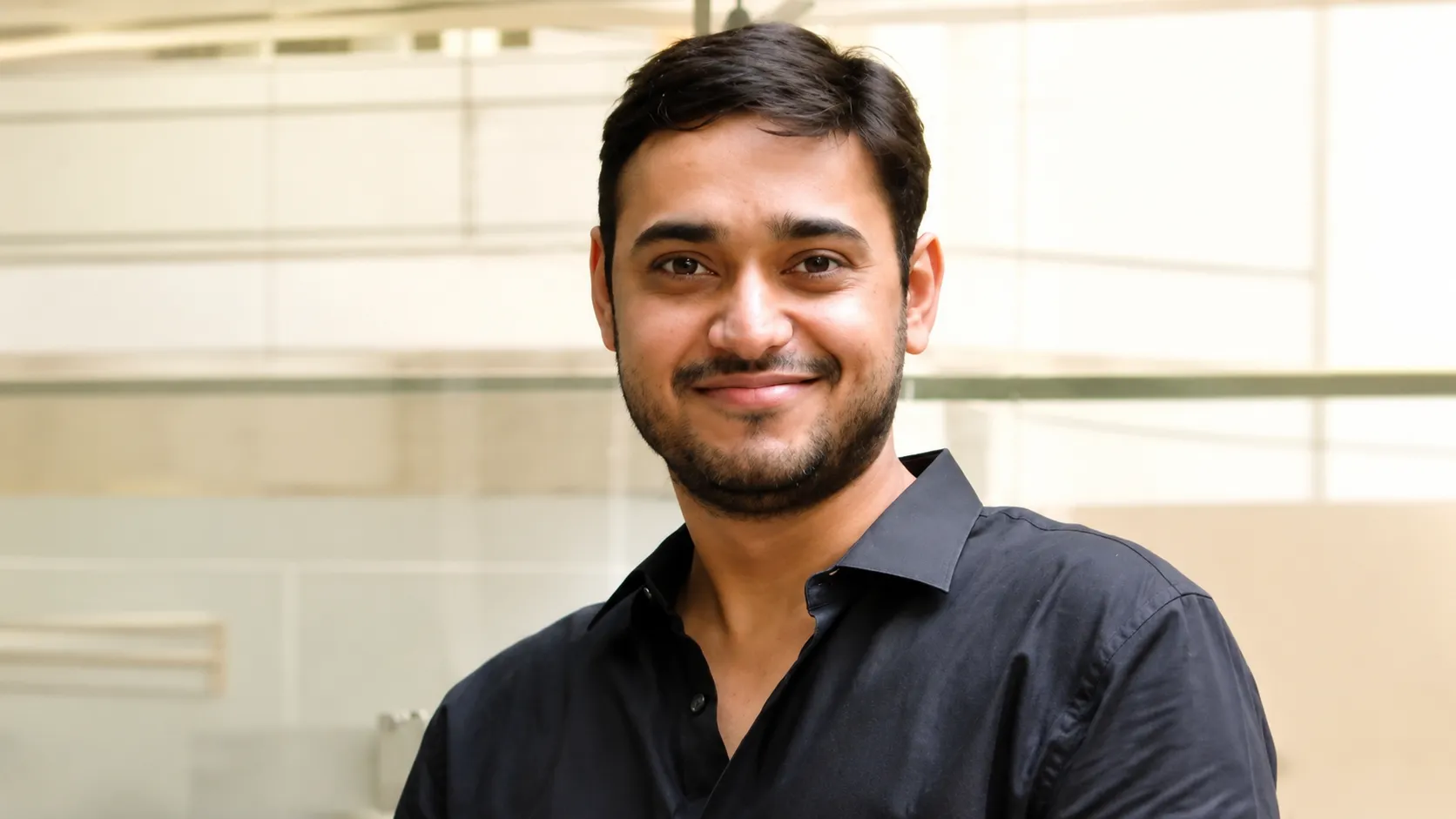
University of Nevada, Reno assistant professor Parikshit Maini has won a five-year, $618,201 National Science Foundation CAREER Award — the agency's most prestigious honor for early-career faculty — to build cooperative drone-and-ground-robot systems that could reshape precision agriculture from Nevada's arid fields to Mars.

By Nisha Omkumar · Author6 August 2026New
Indian-Origin Roboticist Parikshit Maini Wins NSF's Top Early-Career Honor for Farm Robotics Breakthrough

RENO, NEVADA — When Parikshit Maini left India for a research career in robotics, precision agriculture in Nevada's high desert was not an obvious destination for an engineer trained in New Delhi. Nearly a decade later, that unlikely path has led to one of the most competitive honors in American science: the National Science Foundation's Faculty Early Career Development (CAREER) Award, the agency's top recognition for junior faculty who combine outstanding research with a genuine commitment to education and outreach.

Maini, an assistant professor in the Department of Computer Science and Engineering at the University of Nevada, Reno, has been granted $618,201 over five years to pursue a project titled "From Fields to Decisions: Planning and Sensing Cooperative Teams of Air and Ground Robots in Precision Agriculture." The award, confirmed by the university in late July and reported more widely this week, places Maini among a small cohort of Indian-origin scientists nationally to receive the honor in 2026.

A Rare Recognition for Early-Career Faculty

The CAREER Award is not simply another grant line on a curriculum vitae. Administered by the National Science Foundation's Faculty Early Career Development Program, it is reserved for untenured faculty judged most likely to become academic leaders of the future, and it requires applicants to weave together a rigorous, multi-year research agenda with a concrete plan for education — mentoring students, building new curricula, and engaging the wider public. Success rates for the award are consistently among the lowest of any major federal science funding mechanism.

For Maini, the recognition caps a rapid rise since he joined the University of Nevada, Reno's College of Engineering in 2023. He directs the university's Systems and Algorithms for Robot Autonomy Lab, where his research sits at the intersection of robotics, artificial intelligence and — increasingly — agriculture, a sector not traditionally associated with cutting-edge computer science but one that Maini argues is uniquely suited to benefit from it.

Robotic Teamwork in the Field

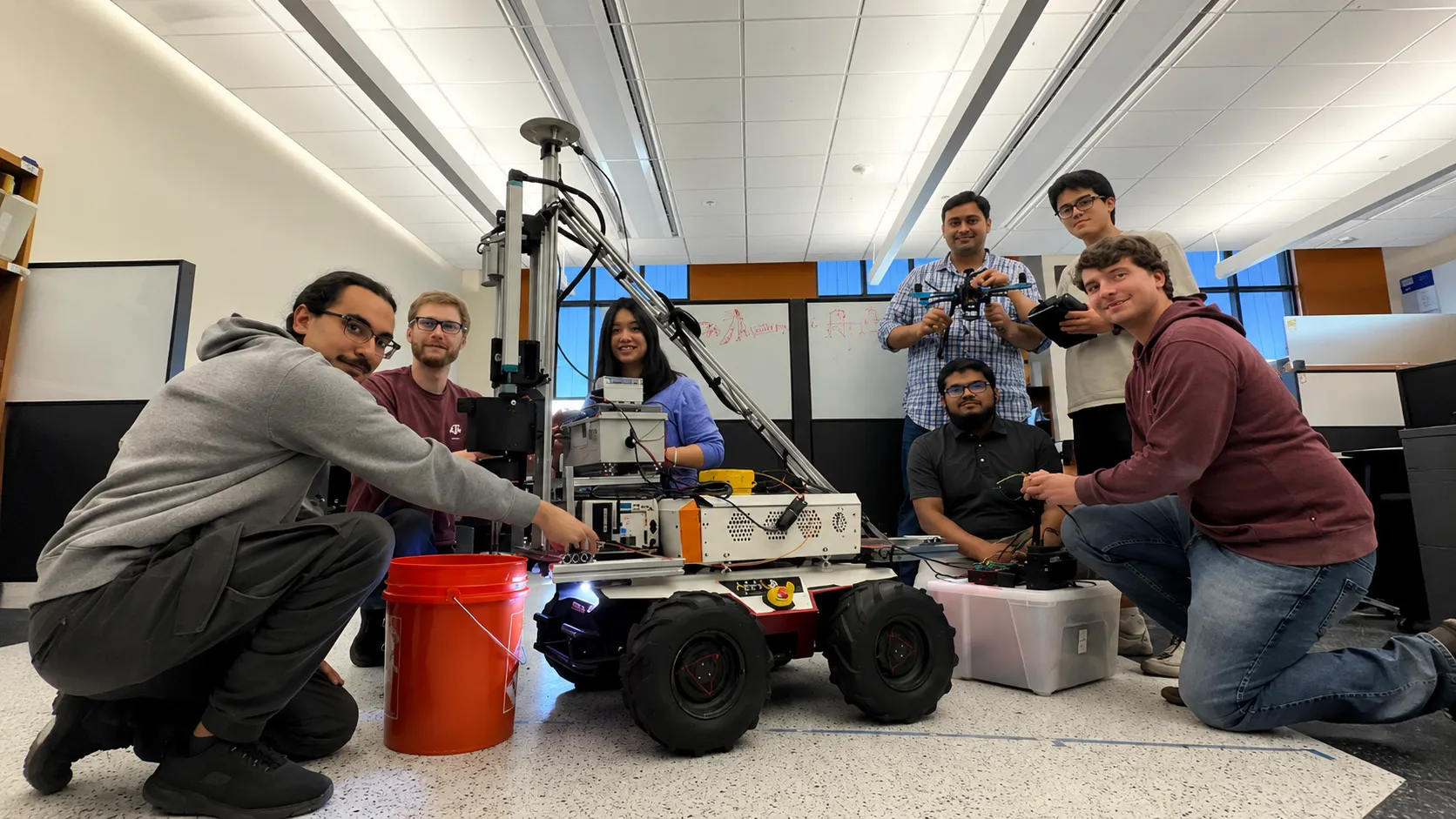
At the heart of Maini's CAREER project is a deceptively simple idea: pair aerial drones with autonomous ground rovers so that each compensates for the other's blind spots. Drones can sweep large areas quickly, gathering a top-down view of crops, but are constrained by limited battery life. Ground robots can carry heavier payloads and operate longer, but move slowly and cannot survey wide areas efficiently. Getting the two to work as a coordinated team, Maini says, is where the real research challenge lies.

"There are challenges to this type of coordination," Maini explained in comments to the university's Nevada Today publication. One central problem is fuel: a drone may not have enough battery charge to monitor an entire field on a single trip, so one proposed solution has it land on the ground robot to recharge — a maneuver that is difficult to time correctly. "Let's say the aerial robot is estimated to consume a certain amount of fuel, but it consumes more, or less," he said. "Based on that, the robots might need to meet earlier than they planned, or at a different location."

A second challenge is communication reliability in open farmland. "If communication between the robots breaks down, then what happens?" Maini asks — a question his research aims to answer by building in redundancy that does not depend on a constant link between machines. A third layer is task uncertainty: robots tasked with spraying a targeted dose of fertilizer cannot always predict how long the task will take or how much power it will consume, since real fields are inherently unpredictable. Layered on top is a sensing challenge — fusing the drone's top-down view and the rover's side view into a single, more complete model of each plant's health, so farmers can apply fertilizer and pesticide only where genuinely needed.

There are foundational capabilities in the technology that we're building in this project — the same coordination and sensing techniques can extend to defense, infrastructure inspection and even planetary exploration.
Parikshit Maini, Assistant Professor, University of Nevada, Reno
image.png

From Precision Agriculture to Planetary Exploration

Although the CAREER project is framed around agriculture, Maini is careful to note that its underlying contribution is broader. "There are foundational capabilities in the technology that we're building in this project," he said, adding that the coordination and sensing techniques could extend into defense applications, infrastructure inspection, and even robotic construction on other planets. That last frontier is not hypothetical: alongside colleague Christos Papachristos, he is separately developing autonomous "worker robot" technologies intended to help build and prepare sites on the Moon and Mars ahead of future missions.

Agriculture remains his central focus, for a reason Maini has stated plainly: "Agriculture is a very important application, because it directly relates to what we eat." His lab is already engaged in related work, including RoboHydra, a wheeled robot developed with the university's College of Agriculture, Biotechnology and Natural Resources that travels alongside grazing sheep to provide water, track location and monitor health, and CowBot, an autonomous rangeland weed-control mower he worked on during a postdoctoral stint at the University of Minnesota.

An Indian Academic Journey to the American High Desert

Maini's path to Reno traces back to India's engineering education system. He completed his Bachelor of Technology in Information Technology at Guru Gobind Singh Indraprastha University in 2012, followed by a Master of Technology in Computer Science and Engineering, before earning his doctorate in 2020 from the Indraprastha Institute of Information Technology (IIIT) Delhi. After postdoctoral research at the University of Minnesota, he joined the University of Nevada, Reno faculty in 2023 — a trajectory that mirrors a broader, steadily growing presence of Indian-trained scientists across American computer science and engineering departments, often in fields, like Nevada agriculture, far removed from the popular image of the diaspora's contribution to Silicon Valley.

Building the Next Generation of Roboticists

The CAREER Award's education component is central to Maini's plans. He intends to develop new interdisciplinary curriculum bridging robotics, AI and agriculture, while continuing outreach through 4-H youth programs, summer camps and school visits. "As a land grant institution, I feel that it is very important that we give back to society," he said. That mentoring ethos has already produced results: his graduate student team, SARAL-Bot, received a best written report citation at the American Society of Agricultural and Biological Engineers' 2024 Student Robotics Challenge for a paper on autonomous strawberry-plant care.

Why It Matters

For Nevada's farmers, the practical stakes are immediate: the state's arid climate leaves little room for waste in water, fertilizer or pesticide use. For the robotics field, Maini's work adds to research on multi-robot coordination under real-world constraints that recur across domains from disaster response to space exploration. And for the Indian diaspora in American academia, his CAREER Award is a reminder that its contributions extend well past California's technology corridors, into land-grant universities and agricultural research programs across the country's interior.

• Award: five-year, $618,201 NSF CAREER grant, the agency's top early-career honor

• Project: cooperative drone-and-ground-robot systems for precision agriculture

• Broader applications: defense, infrastructure inspection, lunar/Martian robotics

• Path to Reno: B.Tech & M.Tech in India, Ph.D. from IIIT Delhi (2020), UNR faculty since 2023

TagsParikshit MainiNSF CAREER AwardPrecision AgricultureRoboticsUniversity of Nevada RenoIndian AmericanDiasporaSTEMField RoboticsDronesAgricultural TechnologyHigher EducationCampusIIIT DelhiIndian-origin scientistAutonomous SystemsAgTechResearch GrantAcademiaInnovation

Reader reviews

Sign in to rate and review this article.
Loading reviews…

