OTT vs Theatres — How India’s ₹13,000 Crore Box Office Boom is Reshaping the Streaming Economy
The Pandemic Pivot That Fooled Everyone
In 2020, when the world locked down, Indian cinema halls went dark for over a year. Filmmakers faced an impossible choice: wait indefinitely or sell directly to streaming platforms. Many chose the latter. Akshay Kumar’s Laxmii went to Disney+ Hotstar. Amitabh Bachchan’s Gulabo Sitabo went to Amazon Prime. Even big-budget spectacles like Coolie No. 1 and Ludo skipped theatres entirely.
For a moment, it looked like the theatrical window—the gap between a film’s release in cinemas and its arrival on OTT—was dead. Some analysts predicted that multiplexes would become obsolete, replaced by living room screens and 5G-powered streaming. The industry braced for a permanent shift.
But they underestimated the romance of the big screen.
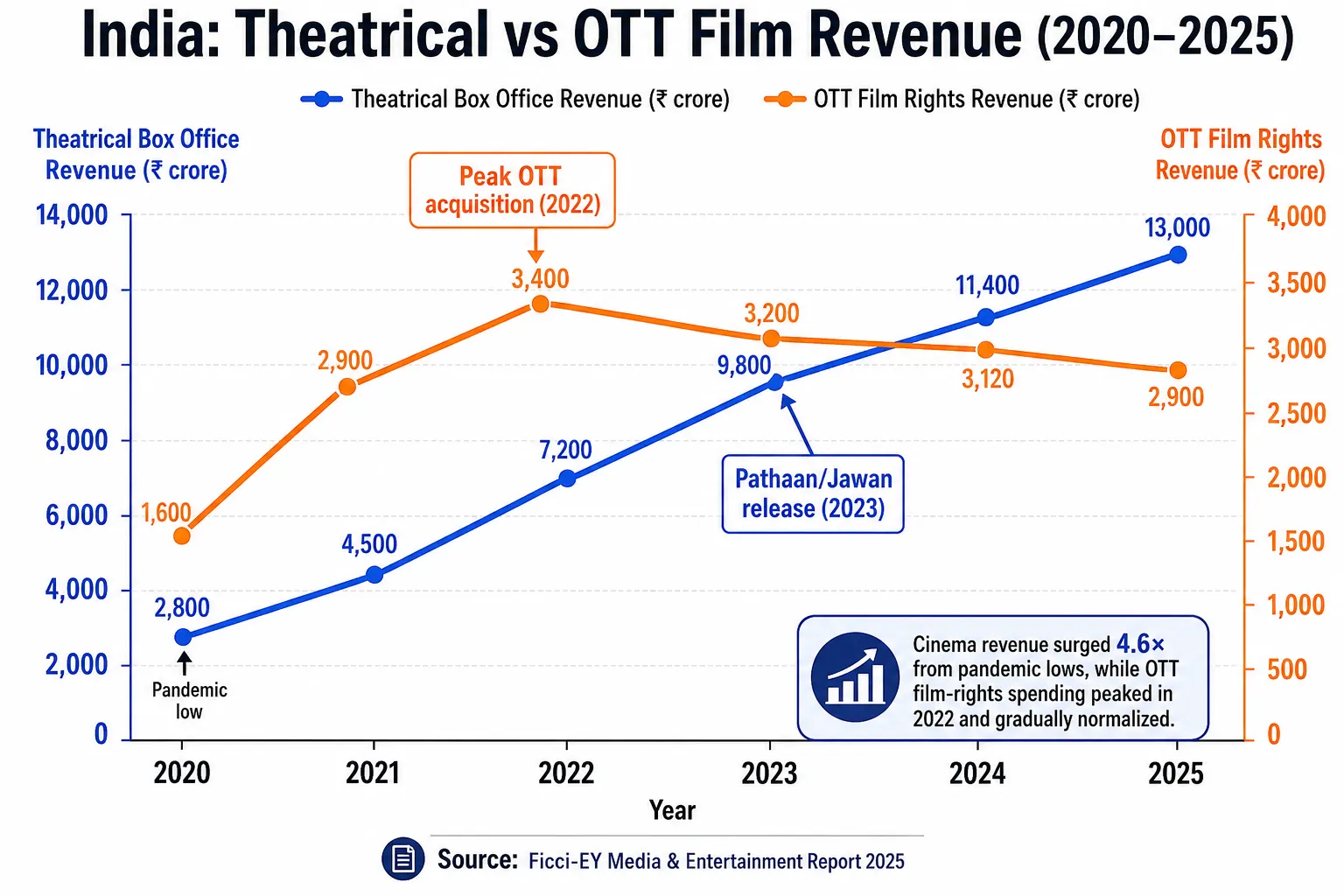
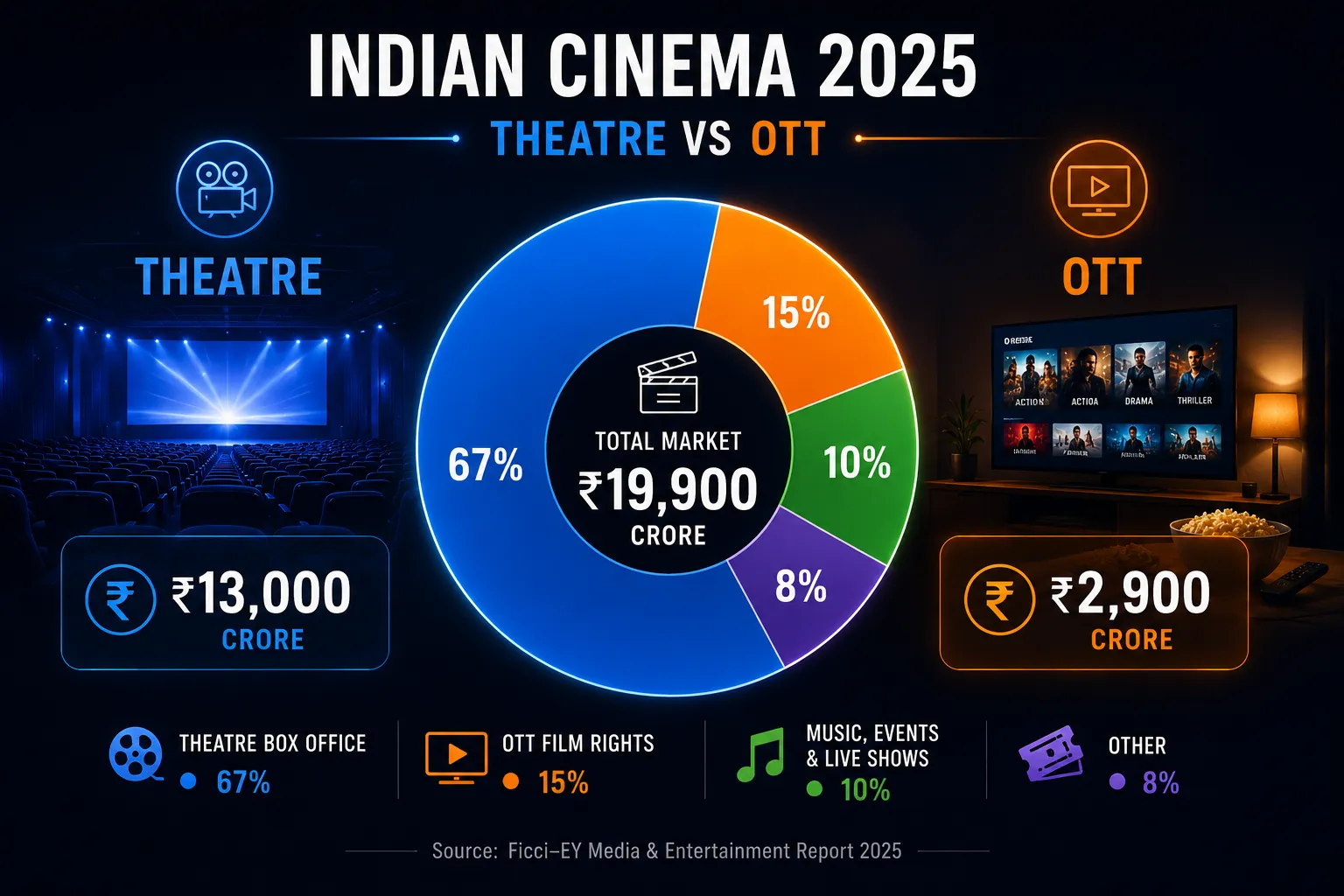
As theatres reopened in 2021–22, audiences trickled back cautiously. By late 2022, Pathaan exploded with ₹1,050 crore worldwide. Jawan followed with ₹1,150 crore. Animal made ₹900 crore despite an A‑certificate. In 2024, Stree 2 became a sleeper blockbuster with ₹400 crore. By 2025, the Indian box office had not only recovered—it had grown to an all‑time high of ₹13,000 crore, a 14% jump from the previous year.
Meanwhile, the OTT market for films shrank. According to the Ficci‑EY report, film rights revenues for streaming platforms fell 7% in 2025 to ₹2,900 crore. Theatrical releases were suddenly more valuable again.
Why Theatres Won Back Audiences — Economics of the Comeback
The theatrical resurgence wasn’t accidental. Several factors aligned:
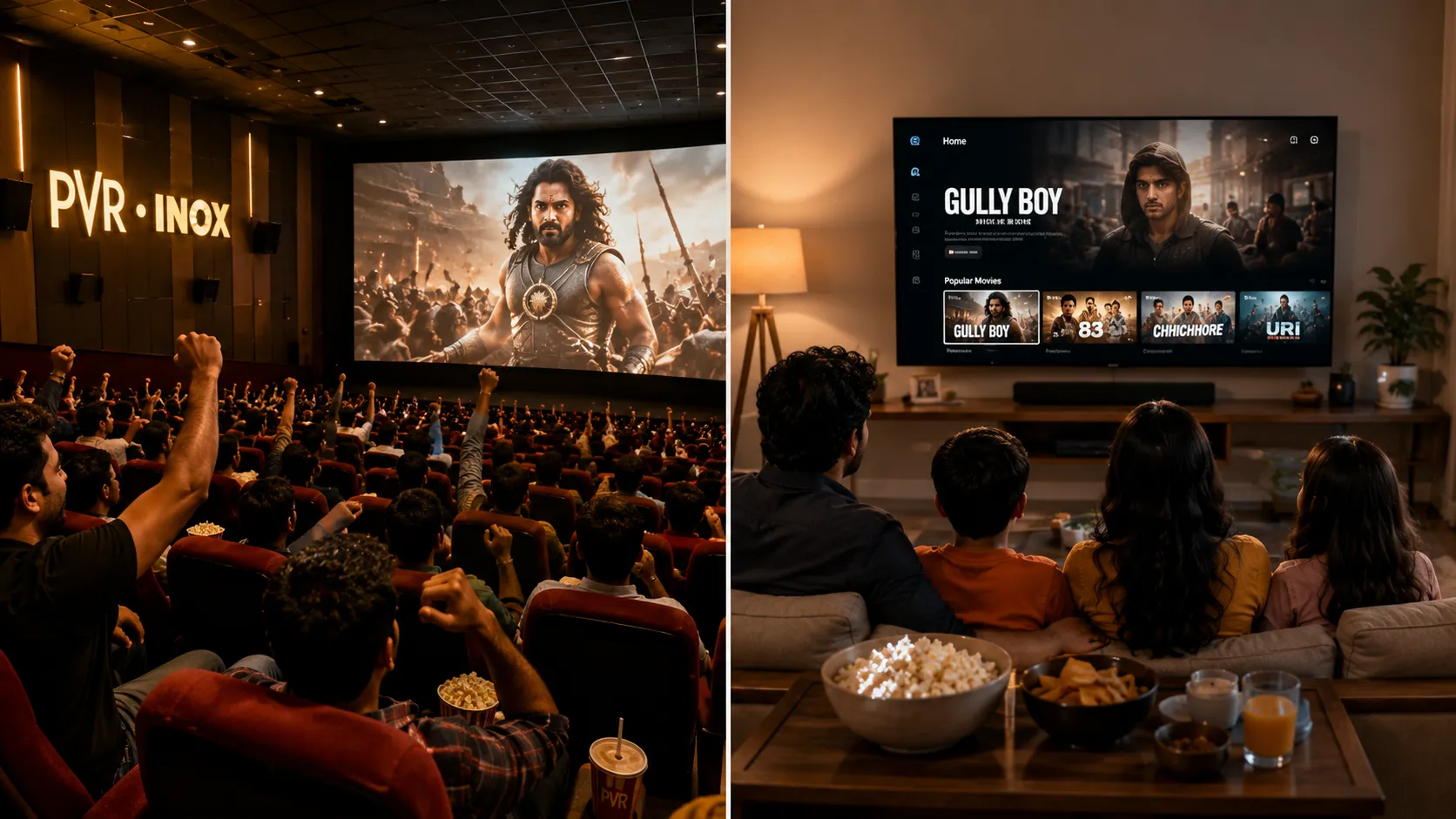
1. The event‑film effect. After being confined at home, people craved collective experiences. Pathaan and Jawan were not just movies; they were cultural events. Fans danced in aisles, cheered for Shah Rukh Khan, and turned screenings into celebrations. Streaming, no matter how good, cannot replicate that energy.
2. Improved content quality. The pandemic forced filmmakers to rethink scripts. Audiences rejected formulaic masala films. In response, producers invested in tighter storytelling, better visual effects, and regional diversity. South Indian films like Kalki 2898 AD and Pushpa: The Rule became national phenomena, pulling in audiences from Delhi to Kolkata.
3. Strategic windowing. Studios realised that releasing films on OTT too early (3–4 weeks after theatrical debut) killed the theatrical run. They pushed the window back to 8–12 weeks, sometimes longer for blockbusters. This gave exhibitors a fair chance to maximise footfall.
4. Premium pricing and formats. Multiplex chains introduced luxury seating, IMAX screens, and 4DX halls. The average ticket price rose from ₹180 in 2019 to ₹280 in 2025, but audiences were willing to pay for a differentiated experience.
The OTT Pivot — From Blockbuster Acquisitions to Smart Content
While theatrical revenues boomed, streaming platforms were recalibrating. During the pandemic, Netflix, Amazon Prime, and Disney+ Hotstar had thrown billions at acquiring direct-to-digital films. They overpaid for mid‑tier movies, betting that subscriber acquisition would justify the cost. It didn’t. Churn remained high, and many direct‑to‑digital films went unwatched.
By 2024, the streaming giants had changed tack. Instead of chasing bollywood blockbusters, they focused on:
Premium series that generate long‑term engagement (e.g., The Family Man, Panchayat, Sacred Games).
Regional originals in Tamil, Telugu, Malayalam, and Bengali, which have higher retention rates.
Licensing deals rather than exclusive acquisitions, sharing risk with studios.
Releasing select films theatrically themselves (Netflix’s Chandu Champion had a limited theatrical run before streaming).
The result? OTT film rights revenue fell, but profitability improved. Platforms reported better subscriber retention and lower content costs. The era of “buy everything” ended; the era of “buy what works” began.
The New Equilibrium — What the 2025 Data Tells Us
Let’s look at the numbers more closely. According to the Ficci‑EY report for 2025:
Segment | 2024 Revenue (₹ cr) | 2025 Revenue (₹ cr) | Change |
|---|---|---|---|
Theatrical Box Office | 11,400 | 13,000 | +14% |
OTT Film Rights | 3,120 | 2,900 | -7% |
Overall Media & Ent. | 195,000 | 235,000 | +20.5% |
The headline figure—₹13,000 crore box office—hides an important story: the overall media and entertainment market grew 20.5% to ₹235,000 crore. OTT as a whole (including series, originals, and sports) is still growing. Only the film‑rights sub‑segment shrank. Theatres and streaming are not zero‑sum; they are learning to coexist.
Exhibitors have invested heavily in renovation. PVR Inox reported that screen occupancy in 2025 was 28%, up from 22% in 2023. The average film now earns 65% of its lifetime box office in the first two weeks, a much faster burn than pre‑pandemic, but the total pie is larger.
Producers have adapted too. A mid‑budget romantic comedy like Tu Jhoothi Main Makkaar (₹150 crore budget) might still prefer a theatrical release for the visibility, but a niche thriller like Mimi can go directly to OTT and find its audience. The decision is no longer ideological; it’s mathematical.
What This Means for the Future
Three clear trends are emerging:
1. The theatrical window is stabilising at 8 weeks for most films, 12 weeks for blockbusters. This gives cinemas a fair run while allowing OTT platforms to plan their calendar.
2. Premium formats (IMAX, 4DX, Gold Class) are growing faster than standard screens. In 2025, premium screens accounted for only 12% of total screens but generated 25% of box office revenue.
3. Regional cinema is the new gold mine. Theatrical growth in Tamil, Telugu, Kannada, and Malayalam outpaced Hindi in 2025. OTT platforms are aggressively acquiring regional originals, and some South films are now dubbed and released nationally in cinemas.
For investors, the takeaway is clear: the “theatrical vs OTT” debate is over. Both will survive. The real opportunity lies in ancillary revenue—in‑cinema advertising, merchandise, live events, and OTT syndication.