Orbit or Bust: How Skyroot Aerospace Became India’s First Rocket Unicorn and Rewrote the Rules of Deep-Tech Entrepreneurship
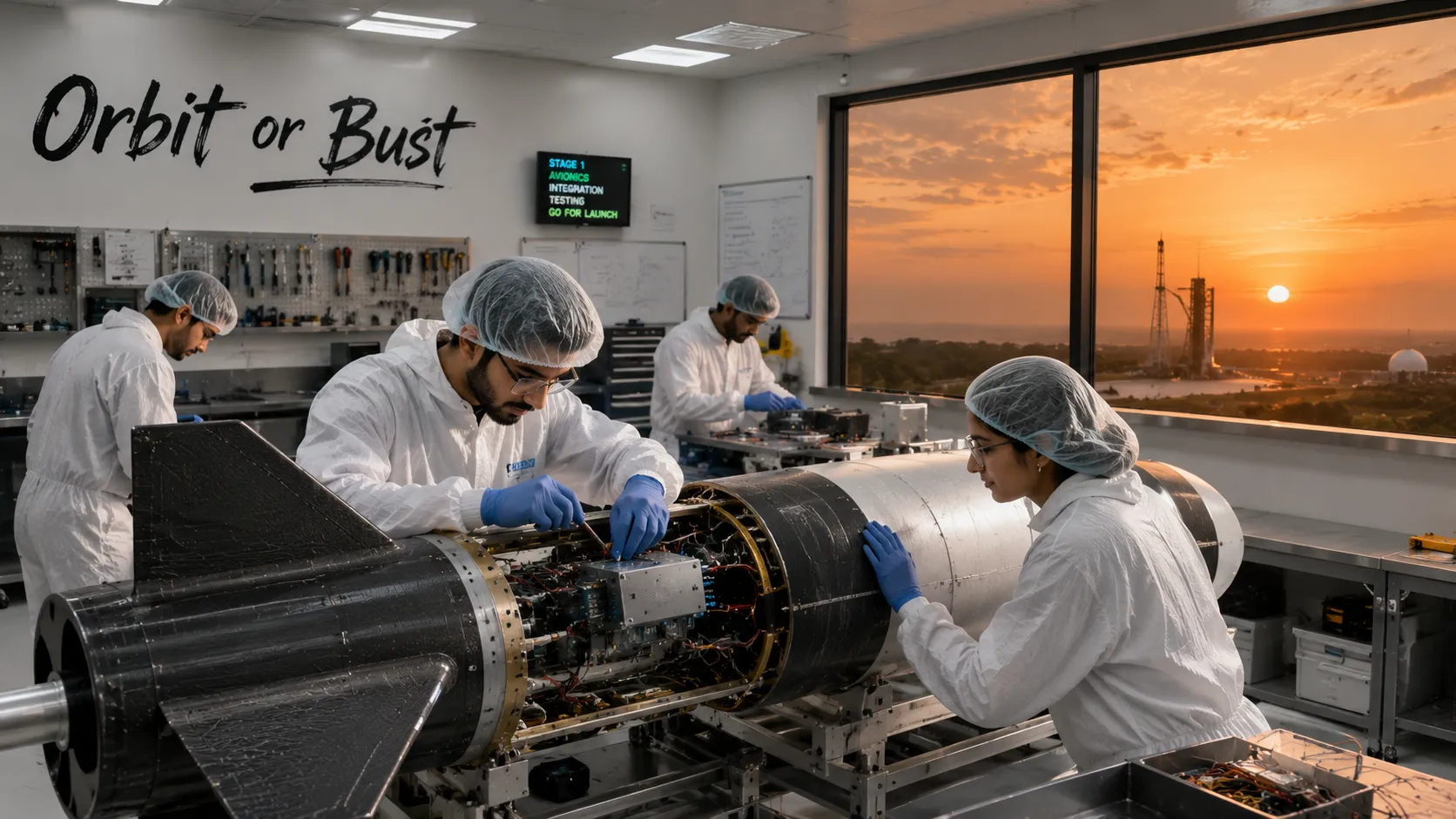
HYDERABAD — May 2026 – In a clean room no larger than a high school basketball court, a hand-painted sign hangs above a workstation cluttered with avionics boards and 3D-printed engine components. It reads: Orbit or Bust. The engineers beneath it—many in their twenties, many trained at ISRO, India’s storied government space agency—are assembling the guidance system for Vikram-1, the country’s first privately developed orbital rocket. The sign is not a motivational poster. It is a statement of intent, scrawled in black paint on a whiteboard by a team that had no money, no precedent, and no reason to believe they would succeed except that they refused to believe anything else.
On May 7, 2026, that intent was vindicated. Skyroot Aerospace closed a $60 million funding round at a valuation of $1.1 billion, becoming India’s first space-tech unicorn. The round, co-led by Sherpalo Ventures and Singapore sovereign wealth fund GIC, with participation from BlackRock, was not a speculative bet on a distant future. It was a bet on a rocket that is on the launch pad, an orbital mission that is imminent, and a team that has already proven it can deliver flight hardware on timelines that make legacy aerospace primes blink.
The ISRO Diaspora
Skyroot’s origin story is inseparable from the institution its founders left behind. Pawan Kumar Chandana and Naga Bharath Daka were both engineers at the Indian Space Research Organisation, an agency known globally for accomplishing extraordinary things on shoestring budgets—a Mars mission cheaper than a Hollywood movie, a lunar orbiter that cost less than a single F-35 fighter jet. ISRO taught them frugality. It taught them that space was not the exclusive domain of superpowers. And it taught them the technical rigor required to build machines that must work perfectly the first time, because there is no roadside assistance at 200 kilometers of altitude.
But ISRO is, by design, a government agency. Its timelines are measured in decades. Its procurement cycles are slow. Its appetite for risk, for all its achievements, is calibrated to political cycles rather than market opportunities. Chandana and Daka wanted to move faster. In 2018, they walked away from the security of government employment and founded Skyroot with a conviction that private industry could do for Indian space what SpaceX had done for American space: cut costs, compress timelines, and prove that a startup could compete with—and eventually surpass—state-run programs.
They were not greeted with open arms. India’s space sector in 2018 was a government monopoly. There was no regulatory framework for private launches, no venture capital ecosystem for space tech, and no cultural template for a startup building rockets. Chandana and Daka were, by any rational assessment, attempting something impossible. The fact that they succeeded is not just a story about rockets. It is a story about how to build a deep-tech company in a market where every structural force is arrayed against you.
Minimum Viable Rocket
Skyroot’s first major gamble was also its most instructive. Rather than designing a full orbital vehicle from scratch—a process that could easily consume a decade and hundreds of millions of dollars—the company built a sounding rocket. The Vikram-S, named after Vikram Sarabhai, the father of the Indian space program, was a suborbital vehicle designed to do one thing: fly.
In November 2022, Vikram-S launched from ISRO’s Satish Dhawan Space Centre. It was a suborbital hop. It did not carry a commercial payload. It did not generate revenue. But it proved, incontrovertibly, that a private Indian company could build a rocket, integrate it with government launch infrastructure, and send it skyward. The launch was livestreamed. The Indian press covered it extensively. Most importantly, the global investment community noticed.
The lesson for deep-tech founders is powerful and transportable. Hardware startups cannot iterate as quickly as software startups. But they can shrink their first milestone until it becomes undeniable. Skyroot did not try to convince investors with PowerPoint slides and CAD renderings. It convinced them with a rocket that left the atmosphere. Proof is the only currency that transcends borders, and Skyroot minted its first coin on a launch pad in Sriharikota.
The Government as Launchpad
One of Skyroot’s most counterintuitive strategic choices was its posture toward ISRO. In many countries, a startup entering the space sector would view the government agency as a competitor or an obstacle. Skyroot treated ISRO as infrastructure.
The newly created Indian National Space Promotion and Authorization Centre, or IN-SPACe, had been established specifically to open ISRO’s facilities to private players. Skyroot used ISRO’s wind tunnels. It tested engines in ISRO’s vacuum chambers. It launched from ISRO’s pad, using ISRO’s range safety systems, under ISRO’s watchful eye. The arrangement was symbiotic: Skyroot gained access to world-class facilities at a fraction of the cost of building its own, and ISRO gained a proof point that its push toward commercialization was working.
This approach has implications far beyond aerospace. For any startup operating in a regulated, government-dominated sector—energy, healthcare, defense, transportation—the government is not always the enemy. It is often the largest infrastructure provider, the most reliable early customer, and the most powerful validator. The trick is not to fight the bureaucracy head-on, but to align your startup’s interests with the government’s own stated goals. IN-SPACe wanted private launches. Skyroot delivered one. The relationship that followed was not adversarial. It was accelerative.
Milestone Financing
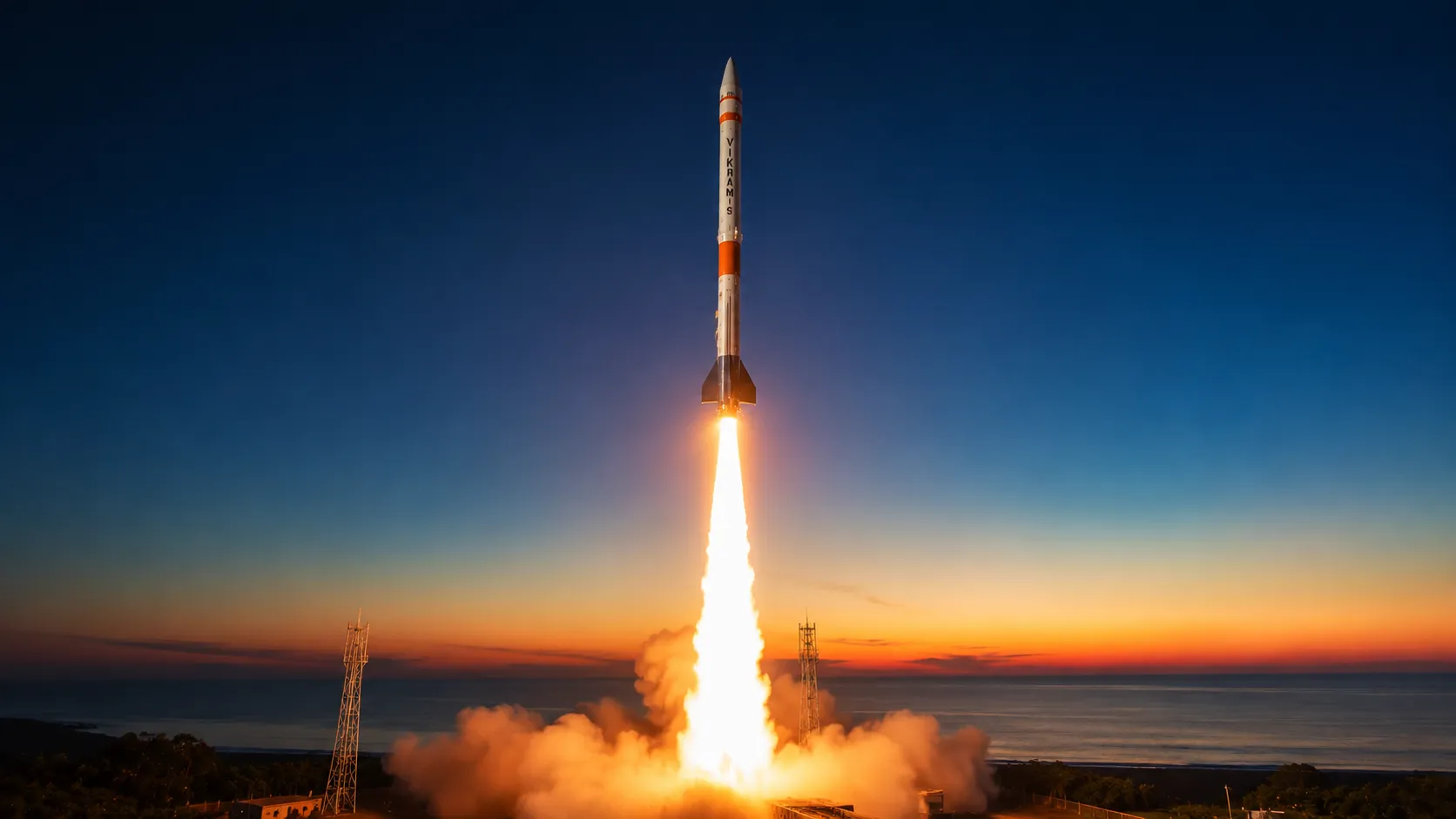
Skyroot’s fundraising journey is a masterclass in milestone-linked capital raising. The company did not walk out of ISRO and raise $60 million on a deck. It followed a deliberate, achievement-stacked path: a seed round to develop the engine, a Series A to fly the suborbital rocket, a Series B to begin orbital vehicle development, and now a unicorn round as Vikram-1 stands on the launch pad, with commercial customers already signed.
Each round was priced higher than the last, reflecting the reduced technical risk. Each round told a story of a promise made and a promise kept. Investors were not asked to fund a vision. They were asked to fund the next concrete step, with full knowledge that the previous steps had been executed cleanly.
For any founder, but especially those in capital-intensive industries, this approach is transformative. It keeps dilution under control. It builds a track record of execution that becomes a compounding asset. And it creates a narrative momentum that pulls investors toward you, rather than requiring you to chase them. Skyroot did not beg for its unicorn valuation. It earned it, milestone by milestone, launch by launch.
The Global Stakes
India now has over 300 space startups, up from a single entity in 2014. Venture funding into the sector more than doubled to $196 million in 2025, and Skyroot’s round alone accounts for a significant portion of that total. The country aims to capture 8% of the global space market by 2035. Skyroot’s emergence as a unicorn is not just a national milestone. It is a signal that the geography of deep-tech innovation is shifting.
For the American entrepreneur, this shift carries a dual message. First, competition is globalizing. The next great rocket company may not emerge from Texas or California. It may emerge from Hyderabad, Chennai, or Bengaluru, with cost structures that Western competitors will find difficult to match. Second, opportunity is globalizing. The playbook that worked for Skyroot—frugal engineering, government partnership, milestone-based fundraising—can be adapted to other markets, including those underserved by traditional venture capital.
What Every Entrepreneur Can Learn
Skyroot’s unicorn moment offers a clean set of transferable principles for any founder building in a tough market.
First, proof over pitch. Nothing convinces customers, investors, or regulators like a real machine doing a real thing. If you can shrink your first milestone to something you can actually demonstrate, do it. The video of Vikram-S launching is worth more than a thousand investor decks.
Second, turn constraints into competitive advantages. Skyroot’s frugal engineering culture, inherited from ISRO, is not a survival tactic. It is a structural cost moat. When your rockets are designed from scratch to be the cheapest on the market, you do not need to win on prestige. You win on price, and you keep winning as the market commoditizes.
Third, treat government as infrastructure. The public sector is slow, bureaucratic, and frustrating—but it also owns wind tunnels, launch pads, testing facilities, and procurement budgets. Align your interests with the government’s stated goals, and you can access capabilities that would cost hundreds of millions to build privately.
The Promise
Skyroot’s name is drawn from the Sanskrit word akasha, meaning sky or space. But the company is not only reaching for orbit. It is reaching for a future in which the boundaries of who can build space technology are defined not by geography or government monopoly, but by the quality of engineering and the audacity of vision. The Vikram-1 launch, when it happens, will be watched by millions. More importantly, it will be watched by the next generation of founders—in India, in Africa, in Latin America—who will see a rocket built by a startup and think: we could do that too.
The hand-painted sign in Hyderabad is still there. The engineers still walk past it every morning. Orbit or Bust. They are not planning to bust.


