Ola Electric’s ₹780 Crore QIP Signals Investor Confidence Amid a Difficult Road to Recovery
After a turbulent year marked by declining market share, mounting losses, and increasing competition, Ola Electric has secured a significant vote of confidence from institutional investors.
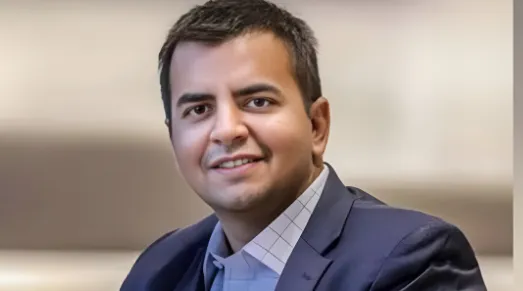
The Bhavish Aggarwal-led electric vehicle manufacturer has successfully raised ₹780 crore through a Qualified Institutional Placement (QIP), substantially exceeding its original fundraising target of ₹500 crore. The issue was oversubscribed by 56%, reflecting strong interest from both domestic and global investors despite the company’s ongoing financial challenges.
The fundraising round attracted a roster of prominent institutional investors, including Goldman Sachs, BNP Climate Fund, Motilal Oswal Mutual Fund, Mirae Asset Mutual Fund, Kotak Mahindra Mutual Fund, and JM Financial Mutual Fund.
For a company that has spent much of the last year battling operational setbacks and market-share erosion, the successful QIP marks an important milestone. It suggests that while investors remain aware of the risks, many continue to believe in Ola Electric’s long-term potential within India’s rapidly expanding electric mobility ecosystem.
A Bigger Raise Than Planned
According to regulatory filings, Ola Electric allotted approximately 21.76 crore equity shares to qualified institutional buyers at an issue price of ₹35.86 per share.
The issue price included a premium of ₹25.86 per share and represented a discount of approximately 4.98% compared to the floor price of ₹37.74 determined under Securities and Exchange Board of India (SEBI) regulations.
While discounted placements are common in institutional fundraising exercises, the level of participation surprised several market observers.
The company had initially aimed to raise ₹500 crore. However, strong investor demand enabled it to increase the size of the issue to ₹780 crore.
For Ola Electric, the additional capital arrives at a crucial time.
The company continues to invest heavily in product development, manufacturing expansion, battery technology, charging infrastructure, and customer service improvements—all areas that require significant financial resources.
The fundraising provides Ola Electric with additional flexibility as it navigates an increasingly competitive electric vehicle market.
Why Investors Are Still Betting on Ola
At first glance, investor enthusiasm may seem surprising.
Ola Electric has faced one of the most challenging periods in its history over the past year.
The company struggled with declining sales, service-related complaints, operational inefficiencies, and intensifying competition from both traditional automakers and emerging EV startups.
These challenges resulted in a dramatic fall in market share.
At one point, Ola Electric’s share of the electric two-wheeler market reportedly dropped to just 3.5%, a sharp decline from the dominant position it once held.
Yet investors appear to be focusing on a different story: the possibility of a turnaround.
Recent data suggests that Ola Electric may be showing early signs of recovery.
The company reported more than 20% month-on-month growth in registrations for two consecutive months. In May 2026 alone, it sold 15,139 electric scooters, increasing its market share to 8.88%.
Although still far below the company’s peak dominance, the numbers indicate that demand is beginning to stabilize.
For institutional investors, this improvement may signal that the worst of the slowdown could be behind the company.
The EV Market Is Still Growing
Another factor supporting investor confidence is the broader outlook for India's electric mobility sector.
Despite temporary fluctuations in individual company performance, the long-term fundamentals of the electric vehicle market remain attractive.
India continues to push aggressively toward electrification through government incentives, infrastructure investments, and sustainability initiatives.
Rising fuel prices, growing environmental awareness, and improving battery technology are accelerating consumer adoption of electric vehicles across categories.
The electric two-wheeler segment, in particular, remains one of the fastest-growing areas of the Indian automotive industry.
Market analysts expect EV penetration in the scooter and motorcycle segment to increase significantly over the next decade.
As one of the earliest and most recognizable EV brands in India, Ola Electric remains well positioned to benefit from this transition if it can successfully address operational challenges and restore consumer trust.
Investors participating in the QIP appear to be making a long-term bet on that possibility.
The Financial Challenges Remain
While the successful fundraising is undoubtedly positive, it does not eliminate the challenges facing the company.
Ola Electric continues to operate under significant financial pressure.
In the fourth quarter of FY26, the company reported operating revenue of ₹265 crore, representing a decline of more than 56% compared to ₹611 crore during the same quarter a year earlier.
The revenue contraction highlights the scale of the slowdown experienced by the company over the past year.
At the same time, losses remain substantial.
The company reported a quarterly loss of approximately ₹500 crore, underscoring the financial strain associated with scaling manufacturing operations while competing in a price-sensitive market.
Like many high-growth technology and mobility companies, Ola Electric is balancing aggressive expansion ambitions with the need to eventually achieve profitability.
The path to that goal remains challenging.
Bhavish Aggarwal’s High-Stakes Vision
For founder Bhavish Aggarwal, the QIP represents more than a fundraising event.
It is also validation of a broader vision.
Since launching Ola Electric, Aggarwal has repeatedly positioned the company as more than just a scooter manufacturer. His ambition has been to create a vertically integrated electric mobility ecosystem spanning vehicles, batteries, software, charging infrastructure, and advanced manufacturing.
The company’s Futurefactory and battery initiatives have been central to that strategy.
However, transforming that vision into a sustainable business has proven more difficult than many initially anticipated.
Operational execution, product reliability, customer service quality, and competition have all emerged as critical challenges.
The fresh capital provides Aggarwal and his leadership team with additional resources to address these issues while continuing to invest in long-term innovation.
Institutional Investors See Long-Term Value
The participation of global institutions such as Goldman Sachs and BNP Climate Fund is particularly noteworthy.
These investors typically evaluate opportunities based on long-term structural trends rather than short-term market fluctuations.
Their involvement suggests continued confidence in India's EV opportunity and in Ola Electric’s ability to remain a significant player within that ecosystem.
Similarly, participation from leading domestic mutual funds indicates that institutional investors continue to view electric mobility as a strategic growth sector.
For many investors, the current phase may represent a period of consolidation rather than decline.
If Ola Electric can successfully improve operational efficiency, regain market share, and strengthen customer confidence, the company could potentially emerge stronger from its current challenges.
What Happens Next?
The immediate focus for Ola Electric will be execution.
The company must demonstrate that recent improvements in registrations and market share are sustainable rather than temporary.
Investors will closely monitor sales growth, customer satisfaction metrics, product performance, and progress toward reducing losses.
The additional ₹780 crore provides breathing room, but it also increases expectations.
Institutional investors are not simply funding survival—they are investing in the possibility of renewed growth.
As of Thursday's market close, Ola Electric was valued at approximately ₹18,993 crore, or roughly USD 2 billion.
That valuation reflects both the challenges and opportunities facing the company.
The successful QIP shows that investors still believe the story is far from over.
Whether Ola Electric can convert that confidence into a lasting comeback may become one of the most closely watched business stories in India’s electric vehicle sector over the next few years.
This version expands the news into a business-analysis feature with context, investor perspective, EV market outlook, financial performance, and future implications in the style of TIGI, Forbes India, or Entrepreneur India.


