
DiasporaImpact12 MIN READ

NRIs Pour $60 Billion Into Indian Banks: Inside the Great Dollar Deposit Race

NRI dollar deposits under RBI's FCNR scheme nearly doubled to $60.55 billion in eight weeks, with HSBC, SBI and ICICI leading the charge as banks sweeten rates before the September deadline.

By Aravind Kumar · Author5 August 2026
NRIs Pour $60 Billion Into Indian Banks: Inside the Great Dollar Deposit Race

There are moments in the life of a diaspora when a single line of government data quietly reorders the financial conversation in a million households at once. This is one of those moments. Sometime in the last week, in bank branches from Dubai to Toronto, from Southall to Singapore, WhatsApp groups made up of aunties, uncles, cousins and old college friends who now live an ocean apart from each other began circulating the same screenshot: a table, ten rows long, showing which Indian bank had managed to pull in the most dollars from people just like them.

The number at the top of that table is startling on its own terms. According to government data placed before Parliament and released on Monday, 3 August 2026, outstanding NRI dollar deposits under a special Reserve Bank of India scheme have very nearly doubled in eight weeks — climbing from $32.56 billion on 5 June to $60.55 billion by the end of July. That is $27.99 billion of fresh money, moved from bank accounts in the West, the Gulf and Southeast Asia into India, in less time than it takes most people to plan a summer holiday.

It is, in other words, one of the largest coordinated financial mobilisations of the Indian diaspora's savings in over a decade — and for the millions of Non-Resident Indians who hold, or are weighing whether to open, a Foreign Currency Non-Resident (Bank) account, commonly known by its acronym FCNR(B), the story behind that number matters a great deal.

ChatGPT Image Aug 5, 2026, 11_35_54 AM.png


The Bank That Nobody Expected to Win

If you had asked most Indian banking analysts in June which institution would end up leading this deposit drive, the smart money would have gone on State Bank of India — the public-sector behemoth with more NRI relationship managers, more legacy trust, and more branches in every corner of the diaspora world than any of its rivals. Instead, the early leader by a clear margin is a foreign bank operating in India: HSBC.

HSBC's India unit has raised approximately $6.14 billion since the scheme opened on 5 June, more than any other single lender in the country. SBI, India's largest bank by every conventional measure, gathered around $4.12 billion in the same window. ICICI Bank, the country's leading private-sector lender for NRI business, brought in roughly $3.7 billion, putting it well ahead of its private-sector peers.

The full picture, drawn from the government's own bank-wise breakdown, reads almost like a leaderboard from a sporting event:

- HSBC: $6.14 billion - State Bank of India: $4.12 billion - ICICI Bank: $3.70 billion - Standard Chartered Bank: $1.86 billion - Kotak Mahindra Bank: $1.66 billion - Axis Bank: $1.59 billion - HDFC Bank: $1.41 billion - Bank of Baroda: $1.05 billion - Punjab National Bank: $970 million - Canara Bank: $933 million

What explains HSBC's runaway lead? Industry watchers point to the bank's aggressive use of leveraged FCNR structures offered through its GIFT City International Financial Services Centre Banking Unit — a facility that has allowed the bank to pitch high-net-worth NRIs, particularly in the Gulf and Singapore, with products that go well beyond the plain-vanilla fixed deposit most families are familiar with. It is a foreign bank with a comparatively modest domestic branch footprint next to giants like SBI, ICICI and HDFC, yet it has out-mobilised all of them — a reminder that in this new phase of NRI banking, product sophistication and targeted marketing to wealthy segments of the diaspora can matter as much as sheer branch count.

Looked at by category of lender rather than by individual bank, the pattern sharpens further. Foreign banks operating in India mobilised $8.37 billion in the period, taking their total outstanding FCNR(B) deposits to $8.97 billion — up from just $603 million before the scheme began. That is not incremental growth; it is a scale of expansion that no other category of Indian bank came close to matching. Private-sector banks as a group garnered $10.73 billion. Public-sector banks brought in $8.84 billion. Small finance banks and cooperative banks, further down the food chain, together accounted for a comparatively modest $50 million.

What Actually Triggered This

To understand why the Reserve Bank of India built this scheme in the first place, you have to go back to May 2026, when the rupee slid to a record low against the US dollar. The currency had been under sustained depreciation pressure for months, driven in part by rising oil prices tied to escalating US-Iran tensions and by expectations of further Federal Reserve interest rate moves that made dollar assets more attractive relative to emerging-market currencies like the rupee.

Faced with this, the RBI reached for a tool it has used only once before in the modern history of Indian central banking: a concessional swap window that allows commercial banks to exchange the foreign currency they raise through FCNR(B) deposits with the central bank at a below-market cost. In plain terms, this reduces the hedging expense a bank would otherwise have to absorb when converting an NRI's dollar deposit into usable rupees — and that saved cost is passed on, in part, to depositors in the form of significantly higher interest rates than would otherwise be commercially viable.

The scheme also carries a second, quieter sweetener for the banks themselves: qualifying incremental deposits raised under the window are exempted from the Cash Reserve Ratio and Statutory Liquidity Ratio requirements that normally apply to bank deposits in India. It became effective on 8 June 2026 and will remain open until 30 September 2026 — giving both banks and NRI depositors a clearly defined window in which to act.

If this playbook sounds familiar to anyone who lived through the "Taper Tantrum" of 2013, that is because it is, almost deliberately, the same playbook. When the Federal Reserve signalled it would begin winding down its bond-buying programme in 2013, capital fled emerging markets en masse, and the rupee came under similarly severe pressure. The RBI's response then was a similar swap facility that, over several months, raised roughly $34 billion from NRIs and helped stabilise the currency. That episode is remembered in Indian financial circles as one of the more successful examples of mobilising diaspora capital in a moment of macroeconomic stress.

This year's version, however, is moving at a considerably faster clip and, if current projections hold, could end up dwarfing it. RBI data released over the weekend showed banks had mobilised nearly $41 billion in foreign exchange inflows under the concessional swap facility when external commercial borrowings and overseas foreign currency borrowings are included alongside FCNR(B) deposits. IDFC First Bank, in a research note, described the pace of these combined inflows as "much stronger than expected," and projected that total inflows across all instruments could reach $90 billion or higher by the time the window closes at the end of September — nearly triple the scale of the 2013 intervention.

The Rate War Nobody Saw Coming

For the ordinary NRI reading this from a kitchen table in Manchester, a high-rise in Dubai, a condo in Singapore or a suburb outside Chicago, the headline numbers about bank-wise mobilisation are interesting, but they are not the number that actually determines whether it makes sense to move your savings. That number is the interest rate on offer — and here, the last few days have brought a meaningful shift.
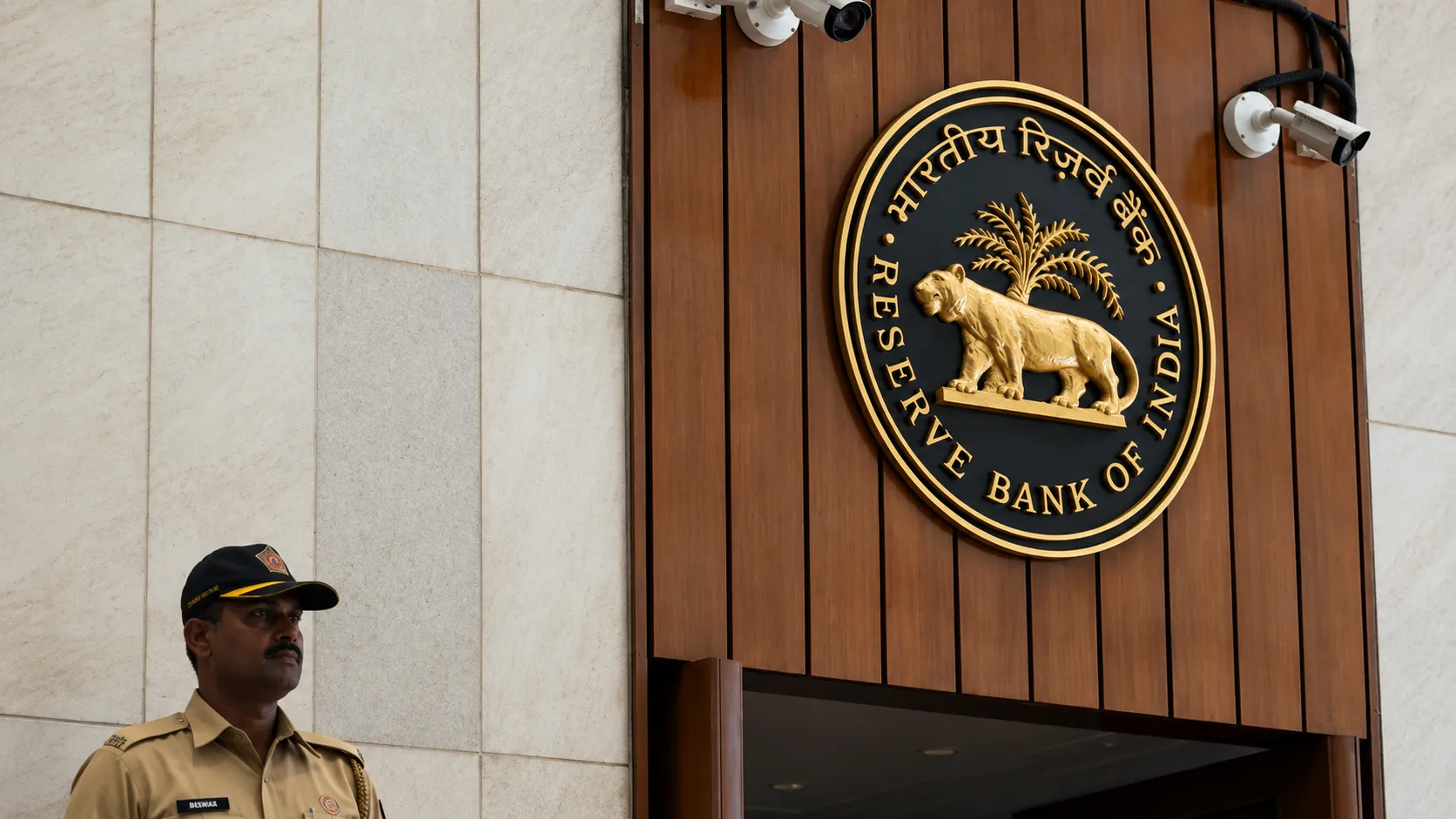

HSBC’s dominance is striking given it is a foreign bank with a far smaller domestic branch network than SBI, ICICI or HDFC. It reflects a strategy of offering leveraged FCNR structures aimed specifically at high-net-worth NRI investors in the Gulf and Singapore — proof that in this new phase of diaspora banking, sophistication can beat scale.
The Impactful Global Indian, Business Desk

Having watched HSBC and SBI capture the lion's share of inflows during the scheme's first eight weeks, the major private banks that had, until now, largely held their nerve at around the 6 per cent mark on three-to-five-year FCNR(B) deposits are beginning to compete more aggressively on price. Both HDFC Bank and ICICI Bank have raised their rates by 25 basis points to 6.25 per cent in that maturity bucket, according to reporting on the rate moves. It is a modest-sounding shift in isolation, but for a depositor comparing offers across five or six institutions, quarter-point moves add up quickly over a three-to-five-year lock-in.

Smaller, more aggressive lenders have gone considerably further. AU Small Finance Bank, for instance, has at various points during the scheme offered rates as high as 7.10 per cent — a full percentage point or more above what the larger, more familiar names are providing, though prospective depositors will want to weigh that higher headline rate against the differences in scale, brand recognition, and service infrastructure between a small finance bank and an institution like SBI or HSBC.

It's worth being precise here about what "FCNR(B)" actually protects and doesn't. These deposits are held in foreign currency — typically US dollars, though other currencies are permitted — which shields the depositor from the exchange-rate risk that comes with a Non-Resident External (NRE) rupee deposit. If the rupee weakens after you deposit, an FCNR(B) holder's principal, denominated in dollars, is untouched; an NRE depositor's rupee-denominated principal would, in dollar terms, effectively shrink. That currency protection, combined with interest that is exempt from Indian tax for as long as the depositor retains non-resident status, has always made FCNR(B) attractive to diaspora savers who are nervous about rupee volatility but still want exposure to India's higher interest-rate environment relative to the near-zero and low-single-digit rates common in the US, UK, Eurozone and much of the Gulf. What the current scheme has done is take a product that was already reasonably attractive on those terms and add, on top of it, a temporary rate premium engineered specifically to pull in dollars during a currency-defense window.

What This Means, Practically, for the Diaspora

For readers in the United States, this is not simply an interesting data point about Indian monetary policy; for many households, it is a live financial decision with a hard deadline. NRIs weighing whether to open or top up an FCNR(B) deposit before 30 September 2026 need to keep several practical realities in mind.

First, the rate landscape is not static, and it is moving in the depositor's favour as banks compete for the remaining two months of inflows before the window shuts — which argues, for those who are not in urgent need of liquidity, for continuing to compare rates directly with individual banks rather than assuming the rate quoted a month ago still holds.

Second, deposits booked under the scheme come with a one-year lock-in condition, and that condition, along with the elevated rate, is retained for the deposit's full agreed tenor once it is booked before the deadline. Money placed after 30 September will be governed by standard, non-concessional terms and rates, which are expected to be materially lower — meaning the arbitrage on offer right now genuinely does have an expiry date.

Third, not all FCNR(B) products are created equal. HSBC's headline-grabbing $6.14 billion haul is substantially attributable to leveraged structures marketed to high-net-worth depositors through its GIFT City unit — a different animal from the standard, non-leveraged fixed deposit most retail NRIs will encounter at a branch or through an app. Depositors comparing offers should be careful to compare like with like: a standard deposit rate at one bank against a standard deposit rate at another, rather than being dazzled by a leveraged product's headline return without understanding the additional structure and risk involved.

Fourth, and perhaps most reassuringly for a diaspora that has, in recent years, grown understandably more cautious about where it parks its money: FCNR(B) deposits are held with regulated Indian banks under the same RBI oversight framework that has governed NRI deposits for decades. The scale of inflows currently being reported is a reflection of strong demand for an attractively priced, temporary scheme — not any signal of change to the underlying safety or regulatory status of the product itself.

Finally, the choice between a public-sector bank like SBI or Bank of Baroda, and a private or foreign bank like ICICI, HDFC or HSBC, remains a genuinely personal one, shaped by existing banking relationships, comfort with digital versus branch-based service, and the specific rate on offer at the moment of deposit. What the government's data makes clear is that strong inflows are being recorded across every category of lender — this is not a story of one type of bank cornering the market, but of an entire banking system, from the smallest cooperative lender to the largest multinational, competing simultaneously for a slice of diaspora capital.


ChatGPT Image Aug 5, 2026, 11_38_49 AM.png


A Diaspora That Still Believes

Strip away the basis points and the swap-window mechanics, and what remains is a simple, almost old-fashioned story: when India's currency came under pressure this year, tens of billions of dollars belonging to people who left the country — sometimes generations ago — flowed back in, drawn by a combination of patriotic goodwill, financial pragmatism, and the enduring pull of an economy that, for all its volatility, continues to offer returns that a saver in London, Los Angeles or Riyadh struggles to find at home.

Whether that $60.55 billion figure grows to the $90 billion some analysts are now projecting by the time the window closes at the end of September will depend on how aggressively the remaining banks compete for the two months left on the clock, and on how the rupee itself behaves in the interim — the currency has, notably, steadied since the RBI's measures were first announced in June, even as it continues to navigate pressure from oil prices and expected Federal Reserve rate decisions.

For now, though, the numbers speak for themselves, and for a diaspora that has spent much of the past two years anxiously tracking headlines about tariffs, visa policy and geopolitical tension, this is a rare piece of news in which Indians abroad are not simply reacting to events — they are, quite literally, banking on India's future, one FCNR deposit at a time.

TagsNRI NewsFCNR DepositIndian DiasporaNRI BankingRBI PolicyHSBC IndiaSBI NRIICICI BankRupee WatchNon Resident Indian

Reader reviews

Sign in to rate and review this article.
Loading reviews…

