StartupsTrending10 MIN READ

Sitharaman Urges India's Entrepreneurs To Overcome Hesitation, Aim For A Quarter Of Global Growth Instead Of A Sixth

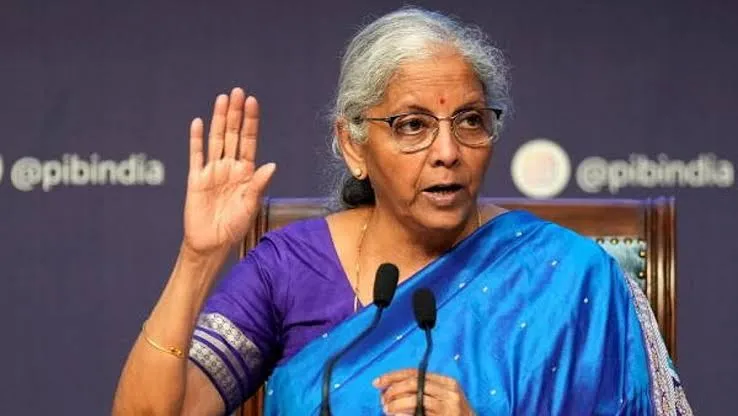
Finance Minister Nirmala Sitharaman urged Indian entrepreneurs to overcome hesitation and drive growth beyond one-sixth of global expansion.

By Shaym Kumar · Author20 July 2026
Sitharaman Urges India's Entrepreneurs To Overcome Hesitation, Aim For A Quarter Of Global Growth Instead Of A Sixth

Union Finance Minister Nirmala Sitharaman delivered one of her most direct and expansive calls yet to India's entrepreneurial community, telling attendees at the Special Plenary Session of the YiFi Entrepreneurship Summit 2026 in Madurai that the country's next phase of economic growth will increasingly be driven by founders willing to take greater risks, leverage technology more aggressively, and expand deliberately beyond traditional geographical boundaries. Addressing an audience of young entrepreneurs on July 18, Sitharaman urged them to overcome hesitation and contribute actively to India's stated ambition of becoming a developed nation by 2047 — the target year marking the centenary of India's independence, commonly referred to in government communications as the Viksit Bharat, or Developed India, goal.

The centrepiece of Sitharaman's address was a striking reframing of India's ambitions on the global economic stage. Noting that India is currently projected to contribute roughly one-sixth of global economic growth in the coming years, the Finance Minister posed a direct challenge to her audience: "It need not just be one sixth. Why can't it be one fourth? It's not a question. We can do it," she said, adding that achieving that considerably more ambitious contribution would have to come from India's entrepreneurs and its young workforce. The rhetorical framing — moving from a passive acceptance of India's current projected share of global growth toward an active, deliberately ambitious target of raising that contribution by fifty percent or more — set the tone for an address that repeatedly emphasised agency, ambition and the removal of self-imposed limitations as the defining themes of India's next entrepreneurial chapter.

Perhaps the most quoted line from Sitharaman's remarks captured this theme most directly: "It is our own hesitation, which is the boundary," she told the gathered entrepreneurs, elaborating that the barriers which once separated talent from opportunity are steadily diminishing in today's interconnected, technology-enabled global economy. "Geography of course still matters, but imagination matters far more," she added, urging entrepreneurs to use technology proactively to access information, resources and markets that would, in an earlier era, have remained largely inaccessible to founders operating outside traditional global business hubs. The framing positioned technology not merely as a tool for building better products, but as a fundamental equaliser that has structurally shifted the competitive landscape in favour of ambitious founders regardless of their physical location within India.
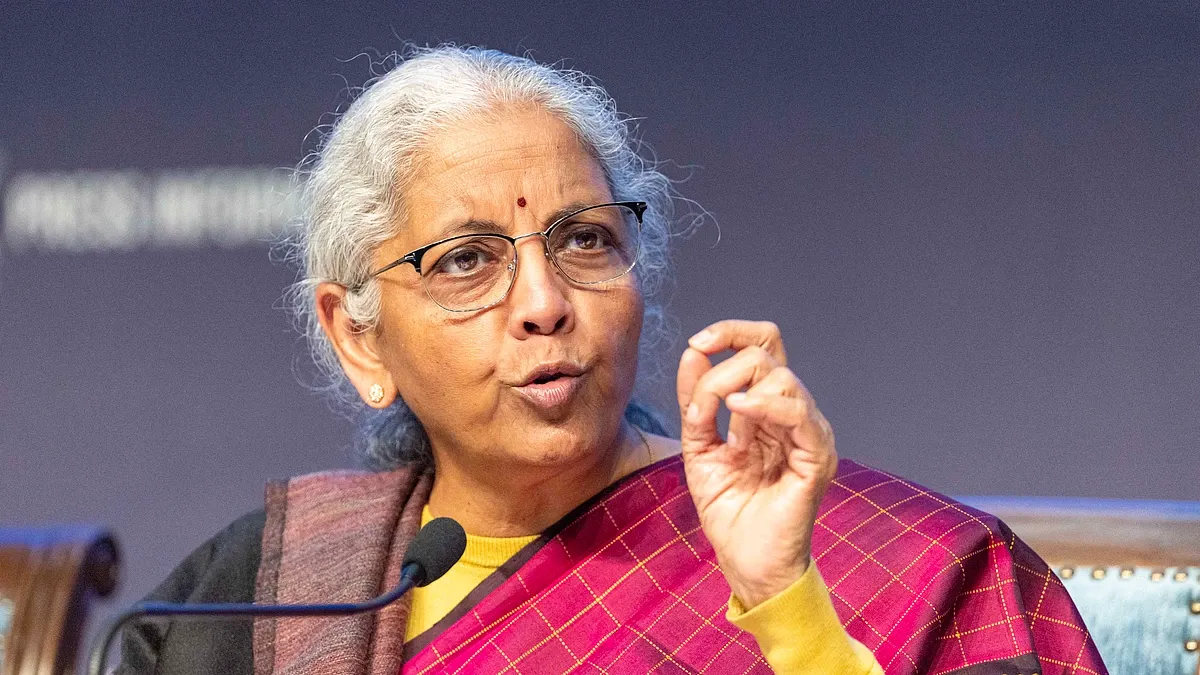
image.png

Sitharaman devoted considerable attention to articulating how the role of government itself has evolved under the current administration's approach to enterprise and entrepreneurship. "Under the leadership of PM Narendra Modi, the role of the Government has been redefined from being a controller of enterprise to becoming an enabler of enterprise," she stated, pointing to a combination of formalisation initiatives, digitisation efforts, regulatory reforms and sustained infrastructure investment as the mechanisms through which this shift has been operationalised in practice. She specifically cited policy certainty, tax stability, and what she characterised as an approachable, responsive government as key competitive advantages that distinguish India's current business environment from earlier periods, framing these attributes as central to her broader assertion that "India is the place to be. India is the place to do business."

The Finance Minister's remarks also highlighted concrete data points underscoring the scale of India's existing entrepreneurial ecosystem, noting that more than 2.4 lakh startups have received formal recognition from the Department for Promotion of Industry and Internal Trade, collectively creating over 23 lakh jobs across the country. She additionally pointed to India's digital public infrastructure as a foundational enabler of continued entrepreneurial growth, highlighting that the Unified Payments Interface now processes more than 20 billion transactions every month — a scale of digital financial infrastructure that Sitharaman framed as opening substantial new opportunities for entrepreneurs building products and services that leverage this payments backbone, spanning fintech, e-commerce, and a wide range of digitally-native business models that would have been considerably more difficult to build and scale without such infrastructure already in place.

Looking toward specific sectoral opportunities, Sitharaman called on entrepreneurs to expand aggressively into emerging and sunrise industries, explicitly citing artificial intelligence applications in agriculture and food processing as areas of particular promise for India's next generation of technology-driven businesses. She also urged founders to prioritise value creation, research and development, and intellectual property generation over what she characterised as an excessive historical focus on valuations alone — a pointed observation that arrives at a moment when India's startup ecosystem continues to work through the aftermath of the funding-driven excesses of the mid-2010s growth boom, during which rapid valuation escalation, in a number of high-profile cases, proved considerably more durable as a headline narrative than the underlying business fundamentals it was meant to reflect.

Sitharaman closed her remarks with an explicit call to ambition that has since been widely quoted across coverage of the summit, urging the next generation of entrepreneurs to "build boldly, build responsibly, build for India, build for the world and above all, build for generations yet to come." The formulation — layering scale, responsibility, domestic rootedness, global ambition and generational thinking into a single call to action — was framed by several commentators covering the summit as a distillation of the government's broader messaging strategy toward India's entrepreneurial community: an insistence that the country's startup ecosystem has matured past its earlier, narrower focus on rapid scale and fundraising milestones, toward a considerably more demanding standard centred on sustainable value creation and long-term national economic contribution.

For India's broader entrepreneurial and investor community, Sitharaman's remarks arrive at a moment when the country's startup ecosystem is simultaneously navigating several parallel narratives — a resurgent IPO market that has finally allowed a number of long-private technology companies to test public market appetite, continued strong venture capital fundraising activity including recent large fund closes targeting India's emerging artificial intelligence application layer, and ongoing scrutiny of corporate governance and disclosure standards among companies approaching public listings. Against that backdrop, the Finance Minister's call for entrepreneurs to move beyond hesitation and pursue considerably more ambitious growth targets reflects a government keen to sustain and accelerate the entrepreneurial momentum that has helped position India as one of the world's largest and fastest-growing startup ecosystems, even as it simultaneously pushes founders to build businesses capable of withstanding the more rigorous scrutiny that comes with genuine, durable economic scale.
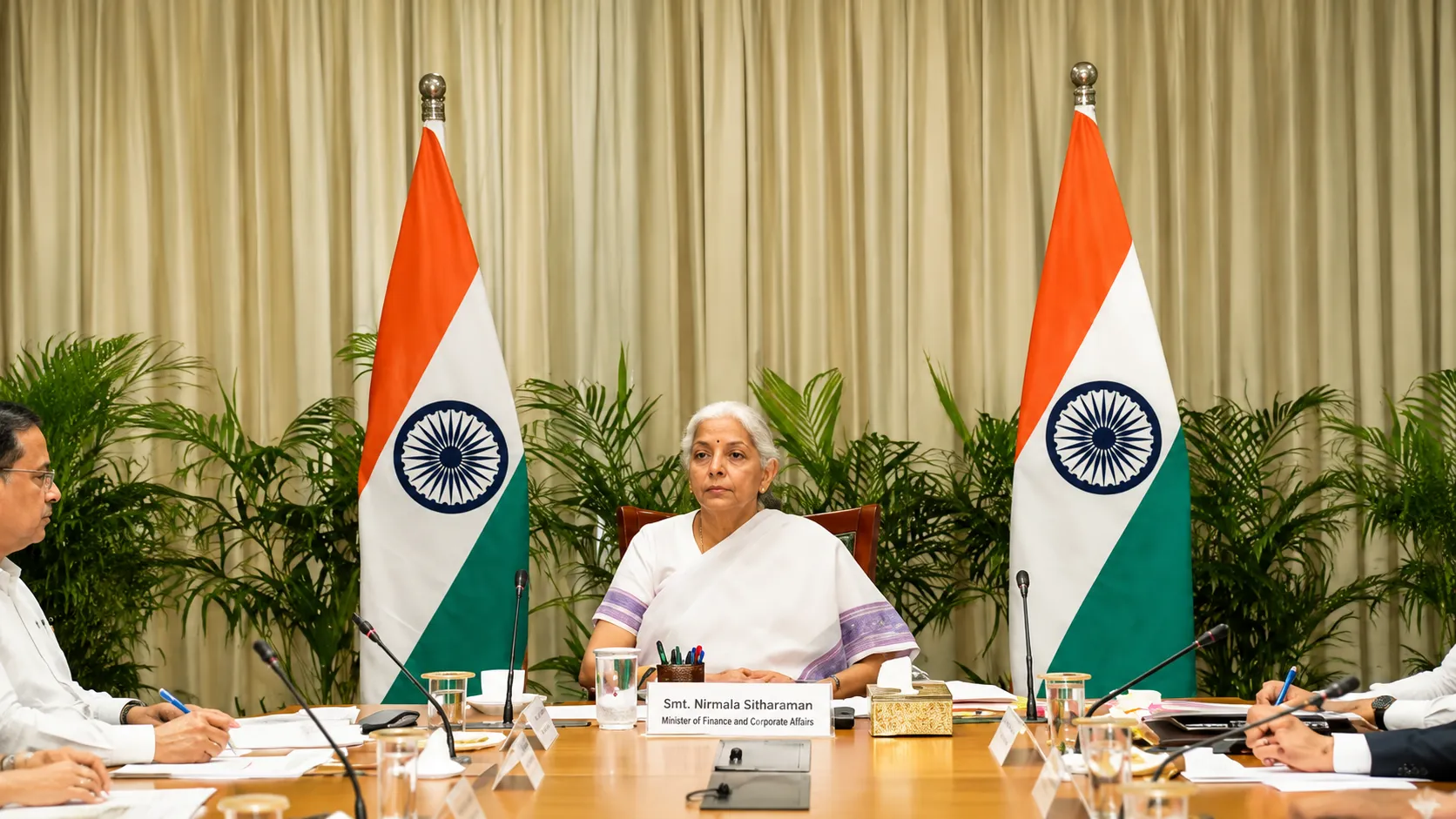

It is our own hesitation, which is the boundary — the barriers that once separated talent from opportunity are steadily diminishing. Geography of course still matters, but imagination matters far more.
The Impactful Global Indian Business Desk

The venue and audience for Sitharaman's remarks carried their own symbolic significance. The YiFi Entrepreneurship Summit, held in Madurai rather than one of India's more traditional metropolitan startup hubs such as Bengaluru, Mumbai or Delhi, reflected a deliberate emphasis on reaching entrepreneurs and aspiring founders across India's smaller cities and towns — a constituency that policymakers have increasingly identified as central to broadening the base of India's startup ecosystem beyond its historical concentration in a handful of major metros. This geographic framing aligned closely with Sitharaman's broader thematic emphasis on technology dissolving traditional boundaries, suggesting that founders based well outside India's traditional startup hubs are, in the government's own framing, no longer meaningfully disadvantaged relative to their metro-based counterparts when it comes to accessing global markets, capital and opportunity.

Response to Sitharaman's remarks across India's startup and investor community has been broadly positive, with several prominent founders and venture capital investors publicly echoing her call for entrepreneurs to prioritise genuine value creation over valuation milestones — a sentiment that has gained increasing traction across India's investor community following several years of more disciplined, fundamentals-focused capital deployment in the aftermath of the excesses of the mid-2010s funding boom. Whether this latest ministerial call to ambition translates into a meaningfully accelerated pace of high-quality startup formation across India's smaller cities and towns, as Sitharaman's remarks explicitly encouraged, will become clearer only over the coming several years as the next generation of Indian entrepreneurs responds to this challenge.

The timing of Sitharaman's address also coincided with a broader wave of policy and private capital activity supporting India's startup ecosystem, including the government's recently rolled-out ₹1.9 trillion semiconductor and mobile manufacturing push, continued strong venture capital fundraising activity such as Elevation Capital's newly closed $500 million fund targeting India's AI application layer, and a robust IPO pipeline that has already allowed several previously private technology companies to test public market appetite. Taken together, this confluence of policy support, private capital availability, and public market access opportunities suggests that India's entrepreneurial ecosystem now possesses a considerably more complete set of resources and pathways than in earlier periods, even as Sitharaman's own remarks made clear that translating those resources into the kind of ambitious, globally competitive companies the government envisions will ultimately depend on entrepreneurs themselves choosing to embrace, rather than shy away from, the scale of risk that genuinely transformative businesses require.

Comparisons to earlier eras of Indian economic policy featured implicitly throughout Sitharaman's address, with her framing of government's shift from controller to enabler of enterprise echoing the broader liberalisation narrative that has shaped India's economic policy discourse since the reforms of the early 1990s, even as the specific mechanisms she cited — digital public infrastructure, startup recognition programmes, and sector-specific incentive schemes — reflect considerably more contemporary policy tools than those available during India's earlier liberalisation phases. This framing positions the current entrepreneurial moment as a continuation of, rather than a departure from, India's decades-long economic opening, while simultaneously suggesting that the tools and opportunities now available to Indian entrepreneurs are qualitatively different, and in the government's own assessment considerably more powerful, than those available to previous generations of Indian founders.

For policymakers and industry observers assessing the practical impact of ministerial addresses of this nature, the ultimate measure of success will lie less in the immediate media coverage the speech generates and more in whether it contributes, even incrementally, to a measurable increase in the pace, ambition and geographic diversity of startup formation across India over the coming years. Government officials have increasingly leaned on this kind of direct, motivational engagement with the entrepreneurial community as a complement to the more structural policy levers — funding schemes, regulatory reforms, and infrastructure investment — that together comprise India's broader startup support framework, reflecting a recognition that policy alone, however well designed, cannot substitute for the individual risk-taking and ambition that Sitharaman's Madurai address was so explicitly designed to encourage.

image.png

As India continues its march toward the 2047 Viksit Bharat milestone, addresses of this nature from the country's most senior economic policymakers are likely to remain a recurring feature of the government's broader engagement strategy with its entrepreneurial community, reinforcing the message that the country's next chapter of growth depends as much on individual founders' willingness to embrace risk as it does on any single policy scheme or fiscal incentive.The generational dimension of Sitharaman's message also deserves attention, given her explicit framing of the challenge as one for India's young workforce and next generation of founders specifically, rather than a broader, generationally undifferentiated call to the country's business community as a whole.

This targeted framing reflects a broader demographic reality shaping India's economic policy discourse: with one of the youngest populations among the world's major economies, India's ability to convert its demographic dividend into sustained economic growth depends substantially on whether that young population can be channelled into productive entrepreneurial and economic activity, rather than facing the kind of underemployment or skills mismatches that have periodically undermined similar demographic opportunities in other developing economies. Sitharaman's Madurai address, in that sense, functioned as much as a piece of demographic and economic strategy communication as a straightforward motivational speech to an entrepreneurship summit audience — a dual purpose that is likely to shape how India's senior policymakers continue engaging with the country's youngest and most ambitious economic actors in the years ahead.

In the meantime, the challenge Sitharaman laid down in Madurai — to raise India's share of global growth from one-sixth toward one-fourth — now sits squarely with the country's entrepreneurs themselves to answer, one bold, technology-enabled, boundary-defying venture at a time, building toward the developed-nation ambition the country has set for itself by 2047, hesitation by hesitation, boundary by boundary, overcome.

TagsNirmalaSitharamanStartupIndiaEntrepreneurshipViksitBharat2047IndianStartupsYiFiSummit2026DPIITStartupsIndianEconomyStartupEcosystemFinanceMinisterIndia

Reader reviews

Sign in to rate and review this article.
Loading reviews…

