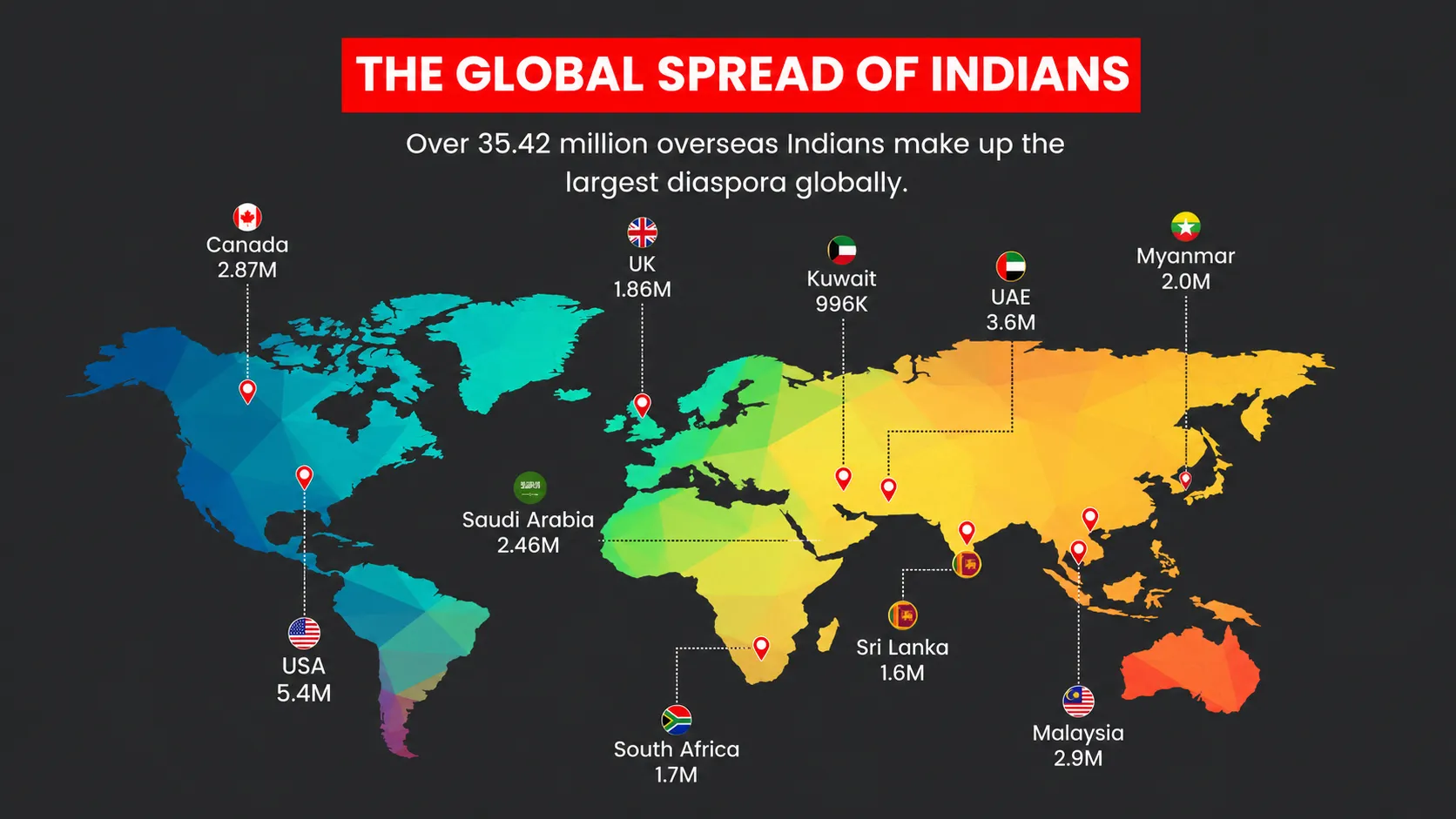
There are weeks in the life of a nation's economy that feel ordinary, and there are weeks that quietly rearrange the furniture of global business. The second week of July 2026 belongs firmly in the second category. Within the span of a few days, an Indian industrialist reclaimed his position as Asia's richest man, a fintech founder from Mumbai took charge of one of the world's most-used messaging platforms, ten scholars of Indian origin were welcomed into one of America's oldest academies, an airline co-founder wrote a nine-figure cheque to bring a medical school to life in Kanpur, India's apex industry chambers found themselves at the center of the country's post-Budget reform conversation, and thousands of miles away in Melbourne, a diaspora community stood ready to welcome a Prime Minister and, with him, the promise of deeper trade.
None of these stories, on their own, would be extraordinary. Together, they tell a story that has been building for two decades and has now reached an unmistakable crescendo: the Indian business story is no longer a domestic one. It is a story that runs through boardrooms in Ahmedabad and Mumbai, through Silicon Valley headquarters, through the marbled halls of Cambridge, Massachusetts, and through the trading floors of Melbourne and Dubai. This is the story of a global Indian establishment — one built not on nostalgia for a homeland left behind, but on capital, talent, and an unapologetic ambition to lead.
Gautam Adani's Return to the Summit
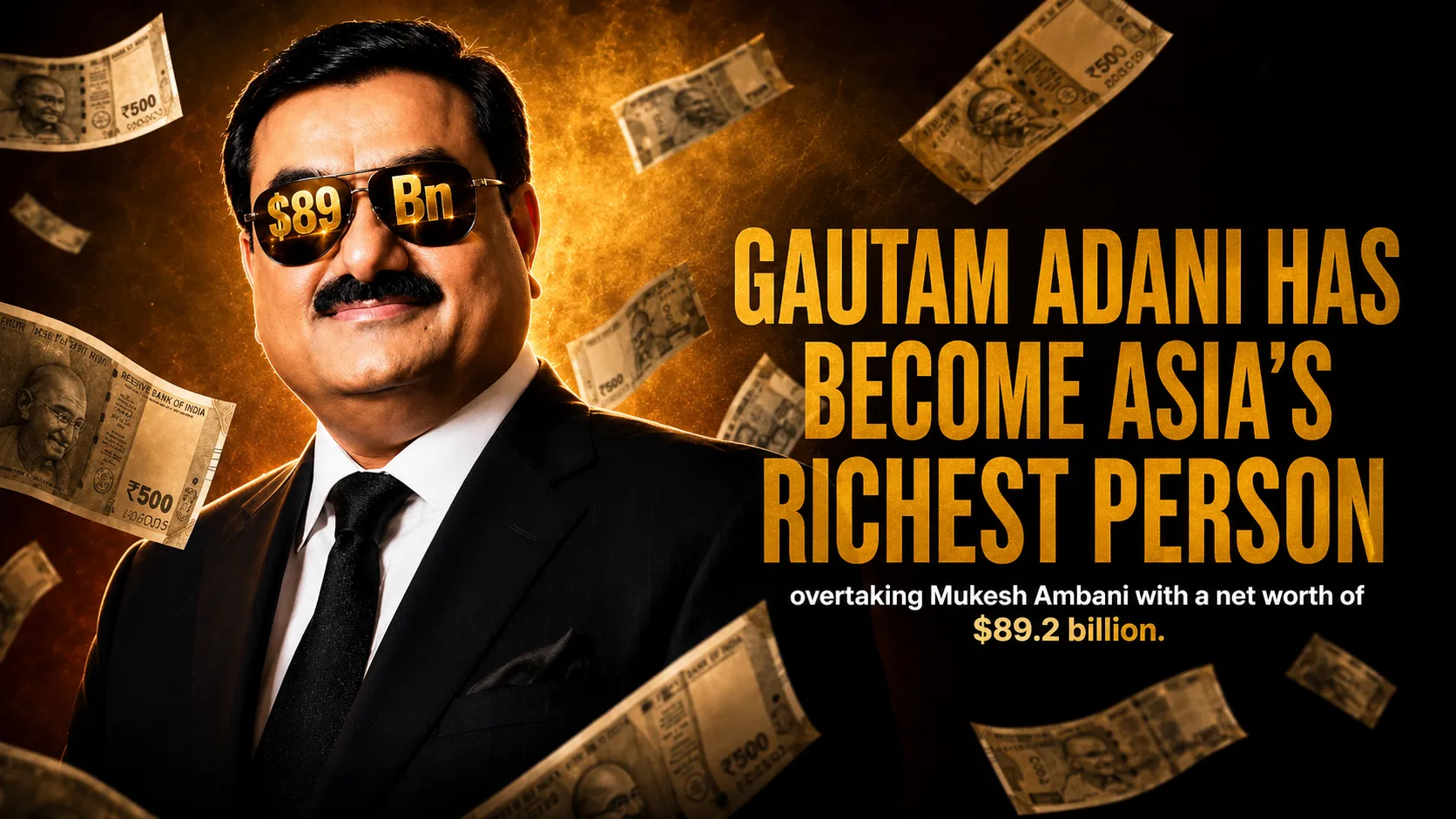
Wealth rankings can feel like sport scores — updated so often that they lose their meaning. But Gautam Adani's return to the top of Asia's rich list this month is not merely a scoreboard update. It is a story about resilience, regulatory vindication, and the peculiar way that markets forgive once uncertainty lifts.
According to Forbes' latest tally, Adani's net worth has climbed to $89.2 billion, enough to push him past both Mukesh Ambani and SoftBank's Masayoshi Son and reclaim the title of Asia's richest person. The rally behind that number has been dramatic: shares across the Adani Group's listed companies have gained between 23 percent and 56 percent so far in 2026, a run that has added tens of billions of dollars to the family's fortune in a matter of months.
The catalyst is not hard to identify. Last month, the United States Department of Justice dismissed fraud-related charges against the Adani Group — allegations that had claimed the conglomerate was involved in a bribery scheme tied to solar energy supply contracts worth roughly $250 million. For a group that has spent nearly three years navigating the aftershocks of a short-seller report first published in early 2023, the dismissal reads as more than a legal formality. It is a signal, markets seem to be saying, that the runway ahead is clearer than it has been in years.
It would be a mistake, however, to read this purely as a story about one man's balance sheet. Adani's businesses span ports, airports, power generation and transmission, and green energy — infrastructure that quite literally moves people, cargo, and electrons across the Indian subcontinent. When Adani's fortunes rise, so does the market capitalization of the enterprises that keep India's ports running and its lights on. And this month, those enterprises have found a new frontier: data centers. Both Adani and Ambani have been stepping up investment in data center capacity in India, riding the same artificial intelligence boom that has reshaped valuations from Nvidia to Nasdaq. AdaniConnex, a joint venture between the Adani Group and a US-based data center operator, is emblematic of a broader pivot — India's biggest industrial houses are no longer just building the physical infrastructure of the twentieth century. They are racing to build the digital infrastructure of the next one.
The rivalry between Adani and Ambani — the two names that have anchored India's billionaire rankings for the better part of a decade — has itself become a kind of national narrative, tracked with the same intensity as a title fight. According to the Hurun Global Rich List 2026, Ambani currently leads India's wealth table at roughly ₹9.8 lakh crore, with Adani following at around ₹7.5 lakh crore, part of a billionaire class in India that has now swelled to 308 individuals. Depending on which index one consults and on which day, the lead has changed hands more than once this year alone. What matters more than who sits atop the list on any given Tuesday is what the competition represents: two of the world's most consequential industrialists, both Indian, both building at a scale that reshapes entire sectors, and both now looked to as bellwethers for how global capital views India itself.

Kunal Shah's Leap to WhatsApp
If the Adani story is about the return of an established titan, the appointment of Kunal Shah as global CEO of WhatsApp is about the arrival of a new generation.
Shah is not a stranger to reinvention. The Mumbai-born entrepreneur first built and sold FreeCharge, then went on to found CRED in 2018, turning it into one of India's most closely watched fintech platforms — a premium rewards ecosystem built around credit-card users rather than the mass-market playbook that most Indian startups chase. It was a contrarian bet at the time: build for India's affluent minority rather than its billion-strong majority. The bet paid off, and it caught the attention of Meta, whose strategic investment in CRED set the stage for what came next.
In June 2026, Meta named Shah as the global head and CEO of WhatsApp, a platform used by billions of people across the planet and one that has become nothing short of critical infrastructure in India, where it functions as everything from a family group chat to a small business storefront to, increasingly, a payments rail. Shah's mandate is significant: to drive WhatsApp's next phase of growth across artificial intelligence, subscriptions, and business messaging, at a moment when Meta is racing to monetize its messaging properties without alienating the very users who made them indispensable in the first place.
The appointment slots neatly into a much larger pattern that has, by now, become one of the defining features of global business coverage: the sheer density of Indian-origin executives at the helm of the world's most influential companies. Satya Nadella at Microsoft, Sundar Pichai at Alphabet, Arvind Krishna at IBM — each has, in his own way, already told this story. What makes Shah's appointment distinct is the origin story behind it. He is not a career technologist who rose through the ranks of an American multinational. He is a homegrown Indian entrepreneur, educated and built in Mumbai, who created something valuable enough that Silicon Valley came calling. It is, in other words, a slightly different chapter in the same book — proof that the flow of Indian talent into global leadership is no longer only about migration and assimilation. Increasingly, it is about acquisition: American companies buying into Indian innovation, and Indian founders bringing their playbooks with them.
A Different Kind of Honor: The Academy Comes Calling
Not every story of Indian global influence is measured in dollars or user numbers. Some are measured in recognition — the kind that arrives from institutions old enough to have outlived empires.
This year, the American Academy of Arts and Sciences, founded in 1780 and among the most prestigious honorary societies in the United States, announced its 2026 class of fellows: more than 250 distinguished leaders drawn from academia, industry, public policy, and the arts. Ten of them are of Indian origin, a cohort whose range says as much about the diaspora's breadth as any single achievement could.
Among the inductees is Shwetak Patel, a leading figure in ubiquitous computing and health technologies, whose work has advanced low-cost, accessible tools for health monitoring on a global scale — the kind of research that quietly changes how healthcare reaches people who would otherwise be left out of it. Also honored is Reshma Saujani, the founder whose advocacy for gender equality in technology has, through her organization, helped thousands of young women find a foothold in computer science careers that were, for too long, closed to them.
What makes this recognition meaningful is not simply the prestige of the institution extending it, but what it represents about how the diaspora's contribution is now being read by the world. This is not a story about immigrants succeeding despite their origins. It is a story about scholars, technologists, and entrepreneurs whose Indian roots and cross-cultural experience are treated as an asset — a source of the very perspective that institutions like the Academy exist to celebrate. The induction of these ten fellows adds to a growing list of similar honors this year, including the Carnegie Corporation's 2026 “Great Immigrants, Great Americans” list, timed to the 250th anniversary of American independence, which separately recognized four Indian-origin leaders across technology, medicine, psychology, and biotechnology.
Building Bridges Back Home: The IIT Kanpur Medical School
If the Academy honors represent the diaspora being celebrated abroad, the story unfolding at IIT Kanpur represents something more active: the diaspora reinvesting, quite literally, in the country it left.
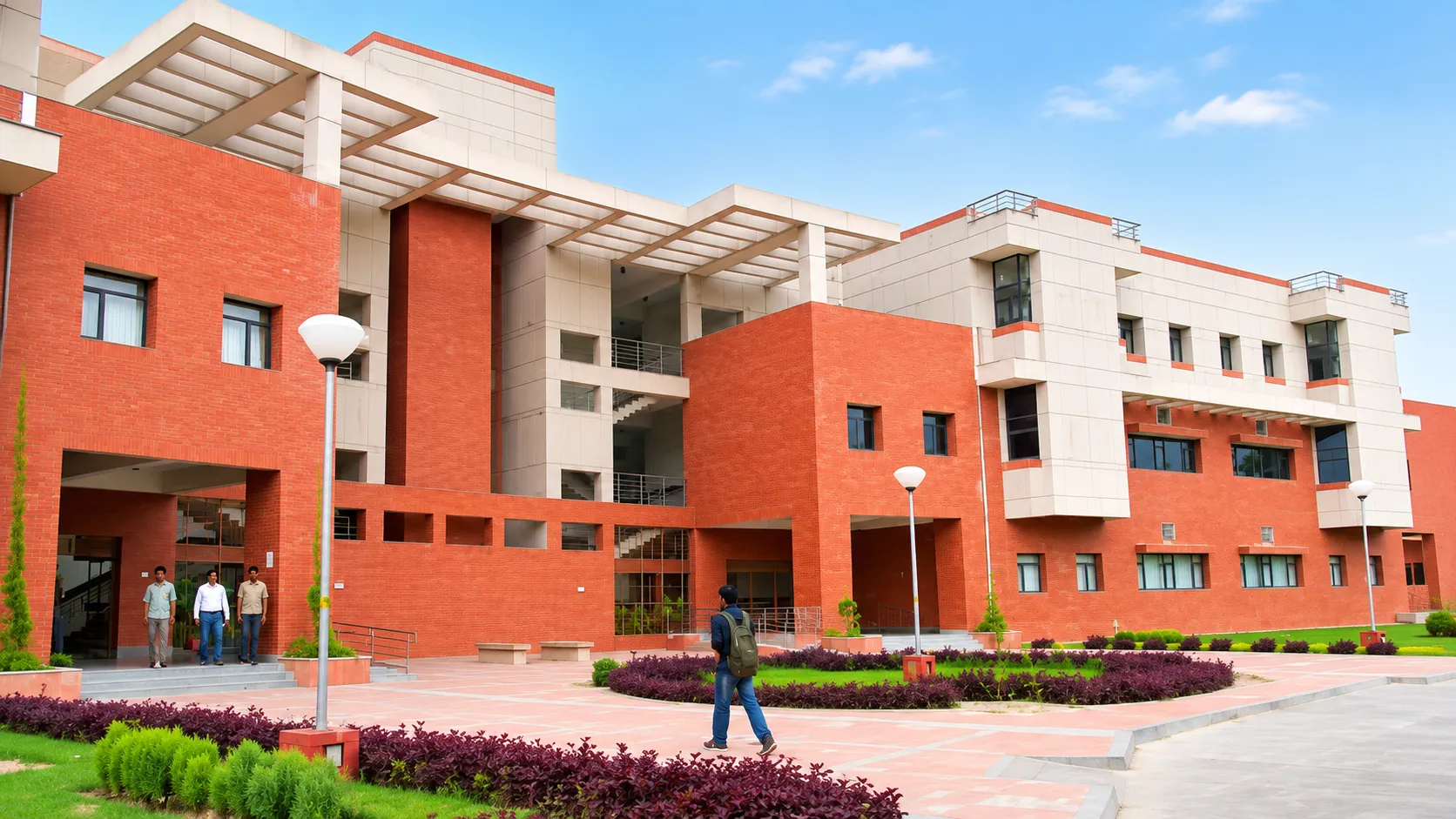
IIT Kanpur's new medical school is being built as a first-of-its-kind initiative that fuses technology and healthcare education, and its early momentum has been driven substantially by the institute's own alumni network scattered across the world. Chief among them is Rakesh Gangwal, the Indian American co-founder of IndiGo — the airline that transformed Indian domestic aviation — and former chairman of US Airways Group. Gangwal's contribution to the medical school project exceeds ₹100 crore, or more than $10 million, a figure that places him among the most significant private backers of an Indian public education initiative in recent memory.
He is not alone. Fellow IIT Kanpur alumni, including Muktesh “Micky” Pant, Dr. Dev Joneja, and Anil Bansal, form part of the project's Founder's Circle, each bringing not just capital but decades of experience built in some of the world's most demanding industries. Their involvement captures a theme that has come up repeatedly at gatherings like the 2026 Indiaspora Forum, which convened diaspora leaders precisely to deepen engagement across business, innovation, culture, and philanthropy: that the Indian diaspora is no longer content to be a source of remittances sent home each month. It has become something more ambitious — a pool of capital, expertise, and institutional credibility that is actively being redirected toward building the India of the next fifty years.
This shift matters because it changes the texture of diaspora philanthropy itself. A remittance is a transfer. A ₹100-crore commitment to a medical school, backed by named alumni willing to lend their professional networks and their reputations, is closer to an investment — one measured not in immediate returns but in the kind of institution-building that took countries like the United States a century to accomplish. It is telling that the same broader trend was recently captured in a report titled “India and its Diaspora: Partners in Progress,” which estimated that more than 35 million people of Indian heritage now live across over 200 countries, with a combined annual income estimated at $730 billion — a figure large enough to function as an economic force in its own right, entirely independent of India's domestic GDP.
India Inc. Finds Its Voice in the Reform Conversation
Back in New Delhi, a quieter but no less consequential story has been playing out inside the country's apex industry chambers. The Confederation of Indian Industry, the Federation of Indian Chambers of Commerce and Industry, and the Associated Chambers of Commerce and Industry of India — CII, FICCI, and ASSOCHAM, respectively — have spent the past several weeks positioning themselves as active participants in shaping India's economic reform agenda, rather than passive commentators on it.
Following the Union Budget for 2026-27, FICCI's leadership welcomed the government's emphasis on manufacturing, MSMEs, infrastructure, and technology-driven growth, framing the budget as a source of policy clarity and macroeconomic stability even against a backdrop of global uncertainty. The chamber also pressed for a specific and often underappreciated concern: effective coordination between the central government and India's states, since many of the budget's flagship schemes place growing implementation and financing responsibility on state governments. Without that coordination, chamber leaders have argued, even well-designed national policy can stall at the point of execution.
Beyond the annual budget ritual, the three chambers have also worked jointly with India's markets regulator, the Securities and Exchange Board of India, through an Industry Standards Forum designed to translate new regulations into workable compliance standards. It is unglamorous work — the kind of institutional plumbing that rarely makes headlines — but it is precisely this plumbing that determines whether ambitious economic reforms translate into practical outcomes for businesses on the ground. FICCI has simultaneously kept up an active international calendar, leading trade missions and business delegations to markets like Uzbekistan and Singapore, reinforcing the chamber's role as a bridge between Indian industry and the wider world.
Melbourne Waits, and Watches
While Delhi's chambers were working the policy machinery, a different chapter of India's global economic story was unfolding on the other side of the world. In Melbourne, members of the Indian diaspora prepared for Prime Minister Narendra Modi's visit to Australia with a mixture of pride and pragmatism, expressing hope that the trip would translate into deeper business ties between the two countries.
Diaspora business figures, including leadership connected to the Australia India Chamber of Commerce, used the moment to make a specific appeal: that the two Prime Ministers use their bilateral talks not only to discuss trade volumes and investment flows, but also softer, human issues — inclusivity for the Indian community in Australia, and visa caps affecting foreign students who form a growing share of Australia's international education economy. It is a reminder that the diaspora's role in international business is never purely transactional. The same community members who serve as informal ambassadors for bilateral trade are also the ones who live with the day-to-day consequences of visa policy and social inclusion — and they are increasingly unafraid to say so in the same breath as they celebrate a state visit.
The Common Thread
Taken individually, these six stories belong to different beats: markets, technology, academia, philanthropy, policy, and diplomacy. Taken together, they describe something larger than the sum of their parts — a version of Indian influence that no longer waits at the border for validation. It builds medical schools with its own money. It runs the messaging app that half the planet uses. It sits, quite literally, at the table when regulators design the rules of the market. And when a Prime Minister lands in a foreign city, it is there in the audience, no longer just cheering, but negotiating.
The Adani and Ambani rivalry will likely produce another headline before the year is out, as it always does. Kunal Shah will be judged, as every new CEO is, by what he builds rather than by the fact of his appointment. The Academy's ten new fellows will go back to their labs and their classrooms. The IIT Kanpur medical school will, if all goes to plan, admit its first students in the years ahead. FICCI, CII, and ASSOCHAM will keep doing the unglamorous work of turning policy into practice. And the diaspora in Melbourne — like diaspora communities in Dubai, Toronto, London, and a hundred other cities — will keep watching, investing, and occasionally, gently, making its expectations known.
What ties it all together is a simple, almost understated truth: in July 2026, there is no major arena of global business — capital markets, big tech, elite academia, higher education philanthropy, regulatory policy, or international diplomacy — where an Indian name is not near the center of the story. That is not an accident of a single good week. It is the visible surface of a two-decade current that has been building underneath, and it shows no sign of receding.


