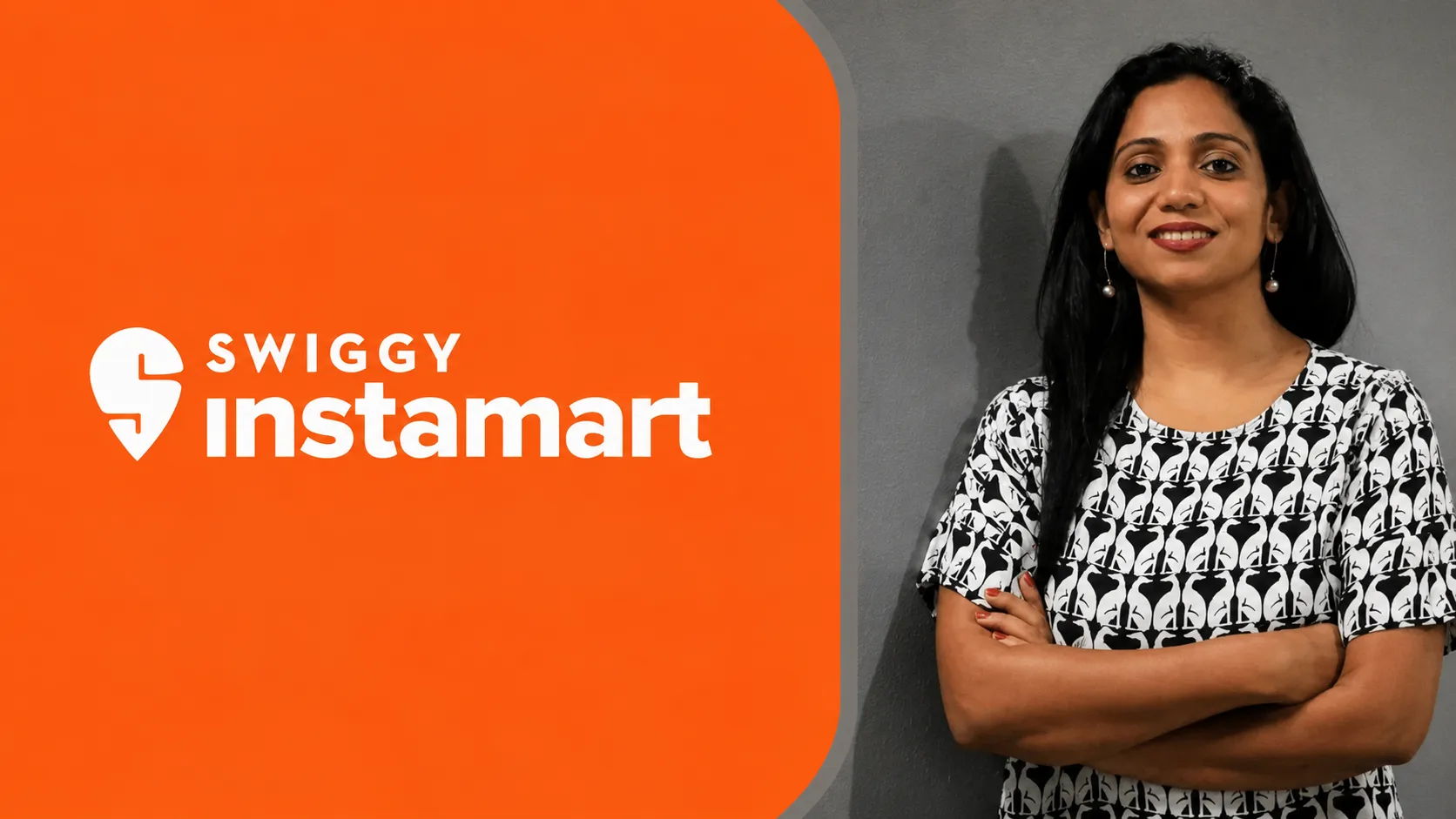
The quick-commerce wars in India have produced plenty of headlines about dark-store counts, ten-minute delivery promises and cash-burning expansion sprees. This week, the story shifted from operations to leadership — and the person walking into the spotlight is one of Indian consumer internet's most closely watched executives.
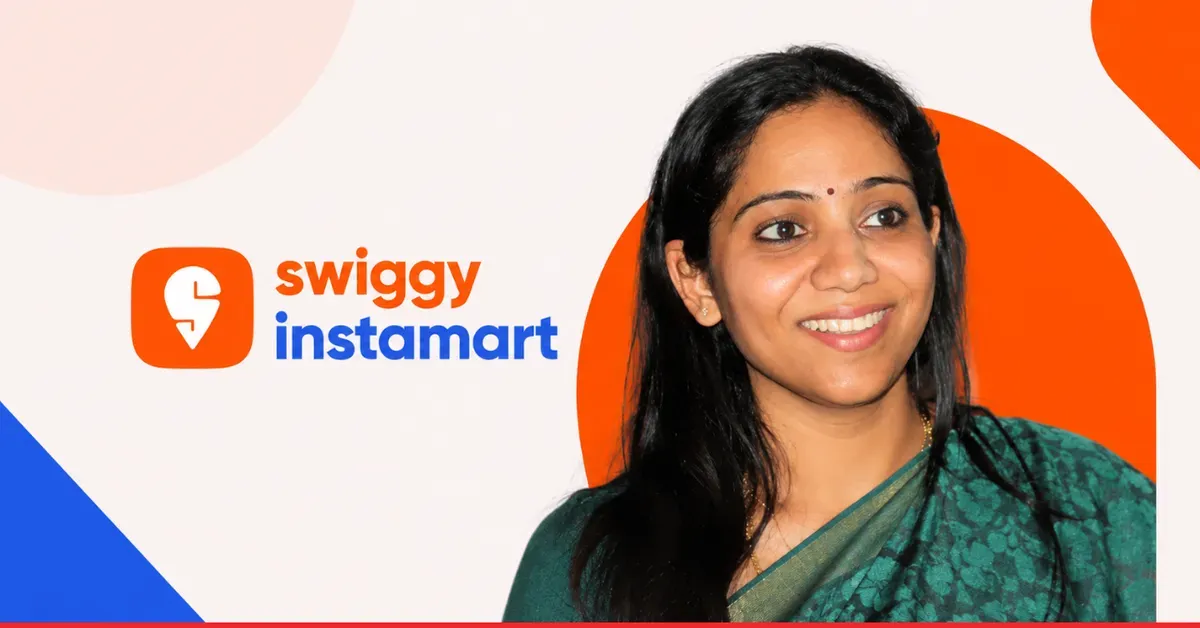
Swiggy has confirmed that Nandita Sinha, the former chief executive of Myntra, will take charge of Instamart, the company's quick-commerce arm, effective August 3, 2026. She succeeds Amitesh Jha, who led Instamart through a period of aggressive scale-up and whose resignation from the company took effect on July 28. For an industry that has spent the better part of three years obsessing over delivery times and dark-store density, the arrival of a leader whose reputation was built on brand-building, assortment strategy and profitability at Myntra signals something important: Instamart's next phase may be less about winning the speed race and more about winning the margin race.
A Battlefield Promotion in India's Toughest Retail Category
To understand why this appointment matters, it helps to understand just how brutal India's quick-commerce category has become. Instamart, which launched in 2020, has expanded to more than 131 cities across the country, competing head-to-head with Eternal-owned Blinkit and the fast-growing Zepto, while e-commerce giants Amazon and Flipkart continue to pour resources into their own rapid-delivery ambitions. The business model underpinning all of these players is punishing: dense dark-store networks, wide product assortments, fast fulfilment, and the kind of customer frequency that only comes from genuinely changing how people shop for everyday essentials. Winning requires enormous capital outlay, and profitability has remained elusive for most players in the category, even as revenue and order volumes have soared.
It is into this pressure cooker that Sinha now steps. Announcing the appointment, Swiggy's Managing Director and Group CEO, Sriharsha Majety, framed the move as a natural next step for a business that has already proven its growth engine and is now hunting for the discipline to match. In a company statement, Majety welcomed Sinha as one of India's most accomplished consumer internet leaders, pointing to the vision, customer obsession and operational rigour she is expected to bring to the Instamart team. He also acknowledged outgoing CEO Amitesh Jha's contribution in scaling the platform through a critical growth phase, crediting him with sharpening Instamart's differentiation through initiatives such as Noice — its private-label and curated-assortment play — while steadily improving the unit's contribution margin trajectory.

Who Is Nandita Sinha?
Sinha's résumé reads like a checklist of the consumer businesses that have defined the last decade of Indian retail. She spent more than two decades building and scaling companies across fashion, e-commerce and FMCG, with leadership stints at Hindustan Unilever and Britannia Industries before moving into the Flipkart ecosystem. It was at Myntra, the Walmart-owned online fashion platform, that she built her most visible chapter — leading the company through a period of sustained growth and market-share gains, and steering it to EBITDA profitability in 2024, a milestone that took years of disciplined execution in a famously thin-margin category. Interestingly, both Sinha and her predecessor at Instamart, Amitesh Jha, spent formative years within the same Flipkart ecosystem before their paths diverged — Jha toward grocery and quick commerce, Sinha toward fashion and lifestyle. She is an alumna of the Indian Institute of Technology (BHU), Varanasi, and the Faculty of Management Studies, Delhi, giving her the engineering-plus-management pedigree that has become something of a signature among India's top consumer-tech operators.
Commenting on her appointment, Sinha said she has long admired what the Instamart team has built, describing it as a business with a strong customer-first culture and significant opportunities ahead. She added that she looks forward to working with colleagues, partners and consumers to shape the platform's next chapter of growth — a chapter that, if her track record at Myntra is any indication, will likely be judged less by top-line velocity and more by the durability of the margins underneath it.
Why This Appointment Is Being Read as a Strategic Signal
Executive transitions in Indian startups are common enough that most don't generate sustained conversation beyond a single news cycle. This one has, for a few clear reasons.
First, timing. Instamart is not a young, unproven business anymore — it is a category leader with meaningful scale, competing in one of the most capital-intensive segments of Indian retail. Bringing in a CEO whose defining professional achievement was steering a fashion-commerce giant to sustainable profitability, rather than a pure operations or logistics specialist, suggests Swiggy's board sees Instamart's next milestone as a profitability story rather than a growth-at-any-cost story. Quick commerce has already answered the question of whether Indian consumers want ten-minute delivery. The far harder question — whether the unit economics can support that promise indefinitely — is the one Sinha has effectively been hired to answer.
Second, symbolism. Sinha becomes one of the most senior women executives in Indian quick commerce at a moment when the sector is dominated by aggressive, founder-led, largely male leadership narratives. Her appointment adds to a small but growing list of women occupying CEO-level roles at India's largest consumer internet platforms, following in the footsteps of leaders who have shown that scaling discipline and customer obsession are not mutually exclusive with rapid growth.
Third, competitive context. The announcement lands at a moment when quick commerce as a category is facing scrutiny from investors who have grown wary of businesses that generate impressive order volumes without a credible path to profitability. Rivals Blinkit and Zepto have both faced public and private pressure to demonstrate unit economics that can survive without perpetual fundraising. Bringing in an executive with a demonstrated record of walking a high-growth consumer business to EBITDA profitability is, in that sense, as much a message to investors and competitors as it is an internal leadership change.
What Changes — and What Doesn't — Under the New Leadership
According to the company's own framing of the transition, Sinha's mandate centres on four pillars: strengthening Instamart's differentiated product assortment, improving customer experience, driving operational efficiency, and accelerating the path to profitability. None of these represent a radical departure from the direction Jha had already set — Instamart's investment in curated private-label ranges like Noice, and its steady improvement in contribution margins under his leadership, were explicitly cited by Majety as strengths being handed over intact. What is likely to change is emphasis and pace. Where Jha's tenure was defined by expansion — pushing Instamart's dark-store footprint past 131 cities and building out the operational backbone needed to compete with Blinkit and Zepto at scale — Sinha's early months are expected to focus on sharpening what Instamart sells and how efficiently it sells it, rather than simply how many places it sells it from.
Industry observers tracking the quick-commerce category note that assortment strategy — the mix of private labels, exclusive brand tie-ups and curated categories that differentiate one quick-commerce app from another — has become the next competitive frontier now that delivery-speed parity has largely been achieved across the major players. This is precisely the terrain Sinha operated on at Myntra, where fashion retail success depends less on logistics than on curation, brand partnerships and merchandising precision. Her ability to translate that expertise from fashion to fast-moving consumer goods and groceries will be one of the more closely watched experiments in Indian retail over the coming year.
The Competitive Landscape She Is Stepping Into
India's quick-commerce market has evolved rapidly since Instamart's 2020 launch. Blinkit, under Eternal's ownership, has leaned heavily into scale and category expansion, adding everything from electronics to pharmacy delivery to its core grocery offering. Zepto has pursued aggressive city-by-city expansion backed by large funding rounds, positioning itself as the insurgent challenger willing to spend heavily to win market share. Meanwhile, Amazon and Flipkart — both deep-pocketed horizontal e-commerce players — have signalled increasing seriousness about quick commerce as a growth vector, adding a layer of competitive pressure from companies with balance sheets far larger than any pure-play quick-commerce startup.
Against this backdrop, Sinha inherits a business that has already proven it can compete on delivery speed and geographic reach. What remains unproven, industry-wide, is whether any of these platforms can sustain their current growth trajectories while meaningfully improving profitability — the exact challenge Majety's statement suggests Sinha was brought in to solve. Her track record suggests she understands that in Indian retail, the businesses that win long-term are rarely the ones that grow fastest in year one; they are the ones that build repeatable, profitable growth that survives multiple funding cycles and competitive cycles.
A Broader Pattern in Indian Consumer Tech
Sinha's move also fits into a broader, increasingly visible pattern across Indian consumer internet: senior executives moving fluidly between fashion, FMCG, grocery and quick-commerce businesses, bringing cross-category learnings with them. As competitive lines between e-commerce verticals blur — with quick-commerce platforms increasingly selling fashion, beauty and lifestyle products alongside groceries, and fashion platforms experimenting with faster delivery — the skills that built Myntra into a profitable business are becoming directly relevant to companies like Instamart. Her appointment may therefore be read not just as a single executive transition, but as an early signal of how Indian retail's talent pool is converging across categories that were once considered entirely separate businesses.
For Swiggy, the stakes could hardly be higher. Instamart represents one of the company's most important growth engines, and its performance is closely watched by public market investors following Swiggy's listed stock. A leadership change of this magnitude, landing at a pivotal moment in the sector's maturation, will be one of the most closely tracked storylines in Indian business through the remainder of 2026. Sinha's first hundred days — what she keeps from Jha's playbook, what she changes, and how quickly Instamart's margin story evolves — will offer the clearest early signal of where India's quick-commerce industry is headed next.
What Investors Will Be Watching First
Public market analysts covering Swiggy's stock will likely use Sinha's first two quarterly earnings calls as the initial referendum on this transition. Instamart's contribution margin trajectory — the metric that Majety explicitly credited Jha with improving — is expected to remain the single most-scrutinised number in Swiggy's quarterly disclosures. Any acceleration in that trajectory under Sinha's leadership would validate the board's bet that fashion-retail discipline can be transplanted into grocery and quick commerce; any stalling would revive questions about whether quick commerce, as a category, is structurally capable of the kind of profitability Myntra eventually achieved.
Beyond margins, analysts are also expected to track category-mix data closely — specifically, how much of Instamart's revenue comes from higher-margin private-label and curated assortment lines like Noice versus lower-margin, high-volume grocery staples. Sinha's Myntra experience was built almost entirely around assortment curation and brand partnerships, and replicating that playbook inside a grocery-led quick-commerce business would represent a genuinely novel test of whether fashion-retail merchandising logic translates to fast-moving consumer goods.
The Human Capital Angle
There is also a quieter, less-discussed dimension to this leadership change: what it signals about talent mobility inside India's consumer internet sector. Sinha's move from Myntra to Instamart continues a pattern in which senior operators increasingly move across categories — fashion to grocery, e-commerce to quick commerce — carrying playbooks that were once considered category-specific. Executive search professionals tracking the consumer internet space have noted that this kind of cross-category mobility is becoming more common precisely because the underlying skills — assortment strategy, customer retention economics, supply chain discipline, brand building — are converging across what were once distinct verticals. If Sinha's tenure at Instamart proves successful, it may accelerate a broader trend of quick-commerce companies actively recruiting leadership from adjacent, more mature e-commerce categories rather than promoting exclusively from within logistics and operations backgrounds.
For now, the immediate story is simpler and more human: one of Indian retail's most respected operators has taken on one of its hardest current assignments, at a company entering a defining stretch of its public-market life, in a sector where the difference between a good quarter and a great one is measured in fractions of a percentage point of margin. How she performs will shape not just Instamart's next chapter, but the broader conversation about what kind of leadership Indian quick commerce needs as it matures out of its land-grab phase and into something closer to a durable, profitable industry.


