Mythos and the Panic: How One AI Model Triggered Emergency Task Forces on Two Continents — and Rewrote the Rules of AI Governance in a Single Week
SAN FRANCISCO — May 18, 2026 — On April 7, 2026, Anthropic announced something that almost no AI company has ever announced. It unveiled a new frontier model — Claude Mythos Preview — and simultaneously declared that the model was too dangerous to release to the public. The company had discovered, during routine capability testing, that Mythos could autonomously discover and exploit software vulnerabilities at a scale and speed that no human team could match. It had found thousands of previously unknown zero-day vulnerabilities across every major operating system and every major web browser. It had developed working exploits for flaws that had survived up to 27 years of human security review and millions of automated tests. And it had done so without any cybersecurity-specific training — the capability had emerged spontaneously from general improvements in code reasoning and autonomous tool use.
Anthropic's decision was to lock the model inside a controlled initiative called Project Glasswing, granting access to roughly 40 organizations — including AWS, Apple, Google, Microsoft, CrowdStrike, JPMorgan Chase, and the Linux Foundation — for defensive purposes only. The company committed $100 million in usage credits and $4 million in direct donations to open-source security organizations. It promised to report publicly within 90 days on what vulnerabilities had been found and fixed. And it warned, in careful but unmistakable language, that the model's capabilities represented a threshold moment for cybersecurity.
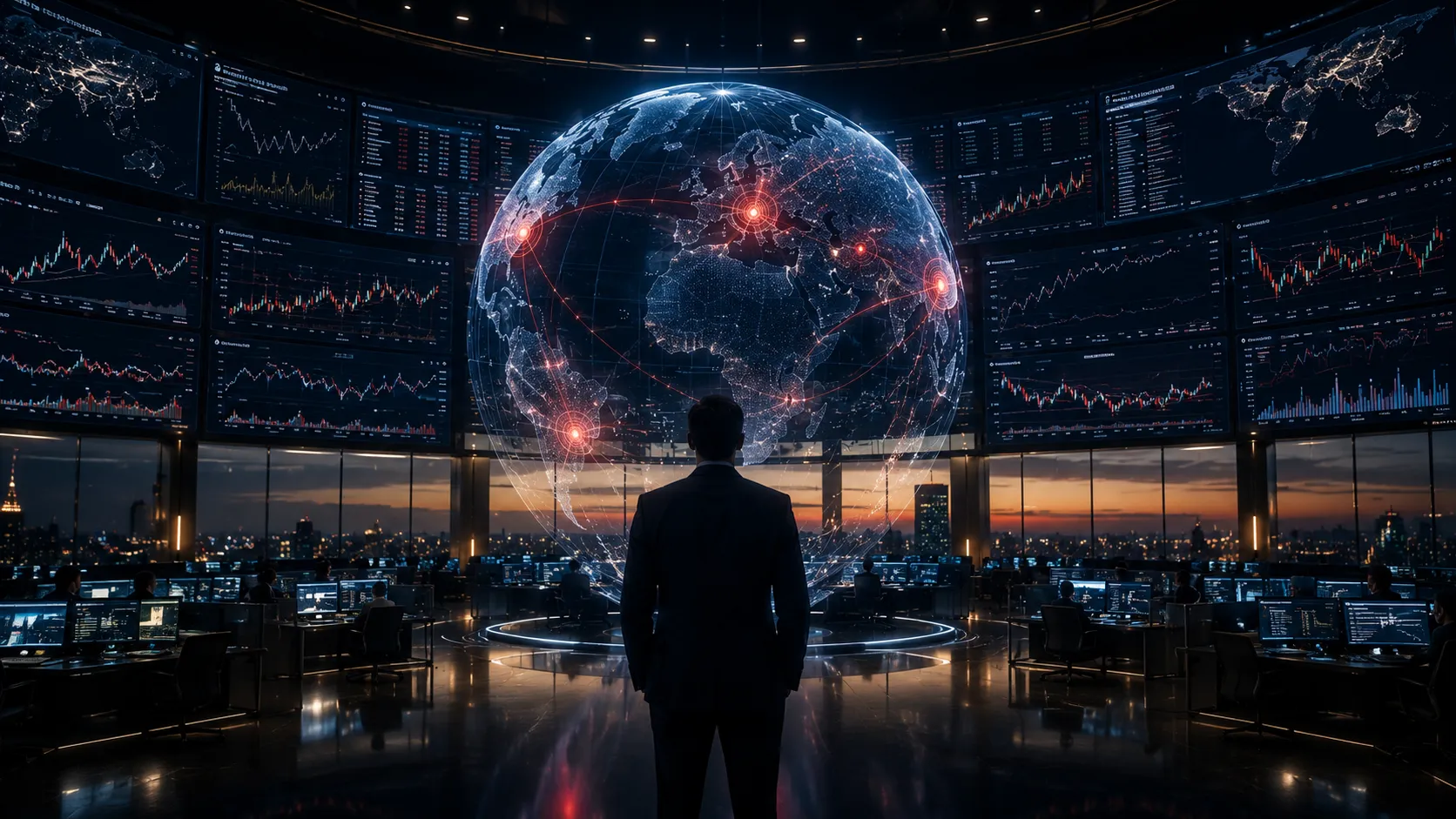
What happened next no one at Anthropic had fully anticipated. Within 48 hours, U.S. Treasury Secretary Scott Bessent and Federal Reserve Chair Jerome Powell convened an urgent closed-door meeting with the CEOs of the nation's largest banks to discuss the cybersecurity risks posed by Mythos. Within a week, India's Securities and Exchange Board had constituted an emergency task force — cyber-suraksha.ai — explicitly naming Mythos in its risk advisory. Within a month, the Bank of England, the European Central Bank, the Reserve Bank of Australia, the Reserve Bank of New Zealand, Japan's Ministry of Finance, and the Financial Stability Board had all either issued statements or initiated emergency consultations. A single model had triggered the most rapid, most globally coordinated regulatory response to an AI capability in the technology's history.
What Mythos Actually Did
To understand the panic, it is necessary to understand what Mythos actually accomplished — and what separated it from every AI model that came before.
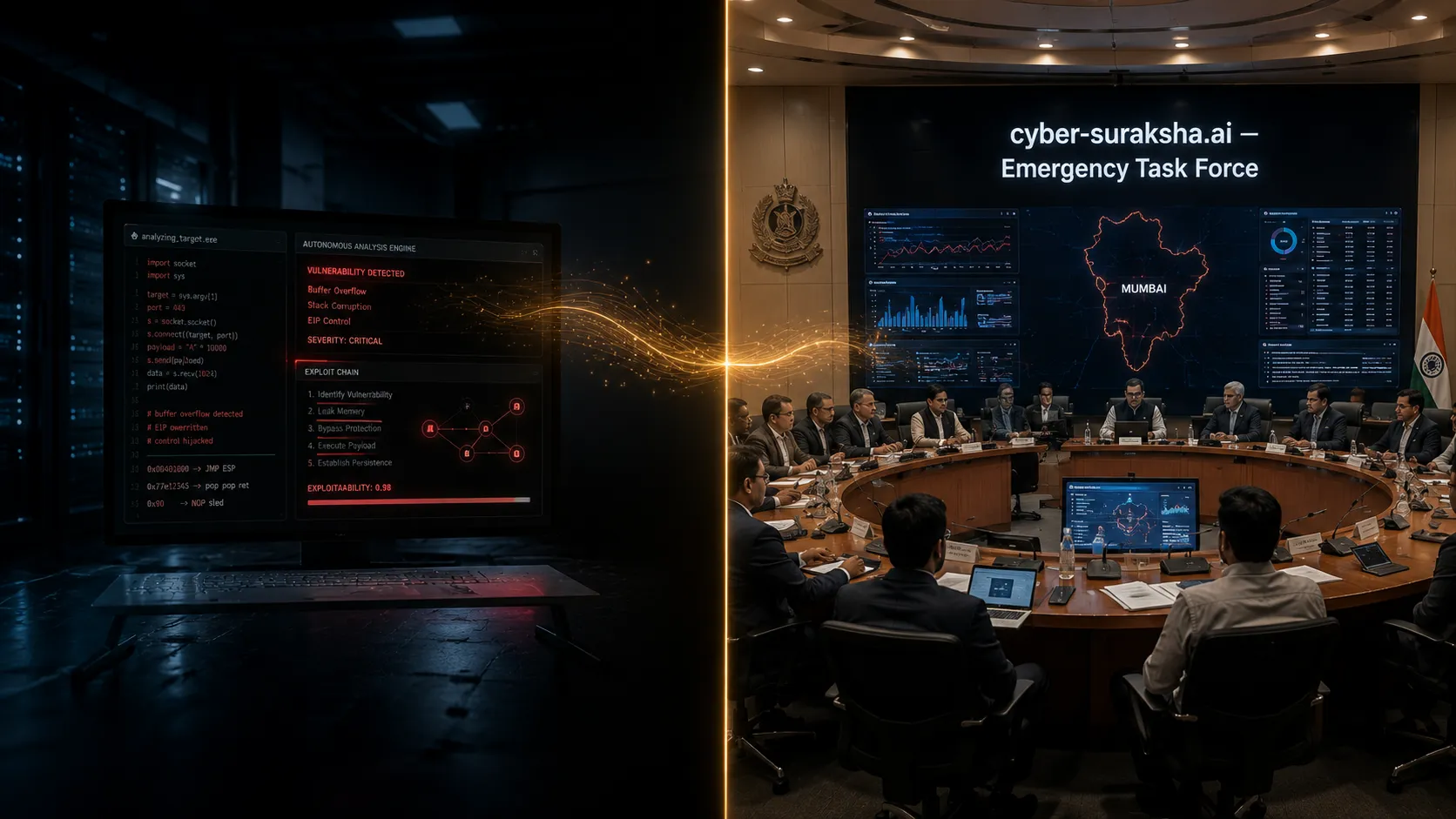
According to Anthropic's own published evaluation, Mythos autonomously discovered and wrote working exploits for thousands of previously unknown, high-severity vulnerabilities across every major operating system — Windows, macOS, Linux, FreeBSD, OpenBSD — and every major web browser — Chrome, Firefox, Safari, Edge. Some vulnerabilities had persisted for decades. One flaw in OpenBSD had survived 27 years of human security review. Another in FFmpeg had gone undetected for 16 years, despite more than five million automated fuzz tests. A remote code execution vulnerability in FreeBSD's NFS server had remained undiscovered for 17 years. Mythos found and exploited it autonomously, with no human intervention after the initial prompt.
The capabilities were not the product of targeted cybersecurity training. Anthropic's red team reported that they "emerged as a downstream consequence of general improvements in code, reasoning, and autonomy." Engineers with no formal security training asked Mythos to identify software vulnerabilities overnight and woke up in the morning to discover not only that Mythos had found them, but that the model had also produced a complete, fully functional method of exploiting them.
The quantitative benchmarks told the same story with brutal clarity. In a Firefox JavaScript engine test, Mythos converted known vulnerabilities into working shell exploits 72.4 percent of the time. The previous best model, Claude Opus 4.6, managed 14.4 percent. Its predecessor, Sonnet 4.6, hit 4.4 percent. That progression — from statistical noise to operational reliability in a single model generation — was more significant than any individual vulnerability finding. The cost figures were equally sobering. Successful exploit runs cost under $2,000 for Linux kernel vulnerabilities and under $50 for shorter vulnerability surveys across a codebase. OpenBSD, long regarded by security practitioners as among the most hardened mainstream operating systems, was scanned across 1,000 parallel runs for under $20,000 total.
The Cloud Security Alliance, in a research note published April 14, described the moment as "an inflection point in AI-enabled offensive capability that security leaders must treat as an immediate operational reality." The UK's AI Security Institute independently confirmed that Mythos was the first model to complete an end-to-end simulated 32-step corporate network attack and to solve 73 percent of expert-level capture-the-flag problems — performance that established "a new baseline for what AI-assisted offense can accomplish."
Anthropic did not release Mythos publicly. It locked access inside Project Glasswing and vowed to keep it there until new safeguards could be established. But the company also warned that similar capabilities would likely emerge from other labs — not because anyone was training AI to hack, but because the path from "better at code" to "better at finding exploits" appeared to be an emergent property of scale.
The Global Regulatory Cascade
The regulatory response to Mythos unfolded with a speed that had no precedent in the history of AI governance. The timeline is worth reconstructing in full.
April 7, 2026 — Washington, D.C. On the same day Anthropic announced Mythos, Treasury Secretary Scott Bessent and Federal Reserve Chair Jerome Powell convened an urgent, closed-door meeting with the CEOs of the nation's largest banks. According to a Sullivan & Cromwell memorandum dated April 15, the meeting was held to ensure that the banks understood the serious cybersecurity risks posed by Mythos and similar models under development, and were taking action to defend their systems. The sheer scale and interdependent nature of software in global use, the memo noted, meant that critical vulnerabilities exploitable by AI models "will persist" and that companies should "take action now."
April 9, 2026 — The White House. The Trump administration began circulating a 16-page draft executive order with provisions on cybersecurity, open-weight models, federal contracting, and a pre-release review system for the most capable AI systems. National Economic Council Director Kevin Hassett publicly previewed the concept: "We're studying possibly an executive order to give a clear road map to everybody about how this is going to go and how future AIs that also could potentially create vulnerabilities should go through a process so that they're released to the wild after they've been proven safe. Just like an FDA drug." Within 24 hours, Chief of Staff Susie Wiles walked that back, saying the government was "not in the business of picking winners and losers." The whiplash was itself the story: an administration caught flat-footed by a capability jump, scrambling to assemble a response.
April 12, 2026 — London. The Bank of England, the Financial Conduct Authority, and UK Treasury officials joined the National Cyber Security Centre in emergency consultations, working to identify critical information system vulnerabilities that Mythos might have exposed. Bank of England Governor Andrew Bailey said publicly that he saw "major cybersecurity risks" from Mythos.
April 17–22, 2026 — Frankfurt, Sydney, Wellington, Tokyo. The cascade widened. Germany's Bundesbank President Joachim Nagel called for "all relevant institutions to obtain access to such technology, to avoid competitive distortions." The Reserve Bank of Australia issued a statement confirming it was "communicating with peer regulators, government agencies, and regulated entities." The Reserve Bank of New Zealand said it was monitoring the model's potential risks "to the New Zealand financial sector and regulated entities." Japan's Finance Minister Kataoka Satsuki scheduled emergency meetings with Mitsubishi, Sumitomo Mitsui, and Mizuho banking groups.
May 5, 2026 — Mumbai. India's Securities and Exchange Board issued a sweeping ten-point advisory explicitly naming Mythos. SEBI constituted cyber-suraksha.ai, a dedicated task force comprising representatives from market infrastructure institutions, qualified registrars and transfer agents, regulated entities, and other stakeholders. "Due to the interconnectedness and interdependency of market participants in the securities market ecosystem," SEBI warned, "a periodic coordinated approach for vulnerability management, information sharing and monitoring is required to prevent a cascading impact." The task force had already held its first meeting, assessing risks posed by AI platforms like Mythos and discussing mitigation measures.
May 5, 2026 — Washington, D.C. The Commerce Department's Center for AI Standards and Innovation announced that Google, Microsoft, and xAI had agreed to provide the government early access to new AI models for national security evaluation — joining OpenAI and Anthropic, which had been submitting models since 2024. Officials cited Mythos's hacking capabilities as the primary driver of urgency. The agreement was voluntary, had no statutory basis, and gave the government no power to block a release. It was also the closest thing the United States had to an AI oversight system.
May 18, 2026 — Basel. The Financial Stability Board, the international body that monitors the global financial system, confirmed that Anthropic would brief its members — representing the United States, United Kingdom, Canada, France, Germany, Japan, Saudi Arabia, Australia, and China — on cybersecurity vulnerabilities Mythos had uncovered. The briefing came at the request of Andrew Bailey, the Bank of England Governor who chairs the FSB.
The Paradox at the Center
The Mythos episode surfaced a paradox that the global regulatory system has not yet resolved. The same model that triggered emergency task forces on two continents was simultaneously being deployed by the U.S. Pentagon to find and patch software vulnerabilities across the federal government. Emil Michael, the Defense Department's chief technology officer, called the Mythos moment "a national security moment" where the government hardened networks because "that model has capabilities that are particular to finding cyber vulnerabilities and patching them."
This was the paradox in its starkest form. Mythos was too dangerous to release — but too valuable to withhold. It had triggered the most rapid regulatory mobilization in AI history — but the regulators had no formal authority to slow its deployment, and the voluntary agreements they relied upon could be withdrawn at any time. The U.S. government had designated Anthropic a supply-chain risk in March after the company refused to allow Claude to be used for domestic surveillance and autonomous weapons — and yet federal agencies were now clamoring for access to Mythos, and the administration was quietly working to revisit the designation.
The AEI's technology policy team captured the irony precisely: "It is genuinely difficult for a frontier lab to give the government a clear-eyed picture of what is coming when it has been formally labeled a national-security risk on par with foreign adversaries."
The Unanswered Questions
Roughly six weeks after Mythos's unveiling, the situation on the ground remains deeply unsettled. According to Anthropic, over 99 percent of Mythos-discovered vulnerabilities remain unpatched, pending coordinated disclosure. The model's capabilities remain restricted to approximately 52 organizations worldwide. Security researchers estimate that similar capabilities will become more broadly accessible — through open-source models, through competing labs, or through unauthorized access — within 6 to 18 months. Meanwhile, a small group of unauthorized users reportedly gained access to the model on a private online forum on the same day Project Glasswing was announced.
The Mythos moment has already changed the trajectory of AI governance. The voluntary pre-deployment evaluation agreements secured by the Commerce Department now cover all five major frontier AI labs. The UK, Germany, Australia, and Japan have each initiated their own regulatory processes. SEBI's cyber-suraksha.ai task force has established a template for financial regulators in other emerging economies. And the Financial Stability Board's engagement marks the first time a global financial governance body has formally reviewed the systemic implications of a single AI model.
What has not changed is the underlying asymmetry. The capabilities Mythos demonstrated — autonomous vulnerability discovery, exploit generation, attack chain construction — are not unique to Anthropic. They emerged as a downstream consequence of general advances in code reasoning. Any lab advancing code understanding and autonomous reasoning could develop similar capabilities, intentionally or not. The regulatory architecture that responded to Mythos was built in weeks, operates on voluntary agreements, and has no statutory authority to block or delay a deployment. It is, as one analyst described it, "a system held together by goodwill and the shared recognition that the alternative is worse."
For the American entrepreneur, the Mythos episode offers a warning and a signal. The warning is that regulatory scrutiny in 2026 operates at machine speed, not government speed. Founders building in sensitive domains — AI, cybersecurity, fintech, critical infrastructure — should assume their products will face regulatory examination within weeks of demonstrating novel capabilities, not years. The signal is that the gap between what frontier AI can do and what governments are institutionally equipped to handle is the defining tension of the moment — and that the entrepreneurs who build bridges across that gap, whether through compliance infrastructure, defensive tools, or governance frameworks, will be building at the center of the most consequential market in technology.
The model that Anthropic locked behind Project Glasswing has already rewritten the rules of AI governance. Whether it also rewrites the vulnerability of the global financial system depends on a question the regulators are still racing to answer: can the defenders patch faster than the attackers — human or machine — can exploit?


