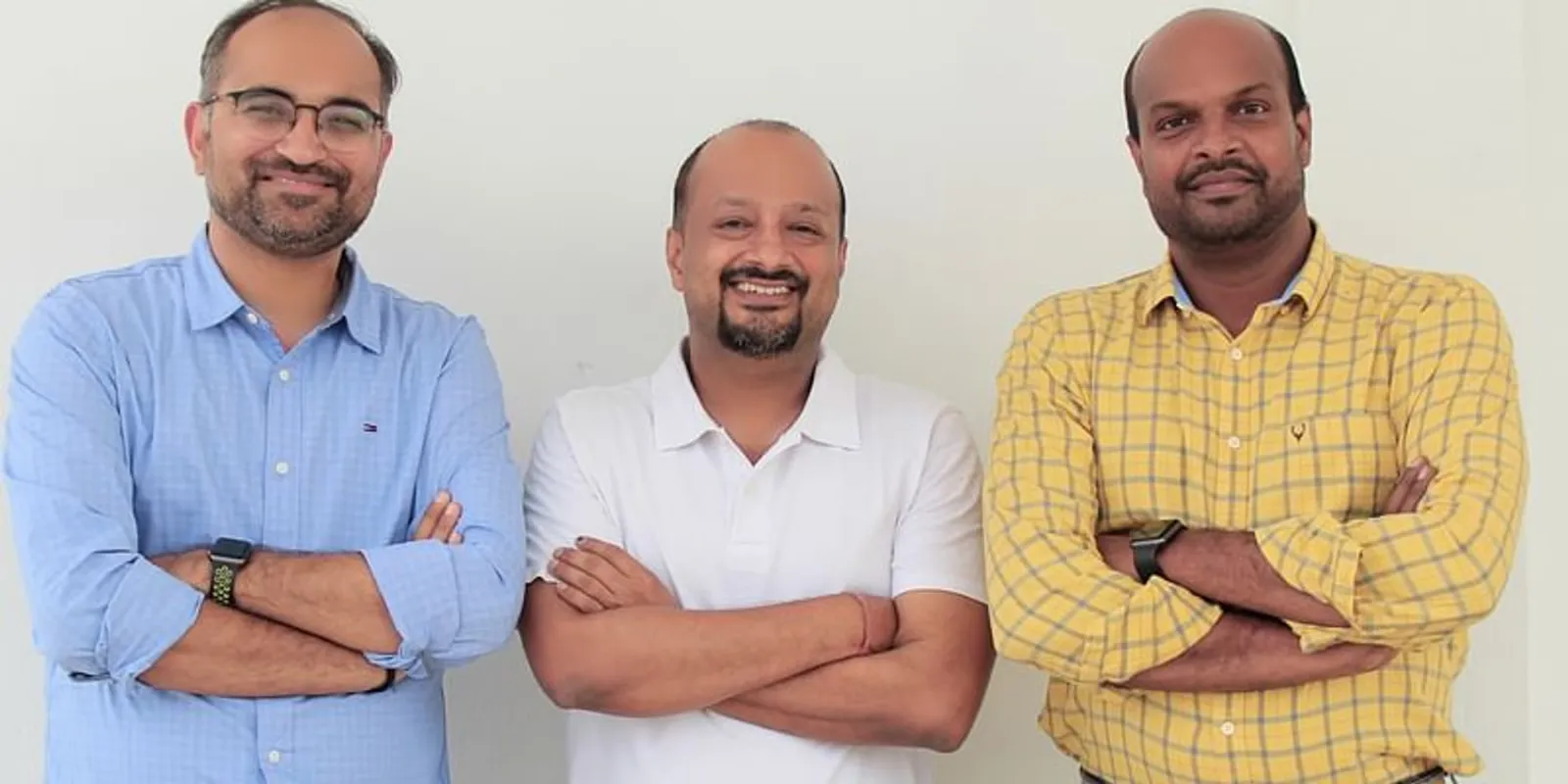
An IITian Took a Job as a Security Guard to Understand the Problem He Wanted to Solve. That Is How MyGate Got Built.
The founding story of MyGate begins not in a boardroom, not in a startup incubator, and not in a venture capital conversation. It begins at a gate.
Abhishek Kumar is an IIT Kharagpur graduate. Before founding MyGate, he wanted to understand what it actually felt like to be a security guard at a residential community — the person at the physical intersection of everything that was dysfunctional about how India's gated communities managed visitor entry, resident communication, and daily security operations. So he took the job. He worked as a security guard. He observed from the inside what the inefficiency looked like at ground level: the manual visitor logbooks, the paper systems, the guards managing dozens of simultaneous decisions without any technology to help them, the residents with no visibility into who was entering their building, the committee management buried in paperwork.
That experience became MyGate's product specification.
Founded in 2016 in Bengaluru by Kumar, Shreyans Daga, Vijay Arisetty, and Rohit Jindal, MyGate was built to replace the manual, paper-based, error-prone entry management systems that governed India's growing population of gated residential communities with a digital platform that connected guards, residents, management committees, and visitors in a single unified system.
Eight years later, that system is the infrastructure of daily life for 5.7 million households across more than 27,000 residential communities in India. On June 10, 2026, MyGate raised ₹225 crore from Dharana Capital to fund the next phase of building that infrastructure toward 10 million homes.
What MyGate Actually Solves — and Why the Market Is as Large as It Is
India's gated community landscape is the result of a specific urban development pattern that accelerated from the early 2000s onward. As Indian cities grew, the market for secured, managed residential developments expanded rapidly — apartment complexes and housing societies with controlled entry points, resident welfare associations, shared amenity management, and a security layer that separated residents from the general public circulation of the city around them.
The problem this created was, until MyGate, managed almost entirely through paper. A visitor arriving at the gate was recorded in a logbook. The guard called the resident on an intercom. The resident verbally approved entry. The guard manually lifted the boom barrier. Every delivery, every maid, every relative, every maintenance worker went through the same process. At communities with thousands of residents and hundreds of daily entries, the bottleneck and the security risk were both structural.
MyGate replaced this with a smartphone-based platform that connects every actor in the system. A visitor arrives at the gate; the guard scans their ID or manually enters their details into the MyGate app; the system sends a notification to the resident with the visitor's information and a one-tap approval or denial. Frequent visitors — delivery staff, domestic help, regular guests — can be pre-approved with recurring access credentials. Residents who are away can manage entry remotely. Guards have a digital record of every entry and exit. Management committees can access real-time data on community operations.
The product has expanded well beyond visitor management since the early days. MyGate ERP handles society accounting and payments — monthly maintenance collections, utility bills, expense tracking, annual budget management — the financial operations of a residential welfare association that in many communities involved Excel spreadsheets and committee volunteers managing crores of rupees with inadequate tools. A resident communication module handles notices, announcements, polls, and community-wide communications. A facility booking system manages shared amenities. A complaint and support ticket system handles maintenance requests and escalation management.
And in June 2025, MyGate launched Lock Pro 2.0, described as India's first smart lock with a sixth sense. The product integrates directly with the MyGate platform, adding hardware-level access control to the software-level visitor management system and creating the possibility of a fully integrated digital security and access management solution that spans from the community gate to the individual apartment door.
The Funding Journey — and the Seven-Year Gap That Explains a Lot
MyGate's funding history has a distinctive shape that says something important about how the company was built.
The company raised through a seed round and a Series A in 2018, attracting backing from Monteverdi and Prime Venture Partners. Then, in October 2019, it raised $56 million in a Series B round — the largest community management platform funding in India's history at that point — from Tiger Global, Tencent, and others. Tiger Global and Tencent are not casual investors in community management software. Their participation at this scale confirmed that MyGate had moved from an interesting product to a platform with the network effects and user engagement characteristics that institutional investors recognise as durable.
Then came the COVID-19 period, which demonstrated something about MyGate's value proposition that no marketing campaign could have engineered: a global pandemic that made contactless entry, visitor screening, and remote access control into urgent public health requirements proved definitively that MyGate's product was not a convenience tool. It was infrastructure.
In 2022, a strategic investment of $12 million arrived from Urban Company and Acko — two companies with significant overlapping user bases in the urban residential market, whose partnership with MyGate created commercial integration opportunities in home services and insurance that the platform could not have created independently.
And then nothing in equity for over three years.
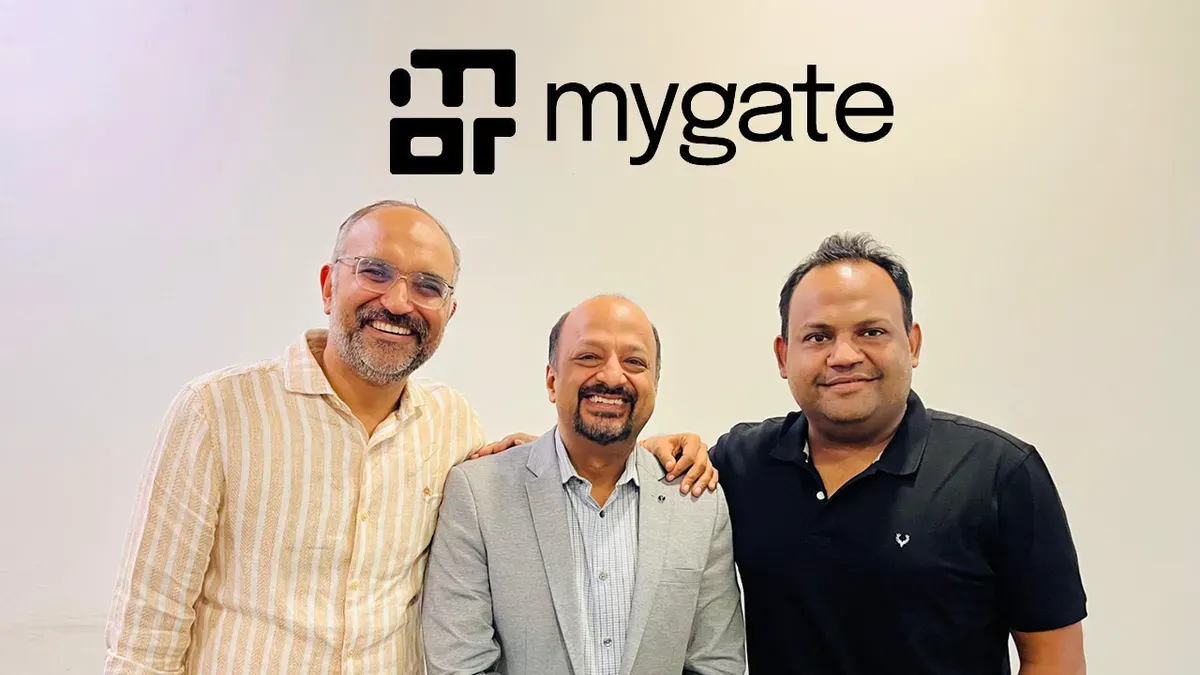
That gap — from October 2022 to June 2026 — is the period during which MyGate built the financial performance that the Dharana Capital round is now backing. In FY25, operating revenue reached ₹173.5 crore, up 80 per cent from ₹96.2 crore in FY24. The company made significant progress on profitability during the same period. The Dharana Capital investment of ₹225 crore arrived not as a lifeline to a company struggling to sustain itself, but as growth capital for a company that had demonstrated it could grow revenue at 80 per cent annually without being dependent on continuous external funding to do so.
Dharana Capital acquired approximately 12 to 14 per cent of the company through a combination of fresh capital infusion and secondary share purchases. India Today valued the company at ₹1,600 crore ahead of the Dharana round in July 2025, and the structure of the Dharana investment implies a valuation at or above that level.
The Leadership Evolution
The June 2026 funding round arrived alongside a significant leadership evolution at the company.
Rohit Jindal, who had been Chief Business Officer at MyGate since its early years, was promoted to Co-Founder status in June 2025 — a recognition of his contribution to building the commercial and business development dimensions of the platform over the course of nearly a decade. Simultaneously, Pranav Shankar moved into the CTO role.
Abhishek Kumar remains the CEO. His background — the IIT credential combined with the decision to start at the bottom of the problem he wanted to solve — has shaped a company culture that prioritises operational depth over promotional storytelling. MyGate does not generate the kind of media attention that the most glamorous Indian startup categories attract. It generates the kind of user trust that comes from being the first thing a resident interacts with every time they enter their building, and the system that a managing committee relies on every month when it processes hundreds of residents' maintenance payments.
That operational intimacy with daily life is the moat. A residential community that has integrated MyGate into its gate security, its accounting, its amenity management, and its resident communications does not switch to a competitor without significant disruption. The switching cost is not the subscription fee — it is the muscle memory of 5,000 residents and the data infrastructure of three years of community financial records.
The Path to 10 Million Homes
The ₹225 crore from Dharana Capital is earmarked for platform expansion, product innovation, and technology infrastructure — with the explicit goal of growing from 5.7 million households to 10 million homes.
The arithmetic of that target reflects the scale of the opportunity. India has approximately 70,000 to 80,000 registered RWAs and residential society management committees. MyGate currently serves approximately 27,000 communities. The addressable market within the existing defined gated community segment is significantly larger than the current customer base. And as India's urbanisation continues and the supply of new residential developments keeps expanding, the total market grows every year.
The partnership with RentenPe, announced in June 2025, to streamline rent payments within the MyGate platform adds a revenue stream that sits naturally within the existing user relationship: residents who already use MyGate for entry management and maintenance payments are natural candidates for a rent payment product that keeps their financial transactions within the same platform.
The Lock Pro 2.0 smart lock, the RentenPe rent payment integration, the continued expansion of the MyGate ERP, and the geographic expansion into new cities and tier 2 markets are all expressions of the same underlying strategy: deepen the platform's integration into the daily operational reality of residential communities until MyGate is not just one of the apps residents use, but the operating system for the building they live in.
The security guard who worked at a gate in Bengaluru in 2016 to understand what the problem actually looked like understood something that most tech entrepreneurs do not find out until much later: the unglamorous, daily, repeated small interactions of residential life are where the most durable platforms get built. Not in the moments that make for good product demos. In the moments that happen 50 times a day, every day, year after year, without fail.
MyGate has been those moments for 5.7 million households. Ten million is the next target. The platform that earned those 5.7 million is the one that will reach the next 4.3 million. One gate at a time.


