"My Daughter Was 11, and I Realised She Was Eating Chemicals": The Mother Whose Kitchen Became a 55,000-Unit-a-Month Organic Food Brand—Built With 85% Women, Zero Pesticides, and a Single Question
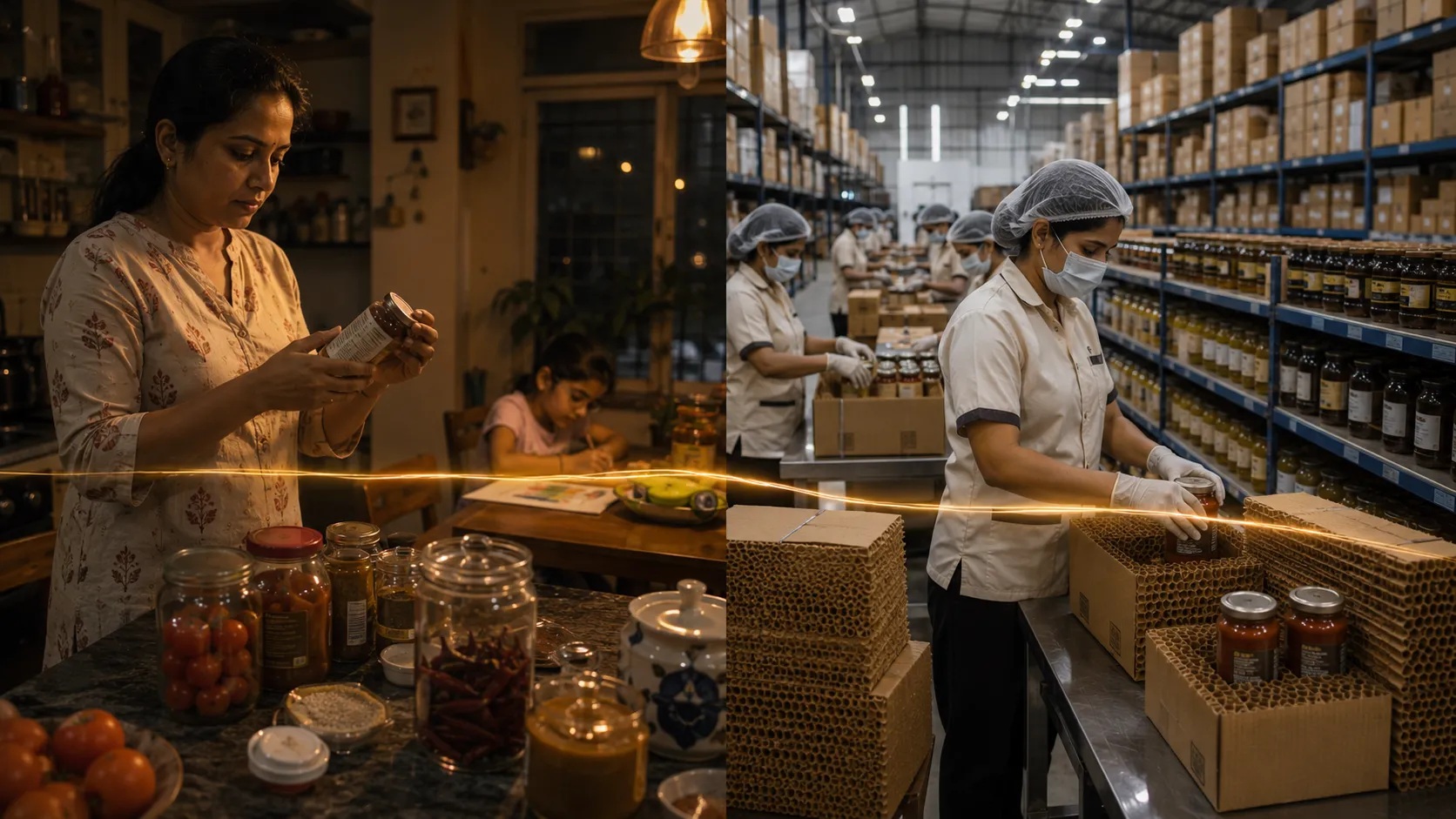
BENGALURU — May 26, 2026 — In 2017, Archana Surana stood in her kitchen in Bengaluru and did something that millions of Indian mothers have done before her. She read a food label. Not casually—not the way a hurried shopper scans the front of a package for the words "natural" or "healthy"—but forensically, the way a mother reads a label when she has begun to suspect that the food she is serving her child is not what it claims to be. Her daughter was 11 years old. The tomato ketchup the child loved was loaded with sugar, preservatives, and artificial colours. The sauces that made dinner appetising were thickened with modified starches and stabilised with chemicals she could not pronounce. The snacks that filled the gaps between meals were engineered for shelf life, not nutrition. "I realised that I was surrounded by food that lacked natural goodness," she told Flipkart Stories. "The idea for the brand grew from a personal need for wholesome, clean, truly healthy nutrition. As a mother, it was concerning. I wanted food I could confidently serve to my children and help other mothers struggling with the same."
She did not have a business plan. She had a conviction—forged across months of reading labels, researching ingredients, and the quiet, accumulating horror of discovering that the foods she had trusted were not worthy of that trust. She began experimenting in her kitchen, starting with a tomato-based product—a ketchup made from organic tomatoes, jaggery instead of refined sugar, and spices instead of chemical preservatives. She tested it on her daughter. Her daughter loved it. She tested it on neighbours. They asked for more. She began to realise that the problem she was solving for her own family was a problem that millions of Indian families were facing—and that the market for genuinely clean, honestly labelled, organic food was far larger than the industry believed.
Her husband, Priyabrata Das—an agricultural engineer from Odisha University of Agriculture and Technology who had also completed a business management programme in sales and marketing from IIM Calcutta—brought the strategic expertise to complement her product vision. "I'm an agri-engineer," he told Flipkart Stories. The early days for the duo were marked by personal investment and a hands-on approach. They began with small batches, testing recipes, and building their brand one customer at a time. They called it NaPuOr—Naturally Pure Organic—and they built it on a philosophy that was as simple as it was radical in an industry defined by shortcuts: if a product could not be made without chemicals, it would not be made at all.
The Agri-Engineer and the Mother Who Built a Supply Chain From Scratch
The most strategically significant dimension of NaPuOr is not the products or the revenue. It is the supply chain. Archana and Das did not simply source organic ingredients from wholesalers and repackage them under their own label—the standard practice for most "organic" brands. They built relationships directly with farming communities, many of them practising Zero Budget Natural Farming, a method that uses no chemical pesticides or fertilisers and that produces food that is genuinely organic, not merely certified as such.
Das's background in agricultural engineering gave him an understanding of what this would require that most food entrepreneurs lack. "Many of these communities are using ZBNF," he explained. "They don't use any chemical pesticides or fertilisers which are artificially induced." The couple sought out farmers in Jharkhand, Odisha, and Karnataka who were already practising natural farming, built relationships with them over years, and created a supply chain that was rooted in the communities rather than in the commodity markets. The farmers who supply NaPuOr are not anonymous vendors selling to the highest bidder. They are partners in a vision that extends well beyond any single transaction—a vision of a food system in which the people who grow the ingredients are paid fairly, treated with dignity, and connected directly to the consumers who eat what they produce.
The company's approach to recruitment mirrored its approach to sourcing. "Initially it was more of a kind of adopting a village or people whom we know," Das said. "For example, in Jharkhand, we work with women entrepreneurs on a regular basis." The phrase is revealing. The couple did not recruit employees through job portals or placement agencies. They recruited through relationships—through the networks of trust that connect rural communities, through the women's self-help groups that are often the most reliable sources of labour in Indian villages, and through the simple, old-fashioned process of asking people they knew whether they wanted to work.
The result is a workforce that is 85 percent women, drawn largely from the same communities that supply the company's raw materials. "We have around 55 members in our team, out of which 85% are women, and it's increasing day by day," Archana told Flipkart Stories. The women who work at NaPuOr are not just employees. They are participants in a value chain that connects the farm to the factory to the customer, and their presence at every stage of that chain is not an accident. It is the operating model of the business. The company has been recognised for its women-led workforce, its engagement with ZBNF communities, and its commitment to building a supply chain that is as ethical as it is efficient. Business Connect Magazine named Archana "Most Trusted Woman Entrepreneur of the Decade in Food & Technology – 2026"—a title that reflects not just the commercial success of the brand, but the philosophy that underpins it.
The 15-Round Testing Protocol
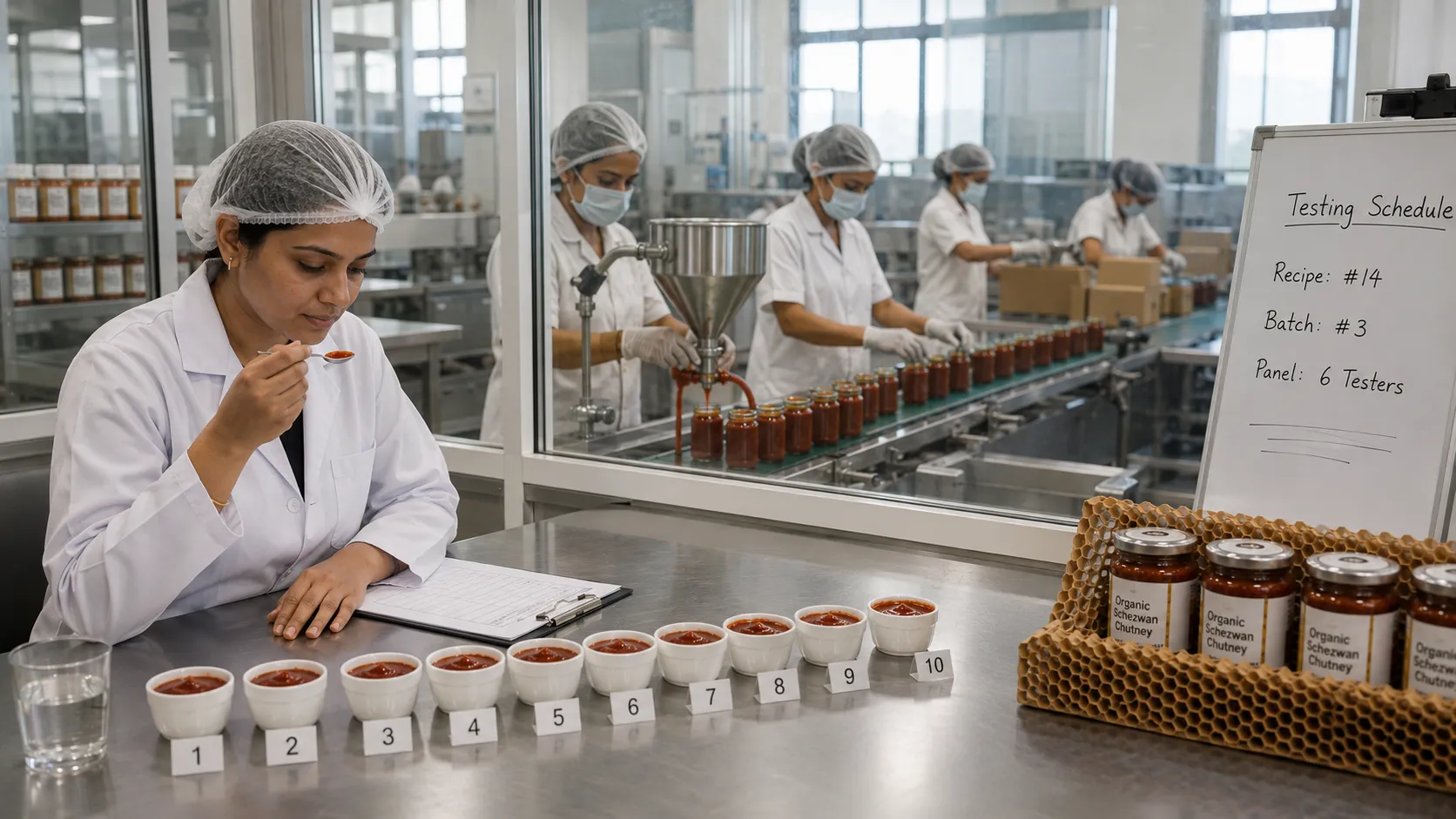
The single most impressive operational detail in the NaPuOr story is not the revenue or the dispatch volume. It is the testing protocol. Every new recipe that Archana develops undergoes 10 to 15 rounds of blind testing before it is approved for launch. "Over time, every new recipe undergoes 10-15 rounds of blind testing to ensure it is foolproof before launch," she said. The protocol is not a marketing claim. It is an operational reality, and it reflects a commitment to quality that is almost unheard of in the Indian packaged-food industry, where most brands launch products after a handful of internal tastings and adjust the recipe based on customer complaints.
The commitment extends to packaging. The couple invested considerable time and money to develop patented honeycomb seven-ply corrugated boxes—packaging designed specifically to protect glass jars during the rigours of e-commerce delivery. "We invested considerable time and money to create honeycomb seven-ply corrugated boxes, which are patented," Das said. "We even designed custom die molds for the different-shaped glass jars to protect them during transit." The packaging innovation is not glamorous, but it is strategically significant. In the e-commerce food business, breakage is a cost that can destroy margins and erode customer trust. The company that invests in solving the breakage problem is investing in the customer experience, and the investment pays for itself in reduced returns, fewer complaints, and the kind of quiet, reliable quality that builds a brand over years.
The product portfolio has grown steadily from that first tomato-based product in 2017. The hero products now include organic tomato ketchup, Schezwan chutney, and pasta sauce—the condiments that are among the most chemically adulterated categories in the Indian food industry. These are complemented by green tea, bilona ghee, rice bran oil, instant coffee, and wild raw honey—each one sourced from farmers who practise natural methods, each one tested for purity, and each one labelled with a transparency that the industry has spent decades avoiding. "I wanted food that was delicious and nutritionally rich, preservative-free, and honest," Archana said. The statement is simple. The execution is not. Building a food brand that is genuinely preservative-free—that does not rely on the chemical stabilisers, artificial colours, and synthetic flavourings that the rest of the industry treats as essential—requires a level of operational discipline that most startups cannot sustain. NaPuOr has sustained it for nearly a decade, and the discipline has become the foundation of the brand.
The company dispatches between 45,000 and 55,000 units every month—a volume that places it among the more significant organic food brands in the country. Its customer base is concentrated in Maharashtra and Gujarat, followed by Northern and Central India, and the brand is available on Flipkart, Amazon, Blinkit, Swiggy, and other quick-commerce channels. The couple chose a technology-first, direct-to-consumer model from the beginning, onboarding onto Flipkart as early as 2018. "E-commerce allows us to directly connect with our customers, understand their needs, and deliver right to their doorsteps," Archana said. The decision to embrace e-commerce early was strategic. It allowed the brand to reach customers across India without the expensive, relationship-intensive process of building a physical retail presence, and it gave the couple access to the data and feedback loops that have enabled them to refine their products continuously.
The Trust Economy
The most powerful dimension of the NaPuOr story is not the products or the supply chain. It is the philosophy that Archana has articulated with a clarity that is rare in the food industry—a philosophy rooted in a single word that the industry has spent decades eroding: trust.
"True to its name, Napuor Organics reflects Archana's belief that food should nourish not only the body, but also trust," Business Connect Magazine wrote in its profile of the company. The sentence captures something essential about the brand. NaPuOr is not a marketing exercise. It is a response to a structural failure—the failure of the Indian food industry to tell the truth about what is in its products. The consumer who buys a bottle of "organic" ketchup from a conventional brand has no way of knowing whether the tomatoes were grown with pesticides, whether the sugar was refined, or whether the "natural flavours" listed on the label were synthesised in a laboratory. The consumer who buys a bottle of NaPuOr ketchup is making a different kind of purchase. She is buying a promise—that the ingredients are what they claim to be, that the processes are what they claim to be, and that the company that made the product has staked its reputation on the truth of those claims.
The trust economy is not new, but it is newly powerful. The same consumers who have rejected factory-made food, factory-made furniture, and factory-made fashion are now looking at their kitchen shelves and asking the same questions they have asked of every other product category: where did this come from, who made it, and what did they use to make it? The food brands that can answer those questions honestly—that can trace their ingredients back to the farmers who grew them, that can demonstrate the absence of the chemicals that the rest of the industry treats as essential, and that can build a reputation for trustworthiness that compounds over years—will capture a disproportionate share of the value the food industry creates over the next decade. NaPuOr is one of those brands. It is small, by the standards of the giants it competes against. But the trust it has built is not small, and the trust is the moat.
The broader context is an Indian packaged-food industry that is in the early stages of a structural transformation. For decades, the industry was defined by a single, crushing assumption: that Indian consumers would not pay a premium for quality. The assumption was reasonable, given the realities of a market in which the vast majority of consumers were price-sensitive and the demand for organic, natural, and preservative-free products was limited to a tiny, affluent elite. The assumption is now breaking. The same forces that reshaped food in the West—rising incomes, greater access to information, and a growing awareness of the connection between diet and health—are now arriving in India with generational force, and the companies that established themselves in the organic and natural segment early will capture a disproportionate share of the value those forces create. NaPuOr is not the largest organic brand in India, but it is among the most principled—and in a market where trust is the scarcest commodity, principle is a competitive advantage that no amount of advertising can replicate.
What This Signals
The NaPuOr story is not primarily about organic ketchup. It is about the collision of two structural crises that are reshaping the Indian food system—and about the couple who are building a business at the intersection of both.
The first crisis is the erosion of trust in the processed-food industry. The Indian consumer has spent decades being told that the food on supermarket shelves is safe, nutritious, and honestly labelled. The consumer has gradually discovered that much of it is none of those things—that the "fruit juice" is mostly sugar water, that the "whole wheat bread" is mostly refined flour with caramel colouring, and that the "natural flavours" were synthesised in a laboratory and have never been anywhere near the ingredient they claim to represent. The discovery has produced a crisis of confidence that is reshaping the food industry from the ground up, and the brands that can restore that confidence—that can demonstrate, with transparency and consistency, that their products are what they claim to be—will capture a market that is measured in the tens of thousands of crores.
The second crisis is the structural neglect of the Indian farmer. The same food system that has failed the consumer has also failed the producer. The farmers who grow the ingredients for India's packaged-food industry are paid commodity prices that reflect the cost of the raw material rather than the value of the finished product, and the intermediaries who connect the farm to the factory capture the margin that should belong to both. NaPuOr's supply chain—its direct relationships with ZBNF farming communities, its commitment to fair pricing, and its integration of rural women into its workforce—is a response to that crisis. The company is not a charity. It is a business, and it must generate returns to survive. But the returns are generated through a model that shares value with the people who create it, rather than extracting value from them and calling the extraction efficiency.
Archana Surana is no longer the mother who stood in her kitchen, reading a food label, horrified by what she found. She is the founder of one of India's most principled organic food brands, the recipient of a national award for trust and transparency in food technology, and the quiet, persistent embodiment of a truth that the food industry has spent decades learning: that the consumer is not stupid, that the mother who reads a label is not an anomaly, and that the company that tells the truth about its ingredients will eventually be rewarded with the loyalty of the customers who have been lied to for too long. The 11-year-old daughter who inspired the first batch of tomato ketchup is now a young woman. The kitchen where that batch was made is still there, in Bengaluru, but the company it produced has outgrown it. The 55,000 units that leave the warehouse every month are not just products. They are arguments—that food can be honest, that business can be ethical, and that a mother's concern for what her child eats can become the foundation of a brand that thousands of other mothers trust. The chemicals are still out there, on the supermarket shelves, in the products that Archana once trusted without reading the label. But the alternative is now available. The brand that began in a mother's kitchen is still growing. The trust is still compounding. The question she asked in 2017—what am I feeding my daughter?—has been answered, jar by jar, for thousands of families who are asking the same question today


