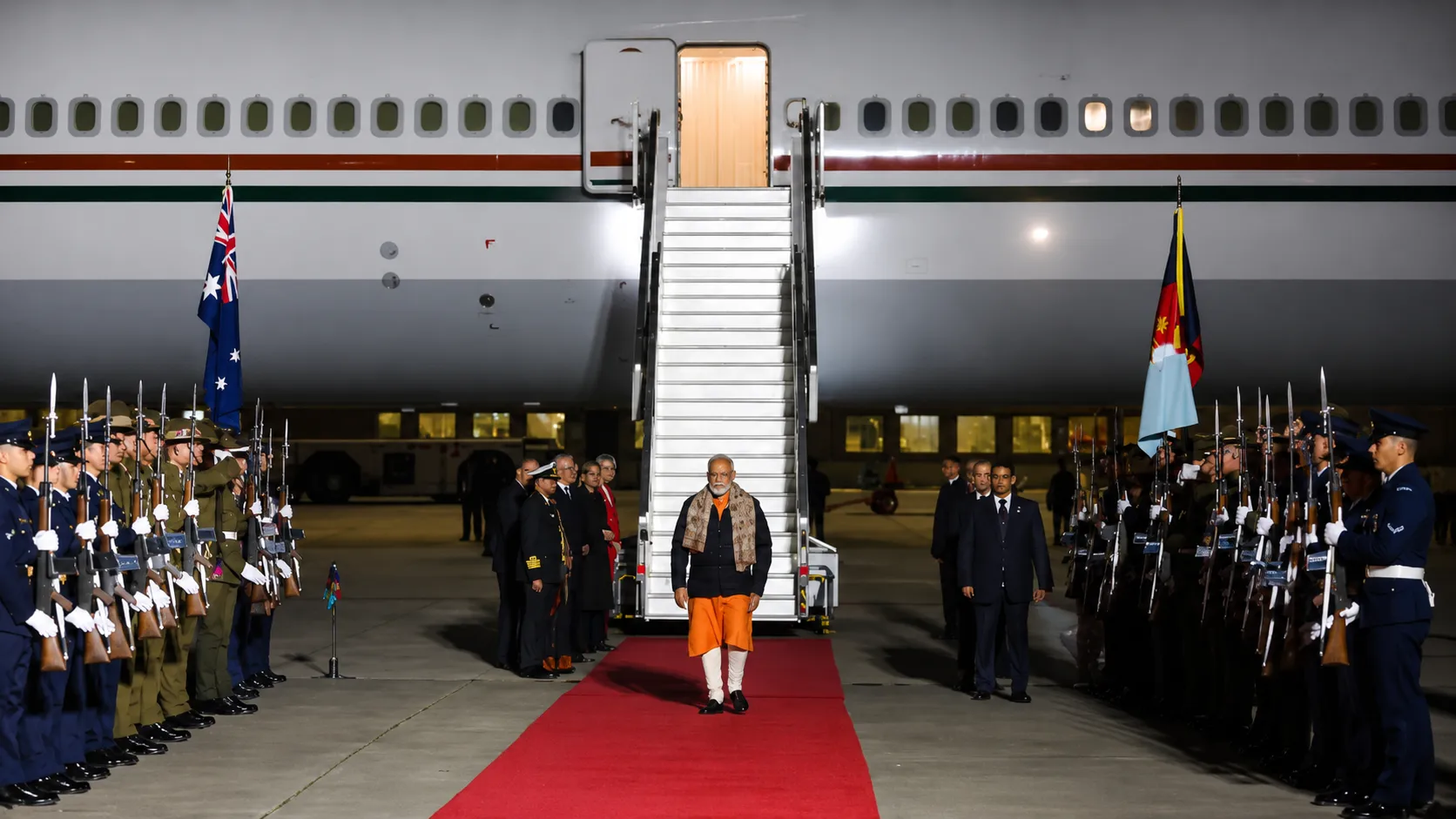
When Prime Minister Narendra Modi's aircraft touched down in Melbourne, the welcome waiting for him was not simply ceremonial. Members of the city's Indian diaspora, some of whom had spent the preceding days coordinating with community organizations and business chambers, saw the visit as a genuine inflection point for a relationship that has been warming steadily but unevenly for years: the economic and cultural partnership between India and Australia.
The optimism was real, but it came paired with something more pointed than simple celebration. Diaspora business leaders used the moment to make specific, practical appeals to both Modi and his Australian counterpart, Prime Minister Anthony Albanese — requests that went beyond the usual diplomatic language of "strengthening ties" and into concrete asks about visa policy, educational access, and the everyday experience of Indian nationals building lives in Australia.
A Community With Skin in the Game
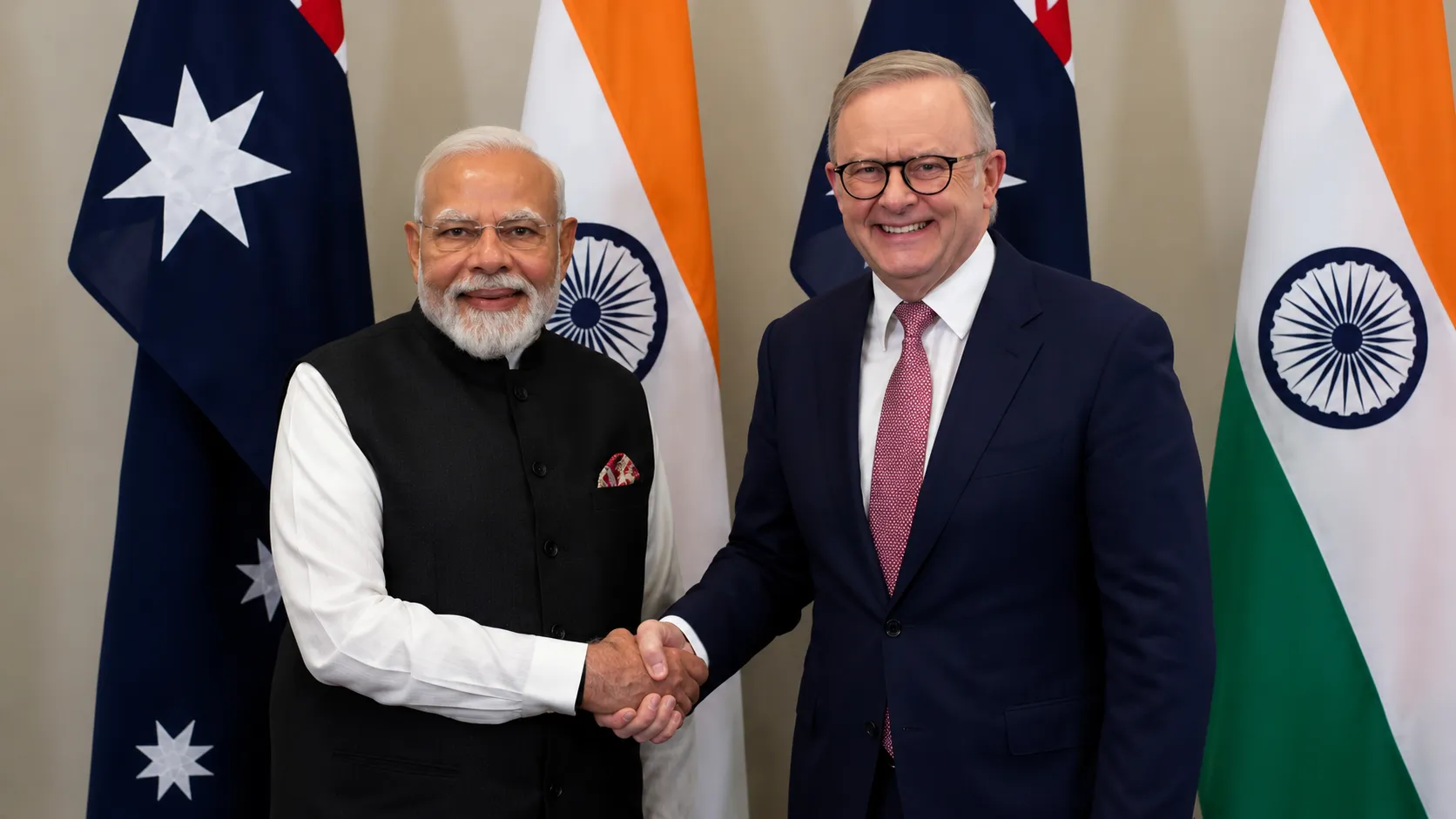
The Australia India Chamber of Commerce, a business body that has spent years working to deepen commercial ties between the two countries, was among the most vocal in framing the visit's stakes. Its former CEO, Nikita Kaur Chopra, who has spent more than seven years working on bilateral business relationships from Melbourne, described the moment plainly: the Australian government was actively inviting business opportunities and collaboration, and Modi's visit represented a chance to strengthen bilateral trade in a way that could translate into concrete outcomes for businesses on both sides, not simply another round of diplomatic photo opportunities.
That framing matters because it reflects something particular about how diaspora communities engage with state visits by their country of origin's leadership. For diaspora business figures like Chopra, a visit by the Indian Prime Minister is not simply a matter of national pride, however real that pride might be. It is a working opportunity — a moment when trade discussions that might otherwise move slowly through bureaucratic channels can be accelerated by high-level political attention, and when business relationships built patiently over years of chamber meetings and trade delegations can suddenly find themselves elevated to the level of prime ministerial priority.
Beyond Trade Numbers: The Visa and Inclusivity Ask
What distinguished the diaspora's response to this visit from a purely celebratory welcome was the specificity of what community leaders asked the two Prime Ministers to discuss. Alongside calls for deeper business ties, diaspora figures explicitly appealed to Modi and Albanese to include topics like inclusivity and visa caps for foreign students in their bilateral talks — a request that reflects the lived reality of a community that experiences the India-Australia relationship not just through trade statistics, but through immigration policy, university enrollment caps, and the day-to-day experience of building a life in a country that has, at various points, sent mixed signals about how welcome that life is meant to be.
Australia's international education sector has grown into one of the country's most significant exports, with Indian students forming a substantial and growing share of the international student population at Australian universities. That growth has not been without friction: policy debates over visa caps for international students have flared repeatedly in Australian politics in recent years, driven by domestic housing pressures and political anxiety over immigration levels more broadly. For the Indian diaspora in Australia, those debates are not abstract policy discussions playing out at a comfortable distance — they directly affect family decisions about whether children should pursue Australian education, whether recent graduates can find a pathway to stay and work, and whether the broader Australian public perceives the growing Indian community as a welcome contributor to national life or as a strain on public resources.
The Dual Role of Diaspora Communities
This moment captures something that runs through nearly every major diaspora community's relationship with high-profile visits from their country of origin's leadership: a dual role that is rarely acknowledged in the celebratory coverage such visits typically receive. On one hand, diaspora business and community leaders function as informal ambassadors for bilateral trade, using their standing and relationships in both countries to advocate for deeper commercial ties, smoother regulatory cooperation, and expanded investment flows. On the other hand, those same individuals live with the direct, personal consequences of the visa policy, social inclusion, and immigration debates that state-level diplomacy often treats as secondary to trade volumes and investment figures.
It is worth noting how much groundwork already existed for this visit to build on. India and Australia have spent recent years steadily deepening a relationship that once lagged well behind the ties either country maintained with other major partners, moving through incremental trade agreements, expanded defense cooperation, and a growing traffic of students, skilled workers, and tourists in both directions. That accumulated groundwork is precisely what allows a single high-profile visit to function as an accelerant rather than a starting point — Modi's Melbourne stop was not attempting to build a relationship from scratch, but to add political momentum to a partnership that diaspora communities, business chambers, and mid-level bureaucrats on both sides had already spent years quietly constructing.
A Pattern Playing Out Across the Global Diaspora
Melbourne's Indian diaspora is far from alone in navigating this dual role. Similar dynamics play out wherever large Indian communities have settled abroad — communities that celebrate high-level diplomatic engagement with India while simultaneously advocating, often through the same organizations and the same individuals, for better treatment on the immigration and social-inclusion issues that affect their daily lives far more directly than any trade agreement ever will. In some diaspora communities, that advocacy has taken on a more urgent tone in 2026: reports of a string of violent attacks affecting the Indian diaspora in Ireland, for instance, have prompted concern among diaspora advocacy groups there, a reminder that the warmth of formal diplomatic relationships between India and a host country does not automatically translate into safety or belonging for the diaspora community living inside that country.
Australia's Indian diaspora has not faced anything comparable to those reported incidents, but the underlying pattern is structurally similar: a community whose economic and cultural contributions are increasingly celebrated at the diplomatic level, while its members continue to press, often patiently and through formal channels like chamber statements rather than public protest, for the practical policy changes — around visas, education access, and social inclusion — that would make that celebration match their daily lived experience.
Trade delegations and chamber advocacy of the kind the Australia India Chamber of Commerce has practiced for years tend to move the needle in smaller, more durable increments than any single state visit ever can — a memorandum of understanding here, a sector-specific working group there, a handful of new investment commitments that accumulate quietly over successive years rather than arriving all at once in a single dramatic announcement. Modi's Melbourne visit functions less as the origin point of the relationship's next phase and more as a marker along a longer, steadier trajectory that diaspora business figures have been pushing forward largely out of the public eye.
What Modi's Visit Could Realistically Deliver
High-profile state visits rarely produce immediate, sweeping policy change on complex domestic issues like student visa caps, which are shaped as much by Australian domestic politics as by bilateral diplomacy with India. What such visits can realistically deliver is momentum: a public signal from both governments that the relationship is a priority, which can in turn create political cover for incremental policy movement that might otherwise stall indefinitely in the ordinary churn of domestic legislative agendas.
The Diaspora as a Bridge, Not Just an Audience
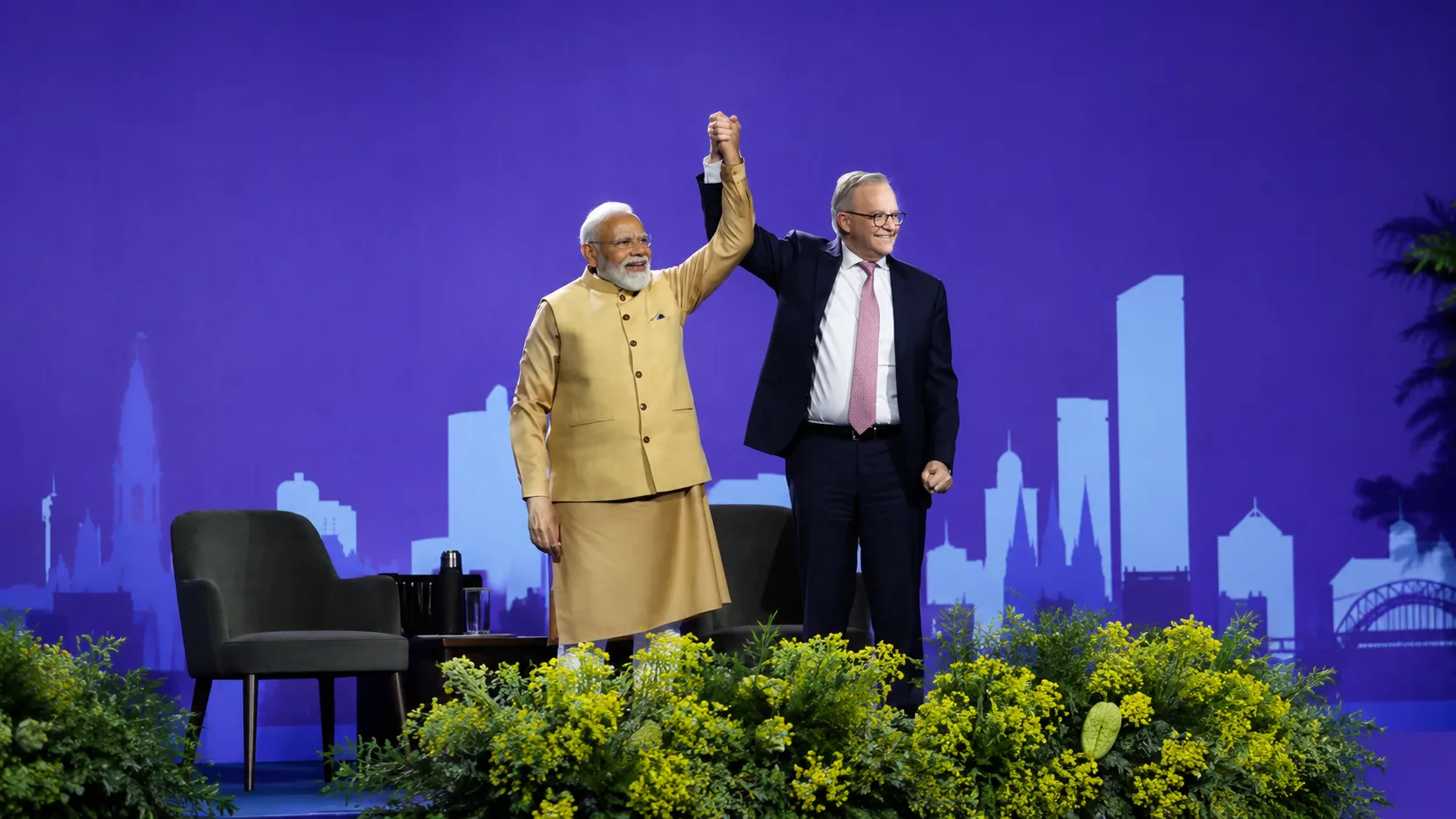
The most important thing about the Indian diaspora's response to Modi's Melbourne visit may be what it reveals about how diaspora communities increasingly see their own role in bilateral relationships. Rather than positioning themselves purely as an audience for diplomatic ceremony — flag-waving well-wishers cheering a visiting head of government — figures like Chopra and the Australia India Chamber of Commerce positioned themselves explicitly as stakeholders with specific asks, treating the visit as an opportunity to advance a concrete agenda rather than simply an occasion to celebrate shared heritage.
That posture reflects a broader maturation in how diaspora communities around the world engage with visits from their countries of origin. It is no longer enough, for a community as economically consequential as Australia's Indian diaspora has become, to simply show up and cheer. Community leaders increasingly expect a seat, however informal, at the table where the actual substance of bilateral relationships gets decided — and they are willing to say so publicly, in the same breath as they welcome a visiting Prime Minister, precisely because they understand that the goodwill generated by a state visit is a limited and valuable resource, one best spent pressing for outcomes that matter rather than simply basking in the moment.
Australia's Indian community has grown rapidly over the past two decades, evolving from a relatively modest population into one of the country's largest and fastest-growing migrant groups, concentrated heavily in cities like Melbourne and Sydney and increasingly visible across business, healthcare, technology, and academic sectors. That growth has itself become part of the argument diaspora leaders make when pressing for policy attention: a community this large, this economically active, and this deeply integrated into professional life across the country is no longer a peripheral constituency whose concerns can be safely deferred, but a genuine stakeholder in decisions about trade, education, and immigration policy that shape its everyday life.
Why Australia Matters So Much Right Now
The stakes of this particular relationship have risen in recent years for reasons that go beyond any single visit. Australia has increasingly positioned itself as a key partner in India's efforts to diversify its trade and investment relationships beyond its traditional reliance on a small number of large economies, while India has simultaneously become an increasingly important market for Australian exporters, educators, and investors looking to reduce their own overreliance on any single trading partner. That mutual interest in diversification gives this particular bilateral relationship a structural momentum that goes beyond the personal chemistry between any two leaders, which is part of why diaspora business figures treat visits like this one as genuine strategic opportunities rather than purely symbolic occasions.
Education, in particular, sits at the center of that mutual interest. Australian universities have built an international education sector worth billions of dollars annually, with Indian students forming one of the largest and fastest-growing cohorts of that international student population. For India, that flow of students represents both an opportunity — access to world-class education and eventual skilled migration pathways for its young population — and a policy tension, since a significant share of India's most talented graduates ultimately choosing to build careers abroad raises its own long-running questions about brain drain versus the diaspora dividend those same graduates may eventually deliver back to India in the form of investment, philanthropy, and institution-building of exactly the kind seen elsewhere in this news cycle.
Whatever specific commitments emerge from Modi's discussions with Albanese, the diaspora's approach to this visit — combining genuine warmth with pointed, specific policy asks — offers a preview of how Indian communities abroad are likely to engage with future high-level visits: not as passive beneficiaries of improving bilateral relations, but as active participants insisting that those improving relations translate into tangible change for the people actually living the relationship day to day.
In that sense, Melbourne's welcome for Modi was never really about a single afternoon on the tarmac. It was about a community that has spent years building the quiet infrastructure of trade relationships, education pipelines, and community organizations, using one Prime Minister's brief visit as leverage to ask, plainly and publicly, for the policy follow-through that would finally match the warmth of the reception he received — a reminder that diaspora goodwill, however genuine and however warmly expressed on any given afternoon in Melbourne, is never simply given away for free, without some quiet, patient expectation that it will eventually, in due course, be met halfway by the governments on both sides of the relationship.


