The Indian EV Driver Has a Ride Platform. What They Don't Have Is Everything Else. Milo Drive Is Building It.
The EV ride-hailing market in India is one of the fastest-growing segments in the entire mobility ecosystem. Cities like Delhi, Bengaluru, Hyderabad, Mumbai, and Pune have set targets for electric vehicles to constitute a growing share of registered taxis and autorickshaws. State governments are offering purchase subsidies for commercial EVs. Charging infrastructure, though still patchy, is expanding faster than at any previous point. And the economics of driving an EV for commercial ride-hailing — lower fuel costs, lower maintenance costs, a growing passenger preference for electric — are increasingly compelling for drivers willing to make the transition from petrol or CNG vehicles.
What the EV driver often does not have is the operating layer that makes the economics actually work at the daily level.
Which platform should they list on to maximise ride demand? Where is the nearest functioning charging station for their specific vehicle model? How do they track their earnings across multiple ride platforms? What maintenance alerts can help them avoid the downtime that earns them nothing? How does a small fleet operator manage vehicle utilisation, assign rides intelligently, and track performance across a group of drivers?
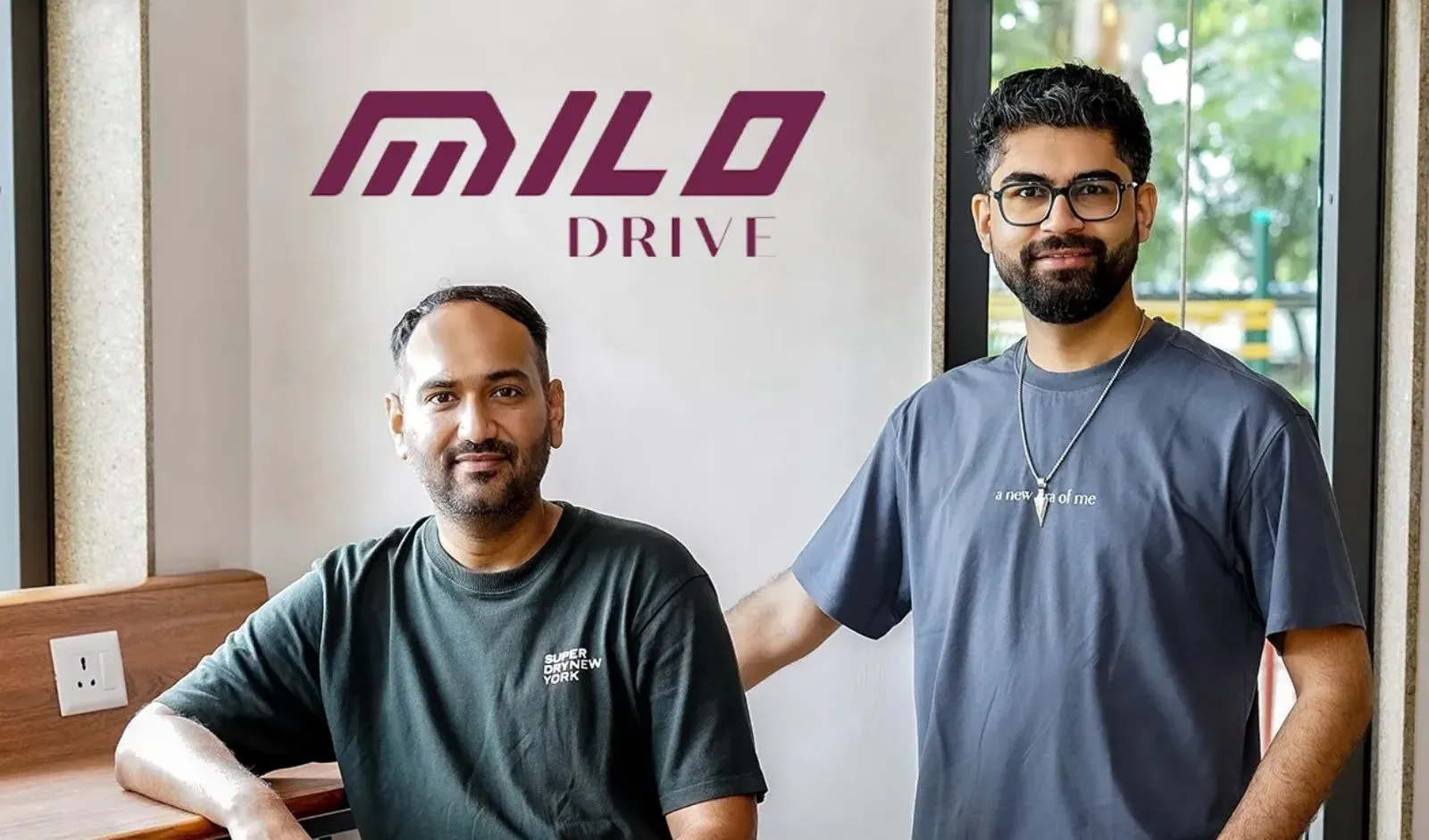
These are the problems that Milo Drive was built to solve. Founded in 2024 in Gurugram by Monil Jayeshkumar Khatri and Vishal Jewrajka, the company is building an asset-light, technology-driven EV mobility platform that serves drivers, fleet operators, and mobility entrepreneurs managing electric vehicle operations across India's ride-hailing and urban transportation ecosystem.
On July 8, 2026, the company announced it had raised $2.4 million in a seed funding round co-led by Caret Capital and Antler India. Also participating: Alteria Capital, IAN Capital (India Angel Network Capital), Climate Angels, and Aureolis Capital. The round brings Milo Drive the capital to accelerate EV adoption, strengthen its technology platform, and create more structured employment opportunities for India's driver workforce.
What Milo Drive Actually Does — the Platform and Its Components
Milo Drive describes its core product as a real-time operating system for EV fleets — a technology layer that integrates five distinct functions into a single platform for the driver, fleet operator, and mobility entrepreneur who needs all of them simultaneously.
Vehicle access is the foundation. Milo Drive connects drivers and small fleet operators to electric vehicles through partnerships that reduce the upfront capital barrier of EV ownership — the primary friction that prevents gig drivers from transitioning from petrol or CNG vehicles where they already own or rent a vehicle they understand.
Multi-platform demand aggregation sits on top of vehicle access. Rather than requiring a driver to manage their presence separately on Ola, Uber, Rapido, and other ride platforms, Milo Drive's system aggregates ride demand across platforms and allocates rides using machine learning to maximise vehicle utilisation and driver earnings. The intelligence is in the allocation — knowing which platform has the highest-value ride available at a given moment, routing that ride to the best-positioned driver, and doing this across a fleet of vehicles simultaneously.
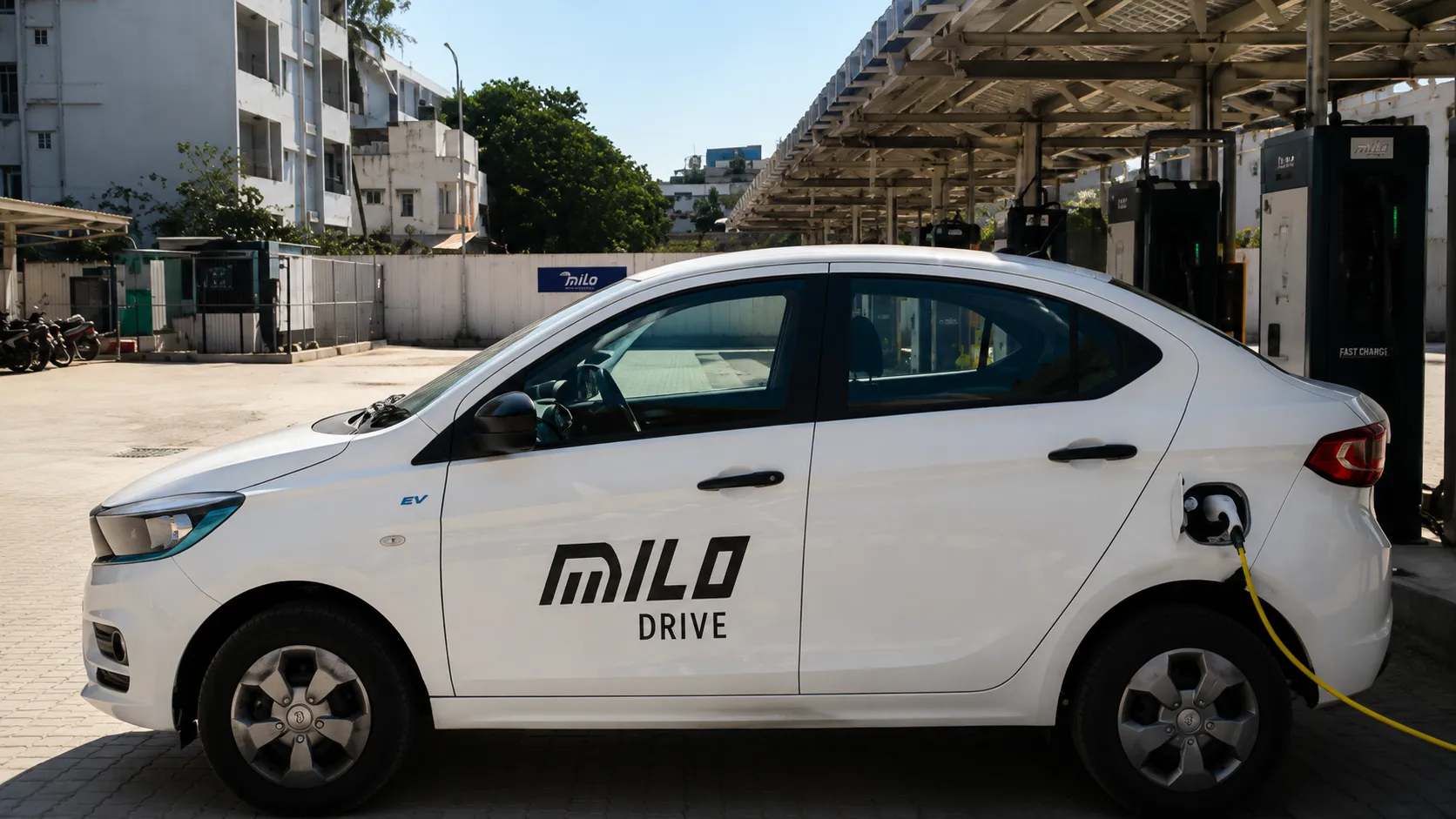
Charging intelligence addresses one of the most operationally significant pain points for commercial EV drivers. Unlike petrol, which can be refuelled at any of India's 80,000-plus petrol stations in minutes, EV charging requires advance planning — knowing which stations are operational, which support the driver's vehicle model, how long the charge will take, and how the charging stop can be integrated into the day's route without excessive earnings loss. Milo Drive's charging intelligence uses AI-driven recommendations and predictive route planning to reduce the operational disruption of charging and minimise downtime.
Fleet management tools give small fleet operators — the individuals who own two, five, or ten vehicles and employ drivers to run them — the visibility and control that professional fleet managers at large companies have had for years but that the micro-fleet market has historically lacked. Live fleet visibility across all vehicles, predictive maintenance alerts, automated geofencing, and performance tracking are the specific capabilities that allow a micro-fleet operator to run a more efficient business.
The driver application is the consumer-facing layer that synthesises all of this into a usable daily experience: payment management, charging assistance, earnings tracking, and performance metrics presented in a format that a driver can actually act on.
Since launch, Milo Drive claims to have facilitated more than one million rides across its platform — a meaningful early traction signal in a category where network effects (more drivers means more rides, more rides means more data, more data means better allocation) require initial scale to demonstrate value.
The 20 Per Cent Driver Income Uplift — and Why That Number Matters
The statistic that best captures Milo Drive's value proposition is the 20 per cent increase in driver incomes that the company reports from its platform tools.
A 20 per cent income increase for an EV cab driver or fleet operator is not an incremental improvement. For a driver earning ₹25,000 to ₹35,000 per month — a typical income range for commercial ride-hailing operators — a 20 per cent increase means an additional ₹5,000 to ₹7,000 per month. That is money for household expenses, for children's education, for the savings that make the EV transition sustainable rather than precarious. It is the difference between a driver who tries the EV platform and stays with it and one who returns to a conventional vehicle because the economics did not deliver what was promised.
The income uplift comes from two sources that the platform addresses simultaneously. Better demand aggregation across multiple ride platforms ensures that a driver does not sit idle because they are only visible on one platform that happens to have low demand in their area at a given moment. Better charging and route intelligence reduces the proportion of the working day spent not earning — the dead time of waiting for a charge, driving to a charging station, or managing vehicle downtime from preventable maintenance issues.
Together, these improvements add up to a more productive working day for the same vehicle and the same hours — which is what the 20 per cent income figure represents in practice.
The Market That Makes This Investment Thesis Compelling
India's EV ride-hailing market was valued at approximately $0.24 billion in 2025 and is projected to reach $4.2 billion by 2030 — a compound annual growth rate of 77 per cent over five years. Inc42's India's Electric Vehicle Startup Landscape Report 2025 places the broader EV sector opportunity at $132 billion by 2030, reflecting the full range of vehicle categories, charging infrastructure, battery technology, and enabling software across the mobility ecosystem.
The specific $0.24 billion to $4.2 billion EV ride-hailing trajectory is the relevant number for Milo Drive, because it defines the market into which every ride the platform facilitates contributes. A 77 per cent CAGR market is extraordinarily rare — even in India's growth economy — and it reflects the convergence of government policy, economics, and consumer preference all pointing in the same direction simultaneously.
The competitors that Milo Drive competes against or alongside include Uber and BluSmart — but the competitive positioning of an infrastructure and technology platform is different from that of a ride-hailing marketplace. Milo Drive is not competing to acquire passenger demand. It is competing to become the operating system that EV drivers and fleet operators use to serve whatever demand platform they choose to list on. That positioning — as infrastructure rather than as a marketplace — is what the asset-light model reflects.
What the $2.4 Million Will Build
The capital from Caret Capital, Antler, and the participating investors will be deployed across three priorities.
EV adoption acceleration means growing the driver and fleet operator base on the platform — more vehicles, more drivers, more rides, and the data and network effects that make the platform more valuable with each addition. Formalising employment opportunities for India's driver workforce — providing the earning visibility, payment management, and structured employment documentation that gig workers in India have historically lacked — is integral to this.
Technology platform strengthening means investing in the AI and machine learning capabilities that underpin the ride allocation, charging intelligence, and predictive maintenance systems that produce the driver income improvements the platform delivers. Every ride and every charging decision generates data that can improve the next allocation and the next recommendation.
Structured employment creation reflects a founding commitment that goes beyond commercial platform building. India's gig driver workforce is large, underserved by formal employment infrastructure, and largely invisible to the financial services companies whose products — credit, insurance, savings — could significantly improve their economic resilience. Milo Drive's vision of formal employment opportunities is not just about payment management. It is about the broader ecosystem of financial inclusion that a well-documented, technology-mediated employment relationship makes possible.
The India that runs on EVs in 2030 will run on infrastructure built now. Milo Drive has raised $2.4 million to be part of what gets built.


