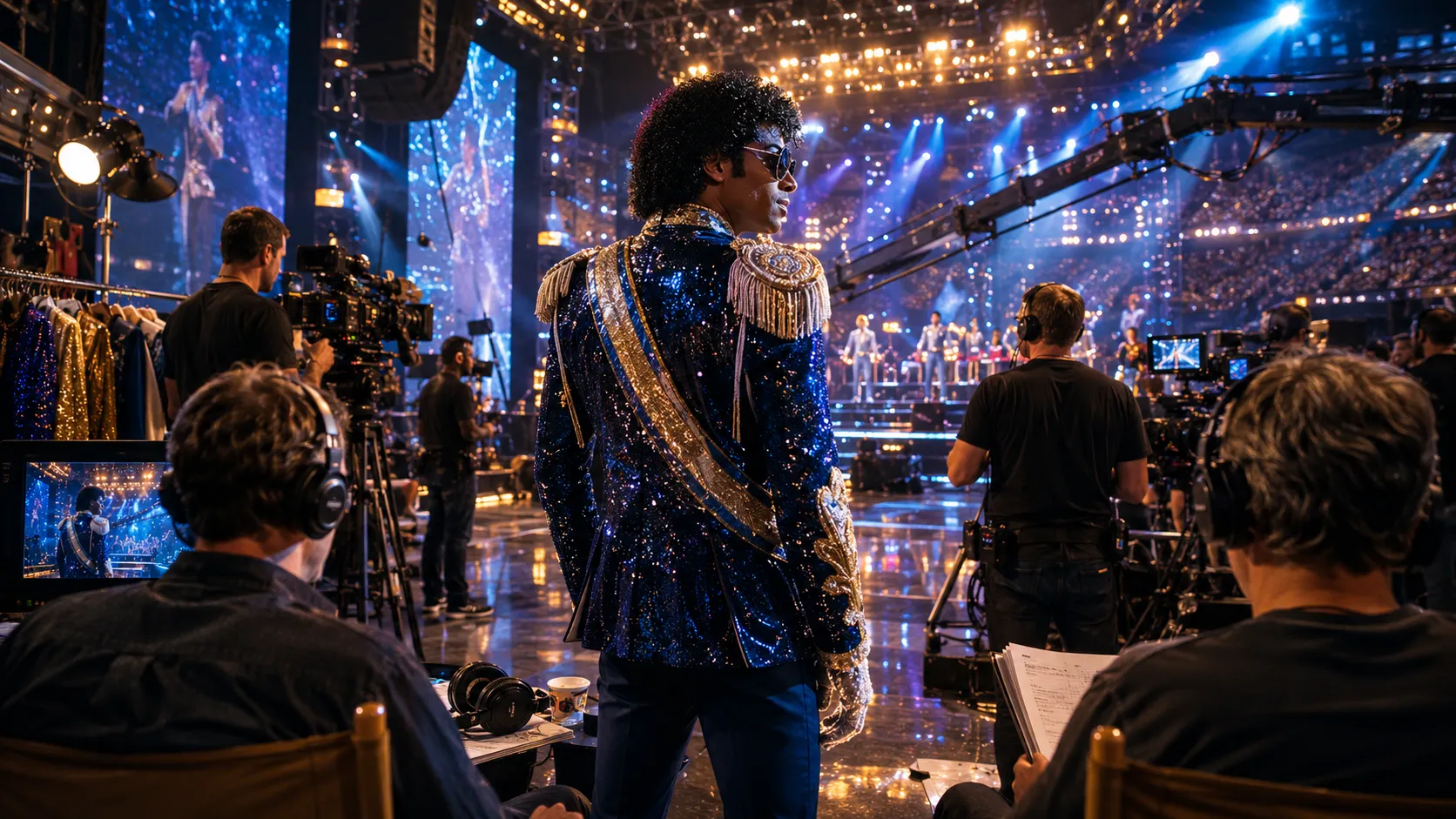
What Began As A Traditional Music Biopic Became One Of Hollywood’s Most Expensive, Legally Complicated And Financially Fascinating Film Projects In Years
Hollywood has always loved predictable business models.
Studios prefer franchises with established audiences, sequels with proven demand and intellectual property that arrives with built-in recognition because familiarity reduces uncertainty. In an era where theatrical attendance remains under pressure and streaming platforms compete relentlessly for attention, executives increasingly seek projects that already possess cultural relevance before cameras begin rolling. Yet even by those standards, Michael represented something unique. It was not based on a comic-book universe, a bestselling novel or a long-running franchise. Instead, it was built around one of the most recognizable human beings in modern history. That distinction made the film simultaneously one of Hollywood's safest and riskiest investments.
Michael Jackson remains a commercial phenomenon unlike almost any entertainer before or after him.
Decades after the release of Thriller, his music continues generating billions of streams, his videos remain cultural reference points and his influence can still be seen across pop music, dance, fashion and performance. Few artists have achieved comparable levels of global recognition. A teenager in India, a football fan in Brazil and a music lover in Germany can all instantly identify Michael Jackson because his cultural footprint extends beyond language, geography and generation. For filmmakers, that level of awareness represents a dream scenario. It means the marketing campaign begins long before the first trailer arrives because audiences already know the subject.That was precisely why the project attracted such enormous attention.
When producers announced a major Michael Jackson biopic directed by Antoine Fuqua and produced by Graham King, the filmmaker behind the hugely successful Bohemian Rhapsody, expectations immediately soared. Industry observers viewed the film as a potential global blockbuster because music biopics had already demonstrated significant commercial potential. Films based on Freddie Mercury, Elvis Presley and Elton John had shown that audiences were willing to pay for stories centered around iconic musicians. Michael Jackson, many believed, represented the biggest prize of all.Yet the project quickly evolved into something far more complicated than a traditional music biopic.
The challenge was never simply recreating concerts, recording sessions and historic performances. Jackson's life remains one of the most scrutinized and debated stories in entertainment history. Any attempt to tell that story would inevitably face questions about what should be included, what should be excluded and how difficult chapters of his life would be portrayed. Unlike many musical legends, Michael Jackson's legacy is inseparable from controversy. That reality transformed the project into a balancing act between commercial ambition, legal complexity and public perception.Then came the discovery that changed everything.
According to multiple reports, filmmakers were confronted with an unexpected legal complication involving a restrictive settlement agreement dating back to 1993. The clause reportedly limited how certain allegations and events could be portrayed on screen. The implications were enormous. Significant portions of the film suddenly required reevaluation because the production could not proceed exactly as originally envisioned. What had already been one of Hollywood's most ambitious biopics now faced a legal challenge capable of altering the project's entire structure.The consequences were expensive.
Reshoots became necessary. Creative plans changed. Storytelling decisions had to be reconsidered. Additional production schedules increased costs at a scale rarely seen for a music biopic. Industry reports suggested that the budget, initially estimated around $150 million, steadily climbed toward the $200 million mark as revisions accumulated. For comparison, many successful music biopics operate at budgets less than half that amount. The numbers transformed Michael from an awards-season contender into one of the most expensive biographical films ever attempted.That budget escalation reveals something important about the economics of modern entertainment.
Studios are increasingly willing to absorb extraordinary costs when they believe a project possesses global cultural appeal. Michael Jackson's name carries a level of recognition that few fictional characters can match. Unlike many entertainment brands that depend on specific markets, Jackson's popularity remains remarkably international. His music catalog performs strongly across continents. His image remains instantly recognizable. His legacy continues generating discussion years after his death. In business terms, he functions less like a celebrity and more like a globally recognized intellectual property asset.
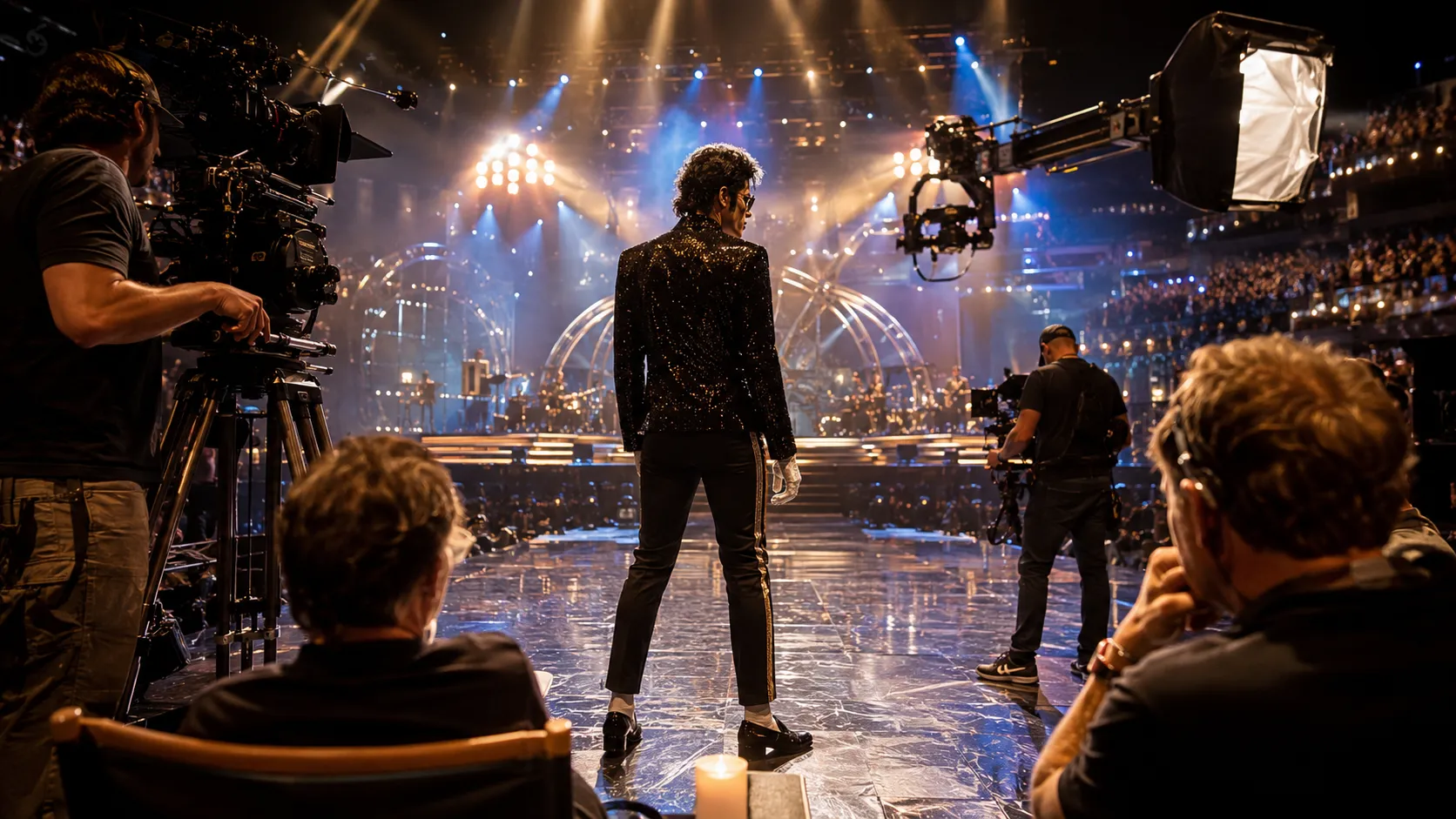
The production challenges eventually became so significant that reports suggested the project could no longer be contained within a single film.
Instead, discussions emerged about splitting the story into multiple parts. Such a move would be highly unusual for a music biopic but increasingly understandable given the scale of the material. Jackson's life included child stardom, global superstardom, record-breaking commercial success, unprecedented media attention and years of controversy. Compressing all of that into one feature-length film was always going to be difficult. The legal complications merely accelerated a reality that producers may have eventually faced regardless.From a business perspective, however, a multi-part approach also offers advantages.
Hollywood has increasingly embraced serialized storytelling because audiences often prefer extended engagement with familiar properties. Franchises dominate box offices partly because they create ongoing relationships rather than one-time experiences. Splitting Michael into multiple releases potentially transforms a single film into a larger commercial ecosystem. More screen time means more marketing opportunities, longer audience engagement and additional revenue streams. What initially appeared to be a production problem may ultimately evolve into a business opportunity.The film's development also highlights a broader transformation taking place across Hollywood.
In previous decades, studios often avoided highly controversial subjects because reputational risks outweighed potential rewards. Today's industry operates differently. Attention itself has become a valuable asset. Projects that generate conversation frequently attract audiences regardless of whether that conversation is positive or negative. The debate surrounding Michael became part of the film's marketing ecosystem long before release. Every headline about production complications, legal disputes or creative decisions increased awareness of the project.That phenomenon reflects the economics of the attention age.
Modern audiences consume entertainment news continuously through social media, podcasts and digital publications. A film no longer begins marketing six months before release. It begins marketing the moment it is announced. Projects capable of sustaining public discussion possess a significant advantage because awareness translates into curiosity, and curiosity often translates into ticket sales.Yet relying on controversy remains a dangerous strategy.
Audiences ultimately decide whether attention becomes revenue. Many high-profile projects generate headlines without generating commercial success. What separates Michael from countless failed experiments is the enduring strength of the underlying brand. Michael Jackson's music continues attracting listeners across generations because the cultural impact of his work remains difficult to replicate. While audiences may disagree about aspects of his legacy, few dispute his influence on modern entertainment.That influence is precisely what studios were betting on.
The producers were not simply making a movie about a musician. They were monetizing decades of cultural memory. Every iconic dance move, every famous performance and every globally recognized song represented an asset capable of attracting audiences. Nostalgia has become one of Hollywood's most reliable commercial engines because it allows viewers to reconnect with experiences that already hold emotional significance. In Michael Jackson's case, those experiences span multiple generations and continents.The larger lesson extends beyond a single film.
Hollywood increasingly views cultural icons as long-term business assets rather than historical figures. The success of recent music biopics demonstrates that audiences are willing to revisit familiar stories when they are presented at sufficient scale. Studios therefore continue searching for figures whose influence extends beyond traditional fan bases. Few names qualify. Even fewer possess the global reach necessary to justify budgets approaching blockbuster territory.Michael Jackson remains one of them.
That is why Michael became far more than a movie. It evolved into a test of how much value still exists inside one of the most powerful entertainment brands ever created. It became a case study in the intersection of celebrity, commerce, nostalgia and legal complexity. It exposed the extraordinary costs that can emerge when filmmakers attempt to tell the story of a figure whose legacy remains both celebrated and contested.
Most importantly, it revealed something fundamental about modern Hollywood.The industry is increasingly willing to take enormous risks when it believes a cultural icon can deliver global attention.And few cultural icons command attention on the scale of Michael Jackson.
That reality transformed a planned $150 million biopic into a near-$200 million business gamble, complete with legal complications, reshoots, structural changes and unprecedented expectations.
Whether viewed as a film, a brand extension or a financial experiment, Michael became one of the most fascinating entertainment business stories of the decade.Because in the end, the movie was never only about Michael Jackson.It was about the enormous economic value of cultural memory itself.


