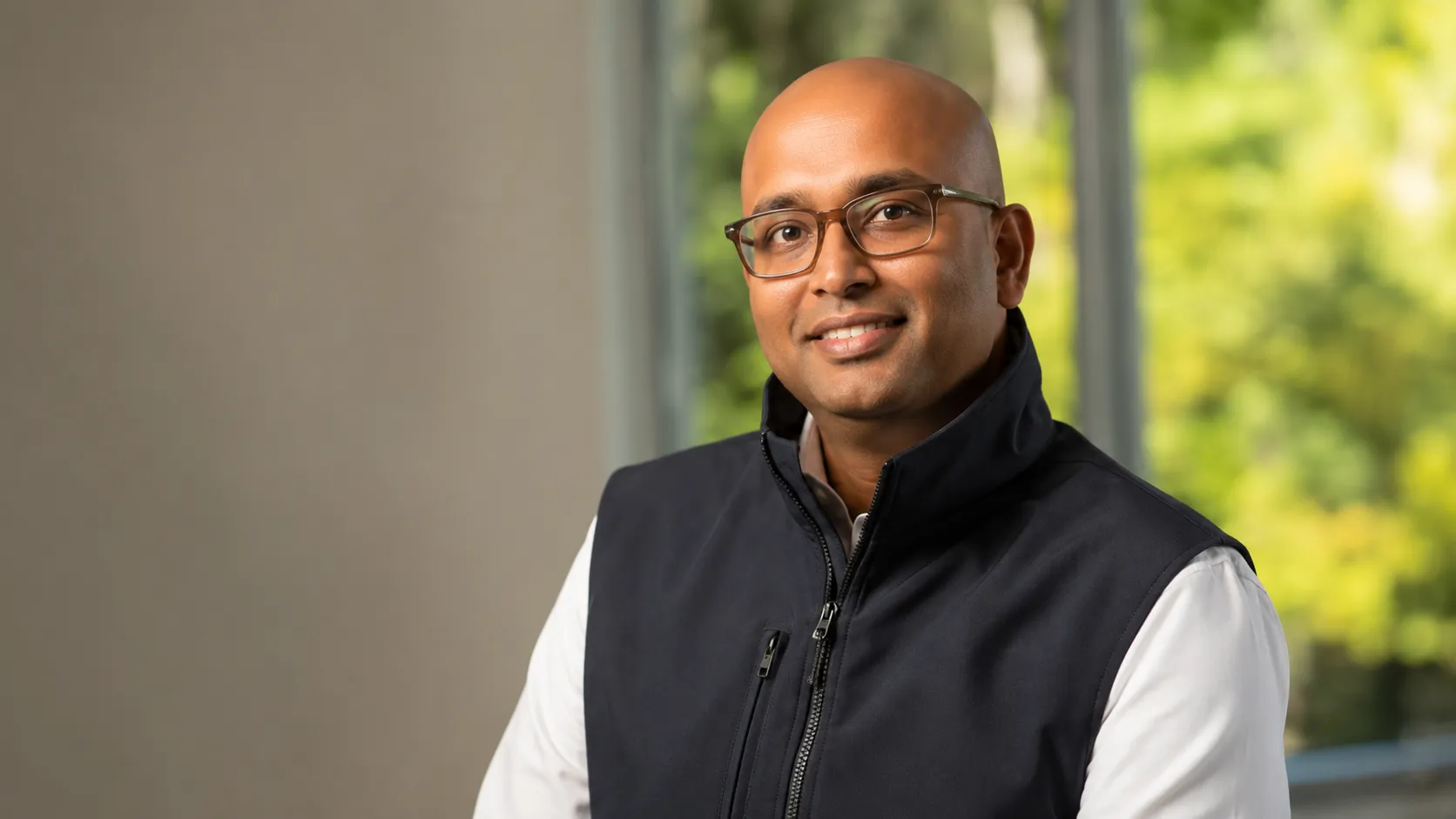
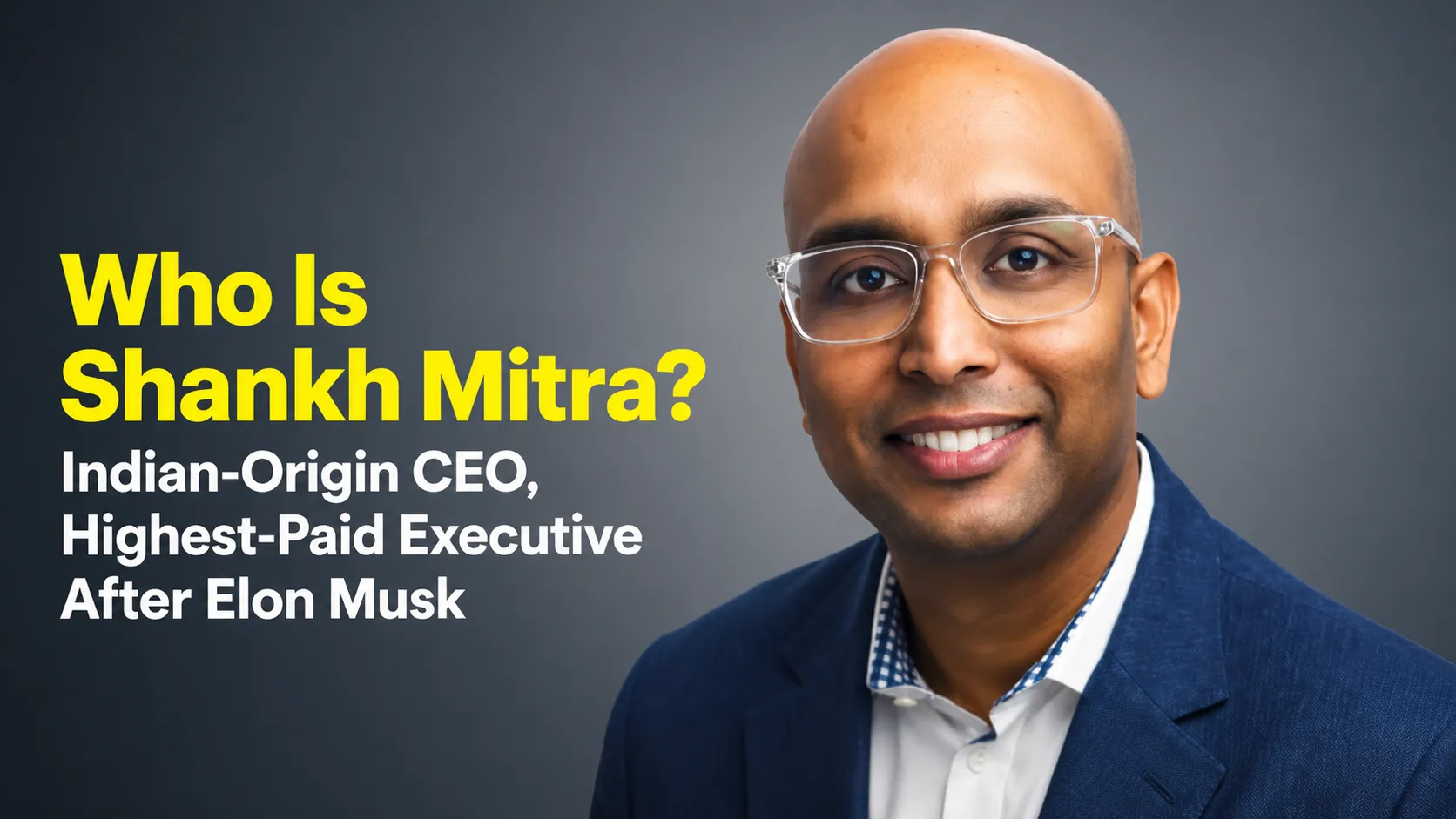
When the Wall Street Journal published its closely watched annual ranking of global CEO compensation for 2026, one name stood out for reasons that had little to do with familiarity and everything to do with sheer scale. Shankh Mitra, the Kolkata-born chairman and chief executive officer of Welltower, the giant American real estate investment trust, was revealed to have received a compensation package worth $821.1 million — a figure that made him the world's second highest-paid executive, trailing only Tesla's Elon Musk. For a business leader who had, until recently, remained relatively unknown outside real estate and healthcare investment circles, the revelation was nothing short of seismic.
What makes Mitra's emergence particularly notable is who he was not. He is not Sundar Pichai. He is not Satya Nadella. He is not Arvind Krishna or Nikesh Arora — the names that have, for the better part of a decade, dominated conversations about Indian-origin executives leading major American corporations. In fact, Mitra's name was reportedly absent even from Forbes' 2026 list of America's 250 Most Successful Living Immigrants, an omission that only heightened the surprise when the scale of his compensation became public. Neither of Big Tech's most famous Indian-American CEOs, it turned out, was the highest-paid Indian-origin executive in the world. That distinction belonged to a finance and real estate specialist most Americans, let alone most Indians, had likely never heard of. Mitra's journey to the top of Welltower, and to the pinnacle of global executive compensation, followed a path markedly different from the well-trodden Silicon Valley narrative that has come to define popular understanding of Indian-American corporate success. Born in Kolkata, Mitra built his early career not in engineering or computer science but in finance, beginning at the professional services giant PwC before moving through a series of increasingly senior roles at Fidelity Investments, the hedge fund Citadel, and Millennium Management. At each of these institutions, Mitra specialised in real estate investment and capital allocation — a discipline that requires a different skill set from the product management and software engineering backgrounds that have propelled many of his more famous Indian-American CEO counterparts. It was in 2016 that Mitra's career took the turn that would eventually lead him to the top of Welltower, when the company appointed him as its Chief Investment Officer. That role placed him at the centre of Welltower's capital deployment strategy at a moment when the senior housing and healthcare real estate sector was undergoing significant structural change, driven by demographic shifts as America's population aged and demand for specialised senior living accommodation grew. Just four years later, in October 2020, Mitra was promoted to CEO and Vice Chairman of Welltower — a promotion that came, notably, at one of the most challenging moments imaginable for the senior housing industry. Mitra assumed the CEO role in the midst of the COVID-19 pandemic, a period during which senior housing operators worldwide faced unprecedented operational, public health, and financial challenges. Senior living communities were, in the early phases of the pandemic, among the settings most acutely affected by the virus, and the sector faced enormous scrutiny over infection control, staffing shortages, and occupancy collapses as prospective residents and their families delayed move-in decisions. That Mitra took the helm of one of the industry's largest players at precisely this moment, and steered the company not merely through the crisis but into a period of aggressive growth and expansion, forms a central part of the narrative that has since been constructed around his leadership. Under Mitra's stewardship, Welltower has pursued an extraordinarily aggressive acquisition strategy, investing more than $40 billion to acquire thousands of senior housing units across North America. Today, the company owns more than 2,500 senior living communities, a portfolio that has made it the largest owner of senior housing in the industry, and — perhaps even more strikingly — the world's largest publicly traded real estate company, with a market value approaching $160 billion. That scale places Welltower among the most significant real estate enterprises on the planet, a remarkable outcome for a company operating in what many investors had, prior to Mitra's tenure, regarded as a relatively niche and unglamorous corner of the property sector. Mitra's investment philosophy at Welltower has centred on repositioning the company's portfolio toward premium senior housing markets — geographies and property classes where demographic tailwinds, affluent resident demand, and operational quality intersect most favourably. He has also focused heavily on strengthening the company's partnerships with leading senior housing operators, recognising that ownership of real estate assets alone is insufficient without high-quality operational partners capable of delivering the standard of care and service that premium residents and their families expect. Analysts covering the sector have repeatedly pointed to this combination of disciplined capital allocation and operator selection as the core driver of Welltower's outsized returns under his leadership. The compensation figure that has thrust Mitra into global headlines requires some unpacking. His $821.1 million package is not, contrary to how it might initially appear, a conventional cash salary. According to details of the compensation structure, Mitra received a base salary of approximately $1.3 million and a cash bonus of roughly $6.5 million — figures that, on their own, would be entirely unremarkable by the standards of large-cap American CEO pay. The overwhelming majority of his total compensation, more than 99 percent, came in the form of long-term stock incentives, valued at over $813 million. In other words, Mitra's extraordinary payday is fundamentally a reflection of Welltower's extraordinary stock performance during his tenure as CEO, structured through equity awards designed to align his personal financial outcomes directly with shareholder returns over an extended period.
This equity-heavy compensation structure is significant for understanding both the scale of the number and its broader implications. Executive compensation experts note that mega-grants of this kind, tied to long-vesting equity awards, have become an increasingly common tool used by boards to retain and incentivise CEOs who have delivered exceptional shareholder value creation, particularly in sectors experiencing structural tailwinds such as demographic-driven demand growth. Welltower's board, in awarding Mitra this package, was in effect betting — and being rewarded for having bet — on continued outperformance in a sector poised to benefit from the ongoing ageing of the American population over the coming decades. Mitra's rise also offers a valuable corrective to a somewhat narrow popular narrative about Indian-American executive success that has dominated media coverage for years — one heavily weighted toward technology, and specifically toward Silicon Valley's software and hardware giants. While Sundar Pichai's ascent at Google and Alphabet, and Satya Nadella's transformation of Microsoft, remain the most visible and celebrated examples of Indian-origin leadership in corporate America, Mitra's emergence at the top of the global CEO pay rankings demonstrates that Indian-American executive talent has achieved comparable, and in this instance even greater, financial outcomes in sectors as distinct as real estate investment trusts and healthcare-adjacent property management. Industry observers have also noted the broader significance of an Indian-origin executive achieving this level of prominence within the specialised world of real estate investment trusts, a sector that has historically been dominated by leadership drawn from a narrower set of traditional American finance and property backgrounds. Mitra's success at Welltower may well encourage a new generation of Indian-American finance professionals to view real estate investment management, rather than exclusively technology or traditional investment banking, as a viable and potentially lucrative career path — much as earlier generations of Indian-American executives helped normalise technology leadership as an accessible pinnacle for immigrant professionals. For the broader Indian diaspora community, Mitra's story carries a resonance that extends beyond the eye-watering compensation figure itself. It is, in many respects, a story about patience and specialisation — a career built steadily across nearly three decades in finance and real estate, culminating not in a single dramatic breakthrough but in the compounding effect of consistently strong capital allocation decisions during a period of significant sectoral transformation. That arc stands in some contrast to the more meteoric, headline-friendly rise narratives often associated with technology entrepreneurship, offering diaspora observers an alternative model of long-term, sector-specific mastery translating into extraordinary financial and professional outcomes. As Welltower continues its expansion and as America's senior population continues to grow at a pace that outstrips available high-quality senior housing supply, Mitra's leadership will remain under close scrutiny from investors, industry analysts, and now, following the Wall Street Journal's compensation revelations, a considerably wider public audience curious about the man behind the company. Whether Welltower can sustain the growth trajectory that has driven Mitra's compensation to its current extraordinary heights remains to be seen, but for now, the Kolkata-born financier sits at a rarefied position in global corporate life: the second highest-paid executive on the planet, and unambiguously the highest-paid Indian-origin business leader anywhere in the world. The scale of Mitra's compensation package has also reignited a broader debate within American corporate governance circles about the appropriateness and long-term incentive effects of mega equity grants awarded to sitting CEOs. Critics of such packages have long argued that compensation figures in the hundreds of millions of dollars risk misaligning incentives, potentially encouraging excessive risk-taking in pursuit of short-term stock price appreciation, or simply reflecting broader market conditions and sector tailwinds rather than CEO-specific skill. Defenders of Welltower's compensation structure, by contrast, point to the extraordinarily long vesting periods typically attached to such grants and the direct, dollar-for-dollar alignment between Mitra's financial outcomes and the returns delivered to Welltower's shareholders over his tenure as CEO, arguing that this is compensation design working precisely as intended, rewarding sustained value creation over an extended multi-year horizon rather than short-term financial engineering. Mitra's emergence also invites a closer look at the demographic and educational patterns among the current generation of top-tier Indian-origin business executives. Unlike the archetypal Indian-American technology CEO narrative, built around undergraduate engineering degrees from elite Indian institutions followed by graduate study at leading American business or engineering schools, Mitra's career path ran through professional services and financial services from the outset, with no widely publicised elite technical pedigree driving his early opportunities. His rise instead appears to be a product of sustained specialisation within real estate capital markets, accumulated over nearly three decades across firms including PwC, Fidelity Investments, Citadel, and Millennium Management, before Welltower recruited him specifically for his real estate investment expertise.
For the broader real estate investment trust industry, Mitra's ascension to global compensation headlines also brings a level of mainstream attention to a sector that, despite controlling trillions of dollars in assets across office, retail, industrial, and specialised healthcare and senior housing real estate globally, rarely captures the kind of public fascination reserved for technology or consumer-facing industries. Welltower's transformation under Mitra into the world's largest publicly traded real estate company, with a market value approaching $160 billion, represents one of the more significant value-creation stories within the REIT sector over the past several years, and industry observers expect Mitra's now much higher public profile to draw increased attention to Welltower's specific investment thesis around premium senior housing as a structurally advantaged asset class amid ageing demographics across developed economies. Diaspora business commentators have also been quick to note the symbolic significance of Mitra's rise for the broader narrative of Indian-origin success in America. For years, that narrative has been dominated almost entirely by technology, with Pichai, Nadella, and a handful of other Big Tech CEOs serving as the default reference points whenever conversations turn to Indian-American executive achievement. Mitra's emergence as the highest-paid Indian-origin executive on the planet — achieved through a career built in finance and real estate rather than software — offers what several diaspora commentators have described as a welcome broadening of that narrative, demonstrating that Indian-American executive excellence extends well beyond the specific sectors that have historically dominated public attention and media coverage. Looking ahead, Mitra's continued leadership at Welltower will be watched closely both for its business implications and for what it may signal about the evolving landscape of Indian-origin executive achievement in America. As the demographic tailwinds driving demand for senior housing continue to strengthen over the coming decades — with the American population of adults aged 80 and above projected to grow substantially through the 2030s and beyond — Welltower's positioning under Mitra's leadership, and the compensation framework that has now made him a global headline, are likely to remain closely watched benchmarks for how sustained sectoral specialisation and disciplined capital allocation can translate into extraordinary financial outcomes at the very top of corporate America. It is also worth noting how Mitra's story complicates the frequently cited statistic that roughly ten percent of the world's technology company CEOs are of Indian origin — a figure often invoked to illustrate the disproportionate representation of Indian-origin leaders relative to India's roughly 1.5 percent share of the global population. Mitra's rise demonstrates that this broader pattern of outsized Indian-origin leadership achievement is not confined to the technology sector at all, but extends into finance, real estate, and increasingly specialised corners of corporate America that receive far less mainstream media attention than Silicon Valley boardrooms, yet in Mitra's case, have produced financial outcomes exceeding even those of his most famous technology-sector counterparts. The revelation of Mitra's compensation also arrives at a moment of heightened public and regulatory attention toward executive pay disparities more broadly, with the Securities and Exchange Commission and various shareholder advocacy groups increasingly scrutinising the mechanics and disclosure practices surrounding mega equity compensation packages across corporate America. Welltower's board will likely face continued questions from governance watchdogs about the precise structure and long-term shareholder value implications of Mitra's package, even as the company's underlying business performance — reflected in its expanding senior housing portfolio and rising market capitalisation — provides the board with a straightforward performance-based justification for the scale of the award. It is also instructive to consider Mitra's story alongside the broader demographic transformation reshaping the senior housing industry itself. As birth-rate patterns from the mid-twentieth century continue to translate into a rapidly expanding elderly population across the United States, the fundamental supply-demand imbalance in premium senior housing has widened considerably, with new construction in many high-demand metropolitan markets failing to keep pace with growing need. Welltower's aggressive acquisition strategy under Mitra has been explicitly designed to capitalise on this structural imbalance, positioning the company to benefit disproportionately as demand continues to outstrip available high-quality supply over the coming fifteen to twenty years — a demographic tailwind that company leadership and outside analysts alike describe as one of the most durable and predictable growth drivers available anywhere in the American real estate sector today.
For business schools and finance curricula, Mitra's career and compensation outcome are already being cited as an instructive case study in how disciplined, sector-specific capital allocation expertise, sustained over multiple institutional roles across nearly three decades, can ultimately translate into outsized personal and shareholder financial outcomes — a narrative arc that stands in useful contrast to more frequently taught case studies centred on rapid entrepreneurial disruption or technology-sector product innovation, offering students and young finance professionals an alternative model of long-horizon specialisation as a viable, and in Mitra's case spectacularly rewarded, path to the very top of corporate leadership.