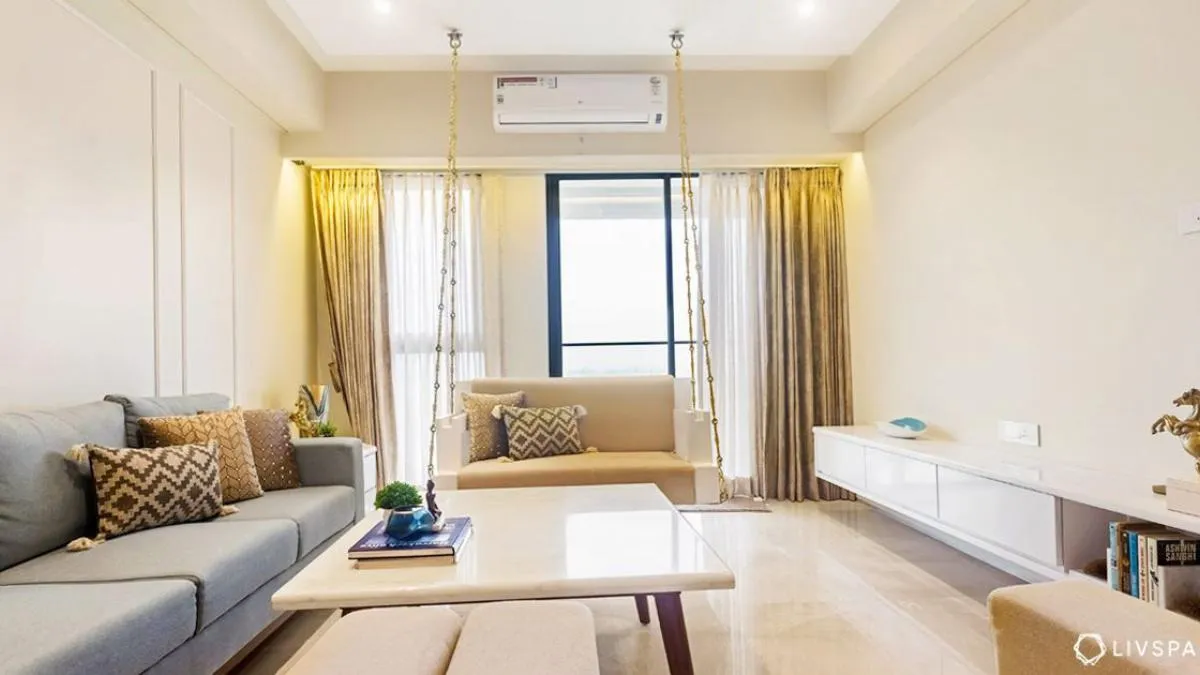
The Home Interior Market Was a Black Hole of Trust. Livspace Built the Infrastructure to Change That.
Anyone who has renovated a home in India knows the experience. The contractor who quotes one price and delivers another. The tile that arrives as a different shade from the sample. The carpenter who disappears after the advance is paid. The timeline that stretches from weeks into months without a clear explanation. The fundamental absence of accountability that comes from an industry built entirely on informal, fragmented, relationship-dependent transactions where the customer has no recourse when things go wrong.
Anuj Srivastava and Ramakant Sharma saw this in 2014 and decided that the same technology infrastructure that had transformed e-commerce — standardised pricing, trackable delivery, quality accountability, verified reviews, predictable timelines — could be applied to home renovation. Not to replace the craftspeople and designers at the centre of the work, but to build a platform around them that connected them to customers in a way that made every transaction accountable.
Livspace was born from that insight, founded in 2014, headquartered in Bengaluru, and built as an omnichannel home interior and renovation platform that serves both the new homeowner and the renovation market — modular kitchens, wardrobes, full home interiors, civil work, false ceilings, painting, flooring, and tiling — through a technology layer that provides design, delivery, and installation with an e-commerce-grade experience.
Twelve years later, Livspace has delivered over 1.2 lakh rooms, sold 50 lakh SKUs through its platform, raised $487 million across 14 funding rounds, and is preparing for an IPO.
The Platform That Organised a Fragmented Industry
The insight that makes Livspace structurally distinctive in the home interior market is not design talent or product quality — though both are central to what the company delivers. It is the systematic organisation of an industry that has historically operated outside any organising framework.
Home interior renovation in India involves designers, architects, modular furniture manufacturers, material suppliers, contractors, plumbers, electricians, painters, and a last-mile installation workforce — none of whom, in the traditional model, are connected by any shared accountability structure. The homeowner is the connecting point. Every coordination failure flows to the homeowner because the homeowner is the only party who has a relationship with every other party.
Livspace built the platform that sits above all of these relationships and owns the coordination layer. Designers, brands, manufacturers, and contractors are onboarded to the Livspace platform and operate within its standards, its timelines, and its accountability mechanisms. The customer interacts with one entity — Livspace — and holds that entity accountable for every element of the experience, from the first design consultation to the final installation punch list.
The technology stack that enables this is proprietary and built from the ground up: an interactive design tool that allows customers and designers to visualise the final outcome before anything is manufactured, a supply chain management system that tracks materials from manufacturer to installation, a project management layer that maintains timeline accountability, and a post-installation warranty system that provides redress when something goes wrong.
Livspace claims to have designed over 1.2 lakh rooms and sold 50 lakh SKUs — numbers that reflect both the scale of the customer base and the depth of the supply chain integration required to serve it reliably.
The Investor Roster — and What It Signals
Livspace's funding history is one of the more strategically interesting in the Indian startup ecosystem, because it combines pure financial investors with strategic investors whose involvement signals specific competitive advantages.
IKEA's investment arm Ingka Group participated in the Series D in May 2019 and followed on in the Series F in 2022. IKEA is simultaneously the world's largest furniture retailer and Livspace's strategic partner — a relationship that gives Livspace access to IKEA's global product range, its supply chain infrastructure, and the brand credibility that one of the world's most trusted home furnishing companies carries. When IKEA invests in an interior design platform, it is not merely a financial decision. It is a statement about the platform's ability to be the channel through which IKEA reaches Indian homeowners who want managed renovation rather than self-assembly.
Saint-Gobain, the French building materials giant, invested in November 2021 and made a follow-on strategic investment in February 2024. Saint-Gobain sells glass, insulation, gypsum, and construction materials — materials that go into every Livspace project. Its investment creates a supply chain alignment that benefits both parties.
KKR led the landmark $180 million Series F in February 2022, which elevated Livspace to unicorn status at a $1.2 billion valuation. KKR is one of the world's largest private equity firms and a significant presence in the Asia-Pacific technology and consumer sectors. Its participation at this scale is the institutional signal that Livspace's business model is credible, its growth trajectory is real, and the path to an IPO is plausible.
Bessemer Venture Partners, Goldman Sachs Investment Partners, TPG Growth, Jungle Ventures, and EDBI round out an investor base that brings together venture capital, private equity, strategic industrial, and government-linked investment in a combination that few Indian startups of any category have assembled.
Total funding across all rounds: $487 million.
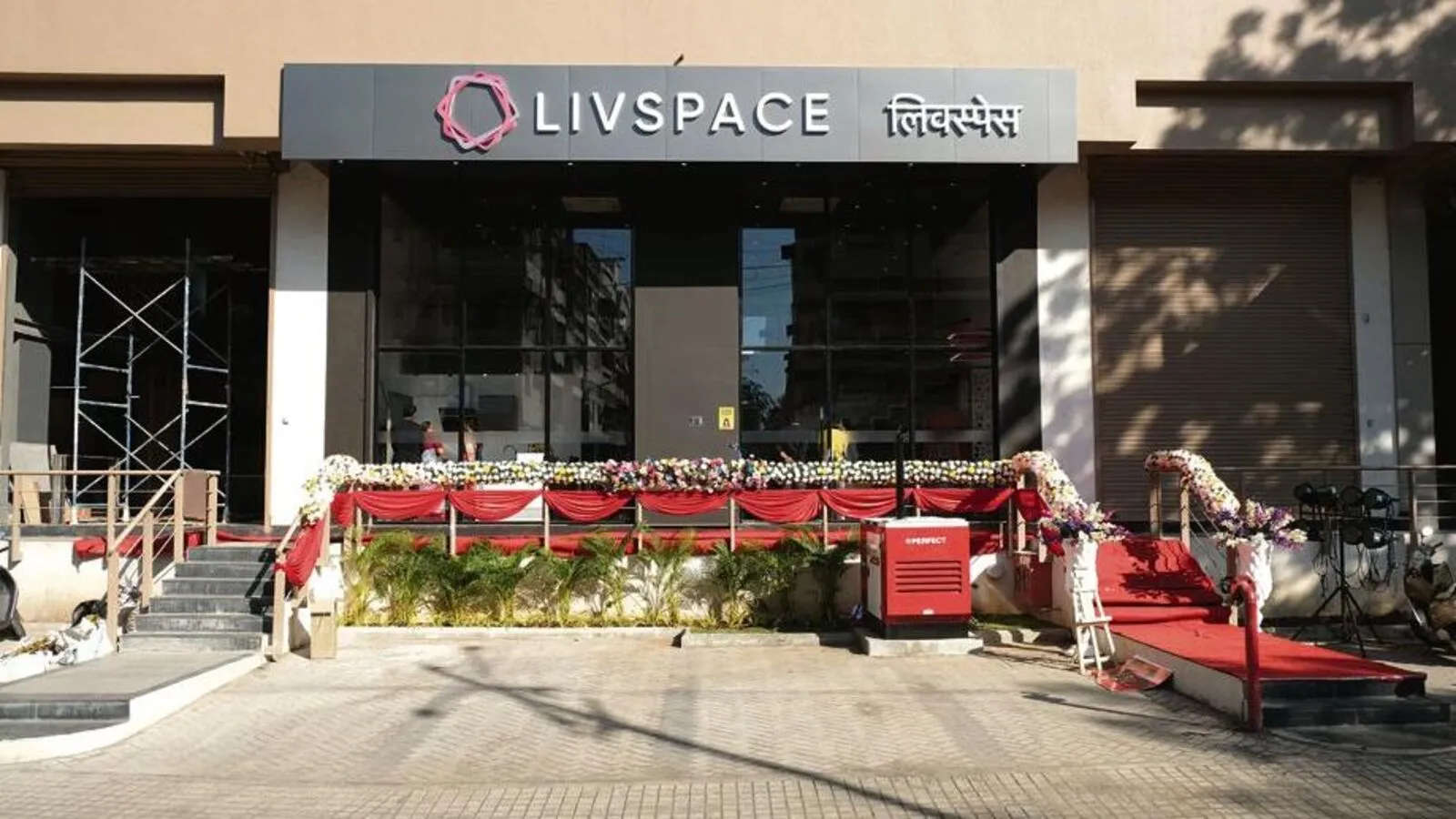
FY24 Revenue, the Reverse Flip, and the IPO Preparation
Livspace's FY24 revenue came in at ₹960 crore, a 15.9 per cent increase from ₹828 crore in FY23. VCCircle reported in October 2025 that Livspace continued to narrow losses and build a profitability path in FY25. The trajectory is one of a company that has passed through the high-burn growth phase and is building toward the sustainable unit economics that a public market listing requires.
In April 2025, Livspace completed a significant step in its IPO preparation: a reverse flip from its Singapore parent entity to India. The company received INR 427.21 crore, approximately $50 million, from Livspace Pte Ltd in Singapore through a rights issue of 1.85 crore equity shares at INR 230 per share. The capital infusion was explicitly described as part of the reverse flipping process as the company prepares for an initial public offering.
The reverse flip itself — the process of redomiciling a Singapore-headquartered entity to India — was accelerated by a government policy change that eliminated the requirement for National Company Law Tribunal clearance, allowing startups to complete the process through a fast-track mechanism. Livspace was among the first to use the new regime.
The leadership transition that accompanied this preparation saw co-founder Anuj Srivastava step into the role of Chairman, with former COO Ramakant Sharma elevated to CEO. Sharma's operational background — as the person who built Livspace's supply chain and delivery infrastructure — makes him the appropriate leader for the IPO-preparation phase, where the story being told to public market investors will be built on operational metrics rather than growth narrative.
The December 2025 Acquisition — and What It Tells You About the Strategy
In December 2025, Livspace acquired a majority stake in Abby Lighting and Switchgear for $23 million. Abby Lighting is a lighting solutions company that serves the same homeowner and commercial renovation market that Livspace operates in — but as a product manufacturer and distributor rather than a platform.
The acquisition is strategically coherent for two reasons. First, lighting is one of the most consequential and least standardised elements of a home renovation — a category where quality, reliability, and design coherence matter enormously to the end experience but where supply chain fragmentation and quality inconsistency have historically made it difficult for renovation platforms to guarantee outcomes. Bringing a lighting brand in-house gives Livspace a quality-controlled supply chain node in a category it could not previously control.
Second, as Livspace approaches an IPO, the ability to point to owned manufacturing and product assets — rather than purely the margins of a services platform — improves the quality and predictability of its revenue streams in the language that institutional investors and public market analysts use to evaluate a business.
In August 2025, Livspace also acquired a stake in furniture manufacturing startup TPlus, extending the same logic: building owned supply chain capability in the manufactured goods categories that flow through every Livspace project.
The IPO That Is Coming — and Why the Market Is Ready
Livspace has publicly indicated an IPO target of late 2025 or early 2026 across multiple reporting cycles. The reverse flip, the internal capital infusion, the leadership restructuring, the acquisitions, and the ongoing profitability improvement all form a coherent preparation narrative that a market that has watched Nykaa, Zomato, and Ather list successfully understands.
India's home interior and renovation market is large and growing at a pace that urban residential demand, rising per capita incomes, and the expansion of the new-home buyer base continue to support. Livspace operates across 50-plus metro and non-metro cities in India, with international presence in Singapore and the Middle East.
The company that organised an industry held together by informal relationships and paper contracts — and replaced it with a technology platform that gives homeowners the accountability they deserve — is building toward its moment on the public market.
Twelve years. Fourteen funding rounds. Forty-seven startups outcompeted. 1.2 lakh rooms delivered. $487 million raised.
The IPO is the next room.


