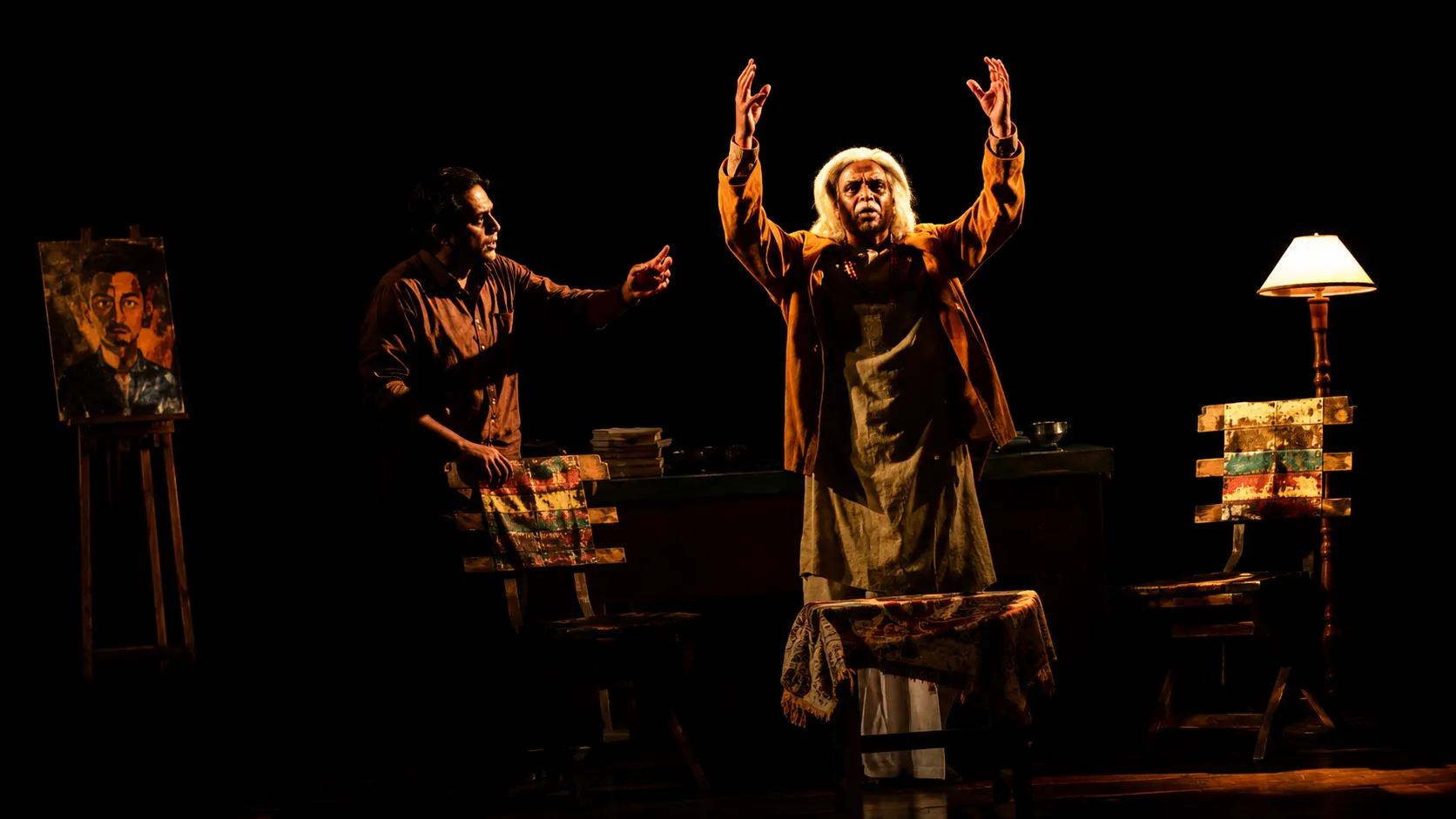
In a converted theater space inside The Drake, a historic Philadelphia building whose Art Deco bones have quietly witnessed nearly a century of the city's cultural life, a small but fiercely committed community of South Asian artists is once again preparing to take the stage. Kushilob & Friends 2026, the latest edition of the Philadelphia-based theater collective's flagship festival, is set to bring original, multilingual drama to both the Proscenium Theatre and the Louis Bluver Theatre at The Drake — a homecoming, of sorts, for an organization that has spent nearly a decade quietly building one of the most distinctive South Asian performing arts institutions in the northeastern United States.
For audiences unfamiliar with Kushilob's work, the festival represents an entry point into a corner of the American theater world that rarely receives mainstream attention: original, frequently untranslated, emotionally uncompromising drama written by and for South Asian diaspora communities, staged not as cultural curiosity but as serious, ambitious theatrical craft. For the Philadelphia-area South Asian community, however, Kushilob & Friends has become something closer to an annual ritual — a recurring proof point that immigrant and diaspora artists can build enduring cultural institutions from the ground up, without waiting for validation from mainstream American theater gatekeepers.
Kushilob was founded in 2016 as a 501(c)(3) nonprofit organization by a group of South Asian expatriate artists based in the Greater Philadelphia and Delaware Valley region. From its earliest days, the organization defined itself not as a single-language or single-community company, but as a self-described multilingual theatre collective, committed to producing both original and adapted works across a range of South Asian languages, most prominently Bengali, while remaining deliberately open to cross-cultural collaboration with artists from across Asia and the broader North American diaspora.
That founding commitment to multilingual, cross-cultural work has shaped nearly everything about how Kushilob has approached its decade of programming. According to the company's own mission statement, Kushilob describes its purpose as connecting diverse ethnicities by breaking through geographical and cultural boundaries, while explicitly celebrating rather than erasing the differences between them — a philosophy that stands in some contrast to theater companies that market South Asian work primarily as a bridge toward assimilation into mainstream American cultural categories. Kushilob's stated ambition has instead been to hold space for South Asian stories on their own terms, performed frequently in South Asian languages, for audiences the company describes as large and genuinely diverse.
Over the ten years since its founding, Kushilob has built a substantial and increasingly well-regarded production history. The company's repertoire spans an unusually wide range of theatrical forms and thematic territory: works that recover marginalized voices and stories from South Asia's past sit alongside contemporary pieces grappling with the urgencies of present-day life, both within India and Bangladesh and within the diaspora communities of the United States. One production frequently cited in the company's own retrospectives, titled Bhokatta, was staged at the prestigious South Asian Theatre Festival and described by the company as a visceral exploration of deception and truth — a production that marked what Kushilob considers its formal entry into the broader South Asian theater circuit in North America, earning notice for its raw intensity and the strength of its performances.
Another notable work in the company's catalogue, Ei Raat Madhyaraat, has been described by Kushilob as a tense, dialogue-driven drama centered on a common man's confrontation with entrenched power. The plot, according to the company's own description, begins as a late-night dispute involving medical professionals and legal proceedings before escalating into a broader reckoning with systemic authority, political influence, and the personal cost of sustained resistance — thematic terrain that reflects Kushilob's evident appetite for staging work that engages directly with questions of institutional power, rather than confining itself to more conventional diaspora narratives centered on immigration or cultural adjustment alone.
Kushilob's collaborative footprint extends well beyond its own original productions. Over the years, the company has performed at a range of significant South Asian and broader Asian-American theater festivals, including the South Asian Theater Festival itself, the well-established Philadelphia Fringe Festival — one of the city's most prominent platforms for independent and experimental theater — as well as FestivET 2023, an international theater festival, and the North America Bengali Conference, a major annual gathering that draws Bengali-speaking communities from across the continent for a mix of cultural, literary, and artistic programming. This pattern of sustained participation across multiple overlapping festival circuits reflects a deliberate strategy on Kushilob's part: rather than operating as an isolated company staging occasional productions for its own community, Kushilob has positioned itself as an active node within a broader, interconnected network of South Asian and Asian-American performing arts organizations across North America.
The company's continued collaboration with fellow artists is reflected directly in the framing of its latest venture, Kushilob & Friends, whose very name signals an explicit embrace of collaboration over solo showcasing. Rather than staging a single company's work in isolation, the festival format allows Kushilob to bring together a broader roster of performers, directors, and storytellers under a shared banner — an approach that mirrors similar community-building models employed by comparable South Asian theater initiatives across the country, including established programs such as coLAB Arts' South Asian Theatre Festival in New Jersey and the long-running South Asian Theater Festival organized in collaboration with Epic Actors' Workshop, a group originally founded in New York in 1988 that has itself played a foundational role in establishing Bangla theater as a durable presence within American diaspora arts institutions.
The choice of venue for this year's edition carries its own resonance. The Drake, home to both the Proscenium Theatre and the Louis Bluver Theatre, occupies a storied position within Philadelphia's broader theater ecosystem, having hosted a range of the city's emerging and independent performing arts organizations over the years, including new-work initiatives such as The Foundry at PlayPenn, a tuition-free, three-year playwrights' workshop for early-career Philadelphia-based writers produced in association with the Philadelphia Theatre Company. Staging Kushilob & Friends 2026 within this same institutional ecosystem places the company's South Asian-focused programming directly alongside some of Philadelphia's most closely watched new-work theatrical initiatives, reinforcing Kushilob's broader ambition of being recognized not as a niche cultural offering operating on the margins of the city's theater scene, but as a fully integrated participant within it.
For the Philadelphia and Delaware Valley region's South Asian community more broadly, Kushilob's decade-long persistence carries significance well beyond any single festival edition. The Greater Philadelphia area has, over the past several decades, developed into one of the more substantial South Asian population centers on the US East Coast, drawing immigrants and their families across a range of professional sectors, from healthcare and academia to technology and small business ownership. Cultural infrastructure supporting this growing population has expanded considerably over the same period, encompassing everything from religious institutions and language schools to large annual festivals such as the long-running Heritage India Festival held at the Philly Expo Center. Within that broader ecosystem, Kushilob occupies a distinctive niche: rather than focusing on the large-scale festival or commercial-entertainment model favored by some diaspora cultural events, the company has instead committed itself specifically to serious dramatic theater — a comparatively resource-intensive and audience-limited art form that requires sustained community support to remain viable over a full decade of continuous operation.
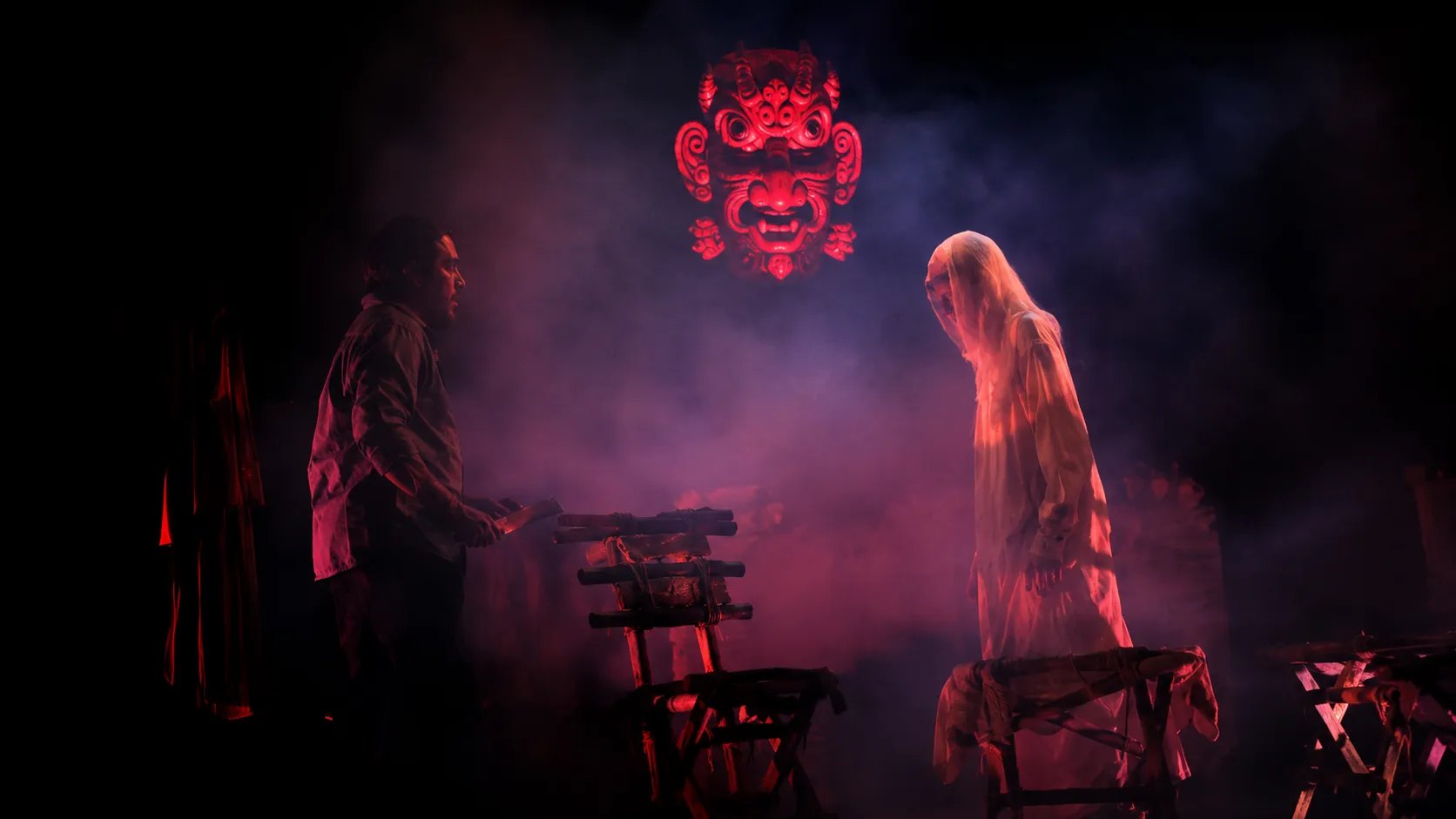
That sustained viability has depended, by the company's own account, on active fundraising and patron support structures, with recent festival editions structured around tiered ticketing options, including single-day festival passes marketed directly to community patrons as a fundraising mechanism supporting Kushilob's nonprofit operations. This model reflects a familiar pattern among diaspora arts organizations across the United States, many of which operate with limited institutional funding and rely heavily on community patronage to sustain ambitious artistic programming year after year.
As Kushilob & Friends 2026 opens its run at The Drake, the festival arrives at a moment when South Asian representation within American arts and entertainment more broadly has become an increasingly prominent subject of public conversation, spanning everything from mainstream film and television casting to Broadway and off-Broadway programming decisions. Against that backdrop, Kushilob's decade-long, largely grassroots effort to build a sustainable, artistically ambitious South Asian theater institution in Philadelphia stands as a reminder that some of the most significant work of cultural representation continues to happen not in major studio boardrooms, but in community-organized theaters, sustained year after year by small groups of committed artists and the patrons who show up to support them.
Kushilob's persistence also invites comparison with the broader landscape of South Asian theater initiatives that have taken root across the United States over the past several decades, each shaped by the particular demographic and cultural character of its home region. In New Jersey, coLAB Arts has built its own South Asian Theatre Festival around a rotating slate of community theater companies performing in English, Hindi, and other South Asian languages, drawing on the state's large and well-established South Asian population. In New York, Epic Actors' Workshop, founded by Dr. Dipan Ray in 1988, has spent nearly four decades establishing Bangla theater specifically as a durable institutional presence, later expanding into broader collaborative festival programming with partners including Crossroads Theatre Company. Kushilob's own emergence in Philadelphia in 2016, relatively recent by comparison, reflects the more recent maturation of the Delaware Valley's South Asian community into a population large and organized enough to sustain its own dedicated theatrical institution, rather than relying solely on touring productions or one-off community performances.
That maturation has not been without its challenges. Sustaining a nonprofit theater company focused specifically on South Asian, and frequently non-English-language, dramatic work requires navigating funding and audience-development obstacles considerably steeper than those faced by companies working in more commercially established genres. Grant funding for ethnic-specific theater remains comparatively limited relative to mainstream regional theater funding pools, and building consistent audiences for original, frequently untranslated dramatic work demands a level of sustained community trust and engagement that takes years, not months, to establish. Kushilob's ability to reach a decade of continuous operation, and to graduate from smaller community venues into a recognized Philadelphia performing arts venue like The Drake, reflects the accumulated result of that sustained community-building work.
Looking beyond this year's festival, Kushilob's leadership has signaled ambitions to continue expanding the company's collaborative reach, both by deepening partnerships with fellow South Asian theater organizations across the northeastern corridor and by pursuing further international theatrical exchanges with artists based in South Asia itself. For a company whose founding mission was explicitly built around breaking through geographical and cultural boundaries, that continued expansion — geographic, linguistic, and artistic — represents not a departure from Kushilob's original vision, but its most direct and deliberate continuation.
For audiences attending Kushilob & Friends 2026, the experience is likely to resemble what regular attendees describe as the company's signature approach: unadorned staging that keeps focus squarely on text and performance, minimal reliance on spectacle, and a consistent willingness to sit with difficult, morally ambiguous material rather than resolve it neatly for audience comfort. That approach has, over the company's decade of operation, built a loyal core audience within the Philadelphia-area South Asian community while also, organizers say, increasingly drawing non-South Asian theatergoers curious about a strand of American theater that remains, even now, significantly underrepresented on the country's major stages. Whether or not this year's festival edition produces the kind of breakout mainstream attention some of Kushilob's peer organizations have occasionally achieved, the company's own history suggests its ambitions were never primarily about that kind of recognition in the first place — but about the harder, slower work of keeping South Asian dramatic storytelling alive, rigorous, and unapologetically itself, one Philadelphia production at a time.
As with many diaspora arts institutions, Kushilob's long-term sustainability will likely depend as much on the next generation of South Asian-American theatergoers, many of them born and raised entirely in the United States, as on the founding generation of expatriate artists and patrons who built the company from scratch in 2016. Cultivating that next generation of audiences, several of whom may relate to South Asian identity in markedly different ways than their immigrant parents, represents an ongoing challenge for diaspora theater companies nationally, and one that Kushilob's programming choices in recent years, including its expanding collaborations with fellow companies and its embrace of festival formats designed to introduce new audiences to multiple works in a single visit, appear increasingly designed to address head-on.
This report draws on Kushilob Inc.'s publicly stated mission and production history, event listings for Kushilob & Friends 2026 at The Drake, and documentation of the company's prior appearances at South Asian theater festivals across the northeastern United States.