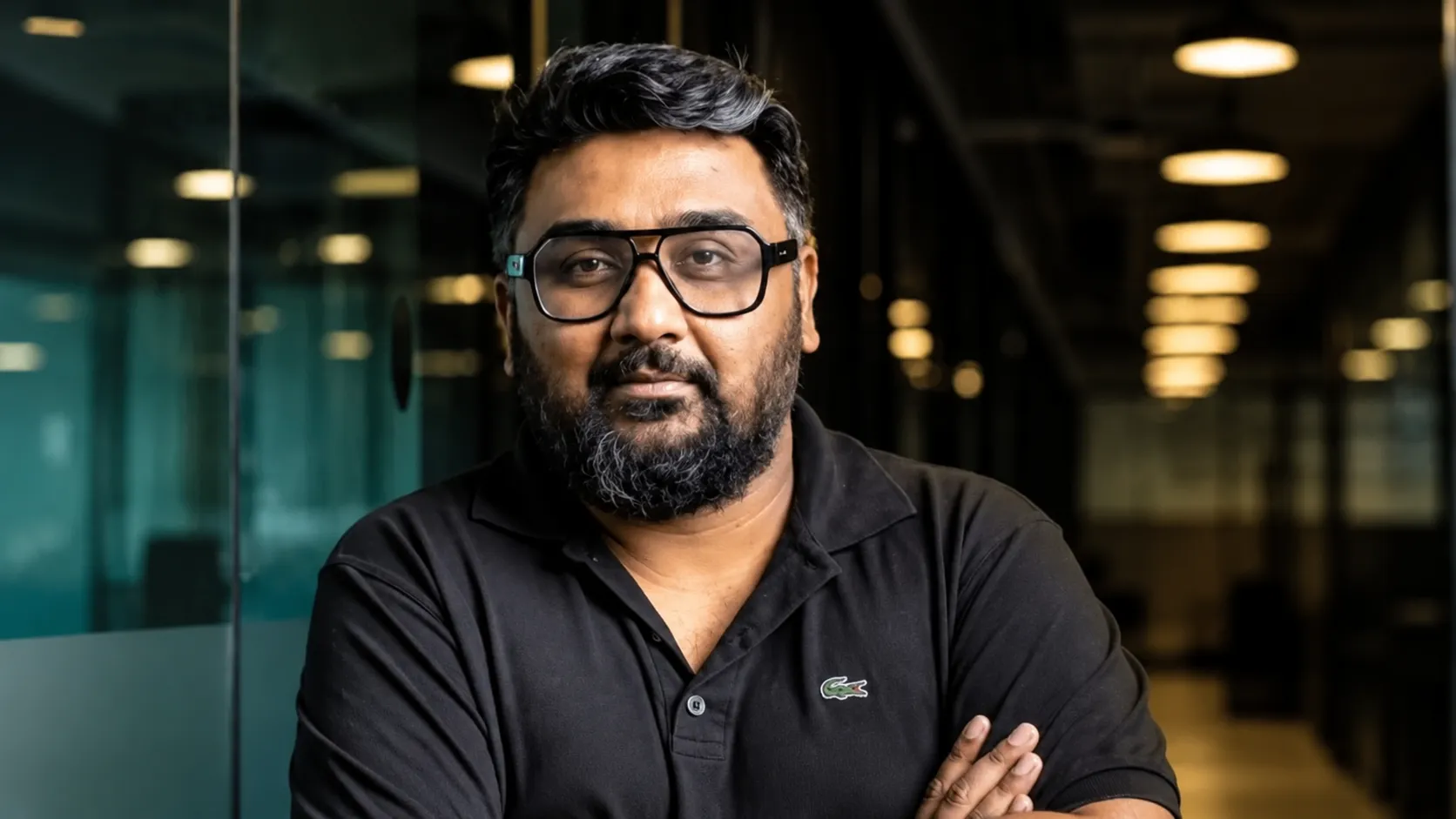
On a quiet Tuesday in June 2026, Meta made an announcement that took even seasoned observers of the Indian technology scene by surprise. Kunal Shah — the Mumbai entrepreneur best known for founding the credit-card rewards platform CRED — would become the global head and CEO of WhatsApp, the messaging application that sits on more than two billion phones across nearly every country on earth. For a company that has spent a decade being led by executives who rose through Meta's own internal ranks, the choice of an outside founder, and an Indian one at that, signaled something bigger than a routine leadership change.
It was, in one sense, the natural next step in a two-decade story about Indian-origin executives climbing to the top of the world's most consequential technology companies. Satya Nadella has run Microsoft since 2014. Sundar Pichai has run Google and its parent Alphabet since 2015. Arvind Krishna has led IBM since 2020. Each of those appointments followed a familiar arc: brilliant engineers and managers, educated in India, who spent decades working their way up through a single American corporation until the top job became theirs. Kunal Shah's story follows no such arc. He built his own companies from scratch, on Indian soil, for Indian customers, and only then did the world's largest social media company come looking for him.
The Announcement Heard Around Silicon Valley
The timing of the announcement mattered as much as the announcement itself. It came weeks after Meta's strategic investment in CRED, a deal that had already raised eyebrows in fintech circles for the sheer size of the bet Meta was willing to place on an Indian rewards platform that, on paper, looked like a small niche business compared to Meta's global scale. What became clear only afterward was that the investment was never just about CRED's balance sheet. It was an audition — and Shah passed it emphatically enough that Meta handed him control of arguably its most important product outside its core social networks.
WhatsApp today is not simply a messaging app in the way it might have looked a decade ago. In India, it has become something closer to civic infrastructure: the app through which small shopkeepers send invoices, through which families coordinate weddings and emergencies, through which government services and local businesses increasingly transact. Handing the keys to that platform to a founder who built his career studying exactly how Indians use financial products was, in retrospect, a logical bet dressed up as a surprising one.
The FreeCharge Years: A First Exit, A First Lesson
To understand why Meta trusted Shah with WhatsApp, it helps to rewind to the beginning of his career. Shah's first major venture was FreeCharge, a mobile recharge and bill payment platform he built in the early 2010s at a moment when most of India was just beginning to carry smartphones and top up prepaid mobile balances through corner-store agents rather than apps. FreeCharge digitized that ritual, turning a small, repetitive chore into a habit-forming digital transaction, and in doing so built one of the earliest large consumer fintech user bases in the country.
He eventually sold FreeCharge, and the sale gave him two things that would define the rest of his career: capital, and a hard-won understanding of how quickly a first-mover advantage in Indian fintech can erode once every large company decides to build a copycat product. FreeCharge's later years were marked by intensifying competition from better-funded rivals, and Shah watched a business he had built from nothing get squeezed by the very success it had proven was possible. It was a lesson that would shape every decision he made with his next company.
CRED and the Art of Building for the Few
Rather than chase India's next billion mobile users — the strategy nearly every well-funded Indian startup pursued through the 2010s — Shah made a contrarian bet when he founded CRED in 2018. He would build for a small, wealthy, credit-worthy slice of Indian consumers: people who already owned credit cards and paid their bills on time, an underserved niche precisely because most fintech founders considered it too small to be worth building for. CRED's proposition was almost the inverse of typical Indian startup logic. Instead of subsidizing mass adoption, it built an exclusive rewards ecosystem, gating access behind credit scores and turning bill payment into something closer to a loyalty club.
The bet looked strange at first, and skeptics pointed out that a company built around a minority of India's population could never achieve the kind of scale venture investors expect. But CRED's users turned out to be extraordinarily valuable — high spenders, high earners, and an audience that advertisers and financial partners were eager to reach. CRED grew into one of the most closely watched fintech platforms in the country, less because of the raw size of its user base and more because of the density of value packed into it. It was this instinct — build precisely for the audience that matters most, rather than for the largest audience possible — that appears to have caught Meta's attention.
By the time Meta made its investment in CRED, Shah was no longer simply an app founder. He had become one of Indian fintech's most quoted public thinkers, known for blunt, sometimes contrarian commentary on how consumer behavior actually works, delivered in a style that made him something of a public intellectual for India's startup ecosystem, well beyond CRED's own user base.
What WhatsApp Actually Needs Right Now
Shah's mandate at WhatsApp is, on its face, deceptively simple: drive the platform's next phase of growth across artificial intelligence, subscriptions, and business messaging. In practice, each of those three words represents an enormous unsolved problem for Meta. WhatsApp has spent years being the app billions of people cannot live without, yet monetizing that dependence without breaking the trust that built it has proven far harder than monetizing Instagram or Facebook's advertising-driven feeds.
Business messaging is the most obvious opportunity, and also the most delicate one. In markets like India, Brazil, and much of Southeast Asia, small businesses already use WhatsApp as an informal storefront — sending product catalogs, confirming orders, and handling customer service entirely inside chat threads. Turning that organic behavior into a structured, monetizable product without alienating small merchants who have come to depend on the app's simplicity is exactly the kind of problem Shah spent years solving at CRED, where the entire business model depended on getting monetization design right for a specific, high-value user segment without breaking their trust.
Subscriptions present a different kind of challenge. Meta has experimented with premium tiers across its family of apps for years with mixed results, largely because messaging apps carry an unusually strong expectation of being free and universally accessible. Layering a subscription business on top of that expectation, without fragmenting WhatsApp's famously flat, ad-free experience, requires the kind of surgical product judgment that made CRED's rewards ecosystem work: give a slice of highly engaged users something worth paying for, without ever making the core experience feel diminished for everyone else.
And then there is artificial intelligence, the area every major technology company is racing to fold into its most-used products. WhatsApp's AI ambitions will need to solve for something almost no other AI deployment has had to solve at this scale: preserving the sense of private, person-to-person intimacy that has always been the platform's core appeal, even as AI features push toward automation, business assistance, and increasingly agentic behavior on users' behalf.
None of these three priorities exist independently of one another, and that interdependence may be the single hardest part of Shah's new job. A business messaging tool that leans too heavily on AI automation risks feeling impersonal to the small merchants who currently value WhatsApp precisely because it feels like talking to a real person. A subscription tier built around AI features risks alienating free users if the underlying AI capability is perceived as being deliberately withheld from everyone else. Getting the sequencing and balance right — deciding which capability ships first, which stays free, and which becomes the anchor for a future paid tier — is a design problem that rewards exactly the kind of granular, consumer-behavior-first thinking that defined Shah's entire career before Meta came calling.
The Bigger Pattern: Founders, Not Just Executives
Shah's appointment slots into a broader, decades-long pattern of Indian-origin executives leading the world's most influential technology companies, but it also marks a subtle break from that pattern's usual shape. Nadella, Pichai, and Krishna each spent the better part of their careers as employees of the companies they eventually came to lead, rising through internal management structures over ten, twenty, sometimes thirty years. Shah's path ran almost entirely outside that system. He built two companies of his own, sold one, and grew the other into something significant enough that the world's largest social platform decided the fastest way to fix a strategic problem was to buy into his company and then hire him directly.
That distinction matters for how the story of Indian talent in global technology gets told going forward. For years, the dominant narrative was one of migration and patient internal ascent: talented engineers leaving India, joining American companies, and slowly working their way to the top over a generation. Shah's story suggests a second, faster pathway is emerging alongside it — American technology giants increasingly looking to acquire Indian innovation and its founders directly, rather than simply recruiting Indian talent into their own existing structures.
What Comes Next
Shah now inherits a platform whose scale is almost difficult to describe in ordinary business terms: a messaging service used by a majority of the planet's connected population, embedded so deeply into daily communication in dozens of countries that any change to how it works ripples through hundreds of millions of small interactions at once. His early moves — which features get built first, how aggressively WhatsApp pushes into business tools, how carefully it handles the introduction of AI — will be watched not just by Meta's investors but by an entire generation of Indian founders who now have a concrete example of what building for a specific, well-understood audience can eventually lead to.
There is also a question of culture that will shape how smoothly this transition goes. Meta is, at its core, an engineering-led organization built around internal promotion cycles, performance review systems, and a management culture refined over two decades of running the same handful of core products. Shah, by contrast, has spent his career as a founder answerable primarily to his own conviction about what consumers actually want, unconstrained by the kind of internal consensus-building that large technology companies require of their senior executives. How he adapts that founder's instinct to the realities of leading a division inside one of the world's largest corporations, rather than a company of his own making, may prove just as consequential to WhatsApp's trajectory as any single product decision he makes in his first year.
Indian fintech founders and technology entrepreneurs have watched the appointment with particular interest, for reasons that go beyond national pride. CRED's own growth story has often been cited in Indian startup circles as proof that a narrower, higher-value approach to building a consumer business could work in a market conventionally understood to reward only massive scale. Shah's elevation to lead WhatsApp extends that lesson one step further: it suggests that building something valuable and precise, rather than simply large, can eventually put an Indian founder in charge of a platform larger than almost any single company most entrepreneurs could ever hope to build from scratch on their own.
Whatever happens next, the appointment itself has already done something notable: it has added a new chapter to the story of Indian leadership in global technology, one written not in the language of steady internal promotion, but in the language of founders building something so precise and valuable that the world's largest companies come looking for them instead.


