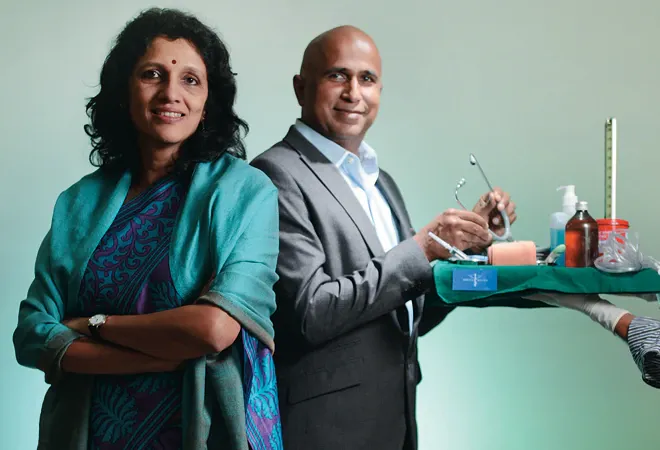
K. Ganesh & Srinivasan — The Chennai Duo That Built India’s Largest Home Healthcare Platform
The Problem: India’s Broken Post‑Discharge Care
In 2012, K. Ganesh was already a celebrated entrepreneur. He had co‑founded TutorVista (an online tutoring platform sold to Pearson for $213 million) and was in the middle of building BigBasket (India’s largest online grocer). But a personal experience changed his focus.
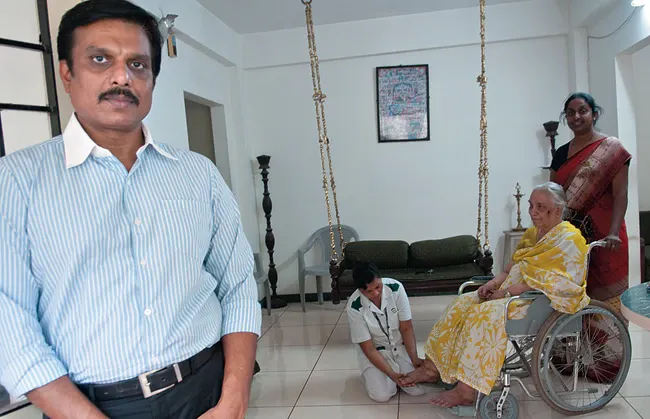
His father had undergone a hip replacement surgery at a top Chennai hospital. The surgery was successful, but the post‑discharge care was fragmented. The family struggled to find a physiotherapist who would come home, a nurse to change dressings, and a doctor for follow‑up. Ganesh’s mother, exhausted, nearly had a breakdown.
Ganesh realized that India’s healthcare system is excellent at acute care (surgeries, emergencies) but terrible at post‑discharge and chronic care. Hospitals discharge patients quickly (to free beds), but families are left to manage recovery at home with no professional support. This leads to complications, readmissions, and immense caregiver stress.
He met Dr. Srinivasan, a Chennai‑based physician with a master’s in public health from Johns Hopkins. Dr. Srinivasan had seen the same problem from the clinical side: elderly patients with diabetes, heart failure, or COPD were readmitted within 30 days simply because they had no one to monitor their vitals, adjust medications, or catch early warning signs.
Together, they founded Portea Medical in 2013. The name “Portea” comes from “portable care” — healthcare delivered at home, enabled by technology. The pilot began in Chennai: a small team of nurses, physiotherapists, and doctors making house calls, coordinated by a simple call centre and basic software.
From Chennai Pilot to National Scale
Portea’s early growth was methodical, not flashy. Ganesh and Srinivasan focused on one city at a time, building a network of trained caregivers, establishing quality protocols, and integrating with hospitals for referrals. Chennai was the laboratory; Bengaluru, Hyderabad, and Mumbai followed.
The business model was simple: Portea charges patients (or their insurers) per visit or per package. A nurse visit for wound care costs ₹500–800. A physiotherapy session costs ₹600–1,000. A monthly package for diabetes management (doctor teleconsult + nurse visit + lab tests) costs ₹2,500–5,000.
Key services offered:
Doctor home visits (GP, cardiologist, neurologist, geriatrician)
Nursing (injections, catheter care, post‑op wound management, palliative care)
Physiotherapy (post‑surgery rehab, stroke recovery, geriatric mobility)
Lab sample collection from home
Medical equipment rental (hospital beds, oxygen concentrators, CPAP machines)
By 2018, Portea had expanded to 20 cities, served 500,000 patients, and raised $60 million from Accel, Temasek, and Sabre Partners. Unlike many healthtech startups that burn cash on customer acquisition, Portea grew through hospital partnerships and word‑of‑mouth — a slower but more sustainable path.
The Technology Layer: Coordinating Care at Scale
Portea is not a “tech‑first” company; it is a “care‑first” company that uses technology to enable scale. The technology stack, built in‑house by a Chennai‑based engineering team, includes:
Care coordination platform: Schedules visits, assigns caregivers based on skill and location, and optimizes routes (similar to logistics software but for healthcare).
Electronic health records (EHR) lite: A mobile app for caregivers to record vitals, upload photos of wounds, and document notes. Physicians can review these remotely.
Remote patient monitoring (RPM): For chronic disease patients, Portea provides Bluetooth‑enabled devices (blood pressure monitor, glucometer, pulse oximeter) that transmit data to a central dashboard. Alerts are triggered if values cross thresholds.
Telemedicine integration: If a home nurse detects a problem, a doctor is available for a video consult within 30 minutes.
During the COVID‑19 pandemic (2020–2021), this technology proved critical. Portea set up home isolation care packages for COVID‑positive patients with mild symptoms, including daily nurse calls, oximeter monitoring, and doctor teleconsults. The company managed over 100,000 COVID‑19 home care cases across India, with a hospitalization rate of under 5% — far lower than the national average.
The Ganesh‑Srinivasan Partnership: Business + Clinical
The Ganesh‑Srinivasan partnership is a textbook example of complementary founders. Ganesh brings business discipline, fundraising prowess, and scaling experience. Srinivasan brings clinical credibility, regulatory knowledge, and patient‑centric design.
Their decision‑making process is unusual: every new service must be approved by both. Ganesh asks: “Will this scale? Is the unit economics viable?” Srinivasan asks: “Will this improve patient outcomes? Is it clinically sound?” If either says no, the idea dies.
This partnership has kept Portea focused. Unlike competitors who expanded into teleconsultation, e‑pharmacy, and diagnostics (often losing money), Portea stayed anchored in in‑home care — the hardest part of healthcare but also the most defensible.
Ganesh’s Tamil Nadu roots (he grew up in Chennai and studied at IIT Madras) kept Portea’s headquarters in the city, despite pressure to move to Bengaluru. The company’s engineering, operations, and clinical training centres are all in Chennai, employing over 3,000 people in the state.
Expansion into Medical Equipment and Tele‑ICU
By 2023, Portea had evolved from a service provider to a healthcare ecosystem. Two major expansions:
1. Portea Home Health Equipment (HHE): Renting hospital beds, oxygen concentrators, wheelchairs, and CPAP machines to patients at home. This is often bundled with nursing services — e.g., a bedridden patient gets a hospital bed delivered, plus a nurse visit twice a week. The equipment vertical now contributes 20% of Portea’s revenue.
2. Tele‑ICU (in partnership with Apollo Hospitals): Critical care specialists remotely monitor ICU patients in smaller towns via high‑definition cameras and real‑time data feeds. This allows district hospitals (which lack intensivists) to keep critically ill patients locally instead of referring them to metro ICUs. Portea’s technology platform powers the data integration.
As of 2026, Portea operates in 40+ cities, has a network of 5,000+ caregivers (nurses, physiotherapists, doctors), and serves over 1 million patients annually. The company generates ₹400 crore in annual revenue and has been EBITDA‑positive since 2024 — a rarity in Indian healthtech.
Challenges and Critiques
Portea’s journey has not been without pain:
Caregiver shortage: India has a severe shortage of trained nurses and physiotherapists. Portea runs its own training academy in Chennai, but scaling remains a constraint.
Reimbursement fragmentation: Insurance companies are slowly covering home healthcare, but most patients pay out of pocket. This limits adoption among lower‑income segments.
Quality consistency: With thousands of caregivers making independent visits, maintaining clinical standards is hard. Portea uses random audits, patient feedback scores, and video‑recorded visits (with consent) to monitor quality.
Some critics argue that Portea’s services are still too expensive for the mass market. A month of chronic care management (₹5,000–10,000) is out of reach for most Indians. Ganesh acknowledges this and is working with the government to pilot subsidized home care for elderly below‑poverty‑line patients.
Leadership Philosophy: Patience, Not Hype
Ganesh is known for his long‑term orientation. He has famously said: “Healthtech is not e‑commerce. You cannot grow at 200% a year and maintain quality. Ten years is the minimum time horizon.”
Srinivasan adds: “We are building a clinical organisation that happens to use technology. Not the other way around. Our brand is built on trust — one patient at a time.”
The founders have taken very little salary, reinvesting profits into training and technology. They have also turned down multiple acquisition offers, including from a large hospital chain and a global home health player.
“We are not building to sell,” Ganesh told Forbes India in 2025. “We are building to last. India will need home healthcare for the next 50 years. We want Portea to be the name families trust.”
The Tamil Nadu Advantage
Chennai has become Portea’s anchor. The city’s strong healthcare infrastructure (Apollo, Fortis, Sankara Nethralaya) provides a referral pipeline. Its pool of English‑speaking nurses and paramedics is among the best in India. And the cost of operations is 30% lower than Mumbai or Delhi.
Portea has also partnered with the Tamil Nadu Health Systems Project to provide home‑based palliative care for cancer patients in rural districts — a pilot that, if successful, could be scaled statewide.
Ganesh mentors healthtech startups at the IIT Madras Research Park and has invested in three Chennai‑based healthcare startups through his family office.


