The 2025 Marketing Technology Landscape, an annual survey of the global marketing software industry, counted more than 15,000 distinct products. Fifteen thousand tools, platforms, dashboards, integrations, and automation layers, all competing for space in the marketing technology budgets of enterprises that are simultaneously being asked to deliver more personalisation, more experimentation, and more measurable impact with flat or shrinking headcount.
Gartner's 2026 CMO Spend Survey found that the average chief marketing officer is allocating 15.3 per cent of their budget to artificial intelligence. It also found that only 30 per cent of CMOs feel ready to scale their AI capabilities.
These two data points, read together, tell you the exact problem that JustAI was built to solve.
Marketing teams are not suffering from a shortage of tools. They are suffering from the absence of a unified system that can make those tools work together intelligently, learn from every decision they make, and give marketers the ability to operate with genuine leverage rather than simply automate individual tasks within a fragmented workflow.
On June 23, 2026, JustAI announced it had raised $17 million in a Series A funding round led by Base10 Partners, with participation from Y Combinator and Peak XV Partners. The round also includes strategic investors and operators from Anthropic, Chime, and Notion, the Chief Technology Officer of HubSpot, and the founders of Eppo and Vapi. The investor list is, by itself, a statement about what category of problem this company is solving: enterprise marketing infrastructure, with the backing of people who have spent their careers inside the largest marketing and technology platforms in the world.
Who Built It and Why Their Backgrounds Matter
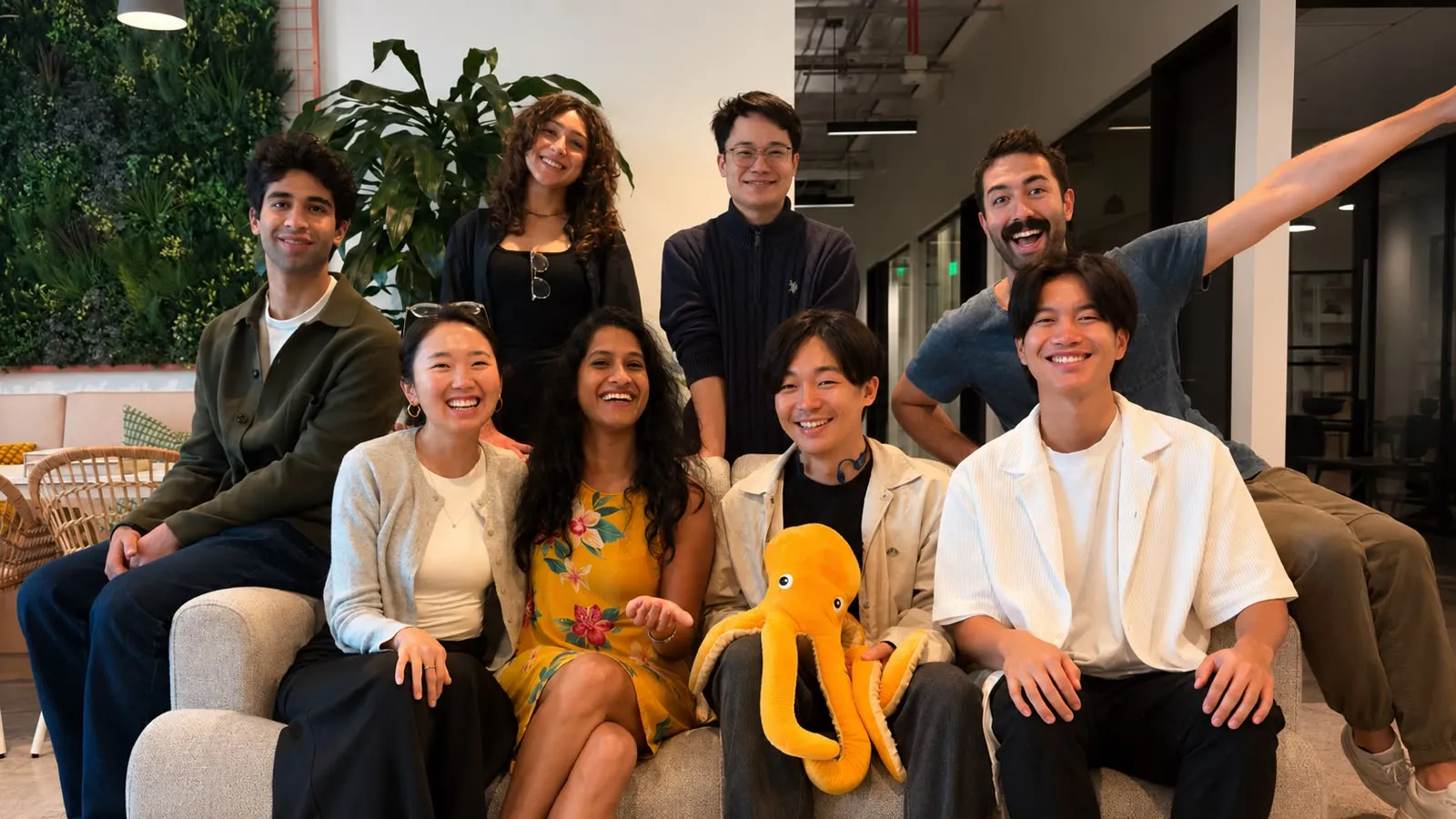
JustAI was founded by Neha Mittal and Jeff Hara, and the specific combination of their backgrounds explains almost everything about how the product was built and why it is structured the way it is.
Mittal spent her career in growth and retention at X, formerly Twitter, and Pinterest — two of the most sophisticated consumer engagement and algorithmic personalisation platforms in the world. Her work at both companies was fundamentally about the same problem JustAI is solving: how do you reach the right person with the right message at the right moment, at a scale that makes individual human decisions impossible, using systems that get better over time rather than requiring constant manual recalibration? The answer, in both cases, was machine learning applied to behavioural data at scale. The insight she carried into JustAI is that enterprise marketing teams need the same capability — but have never had access to it.
Hara brings the technical depth. His background is in machine learning and recommendation systems — the specific discipline required to build a platform whose value comes not from executing pre-defined rules but from learning, in real time, which decisions produce the best outcomes for a given user in a given context. Recommendation systems are, at their core, decisioning engines. The same infrastructure that decides which YouTube video to show you next or which Amazon product to surface on the homepage is the infrastructure that JustAI is applying to enterprise marketing decisions.
Together, the founders have built something that Mittal describes in terms that cut through the product category noise entirely. Marketing teams have spent the last decade buying more tools to manage more workflows. The real opportunity with AI is not another dashboard or another automation layer. It is giving every great marketer the ability to operate with the leverage of an entire team.
What JustAI Actually Does — Four Agents, One System
JustAI's platform is organised around four coordinated AI agents, each addressing a different layer of the marketing decision-making process, all operating within a unified system that learns continuously from the results of every decision it makes.
The Strategy Agent helps marketers audit their users, segments, and product surfaces. It is the diagnostic layer — the capability that tells a marketing team which users are most valuable, which segments are underserved, which product surfaces are generating the most engagement, and where the biggest opportunities for personalisation currently exist. This is the work that traditionally requires data analysts, spreadsheets, and weeks of manual investigation. The Strategy Agent compresses it into a real-time continuous process.
The Creative Agent turns those strategic insights into brand-forward messaging across channels including email and in-app experiences. The distinction from a conventional AI writing tool is important: the Creative Agent is not generating generic copy from a prompt. It is generating campaign content that is informed by the user context and segment insights produced by the Strategy Agent, optimised for the specific channels and formats where each user is most likely to respond.

The Decisioning Agent is the core of JustAI's competitive differentiation. It optimises for business goals including engagement, retention, and revenue, while operating within marketer-defined guardrails. The technology is powered by reinforcement learning — the same approach that underlies the most sophisticated recommendation systems in the world. Rather than running A/B tests that deliver results weeks after the campaign launches, the Decisioning Agent continuously learns from every decision it makes and updates its behaviour in real time. Every campaign it runs makes the next campaign smarter.
The Data Agent continuously measures lift, surfaces insights, and feeds learnings back into the entire system. It closes the loop — ensuring that the results of every marketing decision are captured, analysed, and used to improve future decisions rather than sitting in a reporting dashboard that a human analyst reviews once a month.
The platform currently supports more than 600 marketing decisions delegated to AI every month.
The Numbers That Made Base10 Lead the Round
The investment thesis behind the Series A is grounded in traction that is unusual for a company at this stage.
JustAI grew 5X in annual recurring revenue in the year leading up to the Series A. The platform influenced more than $100 million in customer revenue over the same period. The customer base includes Coursera, ClickUp, and Better — companies with sophisticated, data-driven marketing operations that are not easily impressed by AI promises and that would not have adopted the platform without experiencing the results firsthand.
Rexhi Dollaku, General Partner at Base10 Partners, described the investment case with precision that reflects both the data and the market context. JustAI is one of the few teams building a true decisioning and measurement layer for marketing teams. The traction backs up the thesis: 5X ARR growth and over $100 million in customer revenue influenced. Neha and Jeff combine hard-won growth experience with deep ML depth.
The CTO of HubSpot investing as a strategic angel is the endorsement that most clearly signals where enterprise marketing software is heading. HubSpot is one of the most widely used marketing platforms in the world. The company's CTO investing personally in a platform that sits above HubSpot and similar tools — orchestrating them rather than replacing them — is a statement about where the value in marketing infrastructure will concentrate as AI capabilities mature.
Vera Hui, Director of Marketing at Coursera, described what the platform unlocked at her company in terms that are worth sitting with: it would have required a development team in the past, and would not have been done without JustAI.
That sentence is the investor thesis in a single line. A marketing capability that previously required engineering resources and a development timeline now requires a single platform subscription. That is the economic logic of enterprise software at its most compelling: expanding what marketing teams can do without expanding what they need to spend.
What the $17 Million Is Building Toward
The capital deployment plan reflects a company that has proven its model and is now executing on a scale it currently cannot fully serve.
Engineering and go-to-market team expansion will allow JustAI to serve the enterprise customer pipeline it has built, and to deepen the agentic infrastructure that the platform runs on. The extension of the platform beyond consumer companies into e-commerce and B2B marketing use cases represents a significant addressable market expansion — both categories have the volume of marketing decisions and the data richness required for JustAI's reinforcement learning engine to deliver measurable improvement.
India is an explicitly stated expansion target. DealStreet Asia's coverage of the round noted that JustAI plans to explore market opportunities in India as part of its next-12-month strategy. India's enterprise technology market is both a growth opportunity in its own right and a talent opportunity — the engineering depth available in Bengaluru, Hyderabad, and Pune being directly relevant to the kind of machine learning and reinforcement learning infrastructure JustAI is building.
The consolidation agenda is the 12-month strategic priority. Over the next year, JustAI will focus on helping enterprise marketing teams consolidate fragmented tools and workflows into a unified knowledge and decisioning layer. Not replace every tool in the marketing stack. Sit above them, orchestrate them, and replace the manual human decision-making that currently holds the stack together with AI that learns from every decision it makes.
The martech stack has 15,000 products. Most CMOs cannot scale their AI capabilities. JustAI raised $17 million to be the intelligence layer that makes the other 14,999 products work the way they were always supposed to — together, continuously, learning.


