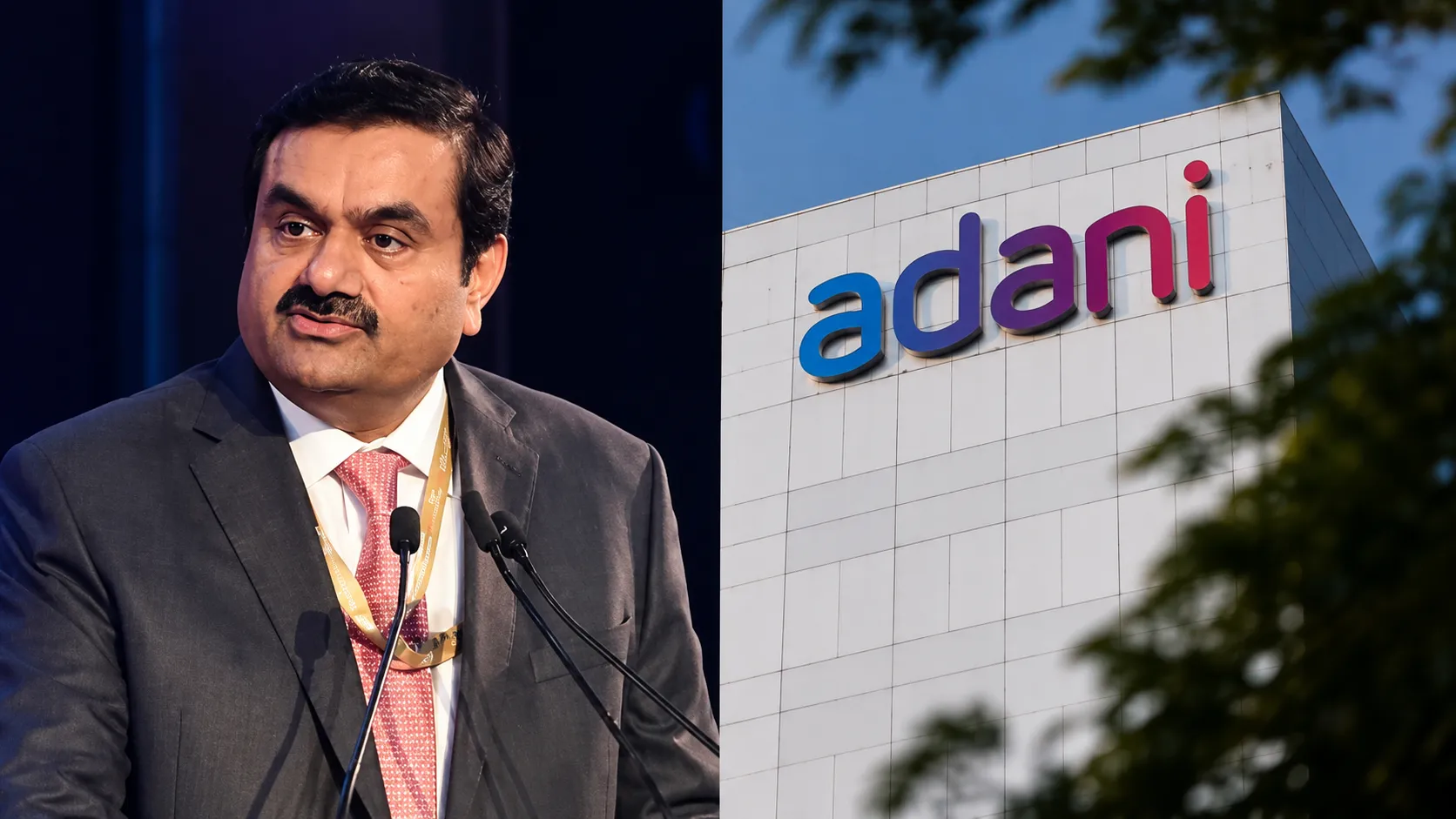
Nearly twenty months after federal prosecutors in Brooklyn unveiled one of the most consequential white-collar indictments ever brought against an Indian business figure, the United States Justice Department has formally moved to dismiss its bribery and securities fraud case against Gautam Adani — bringing to a close a legal saga that had, at various points, threatened billions of dollars in market value, entangled the Adani Group's US fundraising activities, and become a genuine point of diplomatic sensitivity between Washington and New Delhi.
The case originated on November 20, 2024, when the US Attorney's Office for the Eastern District of New York indicted Gautam Adani, his nephew and Adani Green Energy executive Sagar Adani, former Adani Green CEO Vneet Jaain, and several other senior executives, alleging they had orchestrated a scheme to pay more than $250 million in bribes to Indian government officials between 2020 and 2024 in order to secure solar energy supply contracts projected to generate roughly $2 billion in after-tax profits over twenty years. Then-US Attorney Breon Peace, announcing the charges, said the defendants orchestrated an elaborate scheme to bribe officials and lied about it while raising capital from US investors. Prosecutors additionally alleged that Adani Green had raised over $3 billion through bonds and loans from international investors while concealing the underlying bribery scheme from those same investors — a securities fraud allegation that, alongside the bribery charges themselves, gave US authorities jurisdictional grounds to pursue the case despite the underlying conduct having occurred substantially in India.
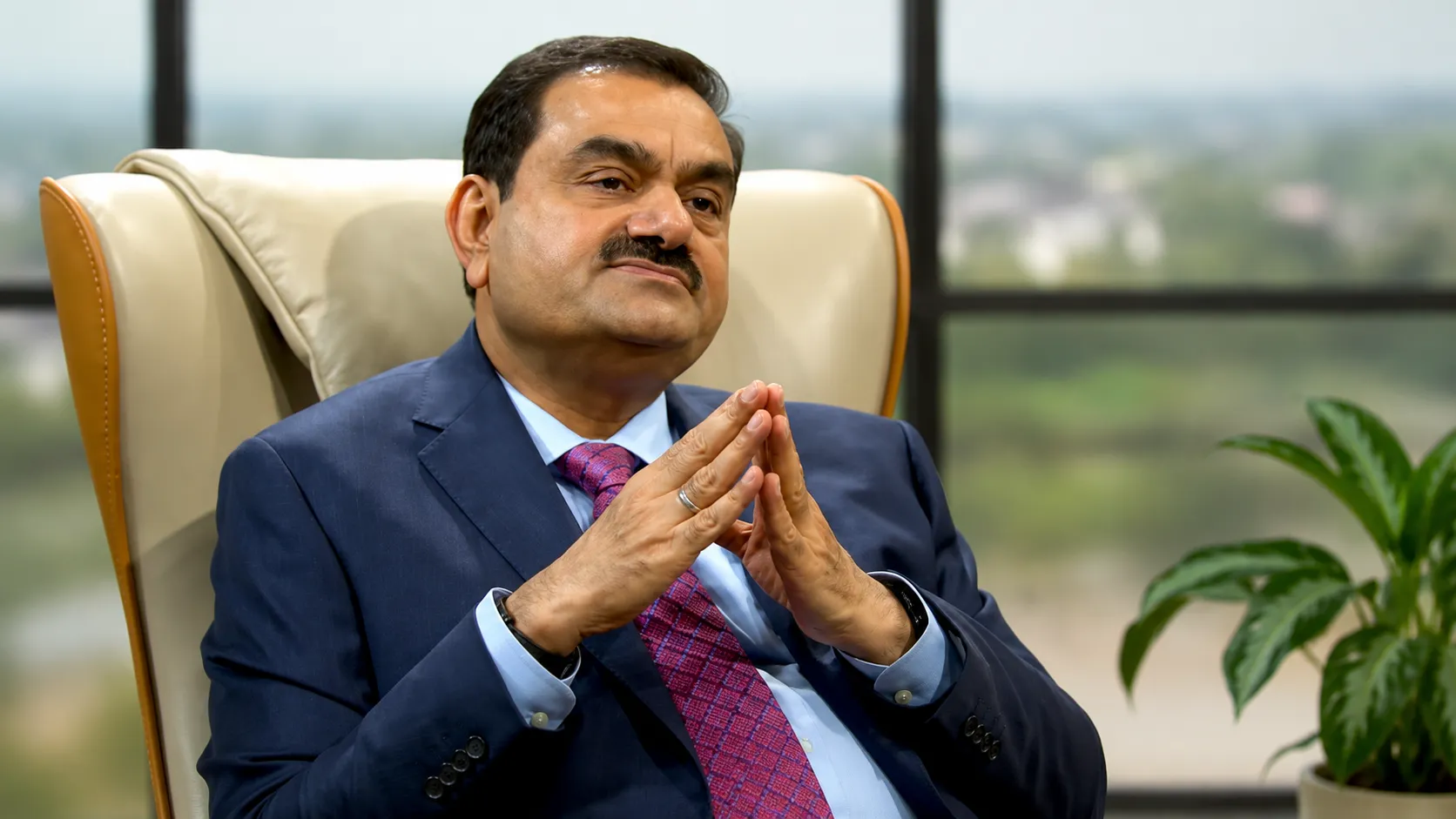
The Adani Group rejected the allegations from the outset, with a company spokesperson describing the charges as baseless and asserting the group was a fully law-abiding organisation compliant with all applicable laws, while pledging to pursue all available legal recourse. The initial market reaction, however, was severe regardless of the group's public denials: Adani Group companies collectively lost close to $75 billion in market value within roughly a week of the indictment's announcement, a shock that briefly dropped Gautam Adani out of the world's top ten wealthiest individuals as ranked by Forbes, and saw him overtaken by long-time rival Mukesh Ambani as Asia's richest person — a dramatic illustration of how directly US legal exposure can translate into immediate, tangible market consequences for even India's largest and most established business conglomerates.
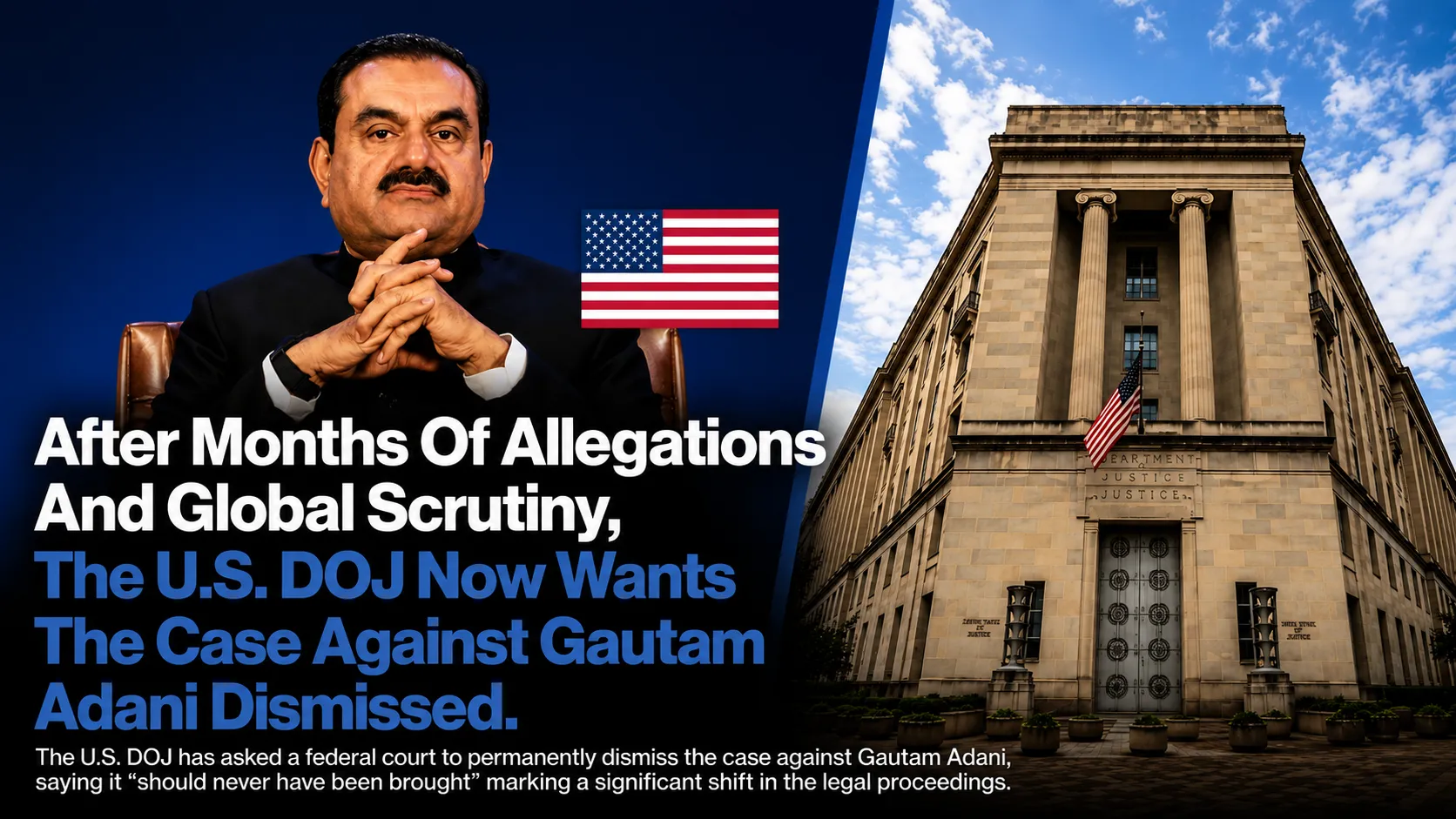
The path toward dismissal began taking shape roughly a year and a half after the original indictment, against a considerably changed political backdrop in Washington. The Trump administration, after taking office, moved to suspend enforcement of the Foreign Corrupt Practices Act — the specific federal anti-bribery statute prosecutors had relied on to bring the original charges — a policy shift that made the eventual dismissal of pending FCPA-related prosecutions, including the Adani case, considerably more likely regardless of the specific evidentiary merits prosecutors might otherwise have continued pursuing. On May 18, 2026, the Justice Department formally filed to drop the fraud case, with prosecutors stating in their court filing that the department had reviewed the case and decided, in its prosecutorial discretion, not to devote further resources to the criminal charges. Days earlier, the Securities and Exchange Commission had separately settled its parallel civil fraud lawsuit against Adani, with Gautam Adani and Sagar Adani agreeing to pay civil monetary penalties without admitting to any wrongdoing — $6 million and $12 million respectively, according to the SEC's own statement, for a combined $18 million settlement that closed out the civil regulatory track of the case even as the criminal prosecution's dismissal was still being formally processed through the courts.
That dismissal was not, however, a simple administrative formality that proceeded without judicial scrutiny. Brooklyn-based US District Judge Nicholas Garaufis, overseeing the case, took the unusual step of ordering the Justice Department to formally justify its reasoning for dropping the charges, stating the department's initial explanation lacked sufficient clarity — a judicial pushback that meant the case's actual conclusion remained genuinely uncertain for weeks even after the Justice Department's initial May filing signalled its clear intent to abandon the prosecution. The Justice Department responded to that judicial order on July 4, 2026, with a considerably more detailed ten-page filing laying out its reasoning: the case, prosecutors argued, was primarily foreign in nature, would be genuinely difficult to prove given the jurisdictional and evidentiary complexities involved, and had become inconsistent with the department's current prosecutorial priorities under the new administration.
The defence effort that preceded and substantially shaped that ultimate dismissal was, by any measure, extraordinary in its scale and sophistication. Sullivan & Cromwell, the elite US law firm that took over Adani's representation in August 2025, mounted a structured legal campaign running from February through April 2026, submitting roughly 600 pages of legal filings across multiple supplemental briefs and slide decks exceeding 300 pages in total. Lead defence lawyer Robert J. Giuffra Jr. detailed the effort's scale directly, writing that our team spent many thousands of hours analysing documents and information related to this case — a submission that specifically targeted what the defence characterised as the extraterritorial overreach of applying US securities law to conduct occurring substantially outside American jurisdiction, alongside challenges to the underlying bribery allegations themselves and to prosecutors' legal interpretation of specific statements at the heart of the securities fraud claims.
The defence team's roster of outside experts added further weight to the submission, encompassing figures whose combined credibility spanned both American legal and regulatory authority and Indian judicial standing: a former acting chair of the US Securities and Exchange Commission, a former Chief Justice of India's Supreme Court, a Harvard law professor, and renewable-energy industry specialists whose combined analysis added close to 200 additional pages examining the materiality of the underlying allegations and the technical realities of the solar energy contracts at the centre of the case. That combination of American regulatory expertise and Indian judicial authority reflected a deliberate defence strategy aimed at demonstrating both the case's genuine jurisdictional weaknesses under US law and the absence of any parallel finding of wrongdoing under India's own legal and regulatory framework, where no equivalent domestic prosecution or formal regulatory finding against the named individuals had been pursued.
A further, notably contentious dimension of the case's resolution has attracted its own separate scrutiny: Adani's decision to retain Giuffra, an attorney who also serves as one of President Trump's own personal lawyers, alongside the subsequent appointment of a member of Giuffra's legal team, James McDonald, to serve as the top federal prosecutor for the Southern District of New York under the Trump administration. Al Jazeera and other outlets covering the case's resolution specifically flagged that overlapping personnel connection as a legitimate point of scrutiny given the case's ultimate outcome, even as neither the Justice Department nor Adani's legal team has suggested any impropriety in how the connection came about. Separately, reports indicated the case's dismissal followed Adani's pledge of a $10 billion investment commitment in the United States, a pledge Giuffra's team specifically raised in the context of broader economic benefits, including projections of roughly 15,000 US jobs, that the defence argued weighed in favour of prosecutorial discretion favouring dismissal over continued pursuit of the charges.
For the Adani Group, the case's resolution removes a significant legal overhang that had shadowed the conglomerate's US fundraising activities, international partnership discussions, and broader global reputation since the original indictment. For India's broader business and diplomatic community, the episode's resolution carries its own significance: the original indictment had been characterised by some commentators as a genuine embarrassment for Prime Minister Narendra Modi's government given Adani's close business ties to figures across India's ruling establishment, and its dismissal — arriving alongside a broader thaw in India-US relations following the February 2026 tariff de-escalation — removes one further source of friction from a bilateral relationship that has, through 2025 and 2026, already had more than its share of turbulence to navigate on trade policy alone.
Whether the case's ultimate dismissal, on largely jurisdictional and prosecutorial-discretion grounds rather than any definitive finding on the underlying factual allegations, fully resolves the broader questions the original indictment raised about corporate governance and regulatory compliance within India's renewable energy contracting process is a separate matter the dismissal itself does not, and was never designed to, formally answer. For Gautam Adani and the conglomerate that bears his name, though, the practical, immediate consequence is unambiguous: a legal threat that once wiped out tens of billions of dollars in market value within a single week has, after nearly twenty months, been formally and finally closed.
The broader pattern this case fits within, involving the Trump administration's shifting approach to Foreign Corrupt Practices Act enforcement more generally, has itself become a subject of considerable debate among white-collar defence attorneys, corporate governance specialists and international anti-corruption advocates. Critics of the administration's suspension of FCPA enforcement have argued the policy shift risks signalling to multinational corporations and executives worldwide that bribery-related prosecutions initiated under one administration can be readily abandoned by a successor administration pursuing different enforcement priorities, potentially undermining the statute's deterrent effect on corporate conduct globally. Defenders of the shift, including several of the case's own outside experts recruited by the Adani defence team, have argued the original prosecution reflected genuine overreach in applying US securities law extraterritorially to conduct occurring substantially within India's own domestic regulatory jurisdiction, and that the dismissal simply corrects that jurisdictional overextension rather than representing any broader retreat from legitimate anti-corruption enforcement.
For the Adani Group's own future US business ambitions, the case's resolution — alongside the accompanying $10 billion US investment pledge — appears to have opened a considerably more constructive chapter in the conglomerate's relationship with American regulators, capital markets and potential business partners than existed at any point during the nearly two years the criminal charges remained pending. Whether that improved relationship translates into the kind of substantial, job-creating US investment the defence specifically cited in support of dismissal will become clearer only as the group's own subsequent capital allocation decisions unfold over the coming years — the next, and arguably more consequential, chapter in a story that began with a dramatic indictment and has now concluded with what both sides are, for now, treating as a genuine legal vindication.
For market observers assessing the episode's broader lessons, the Adani case offers a genuinely instructive illustration of how quickly the legal and reputational calculus facing a major multinational conglomerate can shift alongside changes in political administration, prosecutorial priority and enforcement philosophy — even when the underlying factual allegations at the heart of a case remain, as they do here, formally unresolved on their substantive merits rather than affirmatively disproven. The roughly twenty-month arc from indictment to dismissal, and the extraordinary scale of legal resources both sides ultimately committed to the fight, stands as one of the more closely watched examples in recent years of how a major Indian business figure navigated a genuinely existential-feeling US legal threat and emerged, for now, with the case behind him.


