
A quiet but consequential shift is reshaping how young, urban India chooses to live. Across Bengaluru, Mumbai, Pune, Gurugram, and Hyderabad, a growing share of Gen Z and millennial professionals are bypassing the traditional route of hunting for an independent rental flat, negotiating with a broker, and navigating the notoriously opaque and often adversarial landlord-tenant relationship that has long characterised India's urban rental market. Instead, they are opting for co-living: fully furnished, professionally managed shared accommodation that bundles rent, utilities, housekeeping, and often community programming into a single, predictable monthly payment.
This is not a marginal trend confined to a handful of startups experimenting with a niche housing model. Co-living operators across India have been scaling their portfolios aggressively, adding beds across new cities and expanding into tier-two markets, in response to what industry data consistently shows is surging demand concentrated overwhelmingly among renters in their early-to-mid twenties through early thirties — precisely the demographic cohort that forms the backbone of India's rapidly growing urban knowledge economy workforce.
WHY TRADITIONAL RENTING STOPPED WORKING FOR THIS GENERATION
To understand why co-living has found such a receptive audience, it helps to understand the specific frustrations that have long plagued India's traditional rental housing market for young, often first-time renters relocating to a new city for work. Security deposits in India's traditional rental market have historically been substantial, often requiring anywhere from several months' to a year's worth of rent paid upfront — a significant capital outlay for young professionals, particularly those early in their careers or those who have just relocated from smaller towns and cities without substantial savings or family support networks in the destination city.
Beyond the financial barrier, traditional renting in India has also long been associated with a set of social and administrative frictions that disproportionately affect certain groups of renters. Single women renters, in particular, have historically reported facing discriminatory treatment from landlords and housing societies, ranging from outright refusal to rent to single women, to intrusive curfew requirements and restrictions on visitors that would rarely be imposed on male tenants or families. Renters from religious minority communities, and those from northeastern Indian states relocating to metro cities for work, have similarly reported facing discriminatory barriers in the traditional rental market that co-living operators, by virtue of operating standardised, professionally managed properties with clear anti-discrimination policies, have generally sought to eliminate as part of their core value proposition.
Beyond these social frictions, the sheer administrative burden of traditional renting — negotiating lease terms, arranging utility connections, managing repairs and maintenance requests directly with landlords who may or may not be responsive, and navigating the eventual, often contentious process of security deposit return at the end of a tenancy — represents a meaningful time and stress cost that many young professionals, particularly those working demanding jobs in India's technology, consulting, and financial services sectors, have shown a clear willingness to pay a premium to avoid.

THE CO-LIVING VALUE PROPOSITION
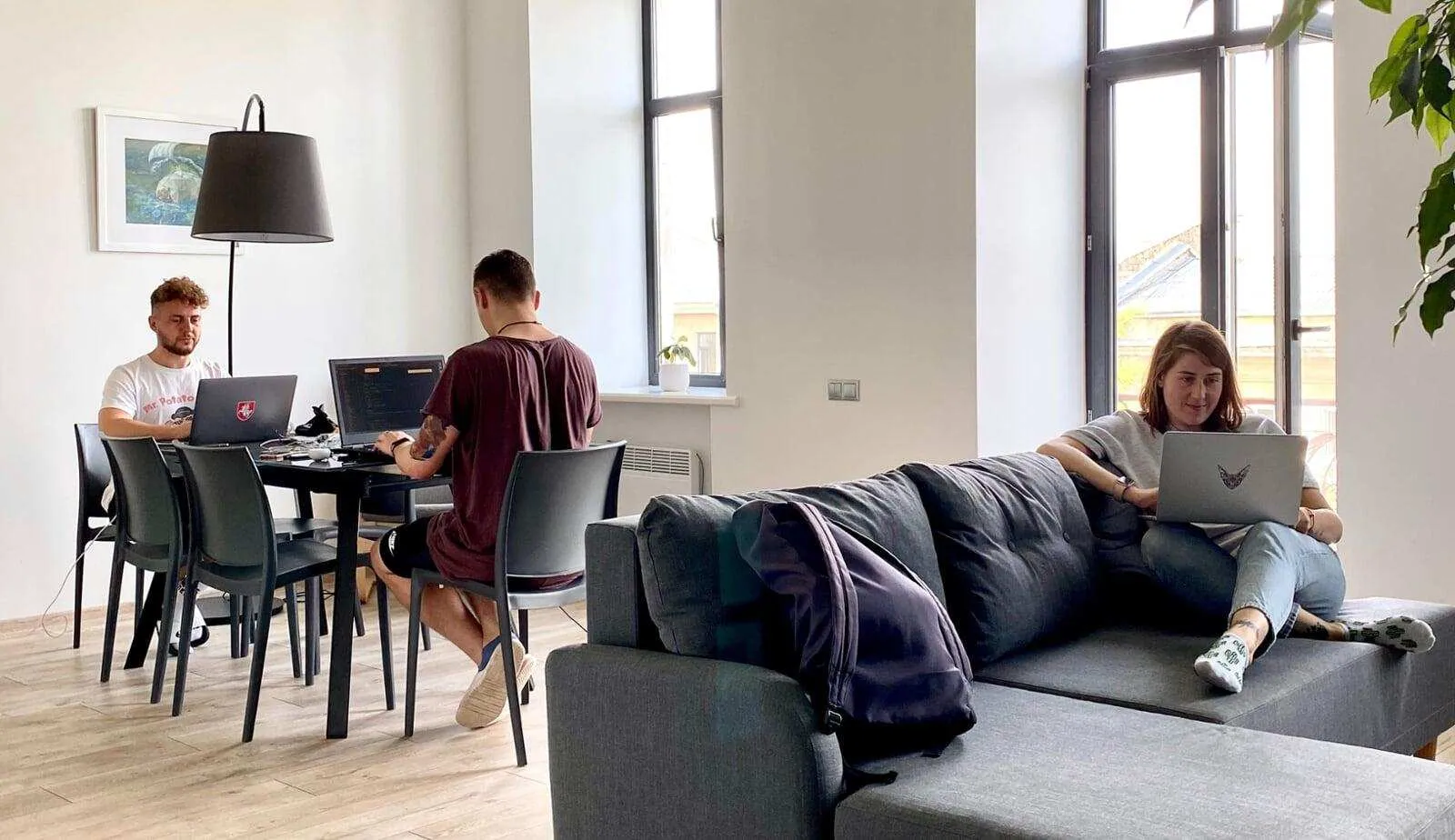
Co-living operators have built their business model directly around addressing these specific pain points. A typical co-living arrangement involves a single, all-inclusive monthly payment covering rent, utilities, high-speed internet, housekeeping services, and often access to shared amenities like gyms, common lounges, and organised social or professional networking events designed to help residents — many of whom have relocated to a new city without an existing social network — build community and social connections more quickly than they might through independent living.
Security deposits at co-living properties are typically far lower than traditional rental market norms, often equivalent to just one or two months' rent rather than the six-to-twelve month deposits common in traditional rentals, removing a significant upfront capital barrier for young renters. Lease flexibility is another core differentiator, with many co-living operators offering month-to-month or short-notice-period arrangements that align far better with the career mobility patterns of a generation of professionals who may relocate between cities multiple times in their twenties as they pursue better job opportunities, further education, or simply want to experience living in different parts of the country before settling more permanently.
THE DEMOGRAPHIC AND ECONOMIC DRIVERS
The demand surge for co-living is closely tied to broader demographic and economic trends reshaping urban India. The country's technology and services sectors have driven substantial internal migration, as young professionals relocate from smaller towns and cities to India's major metro hubs in pursuit of career opportunities concentrated in these urban centres. This migrant workforce — often arriving in a new city without an existing social network, family support system, or deep familiarity with the local rental market — represents precisely the demographic for whom co-living's bundled, simplified value proposition holds the greatest appeal.
Gen Z and younger millennial renters, having grown up in an era of subscription-based services across nearly every category of consumption — from streaming entertainment to ride-hailing to food delivery — have shown a broader generational comfort with paying a premium for bundled, hassle-free, subscription-style access to services, including housing, rather than the ownership-oriented, negotiation-heavy transactional model that characterised previous generations' approach to renting. This generational shift in consumption preferences has aligned neatly with co-living operators' business model, creating a receptive market for what is, in essence, "housing as a service."
THE INVESTOR AND BUSINESS MODEL ANGLE
Beyond the consumer-facing value proposition, co-living has also attracted significant investor interest as an emerging real estate asset class in India, with several operators having raised substantial venture capital and private equity funding to finance their expansion across multiple cities. The business model's appeal to investors typically rests on several factors: the ability to generate higher rental yields per square foot compared to traditional single-tenant residential leasing, given the shared-space, higher-occupancy-density model that co-living properties typically employ; the recurring, subscription-like revenue model that offers more predictable cash flows than traditional real estate leasing; and the scalability of a standardised operating model that can, in principle, be replicated efficiently across multiple cities and property types.
That said, the co-living business model in India has also faced its share of challenges and scrutiny. Profitability has, for several operators, proven more elusive than initial growth-focused fundraising narratives suggested, given the capital-intensive nature of fitting out properties to co-living standards, the ongoing operational costs of providing the bundled services that differentiate co-living from traditional renting, and the competitive pressure from an increasing number of operators entering the space, which has in some markets compressed the premium pricing co-living properties can command relative to unfurnished traditional rentals.
REGULATORY AND MARKET STRUCTURE CONSIDERATIONS
India's regulatory framework for co-living remains, in several respects, still evolving, with operators navigating a patchwork of state-level rental and tenancy laws that were not originally designed with this specific business model in mind. Some state governments have taken steps to introduce more specific regulatory frameworks recognising co-living and similar shared accommodation models as a distinct category, aimed at providing greater clarity for both operators and residents around issues like lease terms, dispute resolution, and consumer protection standards specific to this housing model.
Zoning and building code considerations have also, in some cities, created friction for co-living operators seeking to convert or repurpose existing residential properties into higher-density, professionally managed co-living configurations, with local municipal authorities in some cases applying commercial-use zoning classifications and associated compliance requirements to co-living properties that operate at a scale and density closer to a hospitality business than a traditional residential rental arrangement.
WHERE THE MARKET GOES FROM HERE
Looking ahead, industry participants and analysts tracking India's residential real estate sector broadly expect co-living demand to continue expanding, particularly as the underlying demographic and economic drivers — sustained urban migration for employment, a growing Gen Z and young millennial renter base with strong preferences for flexibility and bundled services, and continuing gaps in traditional rental market infrastructure and tenant protections — show few signs of reversing in the near term.
Whether the current wave of co-living operators can translate this demand growth into sustainable, durable profitability, however, remains a more open question, one that will likely determine which operators emerge as long-term category leaders and which face consolidation or exit as the initial growth-at-all-costs phase of the industry's development gives way to a more mature, profitability-focused phase, as has historically occurred across other venture-backed consumer services categories in India's broader startup ecosystem.
WHAT THIS MEANS FOR TRADITIONAL LANDLORDS
The rise of co-living also carries implications for India's vast informal ecosystem of individual, small-scale landlords who have traditionally dominated the country's urban rental housing supply. As co-living operators capture a growing share of the young professional renter segment — often the most desirable tenant demographic given stable employment income and lower likelihood of payment disputes — individual landlords are increasingly finding themselves competing not just with each other, but with professionally managed, amenity-rich co-living properties that offer a fundamentally different value proposition.
Some individual property owners have responded by partnering directly with co-living operators, leasing their properties to these companies on a wholesale basis rather than continuing to manage individual tenant relationships themselves — a model that offers landlords more predictable rental income and reduced management burden, in exchange for typically accepting a lower per-unit rental yield than they might achieve managing tenants independently. This emerging landlord-operator partnership model represents an interesting adaptation within India's real estate sector, as traditional property owners seek to participate in the co-living growth story rather than simply losing market share to it.
THE COMMUNITY AND MENTAL HEALTH DIMENSION
Beyond the practical and financial considerations, industry observers and co-living residents themselves frequently point to a less tangible but increasingly significant driver of the model's appeal: the community and social connection it offers young professionals navigating the often isolating experience of relocating to a new city alone. For a generation that has, by many accounts, reported higher rates of loneliness and social isolation despite unprecedented digital connectivity, co-living's built-in social infrastructure — shared common spaces, organised community events, and simply the daily proximity to peers navigating similar life stages and career transitions — offers a structured antidote to the isolation that traditional independent renting can often entail, particularly for those without existing friend or family networks in their new city. This softer, harder-to-quantify community value proposition may well prove just as important to the model's continued growth as the more easily measured financial and convenience advantages that dominate most industry analyses of the sector.
TIER-TWO CITY EXPANSION: THE NEXT FRONTIER
While co-living's initial growth was concentrated overwhelmingly in India's largest metro hubs, operators have increasingly begun eyeing expansion into tier-two cities — emerging urban centres that are themselves experiencing growing inflows of young professional talent as companies decentralise operations beyond the traditional metro concentration, partly in response to the rising cost of commercial and residential real estate in cities like Bengaluru and Mumbai. Cities such as Jaipur, Indore, Coimbatore, and Chandigarh have begun to see early co-living operator entry, betting that the same demographic and lifestyle preference shifts driving demand in metro markets will replicate, with some lag, in these emerging urban centres as they too develop stronger local job markets in technology, financial services, and other white-collar sectors.
This tier-two expansion carries its own distinct challenges, including generally lower rent price points that can compress the premium co-living operators are able to charge relative to traditional local rental markets, and a still-nascent understanding among local renters of the co-living value proposition compared to the more established awareness levels in metro markets where the model has had several years to build brand recognition and consumer trust. Nonetheless, operators betting on this expansion see it as a necessary next phase of growth, given the increasingly saturated competitive landscape within India's top metro markets, where an expanding roster of operators now compete for a renter base that, while growing, is not growing quite as fast as the pace of new co-living bed supply being added by an increasingly crowded field of competitors.
For India's rental housing market as a whole, the co-living boom represents one of the more visible signs of how quickly consumer expectations around urban living are evolving — and a reminder that the country's next phase of real estate growth may be defined as much by service and flexibility as by square footage and location alone.


