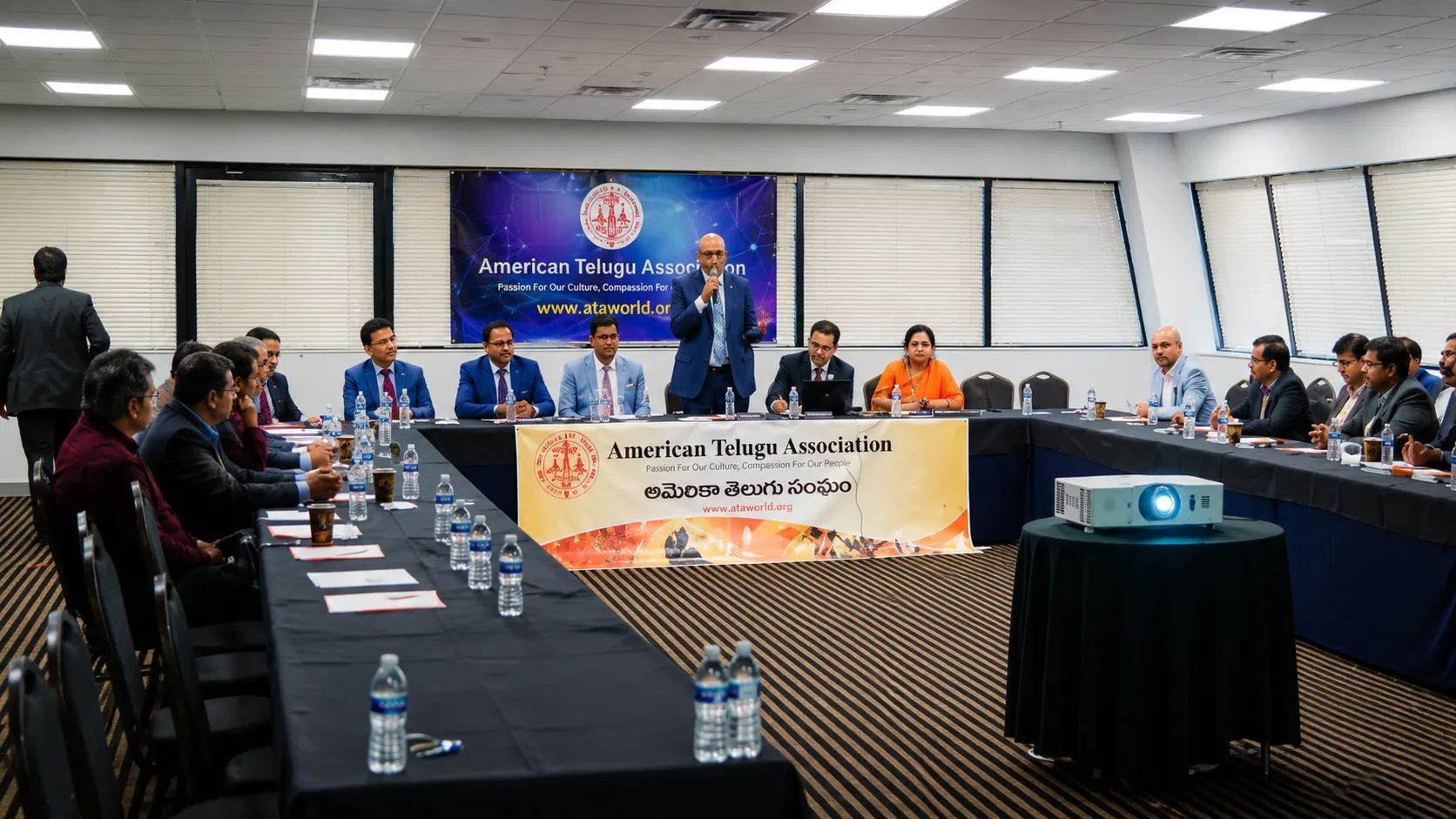
BALTIMORE, MD. — For much of its history, the American Telugu Association's annual convention has been understood, first and foremost, as a cultural homecoming: a weekend of music, dance, food and reunion for a diaspora community whose roots trace to Andhra Pradesh and Telangana but whose lives are now built across suburbs and cities throughout North America. This year's gathering in Baltimore retained that cultural core — but organizers made a deliberate and notable addition to the programming, weaving in a sustained thread of discussions on public service, civic leadership and the cultivation of emerging Indian American political voices.
The shift reflects a broader maturation underway within Telugu American and Indian American community organizations more generally, many of which have spent the past decade grappling with a persistent gap between the community's economic and professional success and its comparatively modest footprint in elected office and formal civic institutions. ATA's decision to structure explicit civic-leadership programming into its flagship convention — rather than treating public service as an incidental theme addressed only in passing remarks — signals a strategic choice by the association's current leadership to treat political and civic engagement as core to its mission, alongside cultural preservation and professional networking.
Attendees at the Baltimore convention described sessions that brought together elected officials, candidates for office, policy professionals and community organizers to discuss practical pathways into American civic life — from local school board and city council races to state legislative campaigns and federal advocacy work. The programming arrived at a moment when Indian American political representation has been expanding steadily but unevenly across the country, with a growing number of Indian American candidates running for office at every level of government even as the community continues to navigate questions about voter mobilization, campaign fundraising infrastructure and the translation of professional networks into political ones.
The convention's emphasis on civic leadership did not exist in isolation from its other programming. The same Baltimore gathering that hosted discussions on public service also recognized Dr. Satheesh Kathula, a prominent hematologist-oncologist and former AAPI president, with its Excellence in Medicine award — a pairing organizers described as intentional, meant to demonstrate that professional excellence and civic engagement are complementary rather than competing pursuits for the community's most accomplished members. The juxtaposition offered convention attendees a working model: individuals who have achieved recognition in their professional fields being actively encouraged, on the same stage, to consider extending that influence into public life.
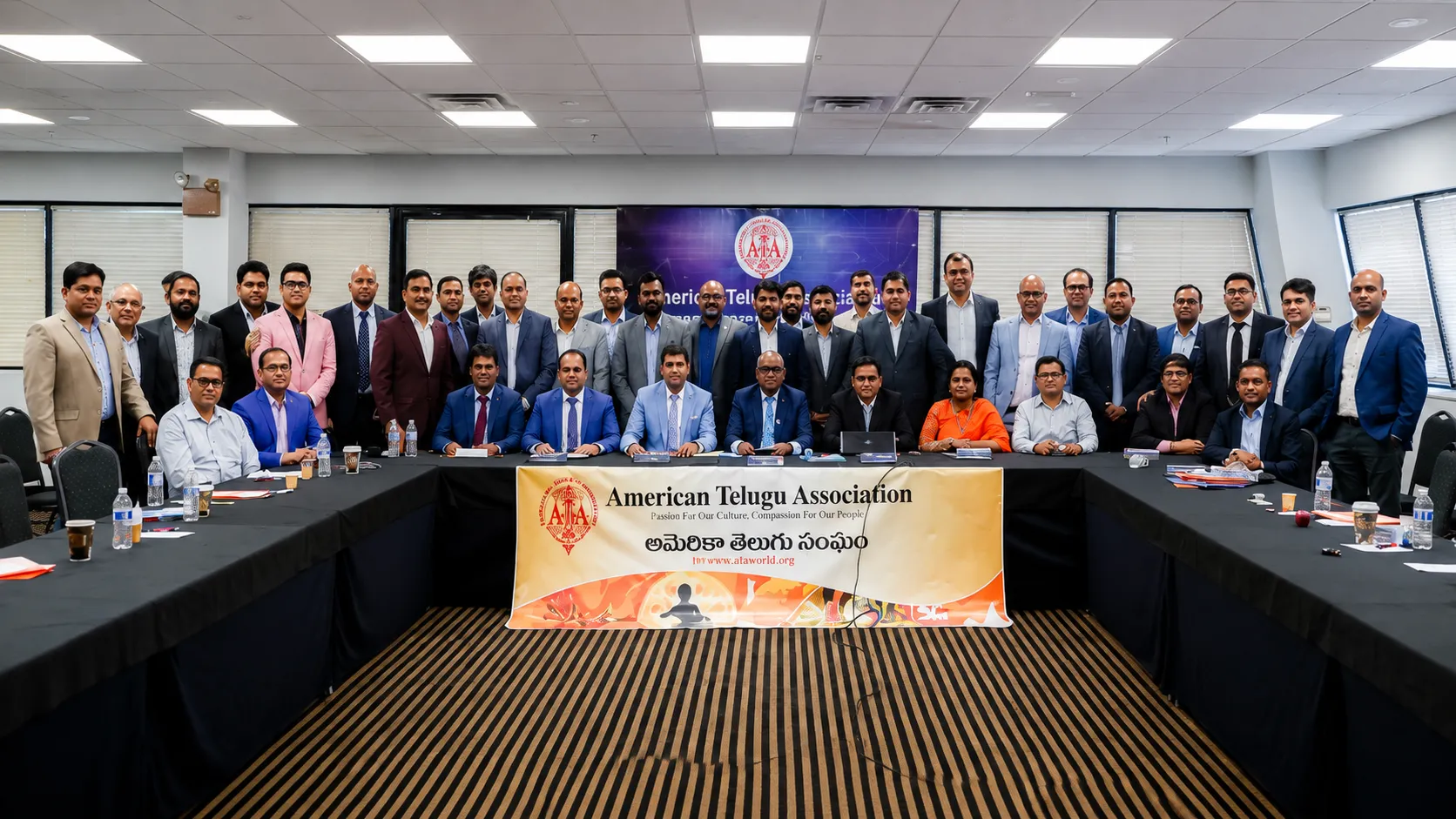
ATA's convention has, over its history, evolved considerably from its origins as a primarily cultural and social gathering into a larger platform that increasingly resembles the annual conventions hosted by other major Indian American regional and linguistic associations — organizations that have found, often through trial and error, that sustaining relevance across generations requires more than nostalgia. Second- and third-generation Telugu Americans, many of whom did not grow up with the same direct memory of migration and community-building that shaped their parents' and grandparents' generations, have different expectations of what a cultural association should offer them — and civic engagement programming has emerged as one of the more effective ways organizations like ATA have found to remain relevant to younger members while still honoring the community's cultural foundations.
The convention drew participation from professionals and community leaders across North America and India, according to organizers, reflecting ATA's continued positioning as one of the largest annual gatherings of the Telugu-speaking diaspora globally. That scale gives the association's civic-leadership initiatives a reach that smaller, more localized community organizations often struggle to match — a single weekend convention capable of introducing hundreds of attendees, many of them established professionals in medicine, technology, law and business, to concrete pathways into public service that they might not otherwise have actively considered.
Observers of Indian American political organizing note that conventions like ATA's Baltimore gathering play an underappreciated role in the broader ecosystem of diaspora political engagement. National advocacy organizations focused explicitly on Indian American political mobilization have grown considerably in visibility and sophistication over the past several election cycles, but much of the actual recruitment and encouragement that leads professionals to consider running for office or taking on formal civic roles happens in exactly these kinds of community settings — conversations at conventions, introductions made by trusted community elders, and the visible modeling of civic engagement by respected figures within the community.
For the current generation of Telugu American professionals navigating careers in medicine, technology and business across the United States, ATA's Baltimore convention offered a rare concentrated dose of that kind of modeling and encouragement — delivered not as an abstract call to civic duty, but embedded within a weekend otherwise devoted to cultural celebration, professional recognition and community reunion. Whether this year's emphasis on civic leadership programming translates into a measurable increase in Telugu American civic and political participation in the years ahead remains, inevitably, to be seen. But convention organizers were explicit in framing the Baltimore gathering as a deliberate first step in that direction — one they intend to build on at future conventions rather than treat as a one-time addition to the program.
As attendees dispersed from Baltimore at the close of the weekend, many carried with them not just memories of cultural performances and professional recognitions, but concrete contacts and conversations initiated through the convention's civic-leadership sessions — the kind of informal infrastructure that, community organizers argue, ultimately matters as much as any single high-profile political campaign in determining whether a diaspora community's economic success eventually translates into commensurate civic and political influence.