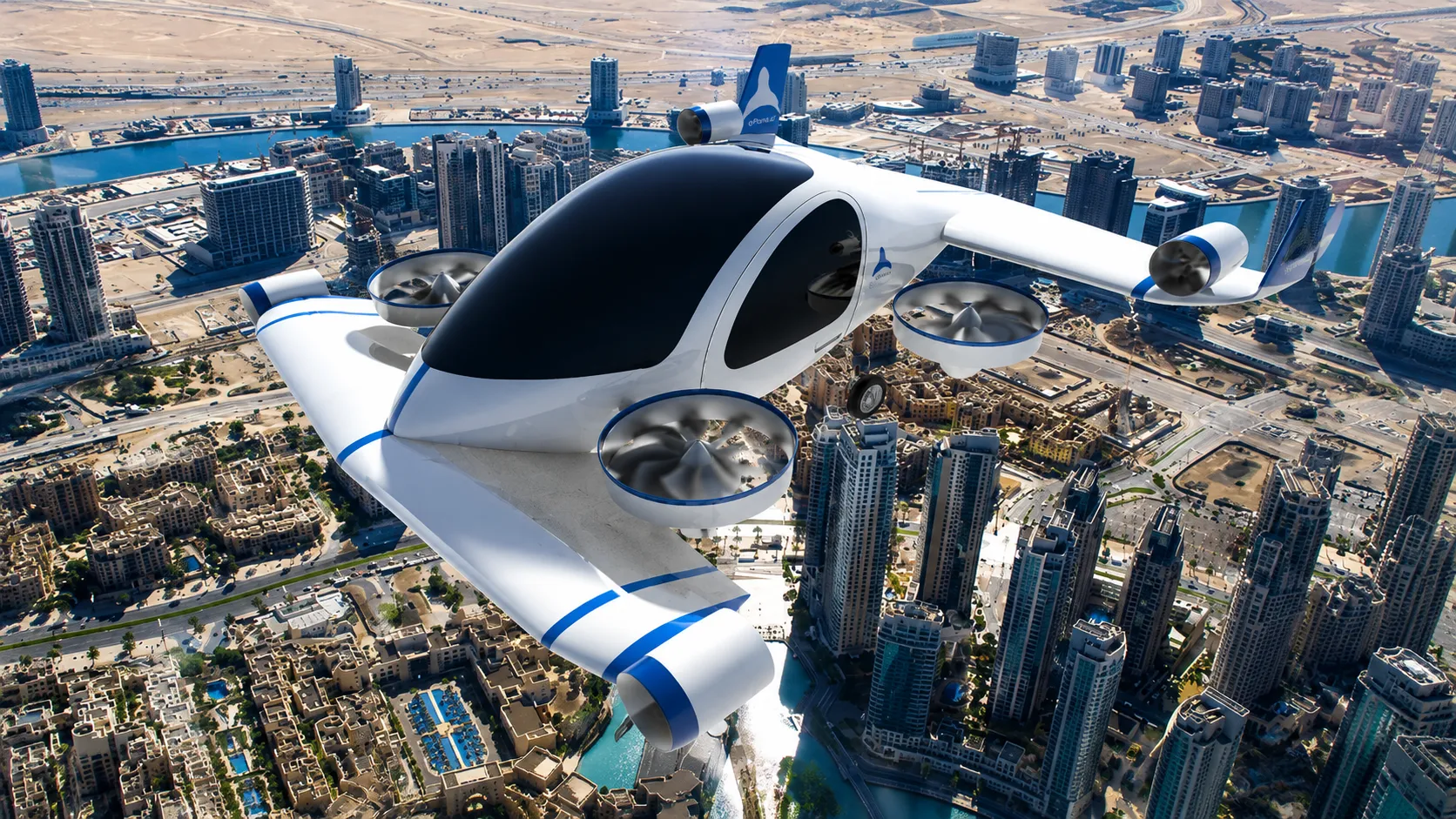
On the tarmac at Farnborough, England — home to one of the world's most prestigious aerospace exhibitions — a Chennai-headquartered startup spent five days doing something few Indian deep-tech companies have managed at this scale: assembling, piece by piece and partner by partner, the industrial supply chain for an aircraft that does not yet exist in commercial service anywhere in the world.
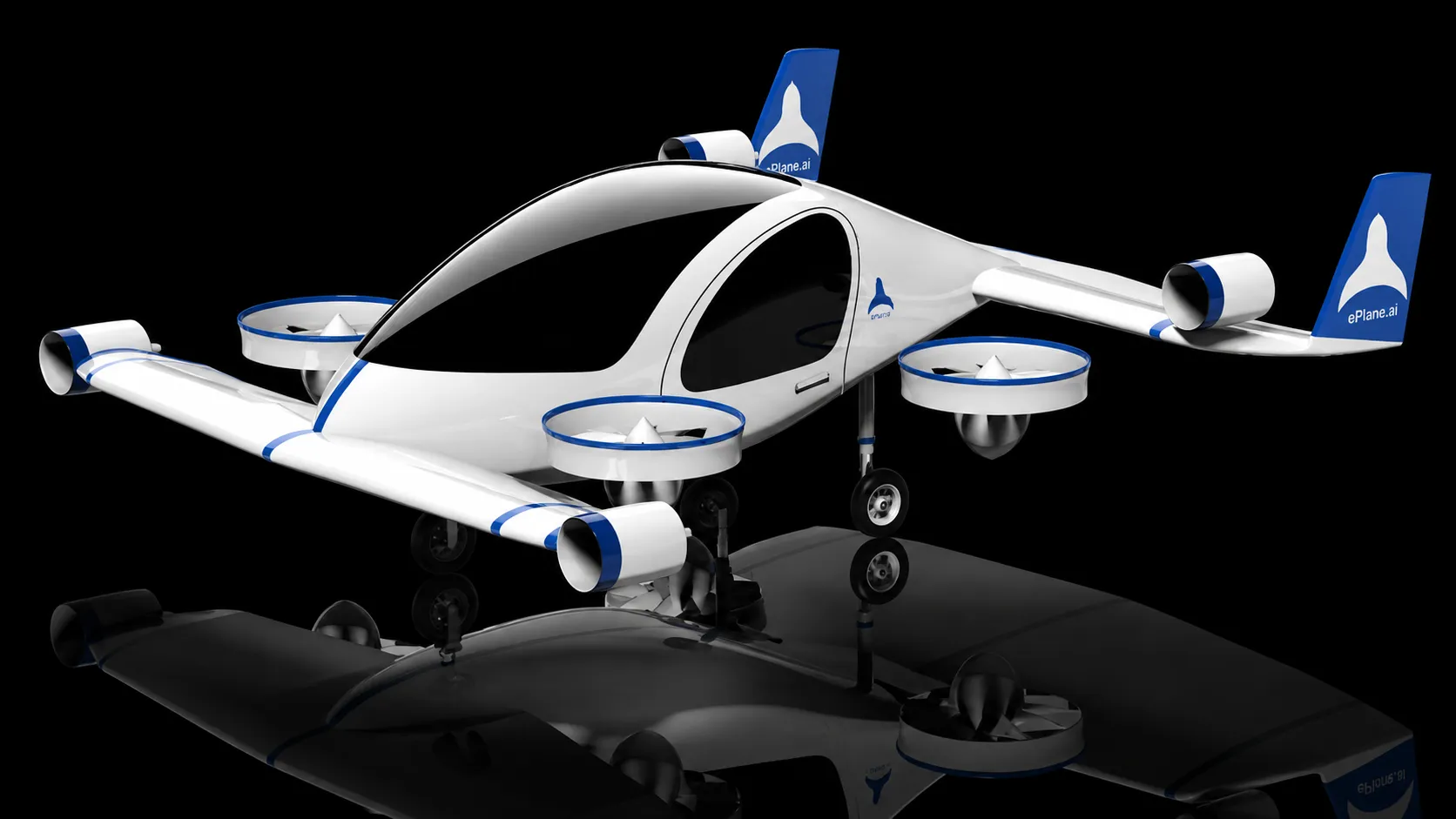
The ePlane Company, formally known as Ubifly Technologies Private Limited, describes itself as India's leading developer of electric Vertical Takeoff and Landing aircraft. At the Farnborough International Airshow 2026, held from July 20 to 24, the company announced five strategic partnerships covering electrical wiring systems, aerospace-grade fasteners, avionics, composite materials and modular interiors — each one a critical structural or systems component for its flagship e200X aircraft, and each one a signal that the company is moving from prototype to manufacturable product with unusual speed for an Indian deep-tech venture.
The Announcements: Five Partnerships, One Aircraft
The most technically significant of the new agreements is a memorandum of understanding with SASMOS HET Technologies, covering Electrical Wiring Interconnection Systems engineering, design and industrialisation for the e200X. In aviation, EWIS is not a peripheral concern — it is one of the most safety-critical and certification-intensive systems on any aircraft, governing how power and data move through the airframe. The partnership is expected to cover harness architecture, design for manufacturability, prototype evaluation and certification readiness, with both companies describing it as the groundwork for a deeper technical relationship as the collaboration matures toward a definitive agreement.
On the structural side, ePlane entered a partnership with Ankit Aerospace Private Limited to supply aerospace-grade fasteners for the e200X — the precision-engineered components that literally hold the aircraft together and keep every critical joint safe under flight loads. Ankit Aerospace brings a track record that matters enormously in aerospace, where trust is earned through certification history rather than marketing: the company has previously supplied mission-critical fastening components to ISRO, HAL, NAL and DRDO, India's premier space, aeronautical and defence research organisations. For ePlane, partnering with a supplier that has already cleared the exacting quality bars set by India's space and defence establishment is as much a credibility signal to regulators and future customers as it is a supply-chain decision.
The company also used the airshow to showcase its ongoing partnership with HENSOLDT Avionics, first announced in February 2026, under which HENSOLDT continues to supply the avionics suite and flight radar system for the e200X — the technology stack responsible for navigation, situational awareness and connectivity as the aircraft advances toward certification. Rounding out the announcements, ePlane entered a partnership with Azista Composites for the supply of composite materials, including carbon fibre and glass prepregs supporting airframe and radome applications, and confirmed AMS Heli Design as a strategic partner for modular interior and seating solutions.
Why Five Separate Partnerships, Rather Than One Big Deal?
For an outside observer, five distinct supplier agreements might look like a scattered announcement strategy. In aerospace manufacturing, it is closer to the opposite: it reflects the genuinely modular, multi-disciplinary nature of building a certifiable aircraft from the ground up. Unlike consumer electronics or even automotive manufacturing, where a single Tier 1 supplier can sometimes handle an entire subsystem, aerospace-grade components each carry their own certification pathway, their own regulatory scrutiny and their own multi-year qualification process. By formalising relationships across wiring, fasteners, avionics, composites and interiors simultaneously, ePlane is effectively derisking its production roadmap across every major subsystem at once, rather than sequencing these dependencies one at a time and risking bottlenecks later in the certification process.
The announcements followed closely on the heels of two other milestones the company notched earlier in the same month: the public unveiling of PT-01, the first full-scale prototype of the e200X, and a memorandum of understanding with Apollo Hospitals to jointly develop an electric air-ambulance network in India, aimed at reducing emergency response times using eVTOL aircraft. Taken together, the sequence — prototype unveiling, healthcare-sector MoU, then a wave of supply-chain partnerships at one of the world's most prestigious aerospace venues — reads less like a series of disconnected announcements and more like a coordinated, deliberately staged rollout designed to build momentum ahead of certification milestones still to come.

What the e200X Is Designed to Do
The e200X is positioned by ePlane as a multi-mission aircraft, designed for passenger transport, cargo movement and emergency medical transport applications. That last use case — air ambulance service — is central to the company's public narrative and is reinforced by its partnership with Apollo Hospitals, one of India's largest private healthcare providers. In a country where emergency response times in many cities and, especially, rural regions remain a serious public-health constraint, the promise of an electric aircraft capable of covering distances far faster than road ambulances, without the operating costs or noise of a traditional helicopter, has an obvious and immediate social relevance beyond the more commonly discussed "flying taxi" framing that dominates global eVTOL coverage.
That dual identity — part urban-mobility moonshot, part practical emergency-healthcare infrastructure — may be one of the more distinctive aspects of ePlane's positioning relative to eVTOL developers elsewhere in the world, many of whom have focused almost exclusively on premium urban air-taxi use cases aimed at wealthy commuters in congested megacities. ePlane's emphasis on medical transport gives it a use case with a more immediate, and arguably more socially resonant, public-interest justification — one that may also prove useful in navigating India's aviation regulatory environment, where safety-critical public-service applications can sometimes move through approval processes with different priorities than purely commercial passenger transport.
The "Make in India" Angle
Every one of ePlane's newly announced partners — SASMOS, Ankit Aerospace, Azista Composites, AMS Heli Design — is an Indian company, while HENSOLDT brings international avionics expertise into an otherwise domestically rooted supply chain. Company messaging around the announcements repeatedly emphasised the phrase "Make in India," positioning the e200X not simply as a startup's product but as a proof point for India's ability to build a globally competitive aerospace supply chain from a standing start, rather than relying primarily on imported components and foreign manufacturing partners.
This matters for reasons that go beyond corporate branding. India's aerospace and defence manufacturing base has historically been dominated by public-sector giants like Hindustan Aeronautics Limited, built primarily to serve defence procurement needs rather than a fast-moving, VC-backed startup building a genuinely novel aircraft category. ePlane's ability to assemble private-sector Indian suppliers — several of whom already carry certification credibility from ISRO, HAL, NAL and DRDO work — around a civilian eVTOL program suggests the emergence of a broader ecosystem of Indian aerospace component manufacturers capable of serving next-generation aviation companies, not just legacy defence contractors. If that ecosystem matures alongside ePlane's own certification timeline, the ripple effects could extend well beyond a single company's product roadmap, potentially seeding a wider supplier base that future Indian aerospace startups can draw on.
The Road Still Ahead
None of this, it is worth being clear-eyed about, means the e200X is close to commercial passenger service. Aircraft certification — particularly for a genuinely new category like electric VTOL — is a multi-year process involving extensive flight testing, safety validation and regulatory approval, and no eVTOL developer anywhere in the world has yet achieved full commercial passenger certification at meaningful scale. What Farnborough 2026 demonstrated is not that ePlane has crossed that finish line, but that it is building the industrial infrastructure — supplier relationships, component certifications, avionics integration — that any serious aircraft program needs long before certification testing can even begin in earnest.
For India's broader deep-tech and startup ecosystem, which has more commonly been associated with software, fintech and consumer internet businesses than with hardware-intensive, safety-critical engineering, ePlane's Farnborough showing offers a useful data point: that Indian startups are increasingly capable of competing not just for capital, but for credibility, on the world's most demanding industrial stages. Whether the e200X eventually becomes a familiar sight over Indian cities — ferrying passengers, cargo or emergency patients — will depend on years of engineering and regulatory work still ahead. But this week in England, the company took a visible, well-documented step toward building the supply chain that path will require.
Why Farnborough Was the Right Stage for This Announcement
The choice of venue was not incidental. The Farnborough International Airshow is one of a small handful of events — alongside its counterpart at Paris Le Bourget — where the global aerospace and defence industry gathers at genuine scale, bringing together established aircraft manufacturers, tier-one suppliers, defence primes and an increasingly visible cohort of electric and urban air mobility startups from around the world. For a company like ePlane, still years from commercial certification, securing supplier commitments and public visibility at Farnborough carries a credibility premium that would be difficult to replicate through announcements made in India alone. It signals to potential customers, regulators and future investors that the company is being taken seriously by an international aerospace supply chain that does not extend partnerships lightly, given the certification and liability stakes involved in aviation-grade components.
It is also worth situating ePlane within the broader, still-nascent global eVTOL industry. Companies developing electric vertical-takeoff-and-landing aircraft have proliferated over the past several years across the United States, Europe and Asia, backed by billions of dollars in venture and public-market capital, yet the industry as a whole remains pre-commercial: no eVTOL developer anywhere in the world has yet achieved full type certification and commercial passenger service at meaningful scale, and several well-funded international players have faced significant delays, cost overruns or restructuring along the way. Against that global backdrop, an Indian startup building out a credible, partially domestic supply chain — rather than relying entirely on imported subsystems from established Western aerospace suppliers — represents a genuinely differentiated approach, one that could prove either a durable competitive advantage or a slower path to certification, depending on how quickly India's aerospace regulatory and testing infrastructure matures alongside the company's own engineering timeline.
The Regulatory Path Still to Come
Aircraft certification in India falls under the purview of the Directorate General of Civil Aviation, and eVTOL aircraft represent a genuinely novel category for which certification frameworks, both in India and internationally, are still being actively developed rather than simply applied from existing helicopter or fixed-wing rulebooks. This means ePlane's certification journey will likely run in parallel with the very regulatory frameworks it needs to satisfy — a dynamic common across the global eVTOL industry, where regulators in the United States, Europe and elsewhere have been developing bespoke certification pathways for electric vertical-lift aircraft even as individual companies race to build and test their prototypes. For ePlane, this means the supplier partnerships announced at Farnborough are not just an engineering milestone but also, implicitly, a demonstration to Indian and international regulators that the company is building toward certifiable, traceable, auditable components rather than experimental one-off prototypes — an important distinction for any safety regulator evaluating a fundamentally new aircraft category.
What Success Would Mean for India's Broader Aerospace Ambitions
If ePlane's certification and commercialisation timeline proceeds even roughly as the company's public milestones suggest it hopes to, the implications would extend well beyond one startup's balance sheet. India has spent years attempting to build a more substantial private-sector aerospace and defence manufacturing base to complement its historically public-sector-dominated industry, and the emergence of a credible civilian eVTOL supply chain — anchored by companies like SASMOS, Ankit Aerospace and Azista Composites, each of which is simultaneously deepening its own aerospace-grade manufacturing capabilities through its work with ePlane — could seed exactly the kind of private supplier ecosystem that future Indian aerospace and advanced-mobility startups would need in order to avoid building every component relationship from scratch. In that sense, ePlane's Farnborough announcements matter not only for what they signal about one aircraft program, but for what they could eventually mean for the broader industrial base supporting India's ambitions in advanced aerospace manufacturing over the coming decade — an ecosystem still being built, one certified component and one signed partnership at a time.


