"Indian Food Can't Scale": The IIM-A Professor Who Told Divya Rao It Was Impossible—And the ₹60 Crore Dosa Empire She Built to Prove Him Wrong
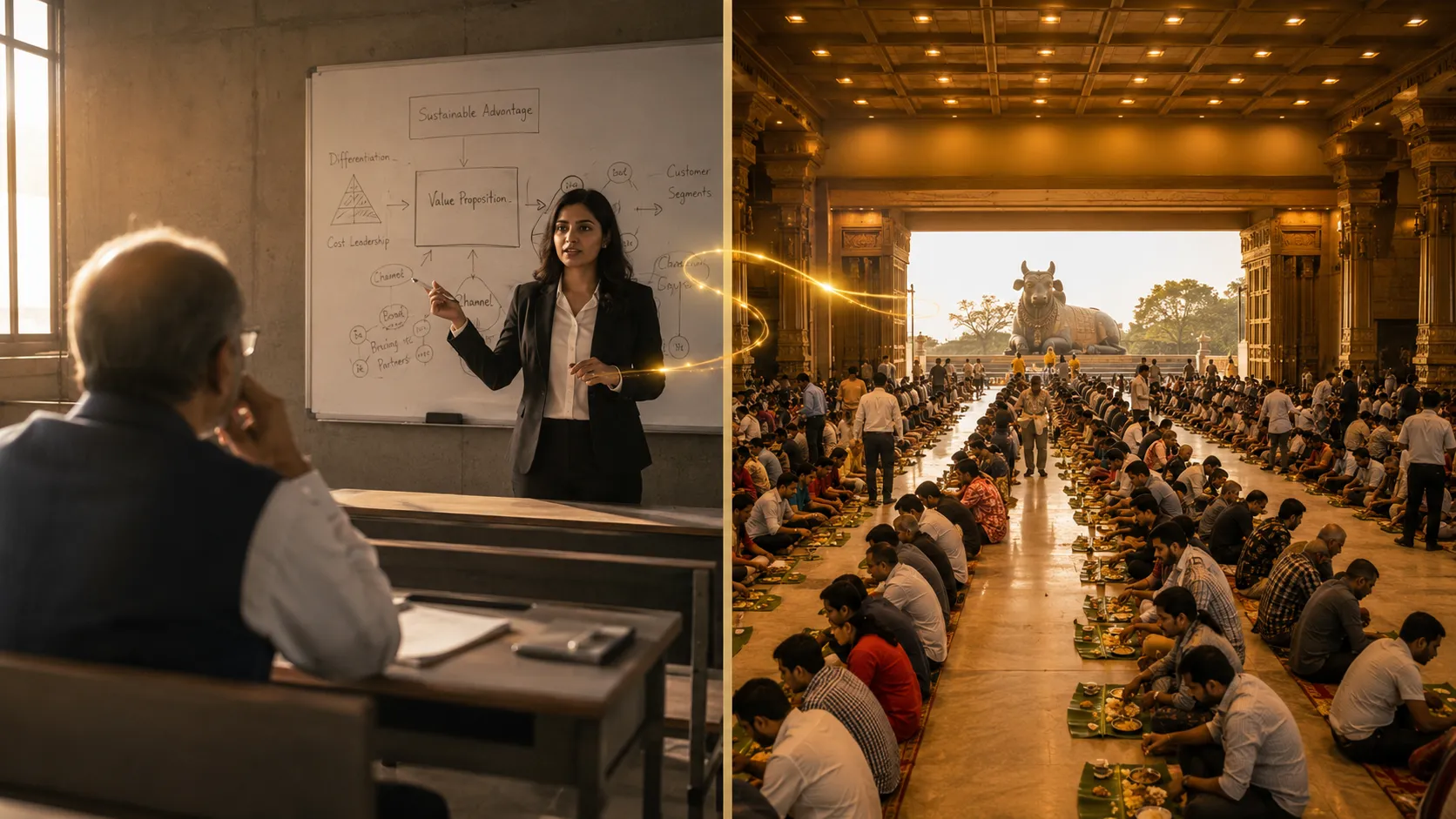
BENGALURU — May 26, 2026 — In a classroom at the Indian Institute of Management Ahmedabad, one of India's most elite business schools, a professor once told Divya Raghavendra Rao something she has never forgotten. She had just presented a case study on scaling a South Indian food brand—her dream, her obsession, the idea she had been nursing through two years of gruelling coursework. The professor listened, nodded, and then delivered his verdict with the casual finality of someone who believes he is doing a student a favour. "Indian food can't scale like McDonald's or KFC," he said. "It's too complex. Too regional. Too dependent on the hands of the cook."
Divya did not argue. She was a chartered accountant who had qualified at 21, a woman who had fought her way into and through one of the most competitive business programmes on Earth, and she had learned, over years of being underestimated, that the most effective rebuttal is not an argument. It is a restaurant. Or, as it turned out, a chain of them.
Today, The Rameshwaram Cafe—founded in 2021 by Divya and her husband Raghavendra Rao—is one of India's fastest-growing South Indian restaurant brands. It generated ₹17.8 crore in revenue in FY25 with ₹2 crore in profit, representing 62 percent growth year-on-year. It operates outlets across Bengaluru, Hyderabad, Pune, and now Mumbai—where a 6,500-square-foot, two-level restaurant opened in Churchgate in March 2026. In April 2026, the company unveiled what it claims is the world's largest restaurant: a 90,000-square-foot, temple-themed destination on Bengaluru's Hosur Road that can seat over 10,000 guests, complete with a Devi Linga Bhairavi temple, a gowshala housing rare Punganuru cows, and live cooking counters inspired by Lord Vishnu's Dashavatar. Dubai is on the roadmap. The professor who said Indian food could not scale has been invited to dinner. He has not yet responded.
The CA Who Walked Away From a Crore-Plus Career
Divya Raghavendra Rao was not supposed to be a restaurateur. She was a prodigy—a chartered accountant who qualified at the age of 21, years ahead of the typical timeline—and then an IIM Ahmedabad graduate, one of the most coveted credentials in Indian business. Her family expected her to take the path that her qualifications demanded: a high-paying corporate job, a comfortable life, the kind of career that makes parents proud and relatives envious. For years, she did exactly that, earning what one report described as "crores per year" and living the life that her education had prepared her for.
But she wanted to build a food chain that would take South Indian cuisine to every corner of the world. The idea had been planted during her time at IIM Ahmedabad, where she studied the marketing strategies of McDonald's and KFC—global brands that had taken simple, regional food and turned it into a universally recognised experience. She believed South Indian food deserved the same treatment. The professor who told her it was impossible only strengthened her resolve. "Indian food can't scale." The words became fuel.
Her husband, Raghavendra Rao, came from a different world entirely. He was a mechanical engineer who had spent years chasing a dream that seemed destined to fail: he wanted to be an actor. He left home, lived in a Chennai slum, slept at railway stations, and survived on temple offerings. "During this tenure, I learnt so much," he told Curly Tales. "A person in hungry teaches many things." When acting did not work out, he returned to Bengaluru, eventually completed his engineering degree after ten years, and entered the food industry—first with a roadside idli-dosa cart in Seshadripuram, then with progressively larger ventures. He had spent more than two decades in the food industry before he met Divya, and his expertise was not academic. It was bone-deep, earned through years of standing behind hot tawas, serving customers, and learning what made food work at scale.
When Divya decided to leave her corporate career and open a restaurant, her family was not supportive. They wanted her to take a high-paying job that her qualifications deserved. She pursued her dream anyway. The couple launched The Rameshwaram Cafe in 2021 in Bengaluru's Indiranagar neighbourhood, with initial capital of under ₹1 crore, guided by what one profile described as "laser-sharp cost control and financial discipline." They named it after the birthplace of Dr. A.P.J. Abdul Kalam, India's beloved former president, who had inspired them with his belief in building something meaningful. The name was a tribute. The ambition was larger. Nearly 1,000 customers arrived on opening day.
The Bootstrapped Empire
The most strategically significant decision the Raos made was not a menu choice or a location. It was a financial one. They refused to take outside capital. The Rameshwaram Cafe has never raised a rupee of venture funding. It has no external investors, no private equity partners, and no debt beyond the normal working-capital requirements of a growing restaurant chain. It is entirely bootstrapped—funded by the profits generated by its own operations, reinvested at a rate of approximately 70 percent back into the business.
The decision was deliberate. Divya, the chartered accountant, understood the mathematics of the restaurant industry better than most: margins are thin, failure rates are high, and the pressure to grow at venture-capital speed can destroy a brand before it has found its footing. She chose a different path. The company would grow at the speed of its own cash flow, opening new outlets only when the existing ones had proven their unit economics and generated sufficient surplus to fund the next expansion. The discipline was not glamorous. It was effective. By FY25, the numbers reflected strong growth: ₹17.8 crore in revenue, ₹2 crore in profit, 62 percent growth year-on-year. This kind of profitable growth is rare in the restaurant industry, where most chains lose money for years before they break even.
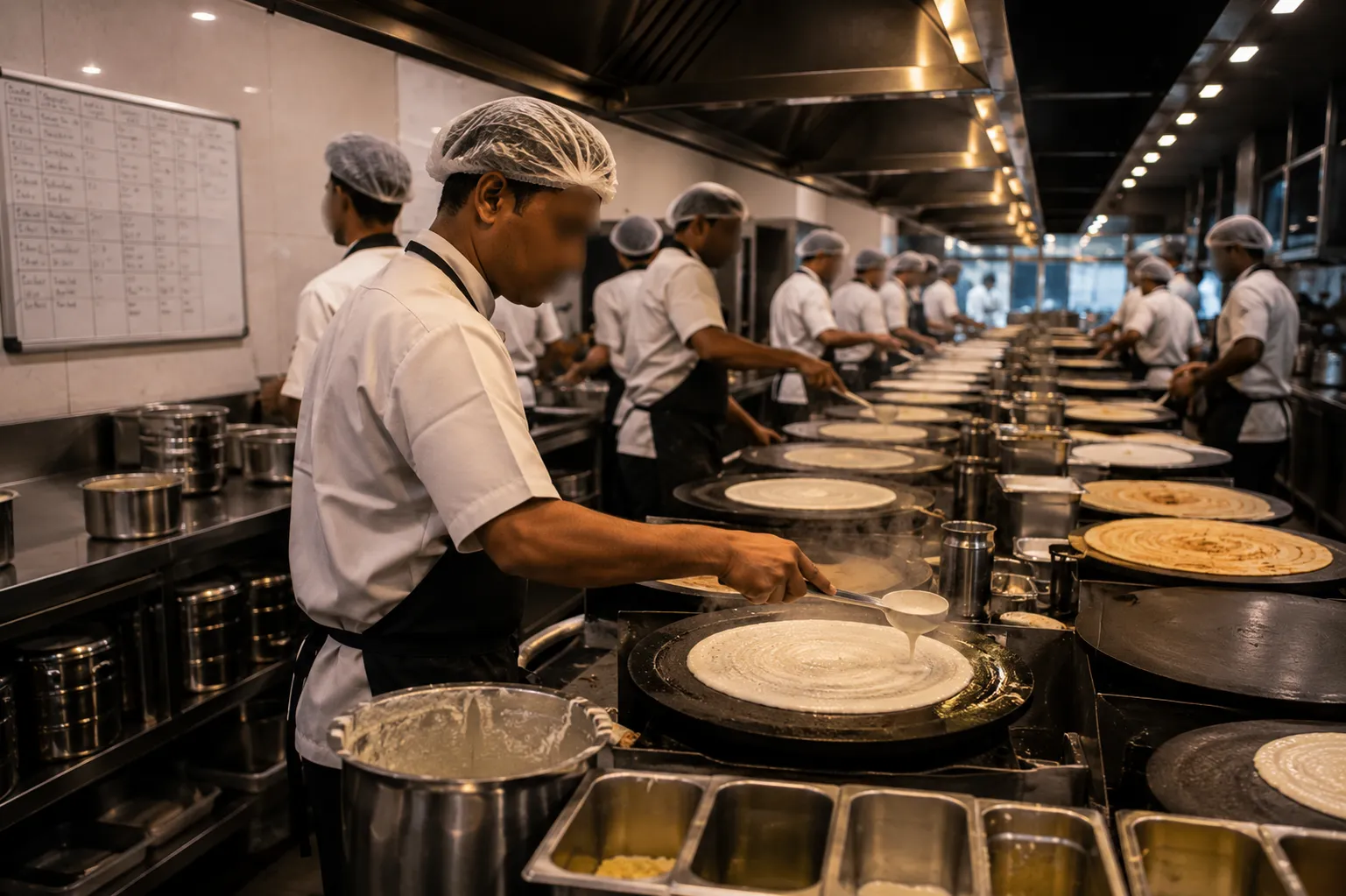
The operational model is built around speed and scale. Despite long queues that have become a feature of every Rameshwaram Cafe outlet—lines of customers stretching down the block, waiting for a taste of the ghee podi masala dosa that made the brand famous—orders are served within minutes. The kitchens are designed for high-volume output without sacrificing quality: batters are stone-ground and slow-fermented, chutneys are prepared fresh daily, and dishes are cooked in small batches without preservatives, artificial enhancers, or MSG. The menu is pure vegetarian and deliberately concise—ghee podi masala dosa, thatte idli, vadas, pongal, bisi bele bath, and the filter coffee that has become so iconic the brand now sells a filter-coffee softie exclusive to its Mumbai outlet. The food is not fusion. It is not innovative. It is traditional South Indian cuisine, executed with a consistency that is almost impossible to achieve across multiple outlets—and it is that consistency, rather than any culinary novelty, that has built the brand.
The couple divides responsibilities with a clarity that reflects their complementary expertise. Raghavendra, the mechanical engineer and food-industry veteran with over 20 years of experience, focuses on operations—ensuring efficiency, consistency, and quality across outlets. Divya, the CA and IIM-A alumna, leads strategy, finance, and expansion, helping the business grow in a structured and sustainable way. Together, they combine strong operational execution with sharp business strategy—a combination that is rarer in the restaurant industry than it should be. The husband who once slept at railway stations chasing an acting dream now runs the kitchens. The wife who was told Indian food could not scale now manages the finances. The partnership works because each founder stays in their lane, and each lane is essential to the whole.
The Temple That Serves Dosa
The most audacious expression of the Raos' ambition is not the revenue numbers or the expansion map. It is the Bommasandra outlet—the 90,000-square-foot, 1.5-acre temple to South Indian food that opened in April 2026 and that the company claims is the world's largest restaurant.
The Bommasandra outlet is not merely a restaurant. It is a destination designed to blend devotion with dining, spirituality with hospitality. Visitors are welcomed by installations of Adi Yogi and Nandi, followed by the Devi Linga Bhairavi Temple within the premises. The space features a towering Indian flag and a dedicated gowshala housing rare Punganuru breed cows. The culinary journey is complemented by live counters inspired by Lord Vishnu's Dashavatar, blending mythology with food presentation. At the centre is a large amphitheatre, highlighted by an intricate wooden carving of Lord Sri Venkateshwara, envisioned as a platform for cultural performances and artistic expression.
In a departure from the brand's typical quick-service format, the Bommasandra outlet introduces a traditional sit-down dining experience. Guests are encouraged to remove footwear, cleanse their feet, and dine on the floor, with meals served on banana leaves—bringing ritual and mindfulness into the dining process. Despite its scale and experiential design, the restaurant maintains QSR-style efficiency, aiming to balance speed with a more soulful approach to service. The outlet officially launched on April 9 with a Ganga Aarathi ceremony, followed by complimentary public trials from April 10 to 15. It opened to the public at 5 AM on April 16.
The philosophy behind Bommasandra reflects the Raos' broader approach to the brand. "For Raghav and Divya, Rameshwaram Cafe is not just a business," Times Now reported. "It is a 'prasadam'—an offering of love, devotion, and passion to their customers." The food is treated not as a commodity, but as a form of service—prepared with the same care and reverence that would go into food served at a temple. The ghee that slicks the dosas, the podi that seasons the idlis, the filter coffee that has become the brand's signature—each element is prepared fresh, from scratch, every day, without shortcuts. The commitment to quality is not a marketing strategy. It is the product, and the product has built a following that no advertising budget could replicate.
The Mumbai Debut and the Road to Dubai
The Mumbai launch in March 2026 marked the brand's entry into India's most competitive South Indian food market—a city already saturated with legendary Udupi restaurants, decades-old matunga cafés, and a dining culture that is famously discerning. The Churchgate outlet, spanning 6,500 square feet across two levels in the historic Eros Building, introduced a slightly evolved format for the brand. While the ground floor is designed for quick, efficient dining in the traditional darshini style—grab a token, get your food, stand, eat—the first floor offers a more immersive, fine-dining seated experience, along with outdoor seating, tailored to Mumbai's social dining habits and weather.
The interiors draw inspiration from temple architecture and coastal South India, featuring Sadarahalli granite, brass detailing, carved yali and Garuda motifs, and traditional Tanjore paintings. Dishes are served on banana leaves, maintaining the temple-style presentation aligned with the brand's positioning. The menu features the same staples that built the brand—benne masala dosa, ghee podi idli, vada, pongal, bisi bele bath, and filter coffee—along with Mumbai-exclusive items like the filter coffee softie, designed to help diners beat the city's heat. "Launching in Mumbai is a special milestone for us," Raghavendra Rao told CNBC-TV18. "The city has always been on our minds. I've always loved Mumbai, it's been a dream market for us, not just because of its scale, but for its deep love for food and openness to regional flavours."
The Mumbai debut follows earlier expansions to Hyderabad and Pune, and the brand has announced plans to enter international markets, with Dubai expected in 2026. The pace of expansion is deliberate—faster than a family-run restaurant, slower than a venture-funded chain, and calibrated to the cash flows that the existing outlets generate. The Raos are in no hurry to become the next McDonald's. They are building something different: a South Indian food brand that scales without losing the soul of the food it serves, that grows without diluting the ownership that has made it profitable, and that treats every dosa as an offering rather than a transaction. The professor who said Indian food could not scale was wrong. The couple who proved him right are just getting started.
What This Signals
The Rameshwaram Cafe story is not primarily about dosas. It is about the structural transformation of the Indian food industry—and about the couple who are building the proof that the transformation is possible.
For decades, the Indian restaurant industry was defined by a single, crushing assumption: that Indian food could not scale. The complexity of the cuisine—the dozens of spices, the labour-intensive preparation, the dependence on the individual skill of the cook—made it resistant to the standardisation that had allowed Western fast-food chains to conquer the globe. McDonald's could open in Mumbai because a burger in Mumbai tasted exactly like a burger in Minneapolis. A dosa in Mumbai would never taste like a dosa in Chennai, because dosas were made by human hands, and human hands varied. The assumption was reasonable. The assumption was wrong.
Divya and Raghavendra Rao have spent the past five years proving that Indian food can scale—not by simplifying it, but by systematising it. The stone-ground batters, the slow fermentation, the fresh chutneys, the small-batch cooking—these are not shortcuts. They are the opposite of shortcuts. They are investments in quality that pay off in consistency, and the consistency is what allows the brand to open new outlets without losing the taste that made the first one famous. The model is not McDonald's. It is something more difficult and more valuable: a high-quality, high-volume, culturally rooted South Indian food chain that is profitable, bootstrapped, and growing at 62 percent annually. The professor who said it could not be done has been invited to see the result. He has not yet responded. The dosas are still selling. The queues are still forming. The temple on Hosur Road is still serving. The empire is still growing. The professor's words are still hanging in the air of that IIM-A classroom, waiting for him to take them back.


