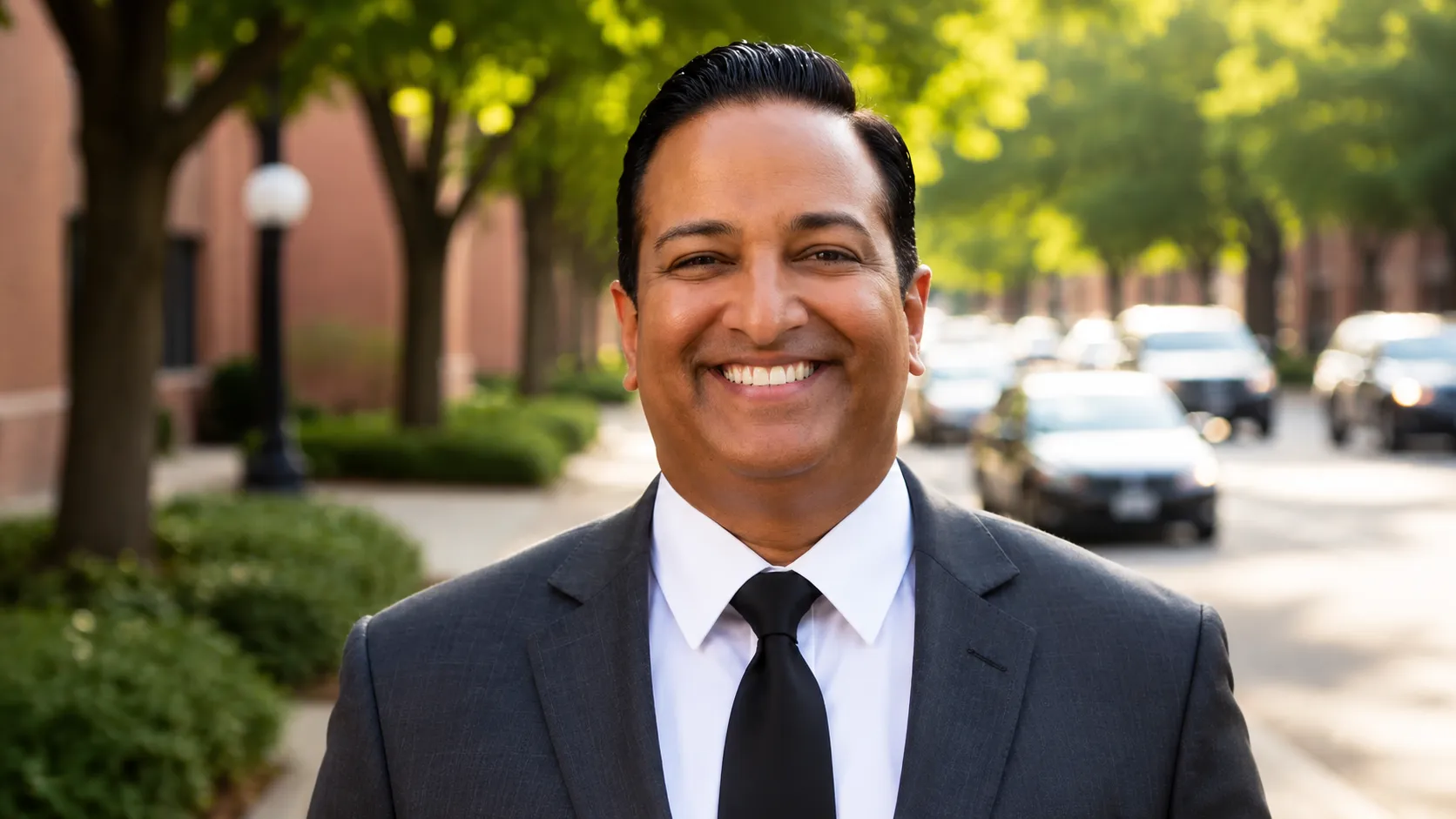
Ajay Thomas, an Indian American public sector investment banking professional with a long record of civic engagement across Texas state government and higher education, has been chosen as chair-elect of the Board of Trustees at Southwestern University, his undergraduate alma mater, the institution announced. Thomas will formally begin his term as board chair on July 1, 2027, capping a decade-long trajectory of escalating service to the small liberal arts university located in Georgetown, Texas, that began with his graduation from the institution in 1994 and has culminated, more than three decades later, in his elevation to its most senior volunteer leadership position.
Thomas's path back to formal leadership at Southwestern began in April 2016, when he joined the university's Board of Visitors — an advisory body that typically serves as a proving ground and pipeline for future trustees at many American private universities. That initial engagement deepened considerably over the following years, and in July 2024 Thomas was elected to Southwestern's full Board of Trustees, the university's primary governing body responsible for institutional strategy, financial oversight, and the selection and evaluation of senior university leadership. Since joining the Board of Trustees, Thomas has taken on substantial committee responsibilities, currently serving as chair of the board's Fiscal Affairs Committee while also holding seats on the Facilities Planning Committee and what the university designates as its SU 560 Committee, a strategic initiative tied to the institution's founding history. Southwestern University itself carries particular historical significance within Texas higher education, having been founded in 1840 and holding distinction as the oldest institution of higher learning in the state operating continuously under its original charter — a lineage that predates Texas statehood itself. As a private liberal arts institution, Southwestern has cultivated a reputation for rigorous undergraduate education across the humanities, sciences, and professional preparatory tracks, drawing students from across Texas and increasingly from a broader national and international applicant pool, while maintaining a relatively intimate campus community by design. Thomas's own academic foundation at Southwestern, where he earned degrees in economics and political science upon his 1994 graduation, laid the groundwork for a subsequent career trajectory that would carry him through some of the country's most rigorous graduate education programmes and into a specialised corner of investment banking focused on public sector finance.
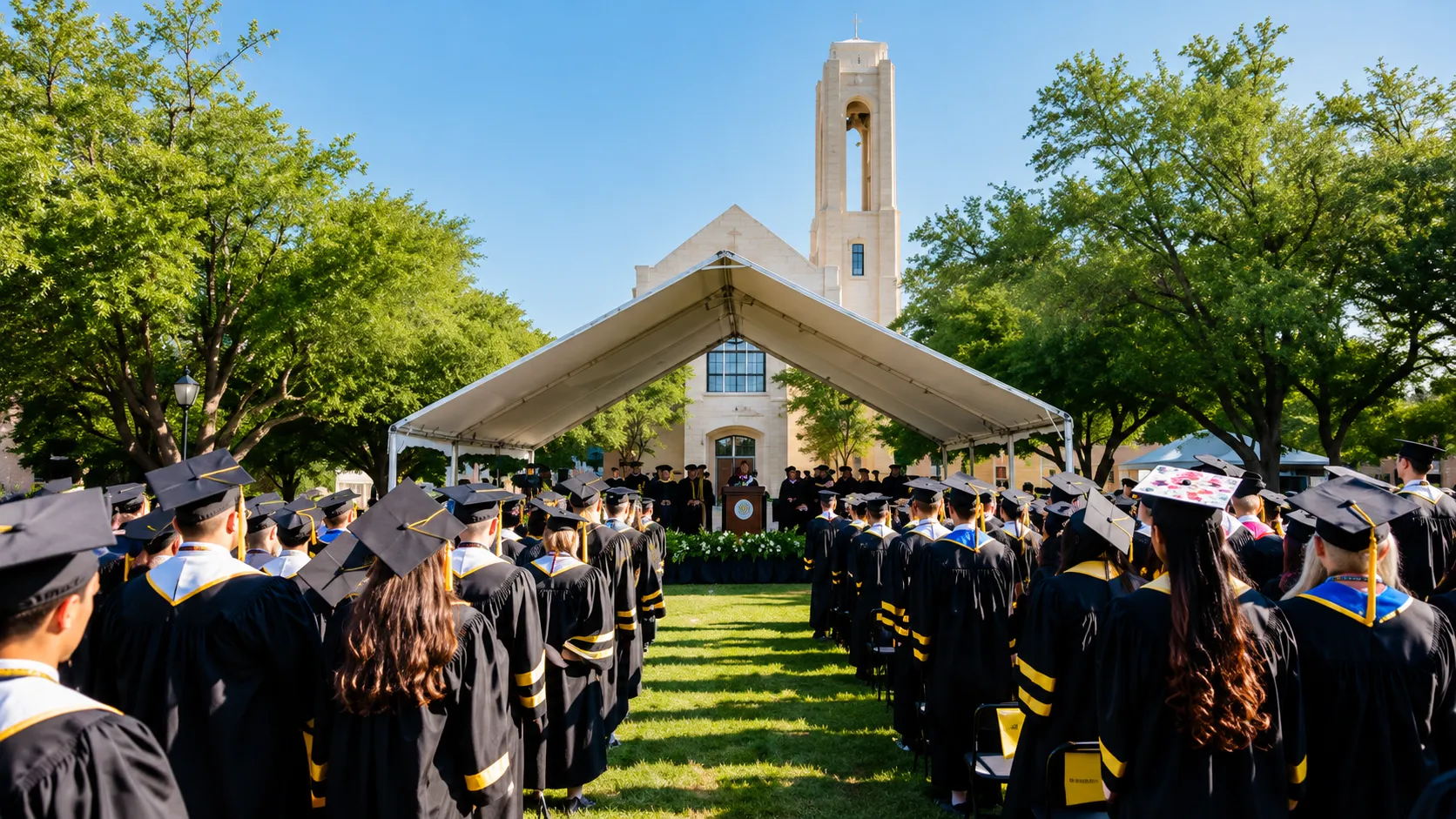
He went on to earn a Master's degree in Public Policy, Business, and Government from the Harvard Kennedy School in 2000, a credential that reflects a deliberate early career orientation toward the intersection of public policy and finance, before completing a Juris Doctor at the University of Texas School of Law in 2001 — a combination of policy, business, and legal training that has positioned him for a career navigating the complex regulatory, financial, and legal dimensions of public sector investment banking. That specialised professional focus on public finance has also translated into substantial engagement with Texas state government beyond his university board work. In 2020, Texas Governor Greg Abbott appointed Thomas to serve on the Board of Directors of the Texas Department of Housing and Community Affairs, one of the state's largest and most consequential public agencies, responsible for administering housing assistance programmes, affordable housing finance, and community development initiatives across a state with some of the country's fastest-growing metropolitan populations and correspondingly acute housing affordability pressures. Abbott reappointed Thomas to a second five-year term on that board in January 2026, extending his tenure in a role where he currently chairs the agency's Audit and Finance Committee — a position that leverages precisely the public finance and investment banking expertise he has built over his professional career. Thomas's dual leadership roles — chairing Southwestern University's Fiscal Affairs Committee while simultaneously chairing the Texas Department of Housing and Community Affairs' Audit and Finance Committee — reflect a career pattern increasingly common among accomplished public finance professionals who leverage their specialised expertise across both private educational institution governance and direct public sector service. This kind of cross-sector engagement, spanning nonprofit higher education governance and formal gubernatorial appointment to state regulatory and finance bodies, has become an increasingly visible pathway through which accomplished Indian American professionals contribute to civic and institutional life beyond their primary professional careers. Beyond his direct governance roles at Southwestern and the Texas housing agency, Thomas maintains additional institutional affiliations that further extend his public policy engagement, including service as an Advisory Board Member for the Harvard Kennedy School's Taubman Center for State and Local Government — a research and policy centre focused on strengthening subnational governance and public management across American state and local institutions. This continued connection to his Harvard Kennedy School training reflects a sustained, decades-long engagement with the academic and policy communities that shaped his early career formation, even as his primary professional focus has remained centred on investment banking practice.
In remarks accompanying the announcement of his chair-elect selection, Thomas reflected on the personal significance of the role, describing his ability to serve first as a trustee and now as incoming chair at his own alma mater as one of the highlights of his life, and framing his broader philosophy of civic engagement around the conviction that service represents a privilege rather than an obligation. He articulated a vision for Southwestern's continued development centred on innovation, intentionality, and forward-thinking institutional strategy, emphasising the importance of ensuring the university continues to deliver what he described as an elite undergraduate education experience capable of positioning graduates for the strongest possible employment outcomes and post-graduate academic opportunities available anywhere in the world. That framing situates Thomas's incoming chairmanship within a broader set of challenges facing small private liberal arts institutions across the United States, many of which have faced mounting enrolment and financial pressures in recent years driven by demographic shifts in the traditional college-age population, rising public scepticism about the value proposition of a liberal arts education relative to its cost, and intensifying competition from larger public universities and increasingly sophisticated online education alternatives. Thomas's specific professional background in public finance and investment banking positions him to bring a particularly disciplined, financially rigorous perspective to Southwestern's governance at a moment when institutional financial sustainability has become an increasingly central preoccupation for boards across the American higher education sector. For the Indian American diaspora, and particularly for the community of Indian-origin professionals who have built careers in American higher education governance and public finance, Thomas's ascension to the chairmanship of a nearly two-century-old Texas institution carries meaningful symbolic weight. Indian American representation in American university governance — as opposed to the more heavily chronicled presence of Indian-origin faculty, researchers, and students within American higher education — has historically been less visible, making board leadership appointments like Thomas's a notable marker of the diaspora's deepening institutional integration into American civic life beyond the professional and technology sectors where Indian American achievement has traditionally received the most sustained media attention.
Thomas's trajectory also illustrates a particular pattern of diaspora civic engagement worth noting: rather than pursuing leadership opportunities at large, prestigious national institutions disconnected from his personal history, Thomas has invested his volunteer leadership capacity specifically in the institution that shaped his own undergraduate formation, building a decade-long relationship with Southwestern that progressed methodically from advisory board service through full trusteeship to eventual board leadership. This kind of sustained, loyalty-driven institutional engagement — reinvesting professional success back into the specific educational institution that provided one's own foundational opportunities — represents a distinct model of diaspora philanthropic and civic contribution, one arguably less visible in public discourse than large-scale monetary donations but equally significant in terms of the sustained governance expertise and strategic guidance it provides to the receiving institution. As Thomas prepares to assume the Southwestern University board chairmanship in July 2027, following a transition period that will allow for continuity with the university's current board leadership, his tenure will likely be watched closely both within Texas higher education circles and within the broader Indian American diaspora community as a case study in how accomplished public finance professionals can translate specialised technical expertise into effective, mission-driven institutional governance. For Southwestern University itself, entering a period of continued sectoral challenge for small private liberal arts institutions nationally, Thomas's combination of deep public finance expertise, sustained institutional loyalty, and demonstrated civic leadership across both nonprofit and state government contexts positions him as a chair well-equipped to navigate the university through the specific financial and strategic challenges facing its sector in the years immediately ahead. Thomas's investment banking specialisation in public sector finance also merits closer attention, given how directly it may inform his approach to Southwestern's governance. Public sector investment banking typically involves structuring and executing municipal bond offerings, infrastructure financing arrangements, and other capital-raising mechanisms specifically tailored to government entities, school districts, and nonprofit institutions — a specialised discipline quite distinct from the corporate investment banking work more commonly associated with mergers, acquisitions, and equity capital markets. This specific expertise in nonprofit and public entity finance gives Thomas a particularly well-matched skill set for navigating the specific financial instruments and capital structures relevant to university endowment management, campus infrastructure financing, and the broader fiscal discipline required of institutions that, unlike corporations, cannot rely on equity markets to raise growth capital.
The broader landscape of small private liberal arts colleges across the United States has faced mounting structural pressures over the past several years, driven by a combination of demographic decline in the traditional college-age population — sometimes referred to within higher education policy circles as the looming 'enrolment cliff' tied to lower birth rates following the 2008 financial crisis — alongside rising public scepticism about the return on investment offered by a traditional four-year liberal arts education relative to increasingly popular vocational and technical alternatives. Against this backdrop, boards at institutions like Southwestern have increasingly sought trustees, and particularly board chairs, with direct financial services expertise capable of helping institutions navigate difficult capital allocation decisions, diversify revenue streams beyond tuition dependency, and build more resilient long-term financial models — precisely the kind of expertise Thomas's professional background provides. For the Indian American diaspora community specifically, and for Texas's own substantial and growing Indian-origin population in particular, Thomas's ascension to Southwestern's board chairmanship adds to a broader and increasingly visible pattern of Indian American civic leadership across Texas institutions, spanning state government appointments, university governance, and municipal leadership roles across the state's major metropolitan areas. As Texas's Indian American population has grown substantially in recent decades, driven by the state's expanding technology, energy, and healthcare sectors, the community's civic footprint has similarly expanded well beyond its initial concentration in professional and technical roles, into exactly the kind of institutional governance leadership that Thomas's Southwestern appointment exemplifies. Thomas's continued service on the Texas Department of Housing and Community Affairs board, running concurrently with his incoming Southwestern chairmanship, also positions him at the intersection of two of the most consequential policy challenges facing Texas: housing affordability amid rapid population growth, and the long-term financial sustainability of the state's smaller private higher education institutions. Both challenges share a common thread of requiring disciplined, sophisticated financial stewardship amid resource constraints and competing stakeholder demands — precisely the kind of challenge that Thomas's specific combination of public finance investment banking expertise, legal training, and public policy graduate education has prepared him to navigate across both institutional contexts simultaneously.
As higher education governance in the United States more broadly continues to grapple with questions of institutional relevance, financial sustainability, and public trust amid a rapidly changing landscape for post-secondary education, trustees and board chairs with Thomas's specific blend of financial expertise, public sector experience, and personal institutional loyalty are likely to become an increasingly sought-after profile across university boards nationally. His selection as Southwestern's incoming chair, and the broader recognition it has generated within both Texas civic circles and the Indian American diaspora community, may well serve as a template that other private universities facing similar structural challenges look to when considering their own future board leadership needs in the years ahead. Thomas's own reflections on his appointment, framing service as a privilege rather than an obligation, echo a broader ethic increasingly articulated by accomplished Indian American professionals as they take on volunteer civic leadership roles across American institutions. That ethic — treating institutional stewardship not as a reluctant obligation but as an active continuation of the opportunity one's own education and career provided — has become an increasingly visible thread running through Indian American civic engagement nationally, whether expressed through university board service, state government appointments, or nonprofit leadership. Thomas's own trajectory, from Southwestern undergraduate to incoming board chair over more than three decades, stands as one particularly well-documented example of precisely that ethic in sustained practice. Ultimately, Thomas's selection reflects a confluence of factors that Southwestern's current board evidently found compelling: proven, sustained institutional commitment stretching back a full decade; directly relevant professional expertise in exactly the kind of public and nonprofit finance discipline the university's governance increasingly demands; and a broader civic profile, built through his parallel service on Texas state government bodies, that lends additional credibility and external network value to his incoming chairmanship. As Southwestern navigates the specific financial and enrolment pressures facing small liberal arts institutions nationally, Thomas's elevation to its highest volunteer leadership post represents both a personal milestone in a multi-decade relationship with his alma mater and a considered institutional bet on the kind of financially disciplined, civically networked leadership increasingly required to steer such institutions successfully through a challenging sectoral period.
For observers of Indian-American civic engagement nationally, Thomas's story offers a useful counterpoint to narratives that measure diaspora institutional contribution primarily through the lens of large-scale philanthropic donations. His path — built through sustained board service, committee leadership, and gradually escalating institutional trust rather than through headline-grabbing monetary gifts — illustrates an equally consequential, if less visible, model of diaspora contribution to American institutional life, one grounded in the patient accumulation of governance expertise and institutional relationships over more than a decade of consistent engagement, offering a template that other diaspora professionals considering their own civic engagement paths may find instructive as they weigh how best to give back to the institutions that shaped their own trajectories. Southwestern's decision to entrust its governance to precisely that kind of patient, expertise-driven leadership speaks to the broader value such long-term institutional relationships can deliver, both to the individual trustee and to the institution fortunate enough to benefit from that sustained commitment.