DiasporaLeaders10 MIN READ

Indian-American Congressman Raja Krishnamoorthi Demands Removal of US Postal Chief Over Alleged Voter-Suppression Scheme

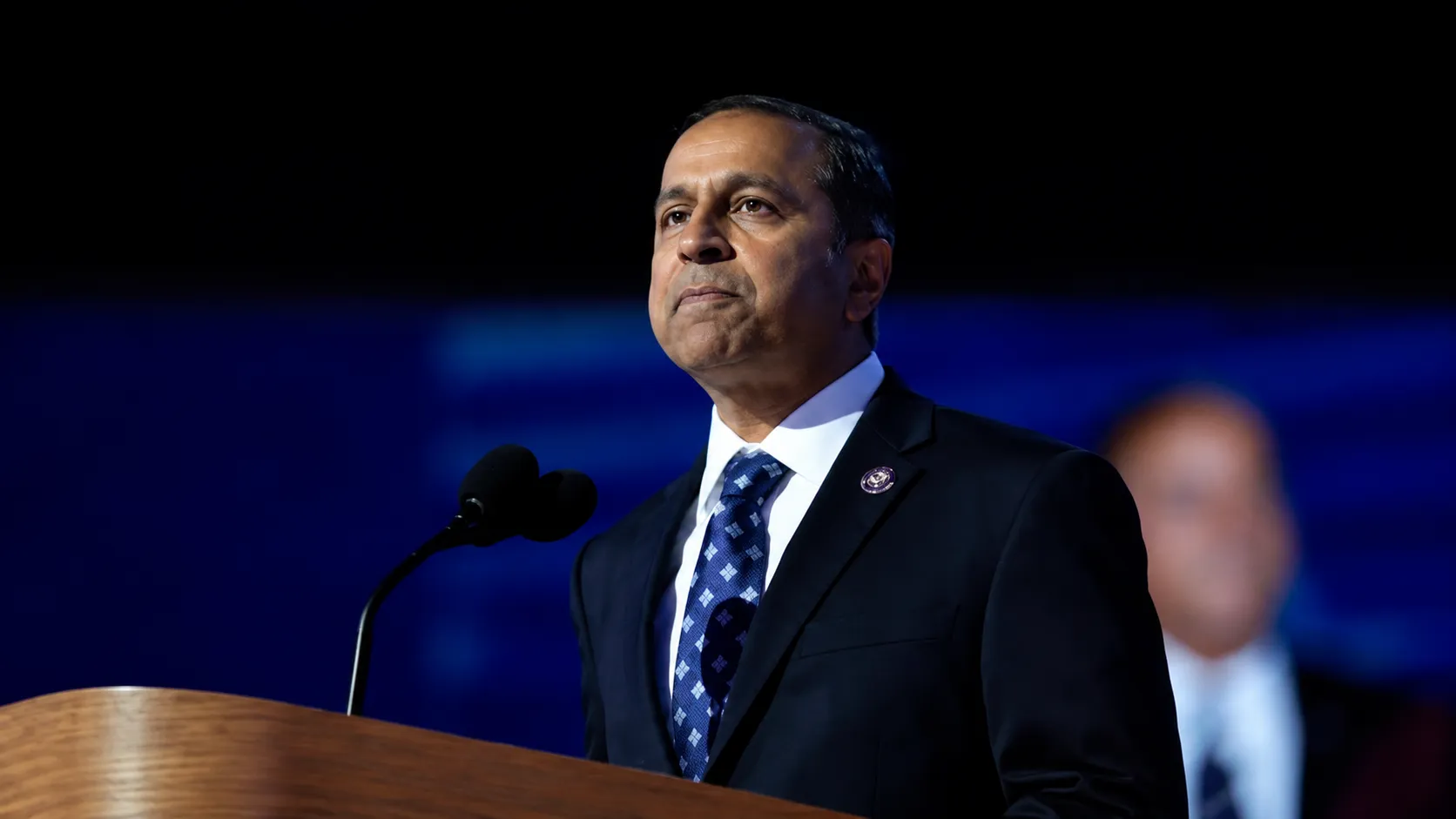
Rep. Raja Krishnamoorthi demands USPS Postmaster General David Steiner's removal, alleging the agency defied two federal court rulings on mail-ballot delivery.

By Aravind Kumar · Author3 August 2026New
Indian-American Congressman Raja Krishnamoorthi Demands Removal of US Postal Chief Over Alleged Voter-Suppression Scheme

In a move that has sent ripples through Washington's political establishment and reignited a bruising national fight over mail-in voting, Congressman Raja Krishnamoorthi — one of the most prominent Indian-American voices in the United States Congress — has formally called for the removal of US Postmaster General David Steiner. The demand, delivered in a pointed letter dated August 3, 2026, to the United States Postal Service Board of Governors, accuses the nation's top postal official of transforming a two-century-old, famously non-partisan institution into what Krishnamoorthi bluntly called "a partisan instrument of voter suppression."

The letter lands at a combustible moment. With the 2026 midterm elections just months away, the fight over how the Postal Service handles mail-in ballots has become one of the most closely watched flashpoints of the election cycle — and Krishnamoorthi, a member of the powerful House Committee on Oversight and Government Reform, has positioned himself squarely at the center of it.

At the heart of the dispute is an executive order signed by President Donald Trump on March 31, 2026, which directed the USPS to withhold delivery of mail ballots to voters whose eligibility could not be verified against a federally compiled voter list. The order was immediately controversial, triggering a wave of legal challenges from twenty-three states and the District of Columbia, all of whom argued that the directive trampled on powers explicitly reserved for state governments and Congress under the Constitution.

Those legal challenges have not gone the administration's way. A federal district court moved to block key provisions of the executive order soon after it was signed, finding sufficient grounds to believe it violated constitutional protections. When the administration appealed, the US Court of Appeals for the First Circuit upheld that injunction on July 25, 2026 — the second time in just a few months that a federal court had ruled against the order. Undeterred, the Trump administration has since escalated the fight to the US Supreme Court, formally asking the justices to allow the order to take effect before Americans head to the polls in November.

It is against this backdrop that Krishnamoorthi's letter lands with particular force. According to the Congressman, USPS's own conduct over the past four months tells a story that directly contradicts the position the administration is now taking before the nation's highest court. In its Supreme Court filing, the Department of Justice characterized the executive order as merely "general policy guidance," and acknowledged that USPS had not finalized any implementing regulations tied to it. Krishnamoorthi argues that this framing simply does not square with what has actually been happening inside the agency.

"The Administration's own filing presents a troubling contradiction," Krishnamoorthi wrote, noting that while the Department of Justice was telling the Supreme Court the order amounted to nothing more than guidance, USPS's apparent implementation efforts over the same period suggested something far more concrete and far more consequential for voters relying on mail-in ballots.

The Congressman's letter does not stop at policy disagreement — it also levels a serious charge of institutional stonewalling. Krishnamoorthi says Postmaster General Steiner has repeatedly failed to cooperate with congressional oversight, a core constitutional function of the legislative branch. According to the letter, Steiner did not respond to repeated requests for information from lawmakers, confirmed during Senate testimony that he intended to implement key aspects of the executive order despite the ongoing litigation, declined to answer follow-up questions in writing, and ultimately refused to appear before the House Committee on Oversight and Government Reform to explain USPS's actions.

For Krishnamoorthi, that pattern of silence is itself disqualifying. In one of the letter's most striking passages, he wrote that a Postmaster General who will not tell Congress whether his agency is complying with a federal court order — and who will not appear to answer for that silence — has already forfeited the trust the office requires. He said he was therefore calling on the USPS Board of Governors to remove Steiner from his post, and that he intends to urge fellow members of the Oversight Committee to join that call.

The letter requests a formal response by August 13, 2026, and asks for detailed records covering several categories: USPS's implementation activities tied to the executive order, internal guidance issued to postal employees regarding mail ballots, communications between USPS and election officials across the states, and any changes the agency has made to its practices in response to the federal court injunctions that have twice ruled against the administration's approach.

This is not the first time Krishnamoorthi has pressed USPS leadership on politically sensitive matters. The Congressman has been an increasingly vocal watchdog on issues ranging from postal service reliability to the treatment of vulnerable populations within federal agencies, and has previously pressed other federal departments, including Health and Human Services, over their handling of politically fraught policy areas. His willingness to take on entrenched federal leadership has made him a familiar name not just among Illinois constituents but across the broader landscape of Indian-American political engagement in Washington.

For the Indian-American community, Krishnamoorthi's rise has carried outsized symbolic weight. Elected to represent Illinois's 8th Congressional District, he has become one of a small but growing cohort of Indian-origin lawmakers who now sit at the highest levels of American governance — a cohort that includes figures across both major parties and that has expanded dramatically over the past two decades as the diaspora's political engagement has matured from campaign volunteering and fundraising into direct representation. Community organizations have long tracked Krishnamoorthi's committee assignments and legislative priorities as a barometer of the diaspora's institutional influence in Washington, and his latest broadside against USPS leadership is already being discussed widely in diaspora media and community forums as a marquee example of that influence being exercised on one of the year's most consequential democratic fights.

The broader context here matters enormously. Mail-in voting has become one of the most polarizing subjects in American political life since the 2020 election cycle, when pandemic-era expansions of mail balloting became a flashpoint in disputes over election integrity and access. Since then, both the legal landscape and the political rhetoric around mail ballots have hardened considerably, with Republican-led efforts in numerous states seeking to tighten verification requirements, and Democratic-led states and advocacy groups pushing back through litigation and legislative counter-measures. The Trump administration's March 31 executive order represents perhaps the most aggressive federal-level intervention yet into how mail ballots are handled by the agency responsible for physically delivering them — the Postal Service itself.
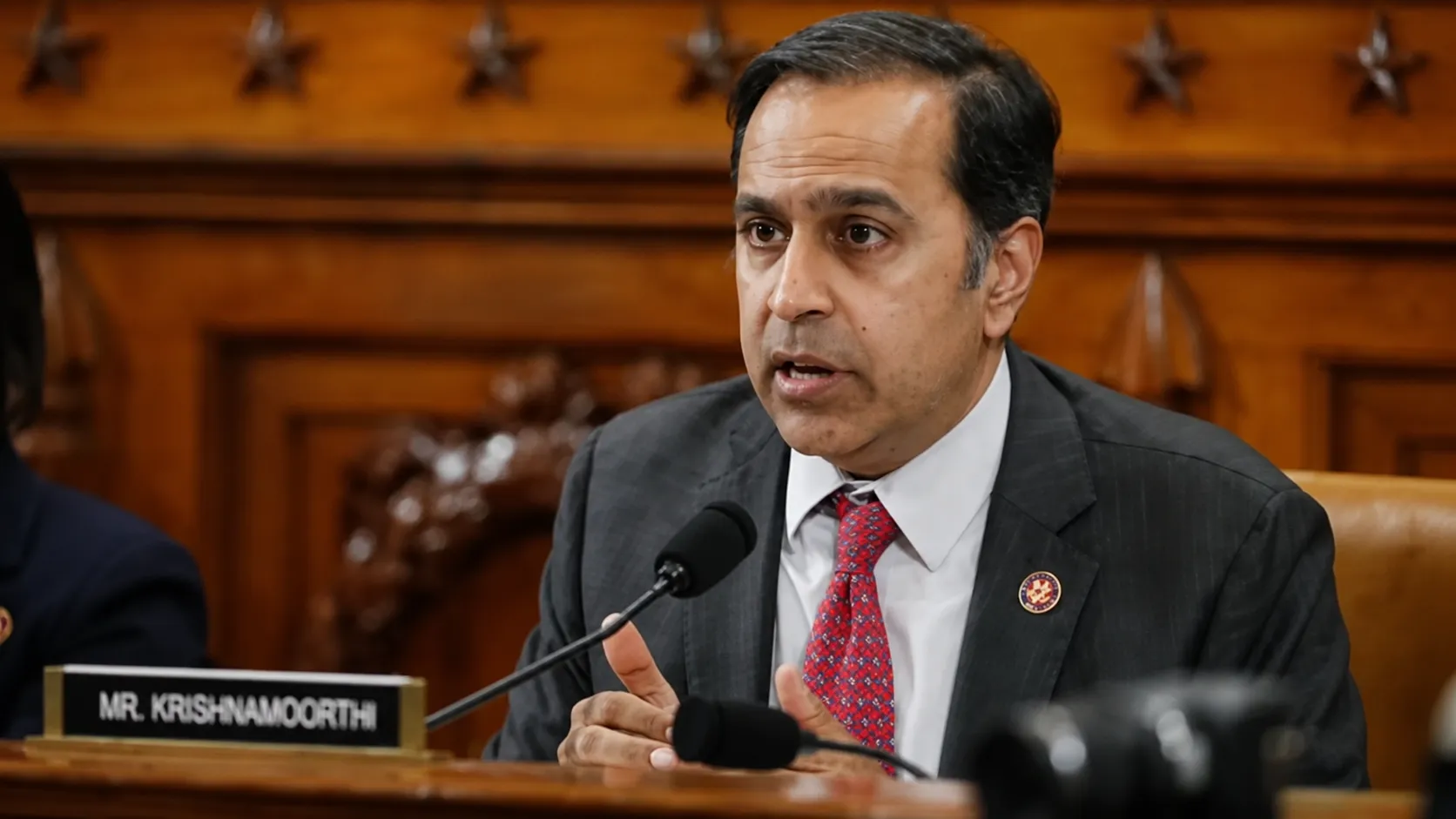

A Postmaster General who will not tell Congress whether his agency is complying with a federal court order, and who will not appear to answer for that silence, has already forfeited the trust the office requires.
Rep. Raja Krishnamoorthi
image.png

Legal experts who have followed the litigation closely note that the twin rulings against the executive order — first at the district court level, then upheld by the First Circuit Court of Appeals — represent a significant, if not necessarily final, setback for the administration's approach. The Supreme Court's eventual decision on whether to allow the order to take effect before November could have profound implications not just for this election cycle, but for the broader question of how much authority the executive branch can exercise over an agency, USPS, that Congress has historically insulated from direct political control precisely because of its role in the democratic process.

It is that historical insulation — the idea that mail delivery, including the delivery of ballots, should occur without regard to party or politics — that runs through the entire spine of Krishnamoorthi's letter. He explicitly invoked more than two centuries of institutional trust, arguing that this legacy has been placed at risk under Steiner's leadership. Whether or not the USPS Board of Governors ultimately acts on Krishnamoorthi's demand, the letter itself has already succeeded in elevating the dispute, ensuring that questions about USPS's conduct will remain squarely in the national conversation as the midterm elections approach.

For now, all eyes turn to two dates. The first is August 13, 2026, the deadline Krishnamoorthi has set for Steiner to respond with the requested documentation. The second, less certain but potentially more consequential, is whenever the Supreme Court chooses to rule on the administration's request to implement the executive order before November's midterms. Between those two dates lies a legal and political battle that will shape not only the fate of one federal appointee, but the ground rules for how tens of millions of Americans — including large numbers of Indian-American voters across battleground states — will be able to cast their ballots by mail this fall.

Krishnamoorthi's office has indicated that the Congressman will continue to press the issue through additional Oversight Committee channels regardless of how USPS responds to the August 13 deadline, framing the fight not simply as a personnel matter but as a test of whether federal agencies can be held accountable to Congress and to the courts in real time, rather than after the fact. As the story continues to develop, The Impactful Global Indian will track both the USPS response and any further Congressional or judicial action.

The Postal Service itself occupies a unique constitutional and institutional position within the American federal government, one that makes this dispute particularly consequential. Unlike most federal agencies, USPS is structured as an independent establishment governed by a Board of Governors, a design Congress deliberately adopted through the Postal Reorganization Act of 1970 in order to insulate day-to-day postal operations from direct political interference. That history is precisely why Krishnamoorthi's letter frames the current controversy in such stark terms: if the allegations he has laid out are accurate, they would represent not simply a policy disagreement but a breach of the very structural independence that Congress built into the agency more than half a century ago specifically to prevent this kind of scenario.

Reaction to Krishnamoorthi's letter has broken down along familiar partisan lines in Washington, with Democratic colleagues on the Oversight Committee signaling support for further investigation, while Republican lawmakers and administration officials have largely stood behind Steiner's leadership and characterized the underlying executive order as a legitimate exercise of executive authority aimed at safeguarding election integrity. That partisan split mirrors the broader, deeply polarized national debate over mail-in voting that has persisted since the 2020 election cycle, when pandemic-driven expansions of mail balloting first became a lightning rod in disputes over both access and security. Voting rights organizations, for their part, have largely aligned themselves with the position taken by the twenty-three states and the District of Columbia that originally challenged the executive order, arguing that any effort to condition ballot delivery on federal verification against a centrally compiled voter list risks disenfranchising eligible voters, particularly those in historically underserved communities.

Within Indian-American political circles specifically, Krishnamoorthi's intervention has been read as part of a broader pattern of the community's elected representatives taking increasingly assertive, high-profile stances on core democratic institutions rather than confining their advocacy to issues narrowly defined as "diaspora concerns," such as immigration policy or US-India relations. Community advocacy organizations focused on South Asian American civic engagement have pointed to Krishnamoorthi's Oversight Committee work, alongside similar efforts from other Indian-origin lawmakers across both chambers of Congress, as evidence that the generation of Indian-American politicians now serving in Washington increasingly view themselves, and are increasingly viewed by their constituents, as mainstream American political leaders whose portfolios extend across the full breadth of national governance.

The stakes of the underlying legal question extend well beyond any single postal appointee. Election law specialists have noted that if the Supreme Court ultimately sides with the administration and allows the executive order to take effect before the midterms, the ruling could establish a significant new precedent for how much latitude the executive branch holds over agencies that touch the mechanics of federal elections, even when those agencies are structurally designed to operate at arm's length from the White House. Conversely, a ruling upholding the injunction would reinforce the twin district and appellate court findings that have already gone against the administration twice, potentially closing off this particular avenue of executive action for the remainder of the current term. Either outcome will be closely watched not just by election law scholars, but by the tens of millions of Americans, including sizable Indian-American voting blocs concentrated in swing states such as Georgia, Pennsylvania, and Texas, whose ability to vote by mail could be directly affected by however this dispute is ultimately resolved.

This report is based on Krishnamoorthi's letter to the USPS Board of Governors, contemporaneous reporting on the underlying litigation, and public statements from the Congressman's office.

TagsRaja KrishnamoorthiUSPSIndian American PoliticsUS CongressMail-In VotingElection 2026Oversight CommitteeDiasporaWashington DCVoting Rights

Reader reviews

Sign in to rate and review this article.
Loading reviews…

