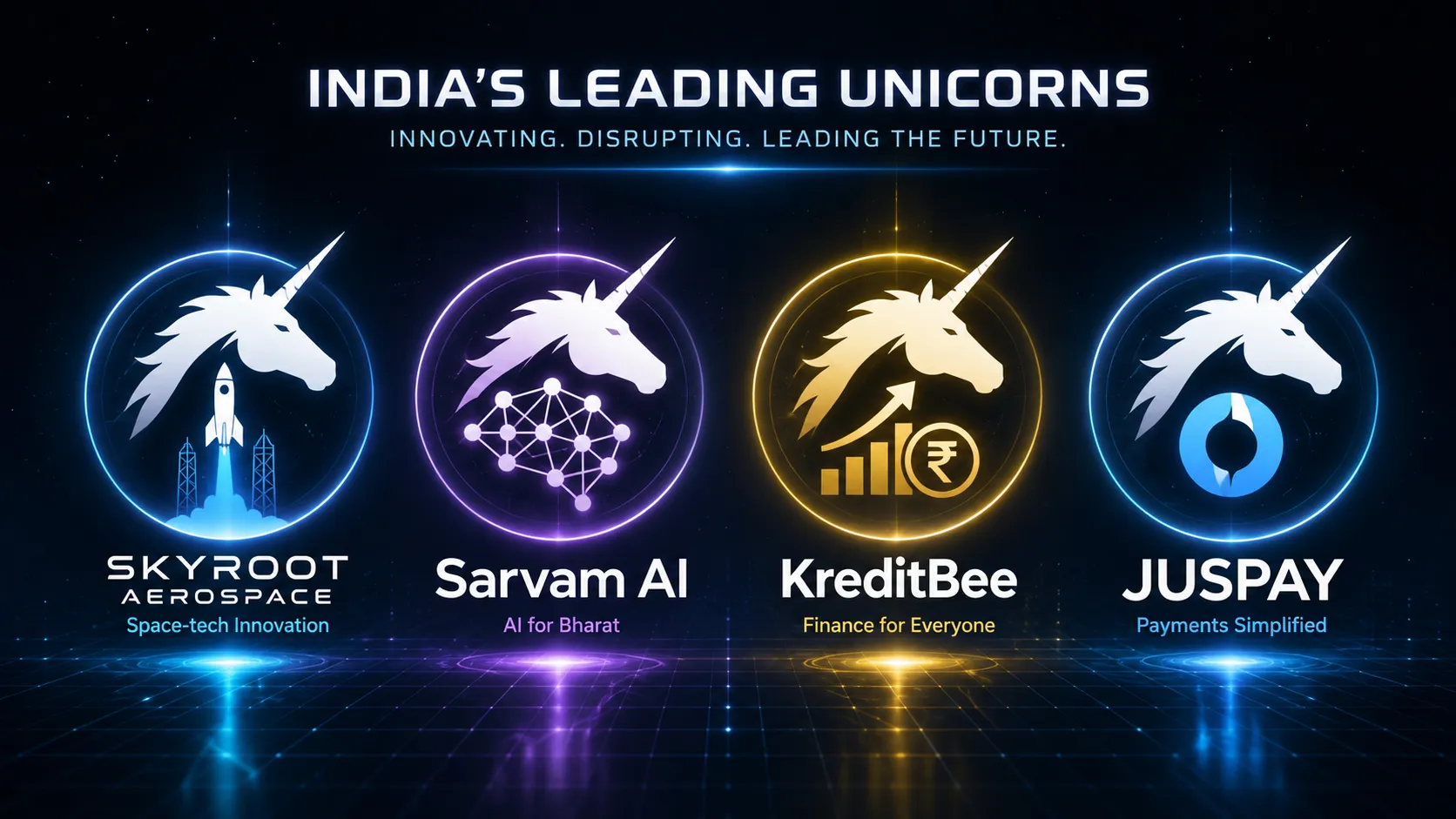
Skyroot Aerospace became the country's first space-tech unicorn on May 7, joining a growing list of 2026 entrants that includes Sarvam AI, KreditBee, Neysa, and Juspay. With 131 unicorns now and India ranked third globally, the billion-dollar club is no longer an anomaly — it's becoming the new normal.
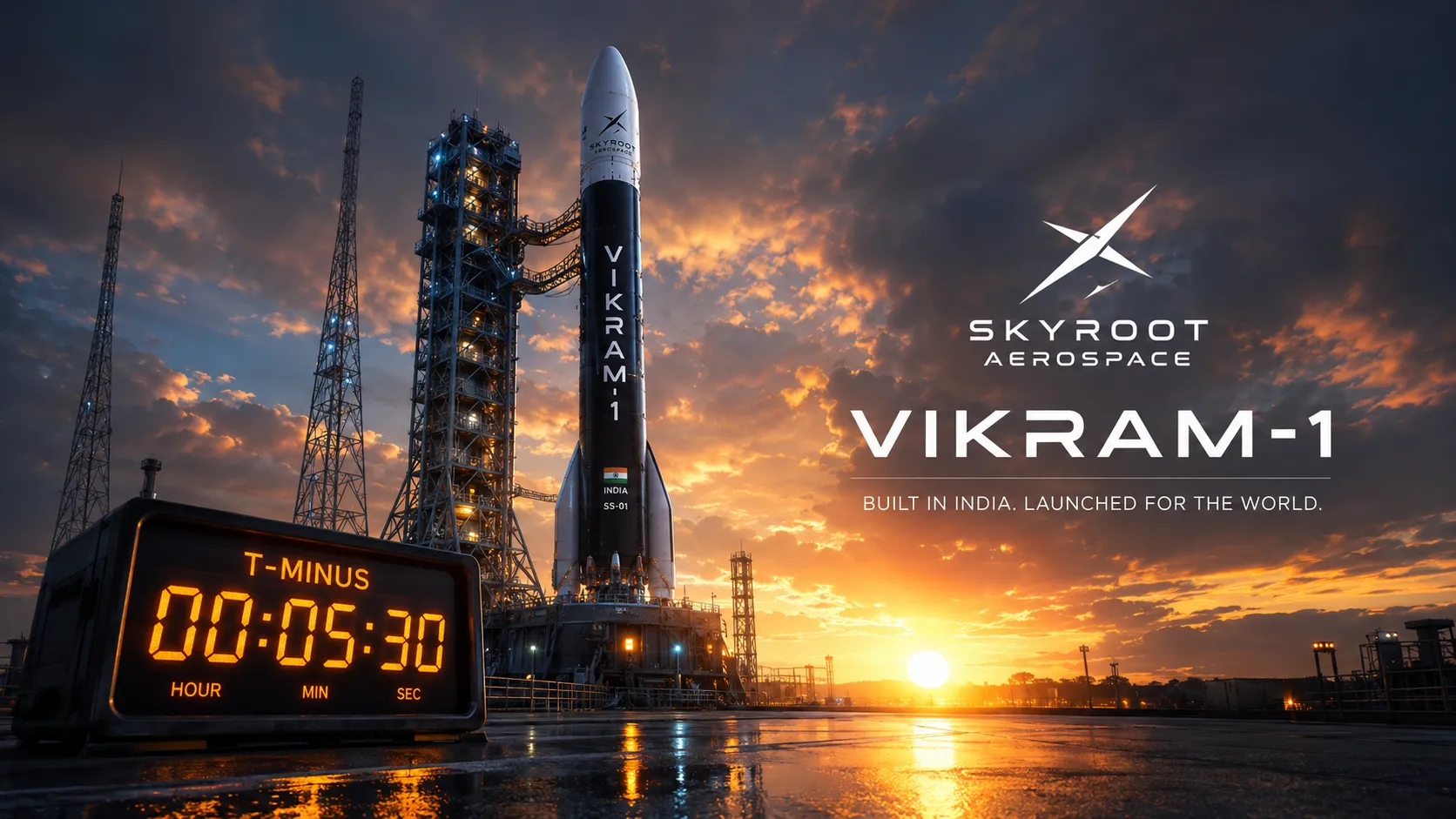
The phone call came at 11 PM on May 7, 2026. Pawan Kumar Chandana, co-founder and CEO of Skyroot Aerospace, was in Hyderabad, going over final pre-launch checklists for Vikram-1, India's first privately developed orbital rocket. The news wasn't about the rocket. It was about the money.
Skyroot had just raised $60 million in a round co-led by Sherpalo Ventures and Singapore's sovereign wealth fund GIC, with participation from BlackRock, the founders of Greenko Group, Arkam Ventures, Playbook Partners, and the Shanghvi Family Office. The round valued the Hyderabad-based spacetech startup at $1.1 billion.
Skyroot had become India's first space-tech unicorn. And it was just the beginning.
The Four Unicorns of 2026
According to market intelligence platform Tracxn, India has added four new unicorns in 2026 as of June 18, taking the total count to 131. Only China, with 248 unicorns, and the United States, with 1,194, rank ahead.
The four new entrants reflect the diversity and maturity of India's startup ecosystem:
Skyroot Aerospace — India's first space-tech unicorn, valued at $1.1 billion.
Sarvam AI — A Bengaluru-based full-stack sovereign AI startup that raised $234 million in a Series B round led by HCLTech, valued at $1.5 billion.
KreditBee — A fintech platform that has been a consistent performer in the lending space.
Neysa — An AI startup focused on enterprise solutions.
Juspay — A payments infrastructure company that has been quietly building scale.
Some reports also count KreditBee, Neysa, Juspay, and Skyroot Aerospace as the four. Others count KreditBee, Neysa, Juspay, and Sarvam AI. The exact list varies by source — but the trend is unmistakable: India's startup engine is firing on all cylinders.
Skyroot Aerospace: From ISRO Engineers to India's First Space Unicorn
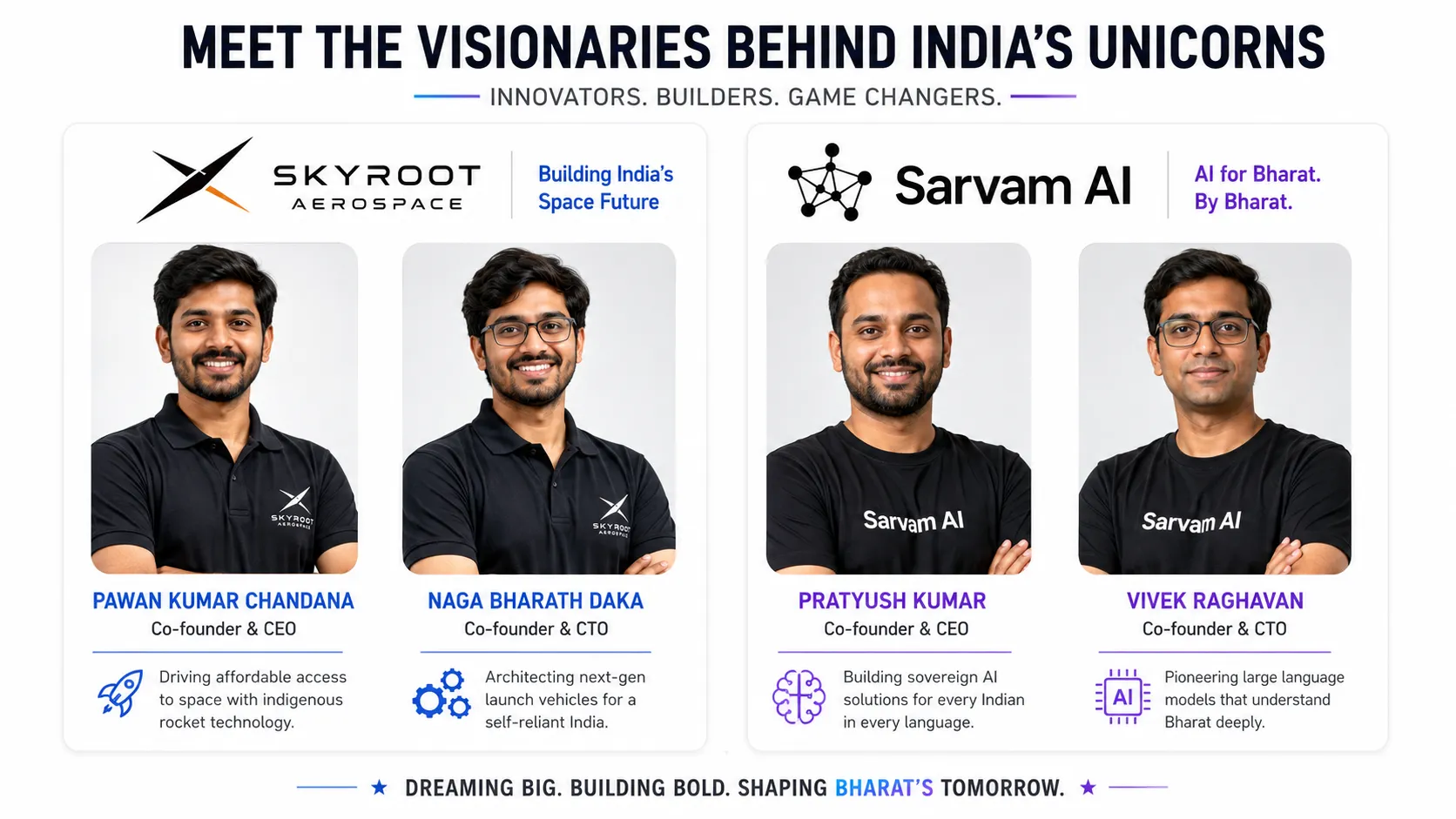
The Skyroot story is one of audacity and execution. Founded in 2018 by Pawan Kumar Chandana and Naga Bharath Daka — both IIT graduates and former ISRO engineers who had worked on the Launch Vehicle Mark-III (LVM Mk-III) that sent Chandrayaan-3 to space — the company set out to do what no private Indian company had done before: build rockets.
In 2022, Skyroot launched Vikram-S, India's first privately built rocket to reach space. It was a sub-orbital mission, but it proved that private enterprise could compete with state-run ISRO. Four years later, Skyroot is preparing for the maiden launch of Vikram-1, India's first privately developed orbital rocket, expected in the coming weeks.
The $60 million funding round that made Skyroot a unicorn was co-led by Sherpalo Ventures — the firm of Ram Shriram, one of Google's earliest backers and a board member of Alphabet — and Singapore's GIC. BlackRock, the world's largest asset manager, also participated. Shriram will join Skyroot's board.
The round nearly doubled Skyroot's valuation from approximately $519 million in 2023 to $1.1 billion. With this round, the company has raised a total of $160 million to date.
The fresh capital will be used to scale up manufacturing, support a higher launch cadence for Vikram-series rockets, and accelerate development of Vikram-2 — a 1-tonne class launch vehicle featuring a cryogenic stage.
"We at Skyroot are excited about the upcoming Vikram-1 launch, India's first private orbital rocket, marking a significant milestone both for India and the global space sector," said Chandana.
Ram Shriram put it even more starkly: "Access to space is one of the key challenges of our time. Skyroot is building the foundational infrastructure for that future with the best cost-to-performance ratio in the orbital-launch industry".
Sarvam AI: India's Sovereign AI Unicorn
Just over a month after Skyroot's milestone, Bengaluru-based Sarvam AI joined the unicorn club. On June 15, 2026, the company announced a $234 million Series B funding round led by HCLTech, valuing the startup at $1.5 billion.
HCLTech invested $150 million for a 10.46% stake. Bessemer Venture Partners also co-led the round, with participation from existing investors Khosla Ventures and Peak XV Partners.
Founded in 2023 by Pratyush Kumar and Vivek Raghavan, Sarvam AI specializes in building full-stack sovereign AI models, infrastructure, and enterprise products across language, speech, vision, and document AI. The company serves clients in banking, insurance, government, and defense. Its conversational AI platform manages over 2 million interactions daily, and its inference platform processes more than 10 million API calls each day.
Sarvam is among a handful of startups attempting to build a complete sovereign AI stack — not just a wrapper on foreign models, but foundational models trained from scratch on Indian data, deployed on Indian infrastructure.
The Bigger Picture: India's Unicorn Ecosystem
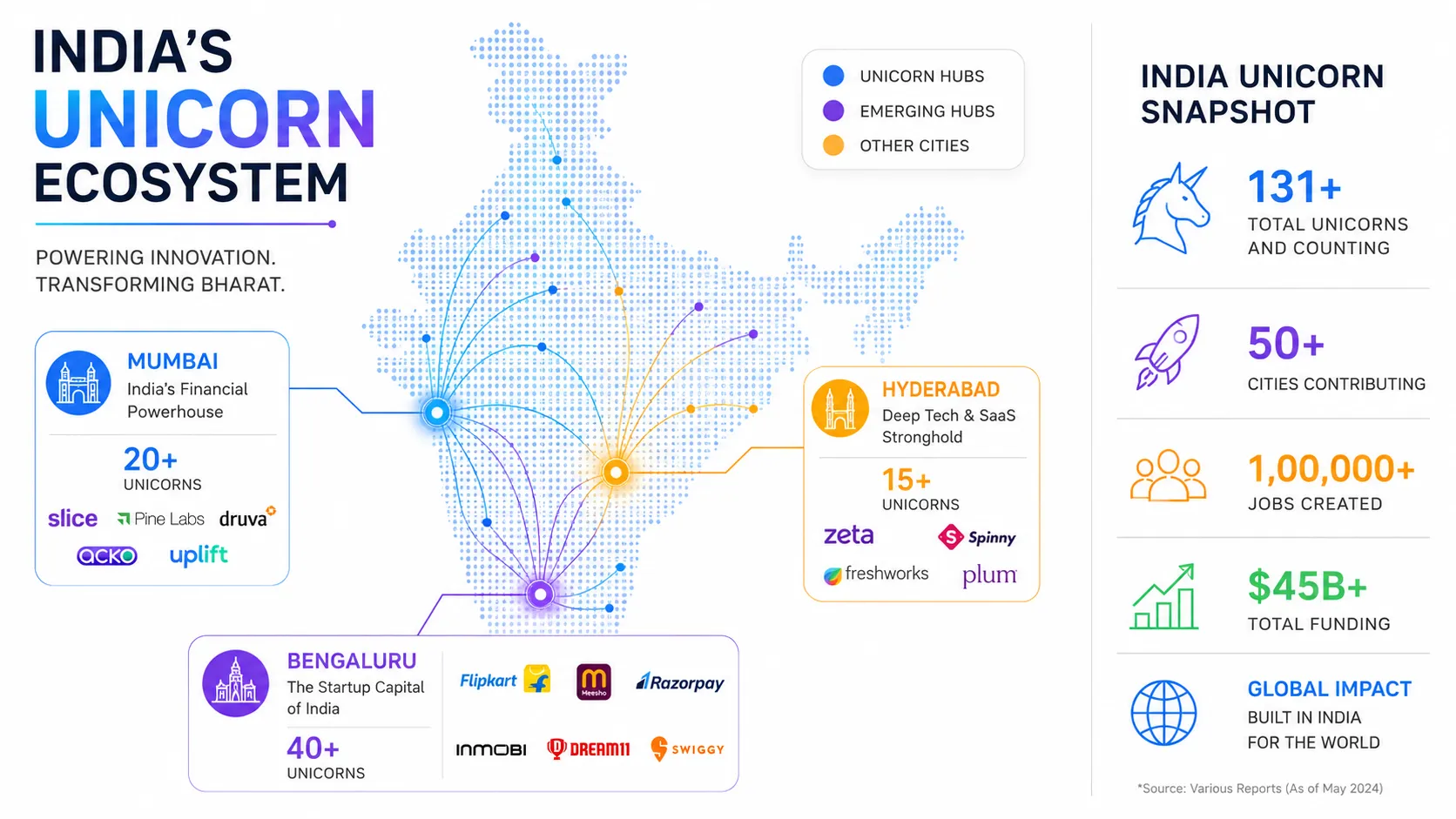
India's unicorn count now stands at 131. The country has added six unicorns in FY 2025-26, reflecting a 50% increase compared to four in the previous fiscal year. India ranks fourth globally in startup funding, with $11.7 billion raised in the most recent fiscal year.
But the story is not all celebration. As Rakesh Khar noted in a recent analysis for BasisPointInsight, "India's start-up story masks structural weaknesses that threaten the country's entrepreneurial ambitions. In its pursuit of valuations, much of the ecosystem has neglected the harder task of building resilient businesses".
The true test of a startup, he argues, "is its ability to build a self-sustaining business that generates returns for investors, pays taxes and creates jobs through its own operating cash flows rather than an endless succession of funding rounds".
The edtech sector's collapse serves as a cautionary tale. But for now, the unicorn party continues.
The Bottom Line
India has added four new unicorns in 2026, bringing the total to 131. Skyroot Aerospace became the country's first space-tech unicorn on May 7, with a $60 million round at a $1.1 billion valuation. Sarvam AI followed on June 15, raising $234 million at a $1.5 billion valuation.
The ecosystem is maturing. The pipeline is deep. And the next wave — including Zepto's upcoming IPO — is already forming.
India now ranks third globally in unicorn count, behind only the US and China. The billion-dollar club is no longer an anomaly. It is becoming the new normal.