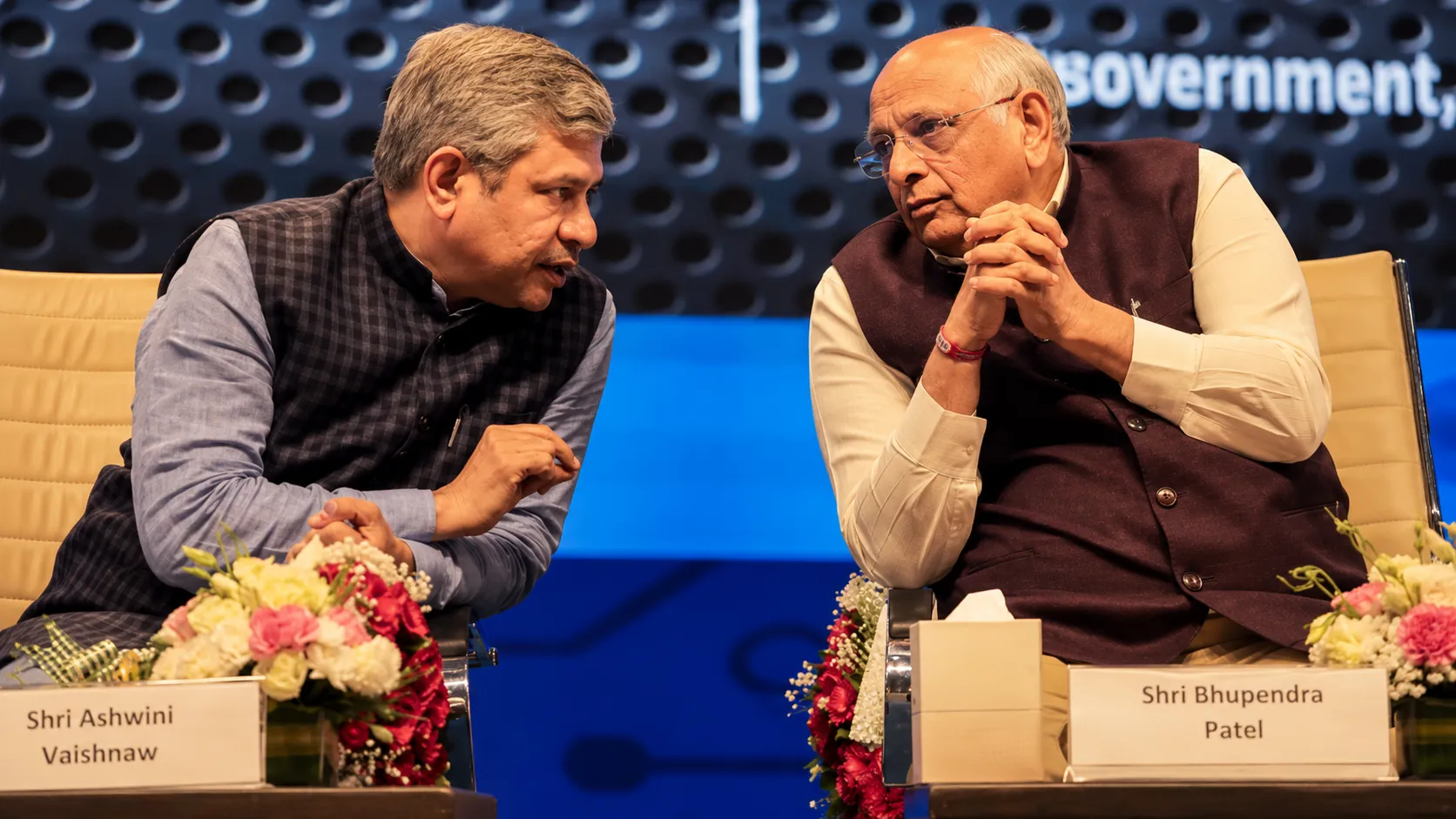
The global shortage of high‑bandwidth memory chips is so severe it's raising smartphone and laptop prices. Ashwini Vaishnaw says India has the answer — and more investments are coming.
Strong demand for memory cards and advanced chips has tightened global supplies and supported higher prices for quarters. And India, the world's largest consumer of smartphones and laptops, is feeling the pinch.
But in a rare moment of semiconductor optimism, Union minister Ashwini Vaishnaw has confirmed that new companies are likely to invest in India to manufacture memory chips, while existing investors scale up production to address the demand‑supply gap.
"For the first time in the way the semiconductor industry has grown at such a rapid pace, we are seeing a huge shortage of certain components required in AI data centres — the high bandwidth memory chips," Vaishnaw told PTI on Sunday, June 14.
The numbers are staggering. Data centre investments in India are expected to cross $200 billion soon, which will require billions of gigabytes of storage capacity. The global shortage of high‑bandwidth memory (HBM) — the specialised chips that power advanced AI models — has become so acute that it is pushing up prices of everything from smartphones to servers.
India, which consumes vast quantities of memory chips but produces almost none, has long been a spectator to semiconductor cycles. Now, Vaishnaw argues, the country is finally becoming a player.
Micron's Success Story
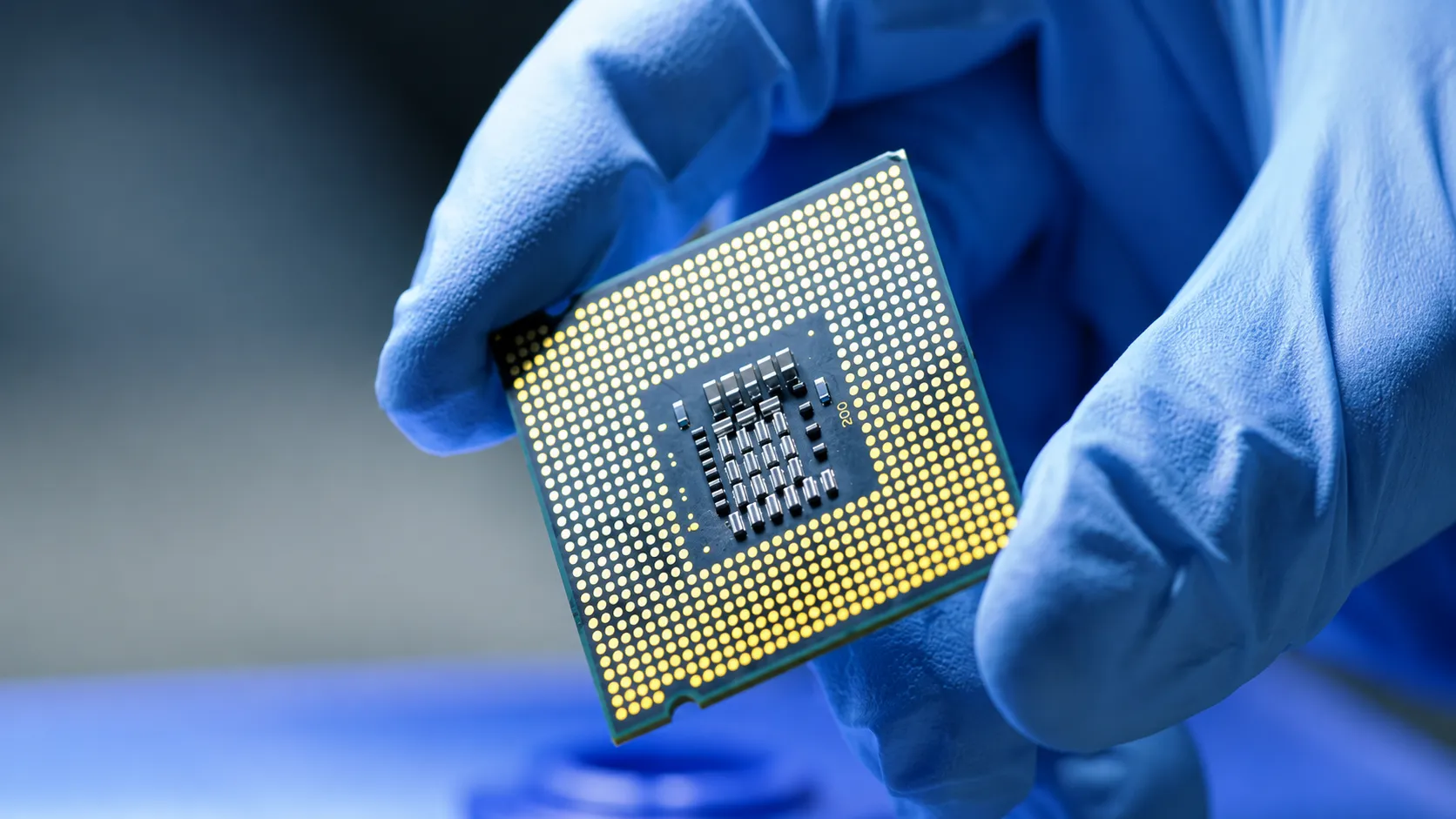
Vaishnaw pointed to Micron as the evidence. The American memory chip maker's first plant in India started commercial production on February 28 this year. Its second plant followed on March 31.
"These are the steps which have started giving results," the minister said.
The Micron plants, located in Gujarat's Sanand district, are focused on assembly, testing, marking and packaging (ATMP) — the backend of semiconductor manufacturing, rather than the more complex frontend wafer fabrication. But even backend production is significant for India, which has historically done almost no chip packaging domestically.
"Micron's investment is not just about the jobs at the factory," a semiconductor industry analyst based in Bengaluru said. "It's about the ecosystem that builds around it. Suppliers, logistics, training, design — all of that starts to take root once you have an anchor facility."
The government's India Semicon Mission (ISM) 1.0, launched in 2022, has brought about 48 startups into the tech product space. Those startups are designing chips, developing intellectual property, and creating tools for the semiconductor industry — the early stages of a domestic ecosystem that could eventually rival established hubs in Taiwan, South Korea, and China.
ISM 2.0: What Comes Next
When asked whether new investments would come from existing players or newcomers, Vaishnaw said, "Looks like both might happen."
He confirmed that work is in an advanced stage on India Semicon Mission 2.0, under which chip design will be the topmost priority, followed by semiconductor manufacturing equipment. For ISM 2.0, the government will also look at indigenous production of the complex chemicals and gases used for manufacturing chips, as well as adding more fabs and ATMP units.
"The large pool of talent availability in India is one of the basic reasons attracting companies from across the globe," the minister said. "Second, our grid is practically a new grid — more than two lakh kilometres of transmission lines have been constructed in the last decade."
The talent argument is India's traditional strength — a deep and growing pool of engineers, many of whom have trained at world‑class institutions. The grid argument is newer. Semiconductor fabs require absolutely reliable, high‑quality power. Brownouts or voltage fluctuations can ruin millions of dollars worth of chips in seconds. India's investment in transmission infrastructure, Vaishnaw argues, has made large‑scale semiconductor manufacturing feasible in ways it wasn't a decade ago.
The Global Memory Crunch
To understand why India's entry into memory chip production matters, you have to understand the scale of the global shortage.
High‑bandwidth memory (HBM) is a specialised type of DRAM (dynamic random‑access memory) that is stacked vertically to achieve extremely high data transfer rates. It is essential for the advanced AI accelerators made by NVIDIA, AMD, and Intel — the chips that power large language models like GPT‑5 and Google's Gemini.
Demand for HBM has exploded as every major tech company races to build out AI infrastructure. Supply has not kept up. The three major memory makers — Samsung, SK Hynix, and Micron — have all announced capacity expansions, but those take years to come online.
In the meantime, the shortage has cascaded down the supply chain. Some HBM production has been shifted from standard DRAM, tightening supplies of regular memory chips used in laptops, desktops, and smartphones. Prices for DDR4 and DDR5 memory modules have risen 20‑30 percent over the past six months, adding to the cost of new computers and phones.
For Indian consumers, who are highly price‑sensitive, these increases are noticeable. A laptop that cost ₹60,000 a year ago now costs ₹65,000‑68,000. A smartphone with higher memory configurations has become significantly more expensive.
"Memory is a commodity, but it's a commodity that everything needs," the semiconductor analyst said. "When memory prices go up, every electronic device gets more expensive. India, as a net importer of electronics, feels that pain directly."
Who Could Invest Next?
Vaishnaw's comment that "both" existing and new investors could expand or enter has set off speculation about which companies might be next.
Existing players like Micron are the obvious candidates for expansion. The company has been pleased with its India operations and could add more ATMP capacity or even move into more advanced packaging.
Newcomers could include other memory makers — Samsung and SK Hynix, both of which have large operations in other parts of Asia but none in India. Both are under pressure from their home governments to diversify manufacturing away from China and Taiwan. India, with its improving infrastructure, large talent pool, and government subsidies, is a plausible destination.
There is also the possibility of Indian conglomerates entering the space. Tata Group has already announced a semiconductor fab in Dholera, Gujarat, in partnership with Taiwan's Powerchip. Vedanta, before its demerger, had expressed interest in chip manufacturing. Reliance has semiconductor ambitions as part of its broader electronics push.
"None of these will happen overnight," the analyst said. "Building a fab takes three to four years, even with all approvals in place. But the conversations are happening. And that's a huge change from five years ago, when nobody was even picking up the phone."
The Chemicals and Gases Gap
One of the less visible but critically important aspects of ISM 2.0 is the focus on indigenous production of the complex chemicals and gases used for chip manufacturing.
Semiconductor manufacturing requires ultra‑high‑purity chemicals — hydrofluoric acid, hydrogen peroxide, ammonia, and dozens of others — as well as specialty gases like silane, nitrogen trifluoride, and tungsten hexafluoride. Most of these are currently imported, largely from China, Japan, and the United States.
Dependence on imported chemicals is a vulnerability. If supply chains are disrupted — by war, pandemic, or trade restrictions — Indian chip fabs could be forced to shut down. The government wants to build domestic capacity for critical chemicals, both for strategic autonomy and for cost reasons.
"Chemicals are a smaller market than chips, but they're equally strategic," a chemical industry executive said. "You can't run a fab without them. And right now, India makes almost none of them at the required purity levels. That's a gap that needs to be filled."
Vaishnaw's mention of chemicals in the ISM 2.0 framework suggests that the government is actively courting investments from specialty chemical companies, both Indian and foreign, to build out this ecosystem.
The Competition
India is not the only country trying to build semiconductor manufacturing capacity. The United States has its CHIPS Act, which has committed $52 billion to domestic production. The European Union has its own Chips Act, with €43 billion in funding. Japan, South Korea, and China are all investing heavily.
Each of these jurisdictions offers subsidies, infrastructure, and market access. India's pitch is different: low labour costs, a massive domestic market, and a government willing to move fast.
"India's advantage is that it's starting from a lower base," the analyst said. "The US and Europe have legacy infrastructure, but they also have legacy costs. India can build new, modern facilities from scratch, with the latest equipment and processes, without having to retrofit old plants."
The disadvantage is that India lacks a deep semiconductor ecosystem. There are no major equipment manufacturers, no large chemical suppliers, no pool of experienced fab engineers. Everything has to be built from the ground up or imported.
"The first few fabs will be expensive and difficult," the analyst said. "The fifth and sixth will be easier. The question is whether India has the patience to get through the first few."
The Bottom Line
Ashwini Vaishnaw's statement that new companies are likely to invest in memory chip manufacturing in India is not a guarantee. It is an aspiration, a signal, a marketing pitch to potential investors. But it is also a reflection of real progress.
Micron's two plants are operational. Tata's Dholera fab is under construction. Forty‑eight startups are designing chips. The government is working on ISM 2.0, with its focus on design, equipment, and chemicals. For the first time, India has a semiconductor strategy that is more than just a PowerPoint presentation.
The memory shortage will eventually ease. New capacity will come online in South Korea, Taiwan, and the United States. Prices will stabilise. But the structural shift — the recognition that India must produce its own chips, not just consume them — will outlast the current cycle.
For Indian consumers paying higher prices for laptops and smartphones, relief may still be years away. For the Indian semiconductor industry, the journey is just beginning. But as Vaishnaw's remarks made clear, the government believes the journey is finally moving in the right direction.


