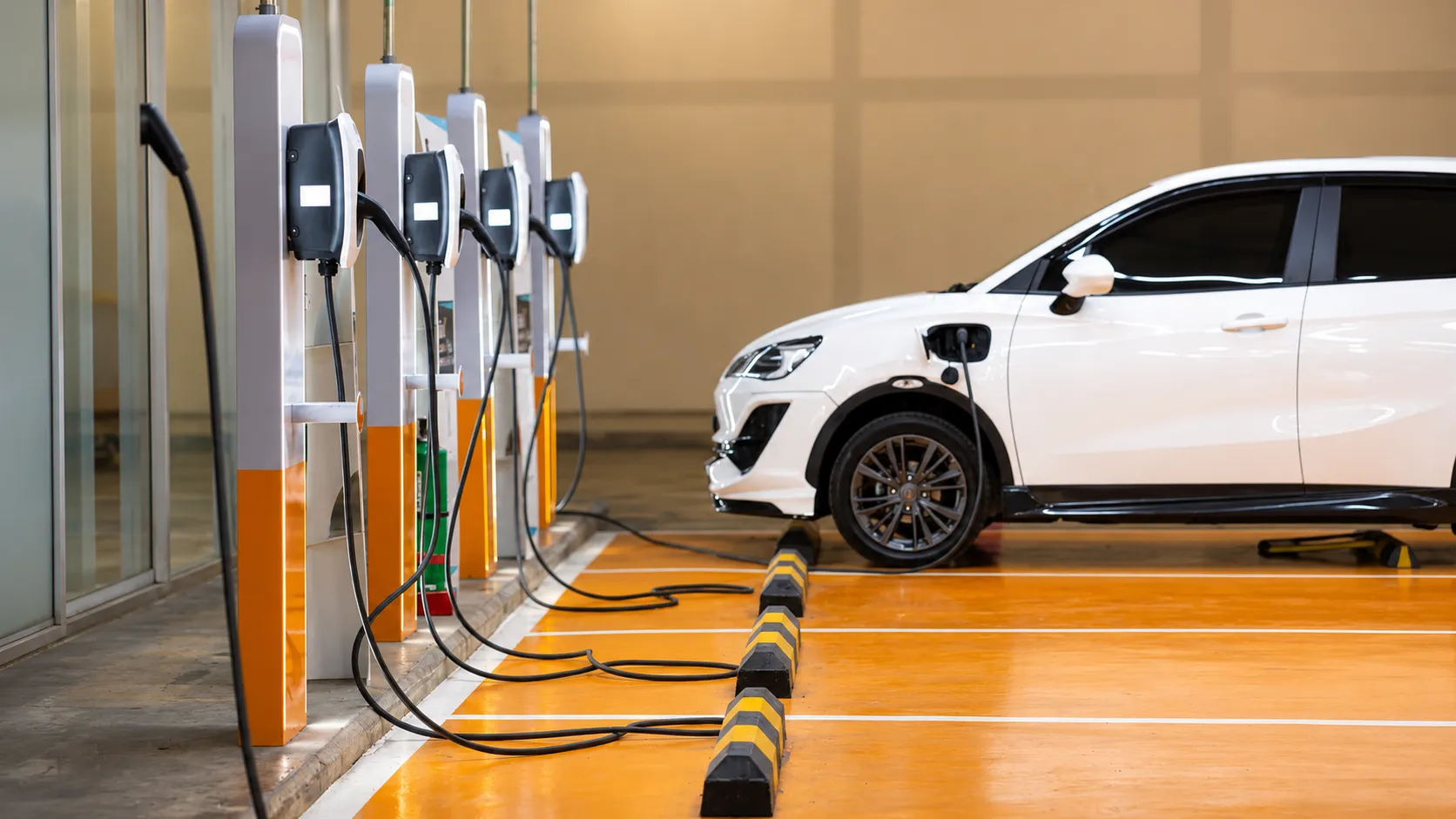
A new report from the India Energy Storage Alliance, prepared in collaboration with Customized Energy Solutions, has put a striking number on the scale of transformation ahead for India's electric vehicle market: annual EV sales are projected to surge roughly 12-fold, from current levels to 30.4 million units by 2032, under what the report terms the high-growth National EV Target, or NEV, scenario. The findings, released this month, offer one of the most detailed publicly available projections yet of how India's electrification of road transport could unfold over the coming seven years — and, just as importantly, what it will take to get there.
The starting point for this projected surge is a market that has already been growing at a healthy clip, if from a modest base. Annual EV sales in India rose from 2.0 million units in 2024 to 2.6 million units in 2025, an increase of approximately 26 percent, according to the report. That growth pushed electric vehicles' overall share of total vehicle sales in India to approximately 9.5 percent in 2025, up from 8.1 percent the year before — a shift the report describes as evidence of the market's continued structural transition toward electrification, rather than a temporary spike driven by one-off incentives or subsidy programmes.
WHAT'S ACTUALLY DRIVING THE SHIFT
The report attributes this accelerating adoption to a combination of factors converging simultaneously. Higher fuel prices, which have kept petrol and diesel costs elevated for Indian consumers even amid periods of global crude oil volatility, have meaningfully strengthened the cost competitiveness of electric vehicles relative to their internal combustion counterparts over the vehicle's total ownership lifetime. At the same time, the report points to an expanding range of electric sports utility vehicle offerings entering the Indian market, alongside a broader wave of new EV product launches across price segments, as factors that have enhanced both consumer appeal and market visibility for electric vehicles — addressing what had previously been a common consumer complaint about limited model choice, particularly in the passenger vehicle segment.
THE SEGMENT BREAKDOWN: TWO-WHEELERS STILL DOMINATE, FOR NOW
Within 2025's roughly 2.5 million total EV units sold, electric two-wheelers continued to command the largest share of the market at 60.1 percent, with electric three-wheelers close behind at 31.6 percent — together, these two lighter-vehicle categories accounted for more than 91 percent of all EV units sold in the country. That concentration reflects a familiar pattern in India's electric vehicle adoption curve: two-wheelers and three-wheelers, which carry lower upfront costs and shorter daily travel distances that align well with current battery range and charging infrastructure limitations, have consistently led India's EV transition ahead of passenger cars.
That said, the report identifies a meaningful shift already underway in the four-wheeler segment, with electric passenger vehicles growing their share of total EV sales to 7.7 percent in 2025, reflecting what the report describes as accelerating consumer adoption of electric cars. Electric buses and trucks, while still representing a comparatively small 0.2 percent and 0.4 percent of total sales respectively, are being supported by public procurement programmes and fleet operator commitments — segments where government and institutional buyers, rather than individual retail consumers, are driving early adoption, often as part of broader public transport electrification and corporate sustainability commitments.
THE BATTERY DEMAND STORY: AN 18-FOLD SURGE
Perhaps even more striking than the vehicle sales projection is the report's forecast for battery demand, which is expected to scale from approximately 19 gigawatt-hours in 2025 to 362 gigawatt-hours by 2032 — an increase driven not just by rising unit sales, but by the fact that average battery pack sizes across most vehicle categories are also expected to grow substantially over the same period, as manufacturers push for longer vehicle range to address persistent consumer anxiety about charging availability and trip distance limitations.
The report also highlights a notable structural shift in exactly which vehicle categories will drive this battery demand growth. While two-wheelers and three-wheelers dominate unit sales, four-wheelers are projected to lead overall battery consumption at 40 percent of total demand, followed by three-wheelers at 27 percent and two-wheelers at a comparatively modest 23 percent — a divergence explained simply by the fact that passenger cars require dramatically larger battery packs than two- or three-wheelers, even though far fewer cars are sold. Electric buses, despite representing a tiny fraction of total unit sales, are expected to account for a disproportionately large 7.8 percent of total battery demand, owing to the exceptionally large battery packs required to power full-sized electric buses across urban public transport routes.
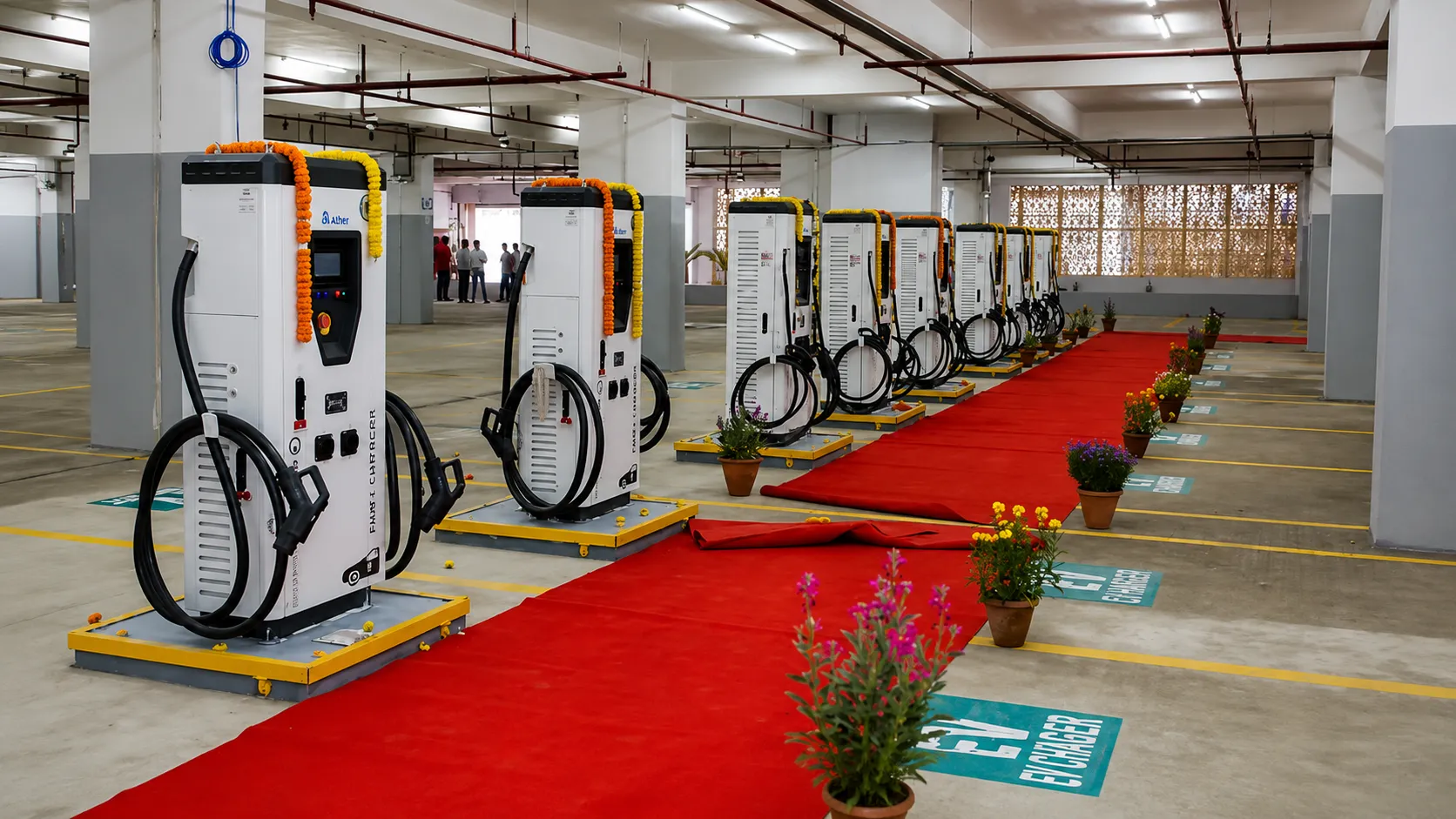
THE ₹3 LAKH CRORE COMPONENT MANUFACTURING OPPORTUNITY — AND ITS LOCALISATION GAP
Beyond vehicle and battery sales, the report puts a specific figure on the size of the manufacturing opportunity this transition represents for India's domestic component industry. India's electric vehicle component market was valued at approximately ₹41,000 crore in 2025, and the report projects this figure will grow to ₹3,02,000 crore by 2032 under its more conservative Business-as-Usual scenario — a compound annual growth rate of roughly 38 percent, and an incremental market opportunity of approximately ₹2,61,000 crore created over just seven years.
Within that component market, battery packs currently represent the single largest category at 52 percent of total value, followed by electric motors at 22 percent, inverters at 12 percent, battery management systems at 11 percent, and DC-DC converters making up the remaining 3 percent. It is here that the report delivers its most pointed cautionary note for Indian policymakers and manufacturers: current domestic localisation of key EV components remains genuinely limited. Motor and controller manufacturing localisation in India currently stands at only 30 to 40 percent, meaning a substantial majority of these components are still being imported rather than manufactured domestically. Inverter supply chains, the report states plainly, remain "heavily import-dependent," while battery management system hardware localisation "lags well behind software capability" — indicating that while Indian companies have made genuine progress developing the software and control logic underpinning battery management, the actual physical hardware manufacturing capability has not kept pace.
The report's authors frame this localisation gap in explicitly strategic terms, stating that the roughly ₹2,61,000 crore incremental component market opportunity being created between 2025 and 2032 "will disproportionately reward players who establish domestic manufacturing depth in power electronics and drivetrain integration ahead of the demand inflection" — a direct signal to Indian manufacturers and policymakers that the window to build competitive domestic capability in these specific component categories is open now, but will close as demand scales and import-dependent supply chains become further entrenched.
WHY THE GAP BETWEEN SCENARIOS MATTERS SO MUCH
One of the more analytically important elements of the report is its explicit distinction between a Business-as-Usual trajectory and the more ambitious high-growth NEV scenario that produces the headline 30.4 million unit, 12-fold surge figure. The report notes that the gap between these two scenarios widens sharply after 2029, a finding that carries a clear policy implication: India's EV trajectory over the back half of this decade will not simply be a continuation of current growth trends, but will instead be substantially determined by three specific factors — the strength of continued policy support for electrification, the pace at which charging infrastructure is built out across the country, and the extent to which domestic manufacturing momentum in components like batteries, motors and power electronics actually materialises at the scale the report envisions.
This framing matters because it positions India's EV future not as a foregone conclusion driven purely by consumer demand and cost economics, but as an outcome still substantially within the control of policymakers and industry, dependent on decisions being made now around subsidy structures, production-linked incentive scheme design, charging infrastructure investment and semiconductor and power electronics manufacturing capacity — precisely the kind of long-cycle industrial policy choices that determine whether India captures the bulk of the value created by its own EV transition domestically, or continues to rely heavily on imported components even as vehicle sales scale toward the report's ambitious 2032 targets.
THE BIGGER PICTURE
Taken together, the IESA report offers both an optimistic and a cautionary reading of India's electric vehicle future. The optimistic case is straightforward: consumer demand for EVs is already accelerating meaningfully, cost competitiveness continues to improve as fuel prices remain elevated, and product choice across vehicle categories continues to expand rapidly, all pointing toward a genuinely large and fast-growing market over the coming years regardless of which specific growth scenario ultimately plays out. The cautionary note is equally clear: without a concerted, sustained push to build genuine domestic manufacturing depth in the specific component categories where India currently lags — inverters, battery management system hardware, and power electronics more broadly — a substantial share of the economic value generated by this 12-fold sales surge risks flowing to component manufacturers outside India, even as the vehicles themselves are assembled and sold domestically. For an industry and a policy establishment that has spent the past several years focused primarily on driving vehicle sales volumes, this report's central message is that the more consequential battle for India's EV future may increasingly be fought not at the dealership, but several tiers deeper in the supply chain.
HOW THIS CONNECTS TO THE REST OF INDIA'S EV ECOSYSTEM
This week's IESA projections land amid a flurry of related developments across India's electric mobility landscape that, taken together, suggest the sector is entering a genuinely active phase of capital deployment and strategic positioning. Hero MotoCorp's newly approved ₹1,000 crore additional investment in Ather Energy, detailed elsewhere in this edition, is a direct illustration of legacy manufacturers moving aggressively to secure position in the electric two-wheeler segment the IESA report identifies as currently dominant by unit volume. Separately, India's transition toward mandatory electric three-wheeler registrations, set to take effect from January 2027, is expected to accelerate adoption in precisely the vehicle category the report flags as currently holding the second-largest share of both unit sales and battery demand — though industry stakeholders have cautioned that affordable financing options for three-wheeler drivers, many of whom operate on thin margins, will be critical to ensuring the transition proceeds smoothly rather than creating financial hardship for a workforce with limited access to formal credit.
THE INFRASTRUCTURE QUESTION
Public commentary responding to the IESA report's findings has repeatedly returned to a practical concern the report itself does not fully address: what happens to India's electricity grid if tens of millions of EVs are simultaneously drawing charging power by 2032. A battery demand trajectory scaling from 19 gigawatt-hours to 362 gigawatt-hours implies not just a manufacturing challenge, but a genuinely significant addition to peak electricity demand, particularly if charging remains concentrated during evening hours when vehicles typically return home and consumers plug in overnight. Addressing this will likely require a combination of smart charging infrastructure that can stagger and manage charging load, expanded renewable energy generation capacity to meet the incremental demand sustainably, and potentially time-of-use electricity pricing structures that incentivise off-peak charging — none of which fall within the direct scope of the IESA's component manufacturing analysis, but all of which will meaningfully shape whether India's grid infrastructure can actually support the ambitious vehicle sales trajectory the report projects.
THE RECYCLING QUESTION POLICYMAKERS HAVEN'T FULLY ANSWERED
A related concern raised by industry observers following the report's release centres on end-of-life battery management. With battery packs typically rated for eight to ten years of useful life before requiring replacement or recycling, the scale of battery deployment implied by the report's 2032 projections means India will, within the following decade, need to have built a genuinely substantial battery recycling and second-life repurposing industry — infrastructure that remains largely nascent in India today relative to the scale the country's own EV adoption trajectory will eventually demand. For policymakers and industry alike, the IESA report's headline growth numbers are, in this sense, as much a call to action on downstream infrastructure and circular economy planning as they are a celebration of India's electrification progress to date.