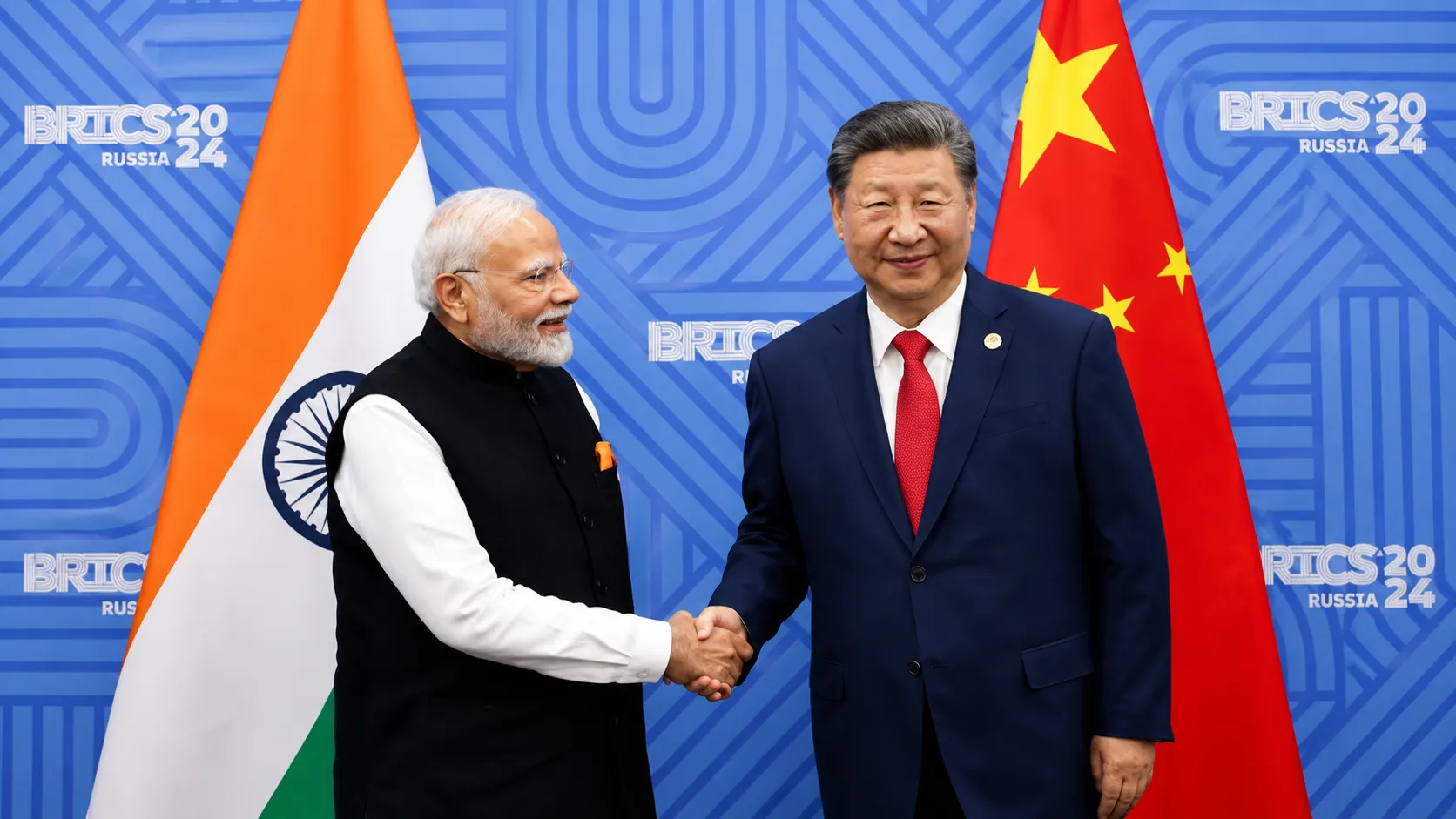
New Delhi, July 31, 2026 — More than five years after India imposed sweeping restrictions on Chinese companies bidding for government contracts in the aftermath of a deadly 2020 border clash, New Delhi has taken a notable, if carefully calibrated, step back toward normalisation within one specific and strategically sensitive sector: power equipment manufacturing. Four Chinese-linked companies with manufacturing operations already established in India — TBEA Energy, Nanjing Electric India, New Northeast Electric India and Taikai Electric India — have been cleared to participate in government tenders for critical power projects, according to an order issued by India's Ministry of Finance.
The decision, while limited in scope to these four specific companies and their India-based manufacturing operations, carries outsized significance as one of the clearest signals yet that India's five-year-old posture of near-total exclusion of Chinese firms from government contracting is beginning to soften, at least within sectors where domestic manufacturing capacity has proven insufficient to meet India's own infrastructure and energy security needs.
The supply gap that forced the decision
Officials have been notably direct about the practical rationale driving this policy shift. V K Singh, Member for Power Systems at India's Central Electricity Authority, told an industry gathering that the decision to allow Chinese companies to participate in power project tenders was taken "very consciously," specifically to address India's requirement for transformers, bushings and other critical materials that domestic manufacturers currently cannot supply in sufficient volume. Singh specifically identified supply-chain constraints around specialised materials, including cold-rolled grain-oriented steel and bushings — components essential to transformer manufacturing and broader power transmission infrastructure — as the specific technical bottleneck that domestic Indian manufacturing capacity has, to date, proven unable to fully resolve.
This kind of specific, technically-grounded justification matters considerably for understanding the nature of this policy shift. Rather than representing any broader softening of India's overall strategic posture toward China, the decision appears narrowly targeted at resolving a specific, identified supply-chain bottleneck within India's power sector — one serious enough that continuing to exclude Chinese manufacturers entirely risked genuinely constraining India's ability to execute critical power infrastructure projects at the pace the country's rapidly growing electricity demand requires, particularly given the scale of investment needed to support both continued economic growth and the broader renewable energy transition that requires substantial new transmission and grid infrastructure investment.
The specific companies and the terms of access
According to the Ministry of Finance order, dated June 24, the four cleared companies — TBEA Energy, Nanjing Electric India, New Northeast Electric India and Taikai Electric India — will be permitted to participate in relevant government power project tenders for a period of two years from the date the exemption was issued, a time-limited scope that suggests Indian officials intend this as a targeted, temporary measure to address the current supply gap rather than a permanent, open-ended reopening of the sector to Chinese participation. Notably, all four companies maintain manufacturing operations already established within India, meaning the exemption specifically benefits Chinese-linked entities that have already made the capital investment to establish local production facilities, rather than opening the door to direct imports or bids from companies operating purely from Chinese soil without any Indian manufacturing presence.
This distinction — favouring Chinese-linked companies with Indian manufacturing operations over those without — reflects a broader pattern in how Indian policymakers have sought to balance competing objectives: addressing genuine supply-chain gaps while still extracting some domestic manufacturing and employment benefit from whatever Chinese-linked participation is ultimately permitted, rather than simply reverting to unrestricted imports of finished Chinese equipment.
The history: why these restrictions existed in the first place
To understand the significance of this policy shift, it helps to recall the origins of the restrictions now being selectively eased. Following a violent clash between Indian and Chinese troops in the Galwan Valley in 2020 that resulted in the deaths of twenty Indian soldiers, New Delhi imposed a range of restrictive measures targeting Chinese commercial interests in India, including a requirement that Chinese bidders register with a dedicated government committee and secure specific political and security clearances before competing for any government contract — a bureaucratic hurdle that, in practice, functioned as a near-complete barrier to Chinese participation in Indian government procurement across virtually all sectors.
These restrictions carried real economic costs for India's own infrastructure and manufacturing sectors, given how deeply integrated Chinese suppliers had become within various Indian industrial supply chains prior to 2020, particularly in sectors like power equipment, telecommunications infrastructure and various categories of industrial machinery where Chinese manufacturers had achieved substantial global scale and cost advantages. The restrictions reportedly affected government contracts collectively worth an estimated $700 billion to $750 billion in scope, and led to specific, documented instances of project delays and complications, including the disqualification of Chinese state-owned rail manufacturer CRRC from a major train-manufacturing contract shortly after the restrictions took effect.
The broader thaw in India-China relations
This power equipment decision does not exist in isolation; it arrives amid a broader, gradual easing of tensions between India and China that has unfolded over recent months, following years of frozen or significantly constrained bilateral engagement in the aftermath of the 2020 border clash. India's finance ministry has, according to government sources, been working on broader plans to scrap the five-year-old registration and clearance requirements for Chinese firms bidding on government contracts altogether, reflecting a wider recalibration of India's approach to Chinese commercial engagement as border tensions have gradually, if incompletely, eased over the intervening years.
A high-level government committee, headed by former Cabinet Secretary Rajiv Gauba, has reportedly recommended easing these broader restrictions, reflecting recognition within India's policy establishment that the near-total exclusion of Chinese firms from government contracting has imposed real costs on India's own infrastructure and manufacturing sectors that may, in specific cases, outweigh the strategic benefits of maintaining blanket restrictions, particularly for products and components where domestic Indian manufacturing capacity has not yet scaled sufficiently to fully substitute for Chinese supply.
Industry reaction: cautious welcome, lingering concerns
India's domestic power equipment manufacturing industry, represented by bodies including the Indian Electrical & Electronics Manufacturers' Association, has historically been a vocal advocate for maintaining restrictions on Chinese competition, citing both security concerns and straightforward competitive concerns about Chinese manufacturers' scale and cost advantages. The CEA's Singh specifically noted that the agency is holding ongoing meetings with this industry body, suggesting officials are working to manage the transition in a way that addresses immediate supply-chain gaps without unduly undermining continued investment in India's own domestic power equipment manufacturing capacity building.
This balancing act — addressing near-term supply constraints through limited, time-bound Chinese participation while continuing to support longer-term domestic manufacturing capacity development — reflects a pragmatic, if inherently somewhat contradictory, policy approach that acknowledges India's current manufacturing limitations while still maintaining a stated long-term commitment to reducing dependence on Chinese suppliers across strategically sensitive sectors including power infrastructure.
What comes next
As this two-year exemption window plays out, several developments will be worth watching closely. Whether India's domestic power equipment manufacturing capacity, supported by various government incentive schemes, manages to scale sufficiently to close the current supply gap before the exemption's two-year window expires will determine whether this proves to be a genuinely temporary bridge measure or the first step toward a more permanent, broader reopening of the sector to Chinese participation. Equally, the pace and scope of the broader restriction-easing process reportedly under consideration by India's finance ministry will offer an important signal about how far and how fast the wider India-China commercial relationship continues to normalise beyond this specific, narrowly targeted power equipment decision.
The renewable energy transmission bottleneck
The urgency behind this policy shift becomes clearer when considered against the backdrop of India's ambitious renewable energy expansion targets, which require not just new generation capacity but a substantial parallel build-out of transmission and grid infrastructure capable of integrating large volumes of variable solar and wind power into the national grid. Transformers, bushings and related power transmission equipment represent essential, unglamorous but absolutely critical components of this broader infrastructure build-out, and any meaningful supply constraint in these categories risks becoming a genuine bottleneck on the pace of India's overall renewable energy integration, regardless of how quickly generation capacity itself scales. This infrastructure-level urgency, sitting alongside India's broader strategic security concerns about Chinese commercial involvement, appears to have been a significant factor tipping the policy calculus toward this targeted, time-limited exemption rather than continued blanket exclusion.
Strategic security versus economic pragmatism
This episode illustrates a recurring tension within India's broader approach to Chinese economic engagement: the ongoing balancing act between strategic security considerations, heightened considerably since the 2020 border clash, and the practical economic costs of maintaining blanket restrictions in sectors where China retains genuine manufacturing scale and cost advantages that domestic or alternative international suppliers have not yet been able to fully replicate. Indian policymakers have, through this specific power equipment decision, signalled a willingness to make narrow, carefully bounded exceptions to accommodate this economic reality, even while maintaining the broader architecture of restriction and heightened scrutiny that has characterised India's overall China policy posture since 2020. How consistently this narrow, case-by-case exception-making approach is applied across other sectors facing similar supply-chain pressures will offer an important signal about the durability and broader applicability of the underlying policy logic driving this specific power equipment decision.
Comparing India's approach to other sectors' China dependence
Power equipment is far from the only Indian industrial sector that continues to grapple with meaningful Chinese supply chain dependence despite the broader restrictions in place since 2020. Solar manufacturing, telecommunications equipment, active pharmaceutical ingredients and various categories of electronics components have each, at various points over recent years, faced similar tensions between the strategic imperative of reducing Chinese dependence and the practical reality that domestic or alternative international manufacturing capacity has not yet scaled sufficiently to fully substitute for Chinese supply in every case. The power equipment exemption may, in this sense, offer a template that other sectors facing comparable supply constraints could look to as a potential model — a narrow, time-bound, domestically-anchored exception rather than a full reopening — should similar critical supply gaps emerge or persist in these other strategically sensitive manufacturing categories over the coming years.
The market reaction among Indian equipment makers
Shares of India's own listed power equipment manufacturers, including established players with long-standing domestic transformer and transmission equipment manufacturing operations, drew close investor attention in the aftermath of this announcement, as market participants weighed the near-term competitive implications of renewed Chinese-linked participation in government tenders against the broader, more encouraging signal the decision sends about accelerating investment in India's power infrastructure build-out overall. Some analysts have argued that the net effect for domestic manufacturers could prove more positive than negative, given that easing the current supply bottleneck should allow a greater overall volume of power infrastructure projects to proceed on schedule, expanding the total addressable market for both Chinese-linked and purely domestic suppliers alike, rather than simply reallocating a fixed pool of existing contract value away from domestic players toward their newly re-admitted Chinese-linked competitors.
A test case for calibrated economic diplomacy
Ultimately, this power equipment decision offers a revealing test case for how India intends to navigate the broader tension between strategic caution toward China and the practical economic costs of prolonged, blanket exclusion in sectors where genuine domestic substitutes remain unavailable at scale. Rather than a wholesale policy reversal, the carefully bounded, time-limited and domestically-anchored nature of this specific exemption suggests Indian policymakers are seeking a middle path — one that addresses immediate, well-documented supply constraints without signalling any fundamental softening of the broader strategic posture that has defined India's China policy since the 2020 border clash. Whether this calibrated approach proves durable and replicable across other sectors facing similar pressures, or whether it instead marks the beginning of a more substantial broader normalisation, will likely become clearer only as India's finance ministry moves forward with its reportedly under-consideration plans to ease the wider registration and clearance requirements still governing most other categories of Chinese participation in Indian government contracting.


