
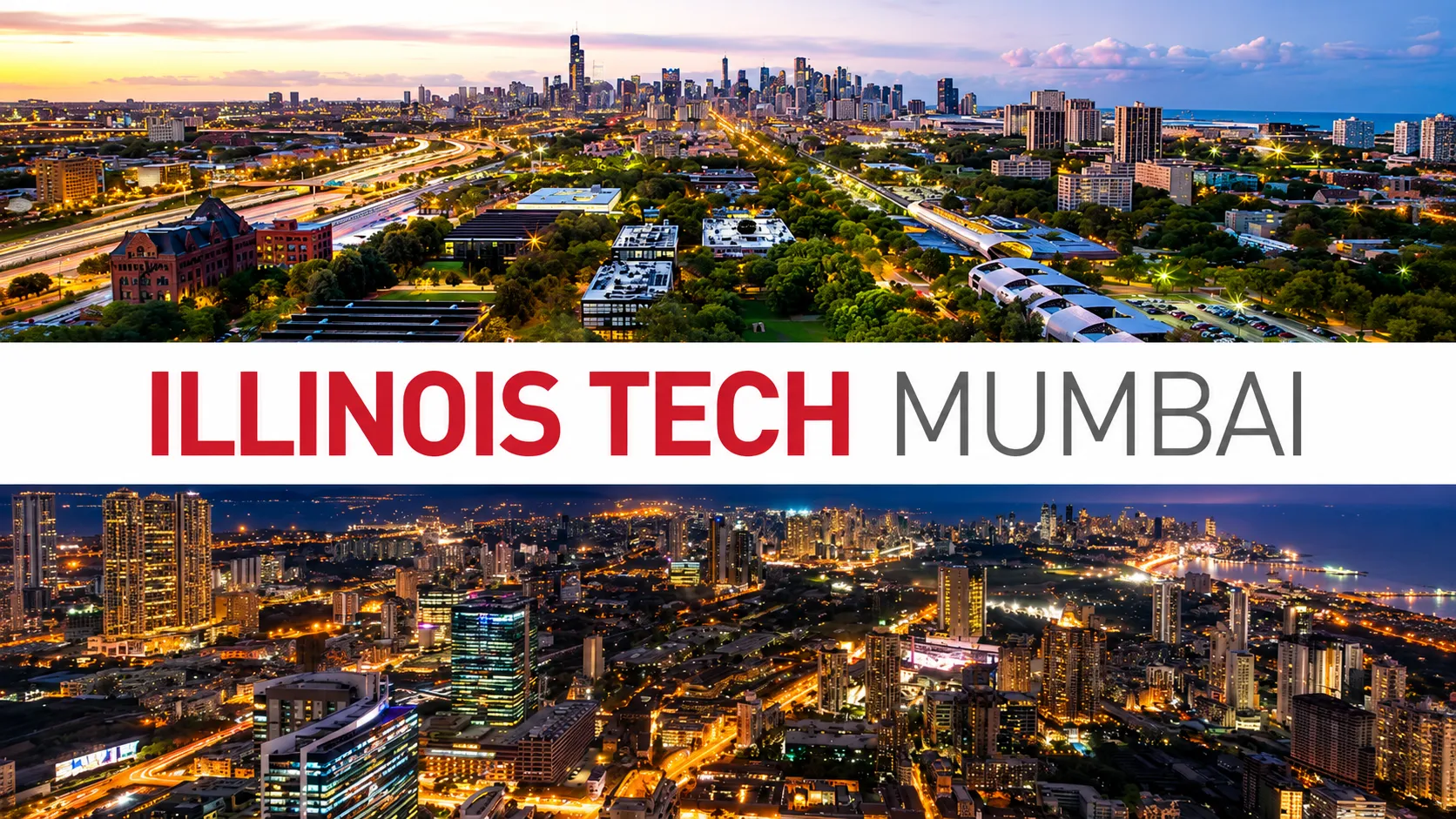
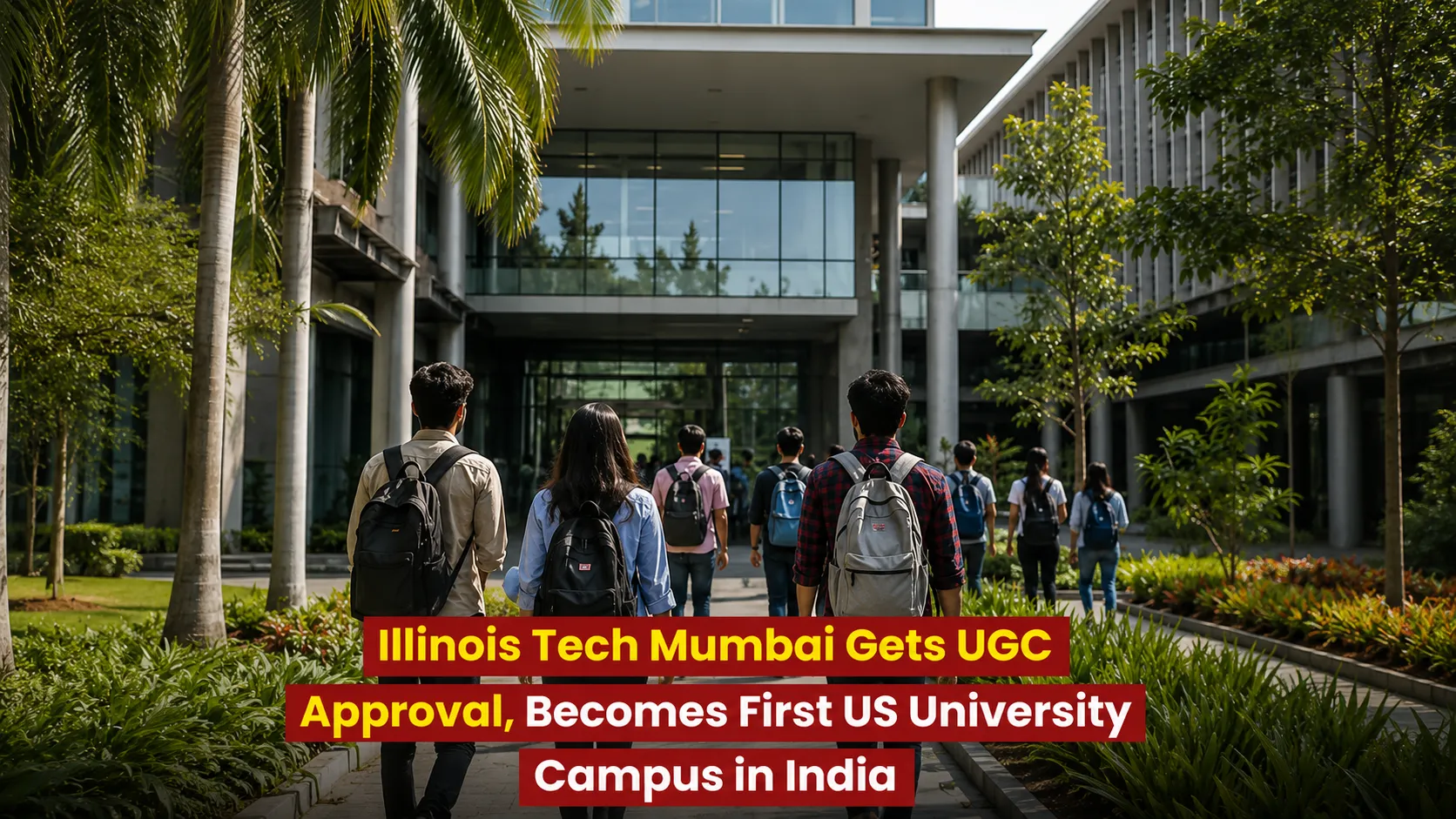
Mumbai, July 31, 2026 — For decades, an American university education has meant one thing for ambitious Indian students: leaving India. That equation is now beginning to change. The Illinois Institute of Technology has become the first United States university formally cleared by India's University Grants Commission (UGC) to establish an independent, degree-granting campus within India, with Illinois Tech-Mumbai set to open its doors at Vikhroli in Mumbai for its first academic intake in Fall 2026 — a genuinely historic milestone in the deepening educational relationship between the world's two largest democracies.
The significance of this approval extends well beyond a single university's expansion plans. It represents the practical activation of a regulatory pathway that India has been developing for several years specifically to allow foreign universities to establish full, independent campuses on Indian soil — a pathway that, until Illinois Tech's approval, had remained largely theoretical for American institutions specifically, even as a small number of universities from other countries had begun exploring similar arrangements under India's evolving foreign higher education institution framework.
Why this matters: reversing decades of one-way educational migration
India has, for generations, been one of the largest single sources of international students for American universities, sending hundreds of thousands of students annually to pursue undergraduate and graduate degrees across the United States, drawn by the perceived quality, prestige and career opportunities associated with American higher education credentials. This one-way flow has carried substantial costs for Indian families, who collectively spend billions of dollars annually on tuition, living expenses and related costs associated with sending their children abroad for education, alongside broader costs to India's own talent base, as a meaningful proportion of Indian students who study in the United States have historically remained there for at least the early years of their professional careers, contributing to a long-standing "brain drain" concern among Indian policymakers.
Illinois Tech's Mumbai campus, and the broader regulatory pathway it activates, offers a potential structural response to this dynamic: allowing Indian students to access a genuine, degree-granting American higher education experience without the enormous cost premium and personal disruption associated with international relocation. For Illinois Tech-Mumbai specifically, students will be able to earn an authentic Illinois Institute of Technology degree while remaining in India throughout their studies, a value proposition that could prove particularly compelling for Indian families seeking the credential and educational quality associated with American higher education, without the full cost burden of an international education experience.
The regulatory framework making this possible
India's decision to open its higher education sector to independent foreign university campuses represents a significant policy shift from the country's historically more restrictive approach to foreign educational institution operations within India, which had previously limited foreign universities largely to more constrained collaboration models, including joint degree programmes, twinning arrangements, and various forms of academic partnership that stopped short of allowing a foreign institution to operate a fully independent, degree-granting campus under its own name and academic governance structure.
The specific regulatory framework enabling arrangements like Illinois Tech-Mumbai emerged from India's broader National Education Policy reform agenda, which explicitly identified greater international collaboration and foreign university presence as a strategic priority for enhancing the overall quality and global competitiveness of India's higher education ecosystem. Under this framework, the UGC has established specific criteria and approval processes that foreign universities must satisfy to establish independent Indian campuses, encompassing requirements around academic quality assurance, financial sustainability, and various operational and governance standards designed to ensure that foreign campuses operating in India maintain standards genuinely comparable to their home country operations, rather than representing a diluted or lower-quality version of the parent institution's core academic offering.
What Illinois Tech brings to Mumbai
Illinois Institute of Technology, historically headquartered in Chicago, has built a particular academic reputation in engineering, technology, architecture and business disciplines — fields that align closely with the kind of technical and professional education increasingly in demand among India's large and growing population of ambitious students seeking career pathways in technology, engineering and business sectors that have become central to India's own economic growth story. This academic focus positions Illinois Tech-Mumbai to potentially serve as a particularly relevant option for Indian students specifically interested in the technology and engineering-focused career pathways that have driven so much of India's own domestic economic transformation over recent decades, including the country's IT services boom and, increasingly, its rapidly scaling Global Capability Centre ecosystem.
The Vikhroli location for the new campus places it within Mumbai's broader commercial and educational ecosystem, offering students proximity to India's financial capital and its associated concentration of corporate headquarters, potential internship opportunities, and professional networking possibilities that could meaningfully enhance the practical, career-oriented value of an Illinois Tech-Mumbai education beyond the classroom experience itself.
The reciprocal relationship: IIT Bombay heads to New York
Notably, this deepening educational exchange between India and the United States is not flowing in only one direction. IIT Bombay, one of India's most prestigious and selective technical institutions, has separately announced a partnership with SUNY Old Westbury that will establish IIT Bombay's first sub-campus in the United States, with the New York-based facility pencilled in for a 2027 opening. This reciprocal arrangement — an American university establishing an Indian campus even as a leading Indian institution establishes its own American campus — illustrates a genuinely bidirectional deepening of the India-US higher education relationship, moving beyond the historical pattern of Indian students travelling predominantly one way toward the United States, and toward a more genuinely integrated, mutually beneficial educational exchange relationship between the two countries' higher education systems.
What this means for India's broader talent and education strategy
Beyond the specific value proposition for individual students and families, the emergence of genuine foreign university campuses within India carries broader strategic implications for the country's overall higher education and talent development strategy. India's rapidly scaling Global Capability Centre ecosystem, now encompassing more than 2,100 centres employing well over 1.9 million professionals, has created substantial and growing demand for globally-oriented, internationally credentialed talent capable of working seamlessly within multinational corporate structures and, increasingly, holding genuinely global strategic mandates from India-based roles.
Foreign university campuses like Illinois Tech-Mumbai could play a meaningful role in helping meet this growing talent demand, producing graduates with internationally recognised credentials and, potentially, exposure to teaching methodologies, curricula and professional networks that more closely mirror what students might have gained through direct international study, but delivered within an Indian context that keeps both the cost and the broader talent pool within India's own domestic economy, rather than exporting that value through traditional international study patterns.
Challenges and open questions
Even as Illinois Tech-Mumbai's approval represents a genuine milestone, several practical questions remain to be answered as the campus prepares for its Fall 2026 opening and beyond. How effectively the Mumbai campus can replicate the full academic experience, faculty quality and institutional resources of Illinois Tech's Chicago operations will be closely watched by prospective students and their families weighing this option against both traditional international study and India's own strong domestic higher education institutions. Questions around long-term financial sustainability, faculty recruitment and retention for the India-based campus, and how effectively the degree credential will be perceived and valued by employers, both within India and internationally, will similarly take time to resolve as the first cohorts of Illinois Tech-Mumbai students progress through their studies and eventually enter the job market.
A milestone with room to grow
For now, Illinois Tech-Mumbai's approval stands as a genuinely significant first step in what India's policymakers clearly hope will become a broader trend of American and other international universities establishing meaningful, independent academic presences within India. Whether this specific arrangement succeeds in delivering the kind of genuine educational value and career outcomes that would encourage additional American universities to follow Illinois Tech's lead in establishing their own independent Indian campuses will likely become one of the more closely watched storylines in India's broader higher education reform journey over the coming several years, as the first concrete test case of a regulatory pathway years in the making finally begins operating in practice.
How Indian students and parents are reacting
Early reaction among prospective students and their families to the Illinois Tech-Mumbai announcement has, by most accounts, been a mixture of genuine enthusiasm and cautious wait-and-see evaluation. Education consultants who advise Indian families on international study options report a notable spike in inquiries specifically about the new campus since the UGC approval was announced, reflecting significant latent interest in an American degree pathway that avoids the substantial cost premium and family separation associated with traditional international study. At the same time, many of these same consultants note that prospective students and their families are, understandably, awaiting more concrete details on admission criteria, fee structures, and — perhaps most importantly — how the resulting degree will actually be perceived by employers, both within India's own job market and internationally, before committing to what remains, for now, an unproven new option relative to the well-established track record of both traditional international study and India's own top domestic institutions.
The fee question
A central variable that will likely determine how quickly Illinois Tech-Mumbai and similar future foreign campus initiatives scale is the fee structure ultimately adopted for India-based programmes relative to comparable programmes at the parent institution's home campus. While specific fee details for Illinois Tech-Mumbai were still being finalised as the campus prepared for its inaugural intake, education policy observers broadly expect India-based foreign university campuses to price meaningfully below equivalent home-country tuition, reflecting both lower operating costs within India and an implicit recognition that a substantial price discount relative to full international study costs represents a core part of the overall value proposition driving interest in this new campus model in the first place. How aggressively Illinois Tech and subsequent foreign entrants price their India-based programmes will likely significantly influence both initial enrolment demand and the broader competitive dynamic between foreign campus offerings and India's own increasingly well-regarded domestic private and public higher education institutions.
Which other universities might follow
Since India first opened the regulatory pathway for independent foreign university campuses, education sector observers have speculated actively about which additional international institutions might follow Illinois Tech's lead. Universities from Australia and the United Kingdom have, in various public statements over recent years, expressed interest in exploring an Indian campus presence, reflecting both those countries' own historically significant role as destinations for Indian international students and a broader recognition across global higher education of India's scale as a potential domestic market for foreign university programmes. Whether Illinois Tech-Mumbai's practical experience — spanning student demand, operational execution and eventual graduate outcomes — proves sufficiently encouraging to accelerate additional American university interest specifically will likely depend heavily on how smoothly the inaugural Fall 2026 intake and its subsequent academic years actually unfold in practice, making Illinois Tech-Mumbai something of a bellwether case study that other prospective foreign entrants, American and otherwise, are likely to watch closely before committing their own resources to a similar Indian campus venture.
Accreditation and quality assurance safeguards
A central concern voiced by Indian higher education policy analysts as the foreign campus framework has developed concerns ensuring that India-based campuses maintain genuinely comparable academic standards to their home-country operations, rather than becoming diluted, lower-quality extensions bearing a prestigious foreign name without the substance to match. India's UGC has built specific quality assurance and periodic review requirements into its foreign campus approval framework, requiring ongoing demonstration of academic standards, faculty qualifications and institutional resources broadly comparable to the parent university's home operations. How rigorously these safeguards are enforced in practice, particularly as more foreign institutions potentially follow Illinois Tech's example over coming years, will likely prove decisive in determining whether India's foreign university campus experiment ultimately delivers the kind of genuine educational value its architects have envisioned, or risks becoming diluted through inconsistent quality enforcement across a growing number of individual campus arrangements.


