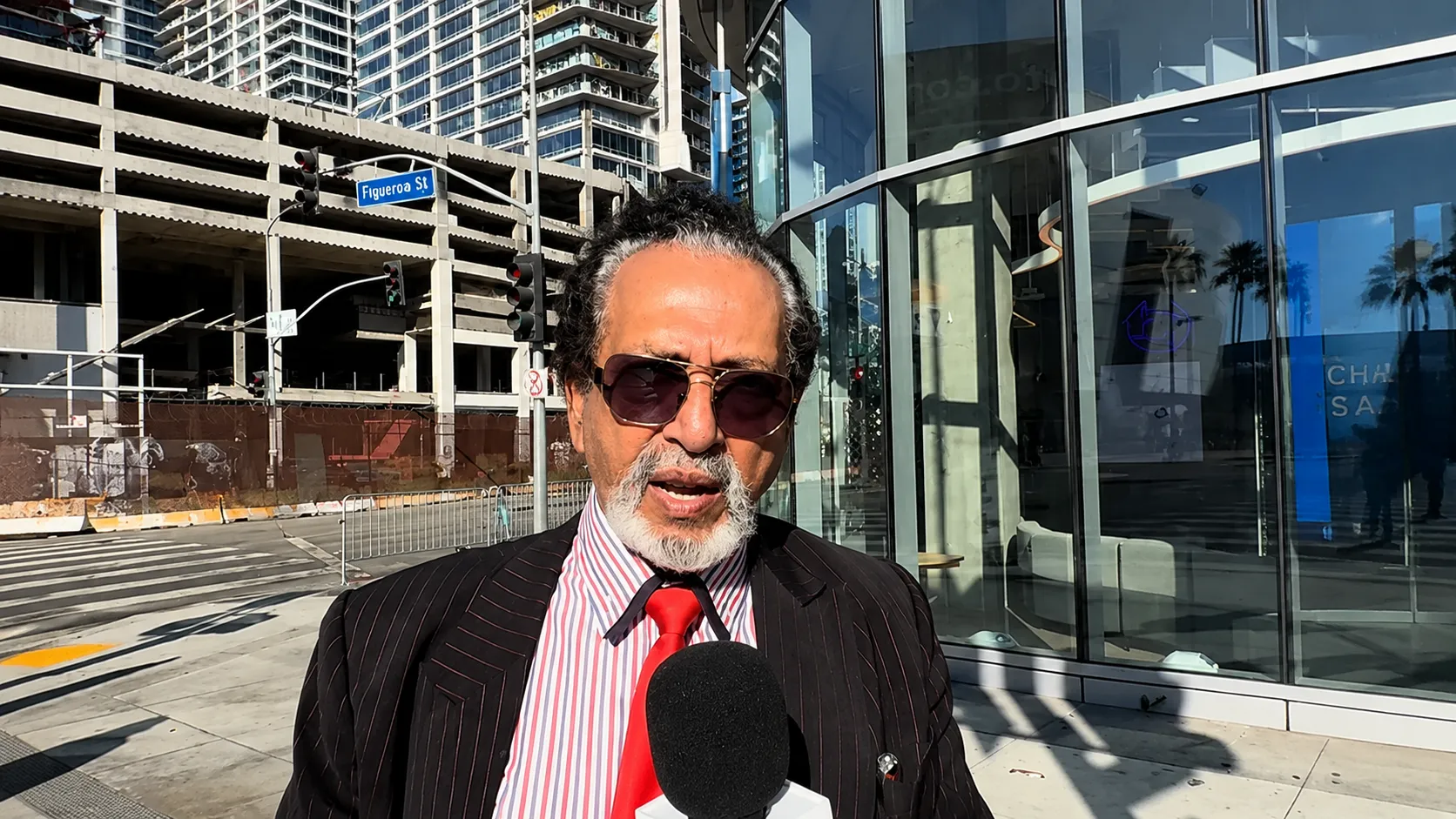
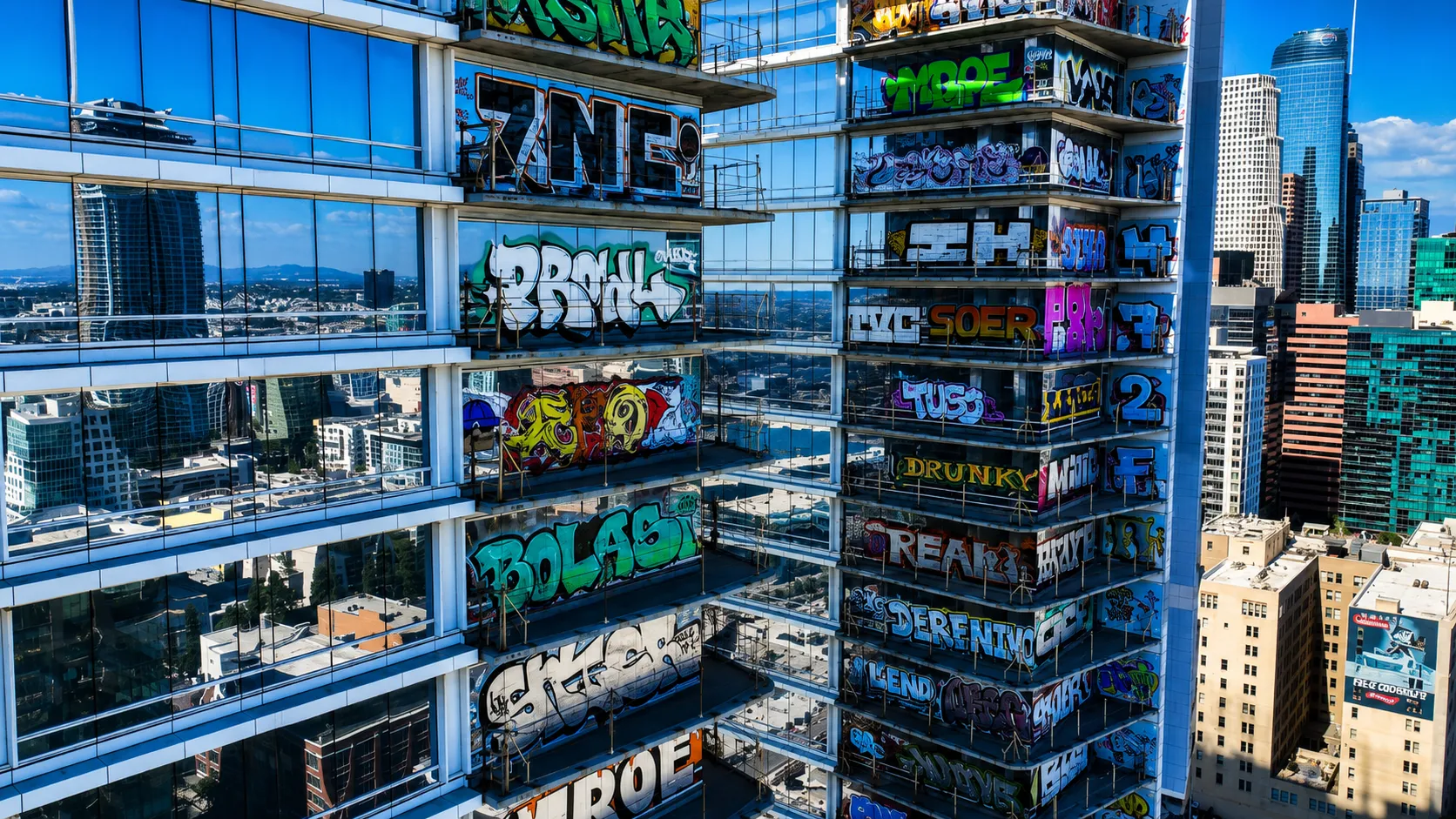
Downtown Los Angeles has, for years, played reluctant host to one of the city's most visible unfinished projects: Oceanwide Plaza, a sprawling mixed-use development that stalled mid-construction after its original Chinese developer collapsed into financial distress, leaving a trio of skeletal, unfinished towers looming over the city's sports and entertainment district as a conspicuous reminder of a deal gone wrong. That chapter now appears to be closing, with Indian-American physician and entrepreneur Dr Kali P. Chaudhary confirming his acquisition of the long-abandoned property, following years of legal proceedings and what he describes as intense competition from dozens of prospective buyers eager to get their hands on one of downtown LA's most prominent, if troubled, development sites.
What makes this acquisition notable extends well beyond the scale of the real estate transaction itself. In an exclusive interview, Chaudhary was unusually candid about his motivations, framing the deal not primarily as a commercial real estate play but as a deeply personal mission: to create what he describes as a lasting symbol of India in the heart of one of America's largest and most visible cities.
FROM MEDICINE TO A LANDMARK LA DEVELOPMENT
Chaudhary's own professional background as a physician adds an intriguing dimension to a story that might otherwise read as a straightforward, if unusually large, real estate acquisition. The path from clinical medicine to large-scale commercial property development is not a conventional one, and it reflects a broader pattern increasingly visible within the Indian-American diaspora: professionals who built their initial careers and financial foundations in medicine, engineering, or other traditionally emphasised fields, before channelling the capital, credibility, and networks built over those careers into entrepreneurial ventures in entirely different sectors, from real estate and hospitality to technology and media.
For Chaudhary specifically, pursuing the Oceanwide Plaza site represented an opportunity to combine that entrepreneurial instinct with something more personal: a chance to create a physical, permanent marker of Indian identity and achievement within one of the country's most prominent urban skylines, in a manner that few individual entrepreneurs, of any background, ever have the opportunity or resources to pursue.
THE VISION BEHIND KPC SQUARE
Chaudhary has confirmed plans to rename the redeveloped project KPC Square, with his stated ambition extending well beyond simply completing the stalled construction and bringing the property to market as a conventional mixed-use development. In describing his motivation, Chaudhary offered a characteristically direct explanation of his intent: to ensure the site carries an unmistakable Indian identity, one built to endure for generations. His stated ambition — that the development should stand recognisably marked for centuries to come — reflects a scale of long-term thinking not always associated with commercial real estate ventures, which are typically evaluated primarily through the lens of near-term returns, financing structures, and market positioning rather than multi-generational symbolic legacy.
This framing positions the project as something closer to a landmark cultural statement than a conventional real estate development — an approach that, if successfully executed, would place KPC Square among a relatively small number of major American commercial developments explicitly designed to carry a specific immigrant community's cultural identity at this scale and in such a prominent, visible urban location.
THE BACKSTORY: HOW OCEANWIDE PLAZA BECAME AVAILABLE
Understanding the significance of Chaudhary's acquisition requires appreciating just how prominent, and how troubled, the Oceanwide Plaza site had become before this deal. The development, originally conceived as a major mixed-use complex adjacent to downtown LA's Crypto.com Arena and the broader LA Live entertainment district, began construction under Chinese conglomerate Oceanwide Holdings before the company's escalating financial distress brought the project to a halt, leaving three unfinished towers standing incomplete for an extended period — a visible, much-discussed symbol of stalled ambition in one of the most closely watched development corridors in the city.
The property's subsequent path through legal proceedings, as its original developer's broader financial troubles played out, created exactly the kind of prolonged uncertainty that tends to deter conventional institutional real estate buyers while simultaneously creating opportunity for entrepreneurial buyers willing to navigate that complexity in pursuit of a strategically significant, if legally complicated, acquisition. According to Chaudhary's own account, the property attracted dozens of prospective buyers during this period, underscoring both the site's inherent value given its prime downtown LA location, and the scale of competition he needed to navigate to ultimately secure the deal.
WHAT THIS MEANS FOR DOWNTOWN LOS ANGELES
Beyond its significance to Chaudhary personally and to the broader Indian-American diaspora narrative, the successful redevelopment of Oceanwide Plaza carries meaningful implications for downtown Los Angeles's own urban development trajectory. The site's prolonged, visible incompletion had become something of a cautionary symbol within local development and civic circles, frequently cited in discussions about the risks of large-scale foreign capital-financed development projects and the vulnerability of prominent urban sites to the financial distress of a single controlling developer.
A successful completion and rebranding under new, stable ownership would offer local officials and the broader downtown LA business community a welcome resolution to a story that has, for years, complicated the broader narrative around the area's development and revitalisation, particularly given the site's high visibility adjacent to major sports and entertainment venues that draw substantial visitor traffic to the district throughout the year.
THE SYMBOLIC WEIGHT OF DIASPORA LANDMARK PROJECTS
Chaudhary's ambition to create a lasting, visible symbol of India within downtown Los Angeles fits within a broader, if still relatively rare, pattern of diaspora community landmark projects across major American cities — efforts by successful immigrant entrepreneurs to translate individual business success into permanent, visible community representation within the urban landscapes of the cities where they built their fortunes. Similar dynamics have played out, in various forms, across other diaspora communities in the United States, with successful entrepreneurs from various immigrant communities occasionally pursuing landmark cultural centres, prominently branded commercial developments, or other visible urban markers intended to cement their community's presence and contribution within a specific city's identity.
For the Indian-American community specifically, a development of this scale and prominence — should it be successfully completed under Chaudhary's vision — would represent one of the more visible such projects to date, offering a physical, permanent counterpart to the numerous other markers of Indian-American success and influence that have accumulated across corporate America, academia, medicine, and technology over recent decades, but which have historically been less tied to specific, physically prominent urban landmarks in the way Chaudhary's KPC Square ambition explicitly aims to be.
THE PRACTICAL CHALLENGES AHEAD
Ambitious symbolic vision aside, the practical work of completing a stalled, partially constructed mixed-use development of this scale carries substantial execution risk and complexity that will ultimately determine whether Chaudhary's broader ambitions for the site can be realised. Construction projects that have been halted mid-build, particularly ones as large and structurally complex as a multi-tower mixed-use development, typically require extensive engineering review to assess the condition of existing construction work, updated financing structures reflecting current market conditions rather than the assumptions underlying the original, now-defunct development plan, and navigation of whatever specific legal or contractual complications remain from the property's protracted path through the previous developer's financial distress and subsequent legal proceedings.
Large-scale commercial real estate redevelopment projects of this nature also typically unfold over a multi-year timeline even under favourable circumstances, meaning that the full realisation of Chaudhary's vision for KPC Square — including whatever specific cultural and symbolic elements he intends to incorporate into the completed development — is likely to require sustained, multi-year commitment and substantial additional capital investment beyond the acquisition itself, a reality that any successful redevelopment of this scale and ambition would need to navigate carefully.
WHY THIS STORY RESONATES BEYOND REAL ESTATE CIRCLES
For diaspora media outlets and the broader Indian-American community following this story, its significance extends well beyond typical commercial real estate coverage precisely because of how explicitly and unapologetically Chaudhary has framed his motivations in cultural and community terms, rather than purely financial ones. In an environment where diaspora success stories are often measured primarily through individual wealth accumulation, corporate leadership positions, or professional recognition and awards, Chaudhary's stated ambition to create a permanent, physically prominent symbol of India within one of America's major cities offers a different kind of narrative — one focused on lasting, visible community legacy rather than individual achievement alone.
Whether KPC Square ultimately achieves the multi-generational symbolic significance Chaudhary envisions for it will only become clear over the years of construction, redevelopment, and eventual completion that lie ahead. For now, the announcement itself has already generated considerable attention and conversation within diaspora media and community circles, offering a compelling, still-unfolding story of ambition, identity, and legacy building that extends well beyond the conventional metrics typically used to evaluate a major commercial real estate transaction.
HOW THE DIASPORA IS RESPONDING ONLINE
In the days since the acquisition was first reported, reaction across Indian-American social media circles and community forums has reflected a mix of enthusiasm, pride, and the kind of good-natured skepticism that often accompanies ambitious, large-scale announcements of this nature. Many commenters have expressed genuine excitement at the prospect of a prominent, permanently Indian-branded landmark in one of America's most visible skylines, framing it as a milestone moment for diaspora visibility comparable to other community landmark achievements in cities with large Indian-American populations. Others have adopted a more cautious, wait-and-see posture, noting the long history of ambitious downtown LA redevelopment projects that have faced delays, cost overruns, or outright failure before ultimately reaching completion — a reasonable caveat given Oceanwide Plaza's own troubled history under its previous ownership.
This mixed but broadly engaged reaction is itself instructive: it reflects a diaspora community increasingly comfortable both celebrating ambitious individual achievement and applying a healthy degree of scrutiny to grand announcements before fully embracing them as accomplished fact, a maturation in community discourse that mirrors the broader diaspora's growing scale, sophistication, and public visibility across virtually every sector of American life.
WHAT SUCCESS WOULD MEAN FOR FUTURE DIASPORA LANDMARK AMBITIONS
Should Chaudhary successfully complete KPC Square and realise his stated vision for the site, the project could plausibly serve as a template, or at minimum a source of inspiration, for other successful Indian-American entrepreneurs contemplating similar legacy-oriented, community-focused investments in their own respective cities. Diaspora community leaders have long discussed the relative scarcity of large-scale, permanently visible physical landmarks explicitly celebrating Indian-American identity and achievement, compared to the community's substantial and growing economic, professional, and cultural influence across the country more broadly. A successful KPC Square could help close that gap in one of America's most prominent cities, while offering a real-world case study in how individual entrepreneurial ambition, community identity, and large-scale urban redevelopment can intersect — for better or worse — when pursued with the kind of explicit, unapologetic cultural intent that has defined Chaudhary's public framing of this deal from the outset.
A STORY STILL VERY MUCH IN PROGRESS
For now, Oceanwide Plaza's three unfinished towers still stand, largely as they have for years, awaiting the construction crews, financing, and engineering plans that will eventually determine whether Chaudhary's ambitious vision translates into a completed, occupied, thriving mixed-use development, or joins the long list of grand real estate announcements that take considerably longer, and prove considerably harder, to fully realise than their initial unveiling suggests. Either way, the deal has already accomplished one thing with certainty: it has put an Indian-American entrepreneur's name, and his explicitly stated cultural ambition, at the centre of a conversation about one of downtown Los Angeles's most prominent and closely watched development sites — and that, on its own, is a milestone worth noting for a diaspora community continuing to expand its visible footprint across American cities, one landmark ambition at a time, in a city that has never lacked for them.


