A Birthday Celebration With a Deliberate Political Undertone
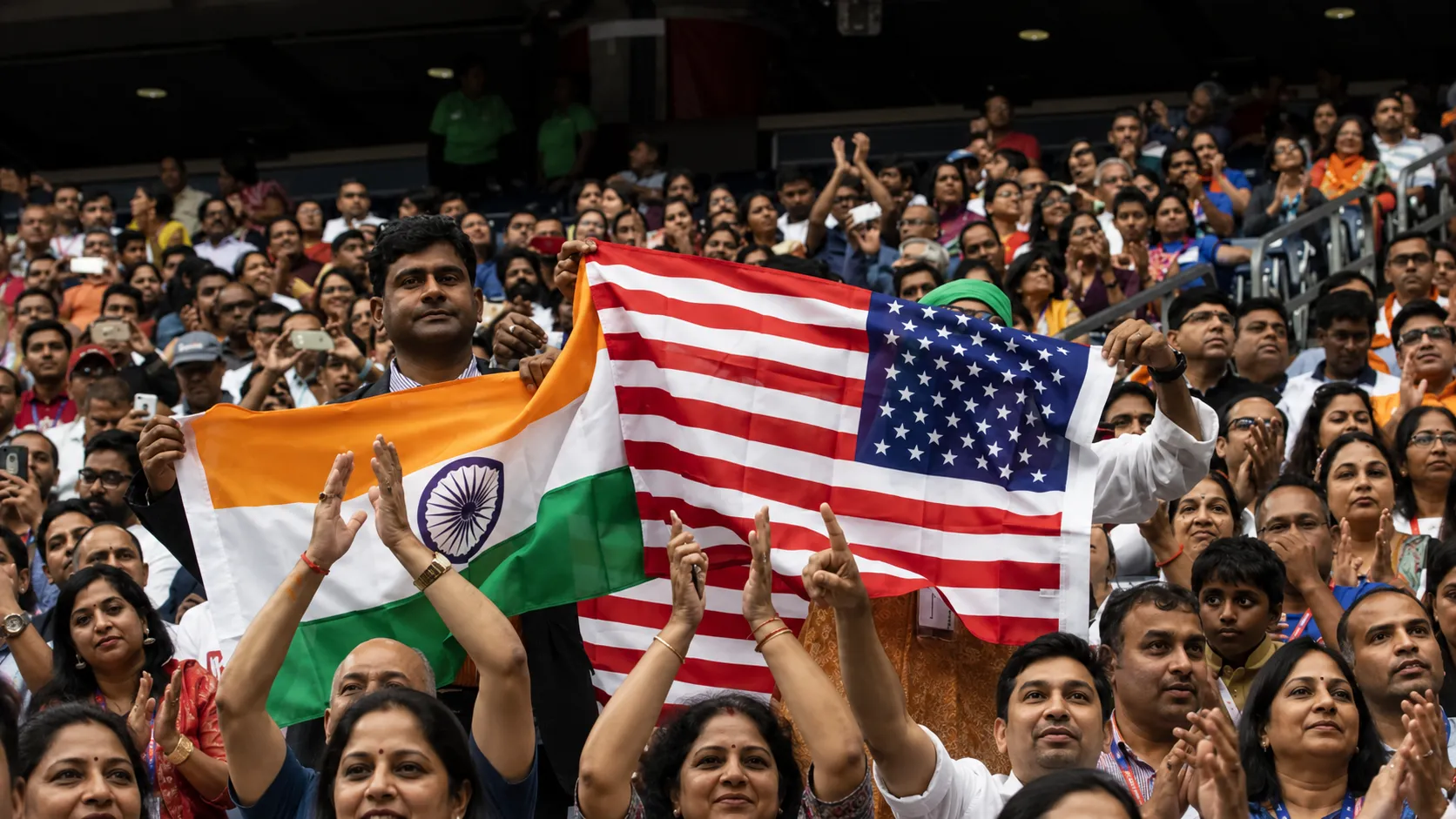
On July 25, 2026, thousands of Indian Americans are expected to gather in Washington, D.C. for what organizers describe as far more than a routine cultural festival or networking mixer. Billed as a patriotic celebration marking the 250th anniversary of American independence, the event has been deliberately structured to bring together Indian American leaders from business, medicine, faith, and civic life around a single, unambiguous message: gratitude for, and commitment to, the country that gave so many immigrant families the chance to build new lives. The gathering, organized through the 250 American Independence initiative, arrives at a moment when the timing feels anything but coincidental — a week defined by a major new federal crackdown on international student visas, a viral controversy over an Indian Harvard Law student's visa delay, and what organizers describe as a troubling rise in anti-Indian American sentiment across social media.
The Voice Behind the Movement: A 1967 Student Visa That Never Expired
The public case for the gathering has been made most directly by Ramesh Kapur, an Indian American business leader whose own personal story has become something close to the event's founding narrative. Writing in Townhall, Kapur described a journey that began not in America but in his childhood imagination of it. 'Long before I ever lived in America, I loved this country,' he wrote. 'Growing up in India, I was fascinated by the United States. I loved the music and movies, but I was also drawn to its history, politics, and optimism. America represented freedom and opportunity.' That fascination became reality in September 1967, when Kapur, then just 19 years old, arrived in the United States on a student visa to attend college. 'I never left,' he wrote simply. He went on to marry his college sweetheart, build a business, and raise a family — a trajectory he now describes as having spanned nearly six decades, meaning he has, by his own account, lived in America considerably longer than he ever lived in India.
"I Am American First"
What makes Kapur's framing of his own story particularly notable, especially amid a moment of intense debate over immigrant identity and belonging, is the directness with which he resolves any apparent tension between honoring his Indian heritage and claiming full American identity. 'I am proud of my Indian heritage. It shaped my values, work ethic, and sense of family and faith. But I say this without hesitation: I am American first,' he wrote. For Kapur, that identity is not merely rhetorical — he described flying the American flag outside his home for every national holiday as a personal expression of gratitude toward a country that, in his telling, gave him the freedom to dream bigger than he ever could have imagined as a young man in India.
A Community Woven Into Every Layer of American Life
Kapur's essay explicitly frames the Indian American community's contribution to the country in sweeping, comprehensive terms, spanning both prominent public roles and the quieter, everyday work that defines most immigrant success stories. 'Across the country — in rural towns and big cities alike — Indian Americans are working hard and giving back,' he wrote. 'We are physicians and nurses caring for patients and business owners creating jobs. We are leading companies, teaching in universities, and serving in government.' He pointed specifically to prominent current examples of Indian Americans in senior federal government positions, including FBI Director Kash Patel and Second Lady Usha Vance, as evidence of how deeply the community has become embedded within the machinery of American public life. 'We are Republicans and Democrats,' he added. 'We are represented in Congress, statehouses, and boardrooms. We are raising children and grandchildren who know no other home than the United States. We are woven into the fabric of American life.'
Responding Directly to Rising Hostility
The essay does not shy away from naming the specific concern motivating the gathering's timing and framing. 'I have been troubled by the recent rise in anti-Indian American sentiment, particularly online,' Kapur wrote, attributing much of that hostility to a basic lack of understanding about the community's history, values, and contributions. 'Too many people do not know our story — how deeply patriotic we are, how much we love this country, and how committed we are to making it stronger.' That concern places the July 25 gathering in direct conversation with several other stories unfolding in the same news cycle: the intense, often ugly online backlash surrounding the Bill Ackman-amplified visa plea from an Indian Harvard Law admit, and the broader wave of federal policy changes — from the newly finalized Duration of Status rule to the sustained OPT fraud investigation — that Indian American community leaders argue have contributed to an increasingly hostile public environment surrounding Indian immigration and educational migration specifically.
What the Gathering Is Designed to Communicate
According to Kapur's own description, the event is deliberately structured around four specific ideals its organizers consider central to the American promise that drew so many Indian immigrants to the country in the first place: liberty, democracy, meritocracy, and religious freedom. 'We are gathering to celebrate the American Dream — the promise that if you work hard and take responsibility for your future, you can build a better life here than anywhere else in the world,' he wrote. Beyond the celebratory framing, the gathering carries an explicit rebuttal purpose as well. 'We are gathering to send a clear message: Indian Americans are proud and grateful to be part of the American story,' Kapur wrote. 'We are proud to contribute to this country, proud to raise our families here, and proud to celebrate the nation that opened its doors to us.'
Part of a Larger National Commemoration
The July 25 Indian American gathering is one component of a much broader wave of America 250th anniversary programming taking place across the country throughout 2026. Separately, the nonprofit organization Indiaspora has assembled its own major contribution to the commemoration: a digital collection called '250 @ 250: The Indian American Story,' capturing 250 specific moments recognizing Indian American achievement across more than fifteen distinct categories, from business and science to public service and the arts. Announced from San Francisco in early July 2026, that initiative describes its purpose as showcasing 'the depth, diversity, and enduring impact of the Indian American diaspora' on the broader fabric of the United States — a companion effort to the Washington gathering that similarly frames the community's story not as separate from the American narrative, but as one of its integral, foundational threads.
What America Represents to Kapur, in His Own Closing Words
Kapur's essay closes by returning to the philosophical core of why he believes this specific moment — America's 250th year, amid genuine political turbulence over immigration — calls for exactly this kind of public, patriotic statement from the Indian American community. 'For me, America has always been more than a place,' he wrote. 'It is an idea — a belief that a person's future should not be limited by where they were born or what class they came from. It is the conviction that if you are willing to work hard, you can build a meaningful life and leave the country better than you found it.' He described that idea as the same one that captivated him as a young man in India decades before he ever set foot on American soil, the same one that welcomed him nearly sixty years ago as a 19-year-old student visa holder, and the same one he says continues to define his relationship with the country today.
How the Event Connects to the Week's Other Headlines
The proximity of the July 25 gathering to the same week's other major Indian American student news stories is difficult to overlook. The finalized Duration of Status visa rule, the viral backlash surrounding an Indian Harvard Law student's visa delay, and the ongoing Optional Practical Training fraud investigation have together created a news environment in which Indian American identity, contribution, and belonging are being publicly litigated across social media and immigration policy circles simultaneously. Organizers of the Washington gathering have been explicit that this convergence is precisely why the event's timing and framing matter: rather than simply celebrating a historical milestone in the abstract, the gathering is designed to intervene directly in an active, ongoing public conversation about whether Indian Americans are viewed, and treated, as fully belonging within the American story their community has spent generations helping to write.
Voices Beyond Kapur Shaping the Broader Commemoration
While Kapur's essay has served as one of the most widely circulated public statements associated with the July 25 gathering, the broader America 250 commemoration effort within the Indian American community has drawn contributions from a wide range of civic and cultural organizations beyond his individual voice. Local chapters of established Indian American civic groups, including regional Association of Indians in America chapters, have organized their own parallel celebrations timed around the broader anniversary, some combining the patriotic commemoration with other community priorities such as autism awareness programming, reflecting how thoroughly the America 250 milestone has been woven into the existing calendar of Indian American community organizing nationwide.
A Gathering That Extends Well Beyond a Single Day
While the formal Washington, D.C. gathering is scheduled for a single day, its organizers and supporters clearly intend for its underlying message to resonate well beyond July 25 itself, particularly given the specific policy and social climate it is responding to. For Indian American students currently navigating a newly restrictive visa environment, for families watching viral controversies like the Ackman-amplified Harvard Law visa plea unfold in real time, and for a broader community grappling with what Kapur describes as rising online hostility, the gathering represents an attempt to assert, loudly and publicly, a claim to American identity and belonging that recent political and social currents have increasingly called into question. Whether that message succeeds in shifting the broader public conversation remains to be seen — but for the thousands expected to attend, the event itself stands as a concrete, visible answer to exactly the kind of doubt its organizers say has become impossible to ignore.
What Success Looks Like for Organizers
Organizers of the July 25 gathering have not framed success purely in terms of attendance numbers, though thousands are expected to participate. Instead, several community leaders involved in planning the event have described their goal in terms of media reach and narrative shift: generating enough mainstream press coverage and social media visibility that the gathering's core message — Indian Americans as patriotic, contributing, fully belonging members of the American story — reaches audiences well beyond the Indian American community itself, including the same online spaces where the anti-Indian sentiment motivating the gathering has been most visible in recent weeks.
The Historical Weight of Choosing July 25
The specific choice of July 25 as the gathering's date, falling just eleven days before America's actual July 4 independence anniversary observance earlier in the year, reflects practical scheduling considerations around Washington's summer congressional calendar and venue availability as much as any deeper symbolic significance. What matters more to organizers than the precise date itself is the sustained, months-long arc of America 250 programming it fits within, spanning from the formal July 4 anniversary events earlier in the year through Indiaspora's ongoing 250 @ 250 digital storytelling initiative and now this Washington gathering, together forming a coordinated, extended community effort to ensure Indian American contributions remain visible throughout the entirety of the nation's yearlong 250th anniversary commemoration rather than confined to a single isolated event. Whether or not the gathering shifts the broader national conversation, for the thousands expected on the National Mall on July 25, it will stand as a personal, public declaration that their American story is not up for debate.
The Generational Divide in How the Message Lands
Community observers have noted a subtle generational divide in how Kapur's message has been received within the broader Indian American community itself. Older, first-generation immigrants who arrived under circumstances similar to his own 1967 student visa journey have largely embraced the gathering's patriotic framing enthusiastically, seeing in it a validation of their own decades-long path to American belonging. Younger, second-generation Indian Americans, including many current college and graduate students directly affected by the same week's visa policy news, have offered a more mixed response, with some embracing the celebration wholeheartedly while others have questioned whether patriotic messaging alone can meaningfully counter the concrete policy headwinds — visa restrictions, OPT uncertainty, viral online hostility — that their generation is navigating in ways earlier arrivals like Kapur never had to face during their own initial years in the country.


