How three of the country's biggest conglomerates are trying to break China's stranglehold on the metals that power EVs, weapons, and the global green economy.
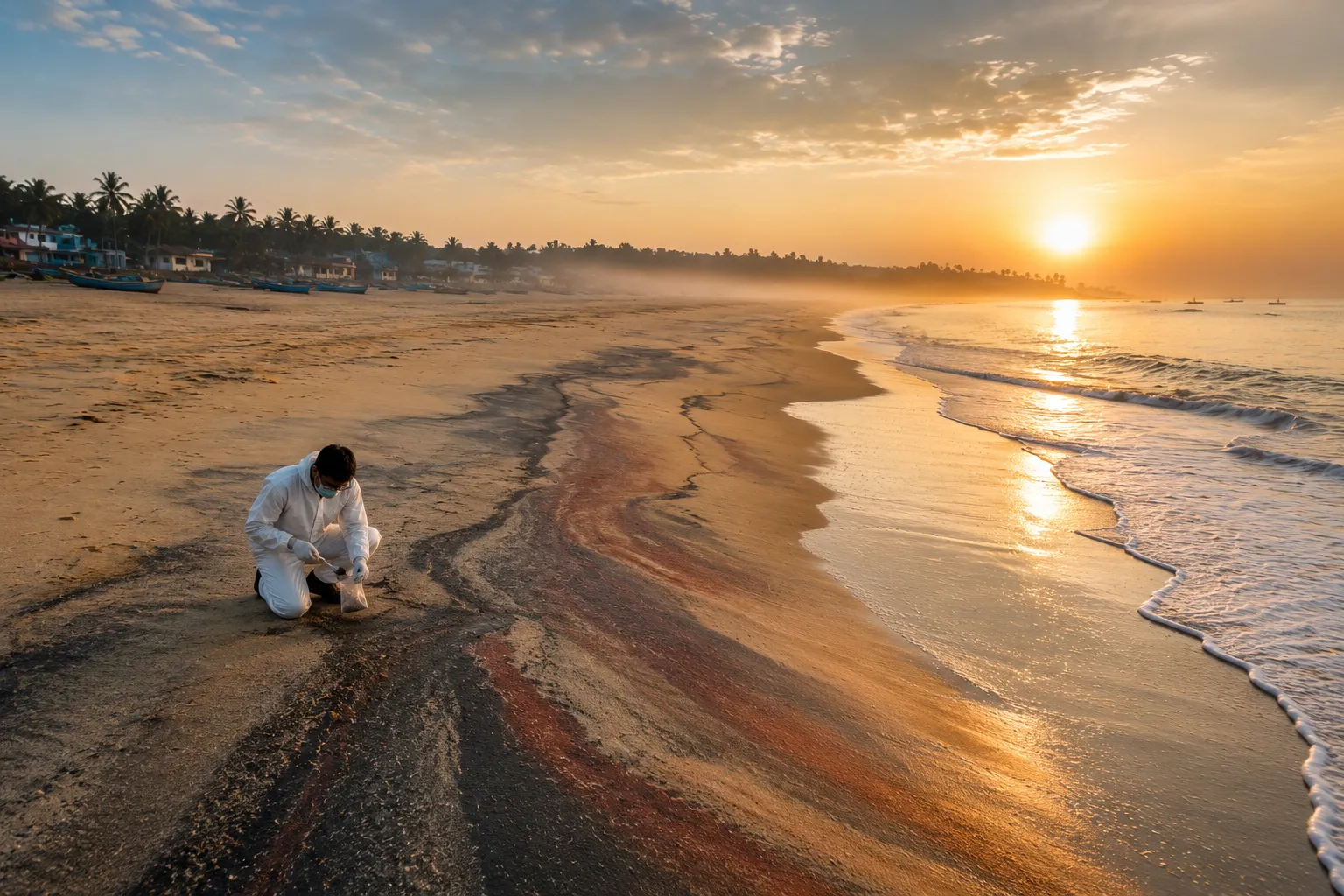
VISAKHAPATNAM, Andhra Pradesh — It looks like ordinary sand. A strip of coastline, waves rolling in, fishermen mending nets, the occasional tourist snapping a sunset photo. But beneath this stretch of the Bay of Bengal lies a prize that has suddenly become one of the most contested industrial assets on the planet.
Not oil. Not lithium. Monazite.
And the race to dig it up, process it, and turn it into the magnets that run electric vehicles, wind turbines, and precision-guided missiles has drawn three of India's largest conglomerates — Reliance, Adani, and Vedanta — to the same stretch of Andhra Pradesh coastline. They rarely compete head‑to‑head. Now they are elbowing for position over beach sand.
The reason starts 2,500 miles away, in Beijing.
The Day the Tap Turned Off
In April 2025, China imposed export restrictions on seven rare earth elements and the high‑strength magnets made from them: terbium, yttrium, dysprosium, gadolinium, lutetium, samarium, and scandium. The move was widely seen as retaliation for higher U.S. tariffs, but its effect was a depth charge across global manufacturing.
The numbers explain the panic. China controls roughly 60% of global rare earth processing and supplies 90% of the world's rare earth magnets — despite holding only 38% of the underlying reserves. For India, the exposure was brutal: in fiscal year 2024‑25, the country imported 93% of its rare earth magnets from China — more than 53,000 metric tonnes, mostly neodymium‑iron‑boron (NdFeB) magnets that are the heart of EV motors and defence systems. When the restrictions hit, Indian industry stockpiles were estimated to last two to three weeks.
"It was a wake‑up call written in plain English," says a senior official at the Ministry of Mines, who spoke on condition of anonymity because he is not authorized to brief the media. "We had outsourced our strategic vulnerability to a single country. That had to change overnight."
New Delhi's Answer: Billions, a Mission, and a Stockpile
The Indian government responded faster than many expected. The centerpiece is the National Critical Minerals Mission (NCMM), announced in the July 2024 budget and formally approved in January 2025, with an outlay of ₹16,300 crore (about $2 billion) and another ₹18,000 crore expected from state‑owned enterprises. A separate Rare Earth Permanent Magnet scheme commits ₹7,280 crore to build India's first integrated domestic manufacturing ecosystem for high‑value magnets, targeting 6,000 metric tonnes per year of capacity — from oxides to finished magnets.
The government also set aside ₹500 crore for a National Critical Mineral Stockpile, designed to hold roughly two months' worth of vital elements. And the Ministry of Mines has signed bilateral critical‑mineral agreements with Australia, Argentina, Zambia, Peru, Zimbabwe, Mozambique, Malawi, and Côte d'Ivoire — a hedge in case domestic processing can't scale fast enough.
In February 2026, the federal budget identified four states as rare earth "corridors." Of those four, Andhra Pradesh has moved fastest from policy paper to actual investment.
Why Andhra? It's in the Sand
The resource here isn't a conventional mine. It's beach sand. Andhra Pradesh holds an estimated 211 million metric tonnes of beach sand mineral resources across 16 identified coastal deposits, spread over roughly 16,600 hectares across eight eastern districts — Srikakulam, Vizianagaram, Visakhapatnam, Anakapalli, Konaseema, Kakinada, West Godavari, and Krishna.
For context, the Geological Survey of India estimates the country's total rare earth ore at 482.6 million tonnes. That means Andhra's beach sands alone account for nearly half of India's total.
The sand contains a heavy mineral assemblage: ilmenite, rutile, zircon, garnet, and crucially monazite — a phosphate mineral that carries the rare earth payload: cerium, lanthanum, praseodymium, neodymium, and in some deposits, heavier elements like dysprosium and terbium. Millions of years of coastal erosion and wave sorting created these deposits. But monazite also contains natural thorium (a radioactive element), adding a layer of regulatory complexity that hard‑rock miners elsewhere don't face.
Yet the real bottleneck isn't the resource. It's processing.
The Four Stages — and the Missing One
The rare earth value chain runs through four stages:
Mining and mineral separation — extracting heavy mineral concentrates from beach sand.
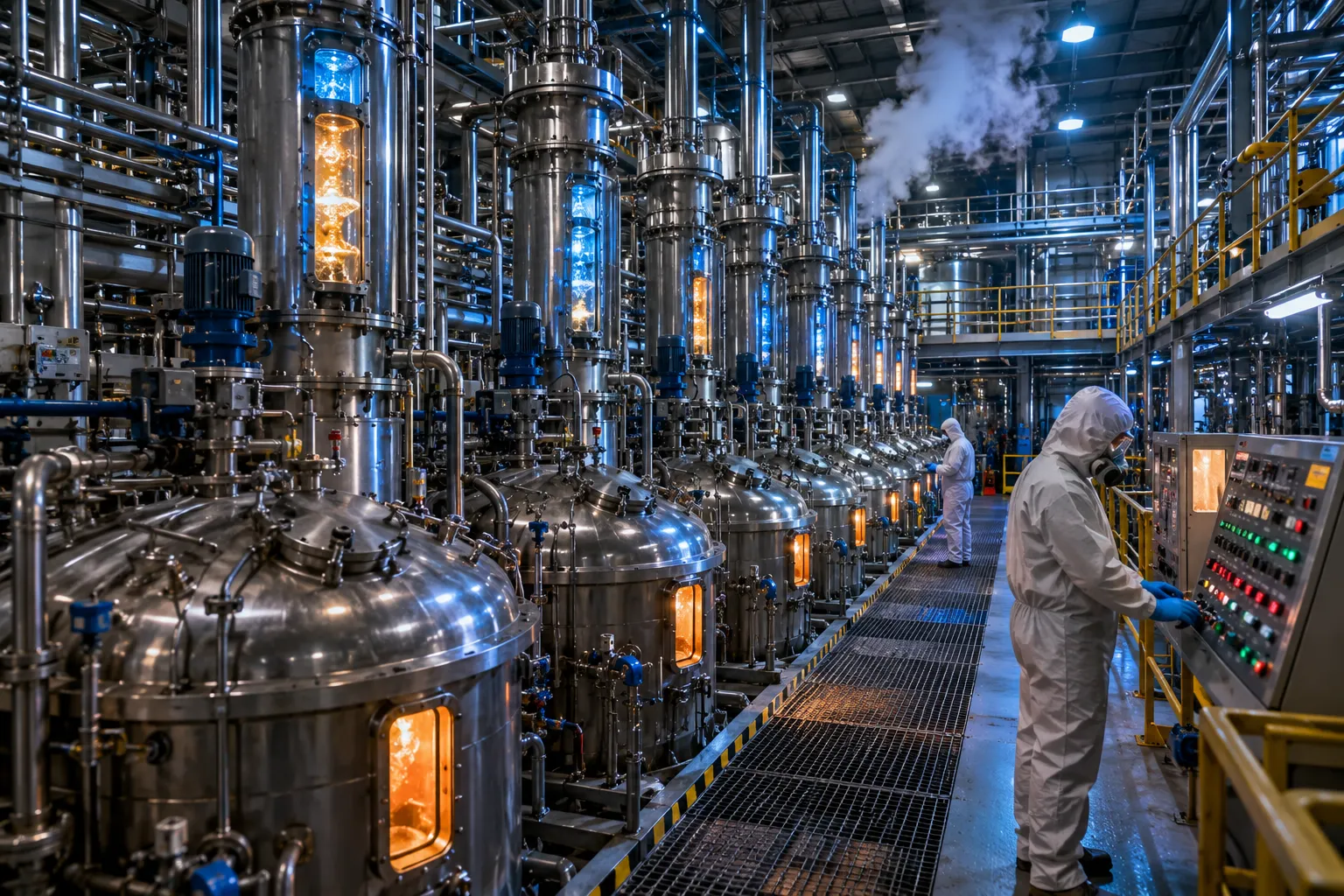
Rare earth oxide production — chemically digesting monazite and using solvent extraction to separate individual elements. This is the core bottleneck.
Metal and alloy manufacturing — converting oxides into usable metals.
Magnet manufacturing — producing NdFeB permanent magnets.
India has historically underinvested in Stage 2 — the hydrometallurgical infrastructure that turns concentrate into high‑purity oxides. Andhra Pradesh's pitch to investors is essentially: We have the feedstock for decades. Now build the rest here.
The Players: Three Conglomerates, Three Angles
According to sources familiar with the matter, about ten companies have expressed interest. But three names dominate.
Adani has gone furthest. The group submitted a ₹23,000 crore proposal for an integrated Titanium & Rare Earth Complex in Visakhapatnam — projected to create 20,000 jobs and aimed at export‑oriented output. For Adani, whose mining operations have historically centred on coal and iron ore, rare earths mark a genuine diversification into critical minerals.
Vedanta comes with existing momentum. Through its subsidiary Hindustan Zinc, the company has already secured a monazite mining block in Uttar Pradesh via a government auction, specifically targeting neodymium for permanent magnets. Andhra's beach sands would extend that strategy to a much larger resource base.
Reliance builds on ground it has already broken in the state. At a past investment summit, Mukesh Ambani committed Reliance to investing in 10 gigawatts of renewable solar energy in Andhra. That relationship makes a rare earth processing investment a natural extension rather than a cold start. Reliance also has downstream manufacturing capabilities — converting rare earth materials into components for its own EV, electronics, and green energy ambitions.
Beyond the big three, JSW Group (through JSW Rare Earths) and auto components maker Sona have also shown strong interest.
The Catch: India's "Light vs Heavy" Problem
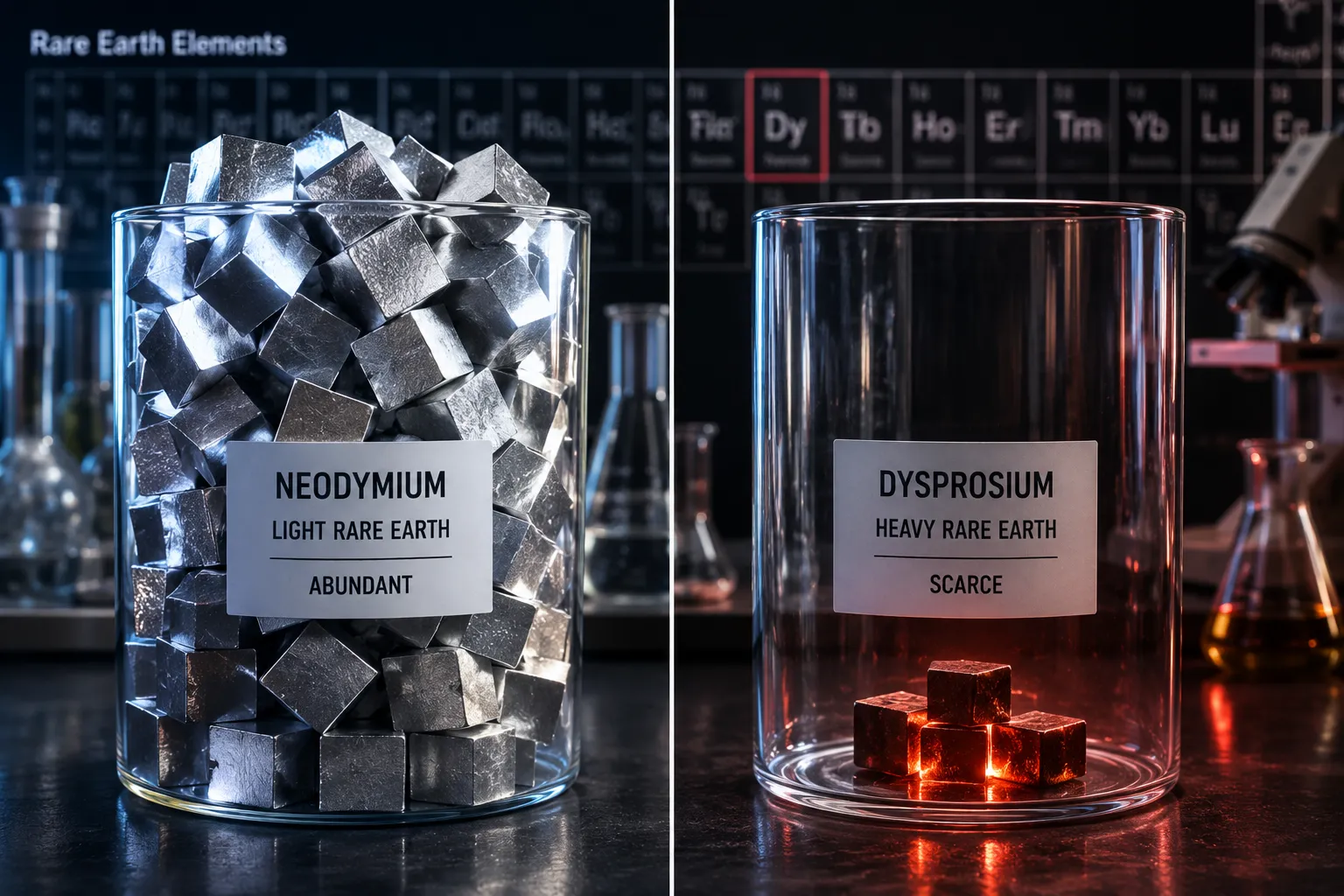
Even with all this momentum, there is a structural limitation. India has what experts call a compositional imbalance: a surplus of "light" rare earth elements (LREEs) like cerium, lanthanum, and neodymium, but almost no extractable heavy rare earth elements (HREEs) — dysprosium, terbium, yttrium, gadolinium, lutetium. Those heavies are precisely the elements China restricted in April 2025, and they are essential for the highest‑performance magnets used in defence systems, wind turbines, and advanced electronics.
So even if the Andhra corridor succeeds beyond expectations, India will remain entirely import‑dependent for heavy rare earths. That is why the government's strategy also leans on international partnerships, recycling (including e‑waste recovery), and the strategic stockpile. Andhra solves a large part of the problem — but not all of it.
The State's Pitch: $5.2 Billion and a Corridor Policy
Andhra Pradesh is not sitting passively on its sand. The state government has set an investment target of ₹50,000 crore (about $5.2 billion) in rare earth and titanium‑related investments over the next decade. It is preparing a dedicated "rare earth corridor policy" — expected to receive cabinet approval within weeks — offering capital‑linked incentives and additional benefits for projects of ₹1,000 crore or more. Once the policy is in place, tenders for new processing facilities will be issued.
State Mines Minister K. Ravindra has framed the ambition explicitly: turning the state's beach sand resources into a "globally competitive titanium and rare earth industrial ecosystem." Officials describe a vision of integrated mineral‑to‑manufacturing clusters — feedstock, processing, and magnet production co‑located to capture value at every stage, rather than exporting raw concentrate as India has historically done.
The Bottom Line
What is unfolding on the Andhra coastline is a microcosm of a much larger global recalibration. China spent decades building an almost unassailable lead in rare earth processing — not because it has a monopoly on the underlying minerals, but because it was willing to build the unglamorous, environmentally complex, capital‑intensive midstream infrastructure that everyone else outsourced to it. The April 2025 export restrictions were a reminder that such concentration is also a lever.
For Reliance, Adani, and Vedanta — three companies that rarely compete directly in the same vertical — converging on the same stretch of sand signals just how seriously corporate India now views critical minerals as a strategic category, not just another commodity bet.
If even a fraction of the ₹50,000 crore target materializes into operating rare earth oxide and magnet plants, it would mark one of the most significant shifts in India's industrial supply chain in a generation. A tourist coastline known for its beaches would become the foundation of the country's EV, electronics, and defence manufacturing ambitions.
And all of it starts with sand.