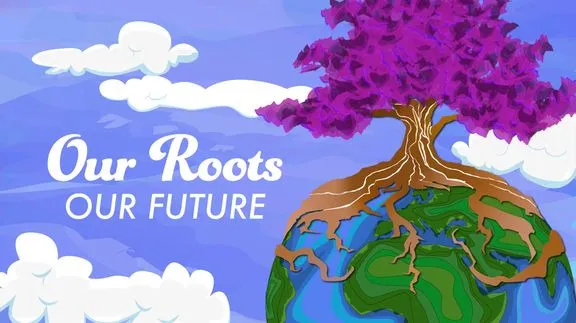
There is a question that sounds simple and is not: how do you preserve your roots while reinventing your future?
It sounds like a question about balance — as though there is a fixed quantity of cultural heritage on one side and an equal and opposite force of change on the other, and the task is to hold the scale steady. But this framing is wrong, and the wrongness matters because it leads to the wrong strategies.
Cultural preservation is not a holding action. It is not a fight against time and change that, if conducted successfully, ends with something intact that would otherwise have been lost. The Indian diaspora's five-thousand-year experiment in carrying culture across distances and generations has demonstrated something more complicated and more hopeful: that the cultures which survive are not the ones that resist transformation. They are the ones that transform intelligently — keeping what is alive, letting go of what is not, and generating something new from the encounter between what was carried and where it landed.
What the Evidence of Cultural Survival Actually Shows
At the heart of Indian diasporic identity is a tension that globalization has intensified rather than resolved: between cultural continuity and cultural transformation. The Indian diaspora does not simply carry Indian culture abroad and preserve it unchanged. It transforms that culture through contact with other societies, through the needs of new generations, and through the realities of being a minority in someone else's country.
The clearest evidence of this is in the cultural forms that the Indian diaspora has produced in its most long-established communities.Tamil rap in Singapore, Bhojpuri-infused calypso in Trinidad, Punjabi comedy in British cinema. None of these forms existed in India. None of them are simply Indian culture transplanted. All of them are recognisably continuous with their origins — carrying rhythms, languages, and sensibilities that trace back across generations — while being wholly products of the diaspora encounter.
The girmitya communities — descendants of the indentured Indian labourers who were brought to the Caribbean, Fiji, South Africa, and Mauritius under British colonial labour programmes in the nineteenth century — offer perhaps the most instructive example of what cultural survival looks like over the very long term. The cultural heritage that the girmityas carried with them has been transformed and creolized over time. The musical and cultural roles established across the Tamil diaspora have merged with Creole forms. Parai drumming that began in South Indian temples is now performed at ceremonies in Mauritius in a form that retains its ritual significance while having incorporated influences from the surrounding culture across 150 years.
As Dr. Vishnu Bisram observed of the Caribbean Indian diaspora: "Resilience, creativity and adaptability have led to cultural preservation and persistence of Indian culture. Not fidelity to an unchanging original. Resilience, creativity, and adaptability — the capacities that allow a cultural tradition to survive contact with other cultures without being absorbed by them.
What Gets Lost When Preservation Becomes Freezing
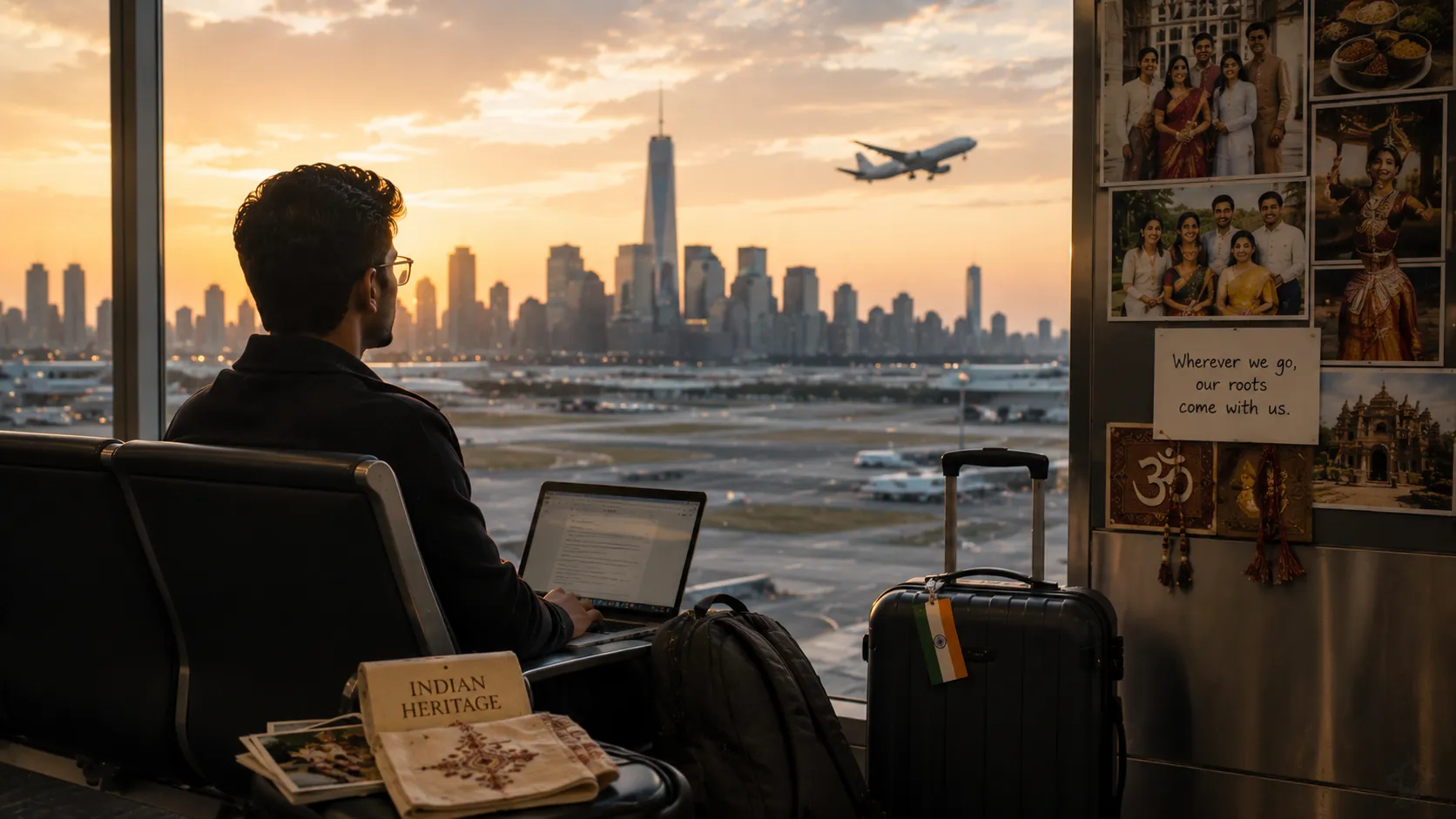
The failure mode of cultural preservation is not transformation. It is freezing — the attempt to maintain a cultural form in a state of suspended animation, unchanged from the moment of departure, as though time in the diaspora context should be stopped while time in India continues.
This failure mode produces the cultural cringe: the second-generation child who is told that she is doing her culture wrong because she does not speak the language with a particular regional accent, or because she celebrates Diwali in a form that has adapted to her circumstances rather than replicating the form her grandparents knew. It produces the family conflict between a first generation that experiences cultural adaptation as loss and a second generation that experiences cultural rigidity as exclusion.
Cultural preservation is not simply nostalgic. It provides a sense of rootedness and psychological security in environments where immigrants may otherwise feel invisible or marginalised. But the rootedness that matters is not attachment to a specific form of cultural expression. It is attachment to the values, the relationships, and the ways of being in the world that the cultural expression carries. Those values, relationships, and ways of being can survive transformation of the forms that carry them — and often require it.
As Stuart Hall wrote, cultural identity is a matter of "becoming" as well as "being." It belongs as much to the future as to the past.</cite> The culture that a diaspora community passes to its children is not a museum exhibit. It is a living thing, and living things grow and change or they die.
The Practical Question: What Is Worth Carrying
If the choice is not between preservation and transformation but between intelligent transformation and unintelligent transformation, the practical question becomes: what is worth carrying, and in what form?
The honest answer is that different elements of cultural heritage have different weights and different survival requirements.
Language is the most vulnerable and the most contested. The pattern is familiar: the first generation speaks their mother tongue fluently; the second becomes bilingual; by the third, fluency may shrink to a few phrases. Yet rather than disappearing, language often gets reimagined — through Tamil rap in Singapore, Bhojpuri-infused calypso in Trinidad, or Punjabi comedy in British cinema. The choice is not between preserving the language and losing it. It is between reimagining it in forms that new generations will actually use or watching it become a relic that is venerated but not spoken.
The traditions are dynamic, adapting to changes in the surrounding environment while maintaining their cultural roots. Intangible heritage continues to be protected and practiced within Indo-Caribbean communities through religious spaces such as mandirs and mosques, as well as through stages, broadcast media, print media and social media.</cite> Religion and its associated practices — festivals, rituals, the rhythms of the sacred year — have proven to be among the most durable carriers of cultural identity across generations and geographies, because they provide both a community context and a reason for gathering that is explicitly about what is being carried rather than incidentally associated with it.
Values — the ethics of family obligation, the orientation toward learning, the specific quality of hospitality that Indian households across all diaspora contexts maintain — are arguably more durable than either language or explicit cultural forms, because they are embedded in daily practice rather than in conscious identity performance. A household that maintains the practice of caring for elderly parents, of treating guests as sacred, of taking a child's education as a family project rather than an individual one, is maintaining something culturally essential without requiring that it be named.
The Answer the Evidence Suggests
The question of how to preserve roots while reinventing the future is answered, in the end, not by policy or programme or deliberate cultural strategy. It is answered by the daily decisions of millions of individuals choosing what to carry and what to put down, what to pass on and what to transform, what to insist on and what to let their children renegotiate.
What emerges is a picture of diasporic identity not as a fixed state but as an ongoing process. The Indian diaspora does not face a simple choice between being "authentically Indian" or "fully assimilated." The more honest and accurate picture is of millions of individuals continuously navigating, negotiating, and reinventing what it means to carry Indian heritage in a non-Indian world — generation by generation, context by context, and person by person.
The roots are not what you freeze. They are what you grow from. The future is not what you build instead of the past. It is what the past makes possible when it is carried generously rather than anxiously, transformed creatively rather than abandoned carelessly, and trusted to survive contact with the world without needing to be protected from it.
The parai drum survived 150 years of diaspora. Tamil rap is 25 years old and still multiplying. Punjabi comedy is making British audiences laugh at the same stories Indian villages have always laughed at. The roots are holding. The future is being invented. And in the best diasporic communities, those two facts are not in tension.
They are the same fact.


