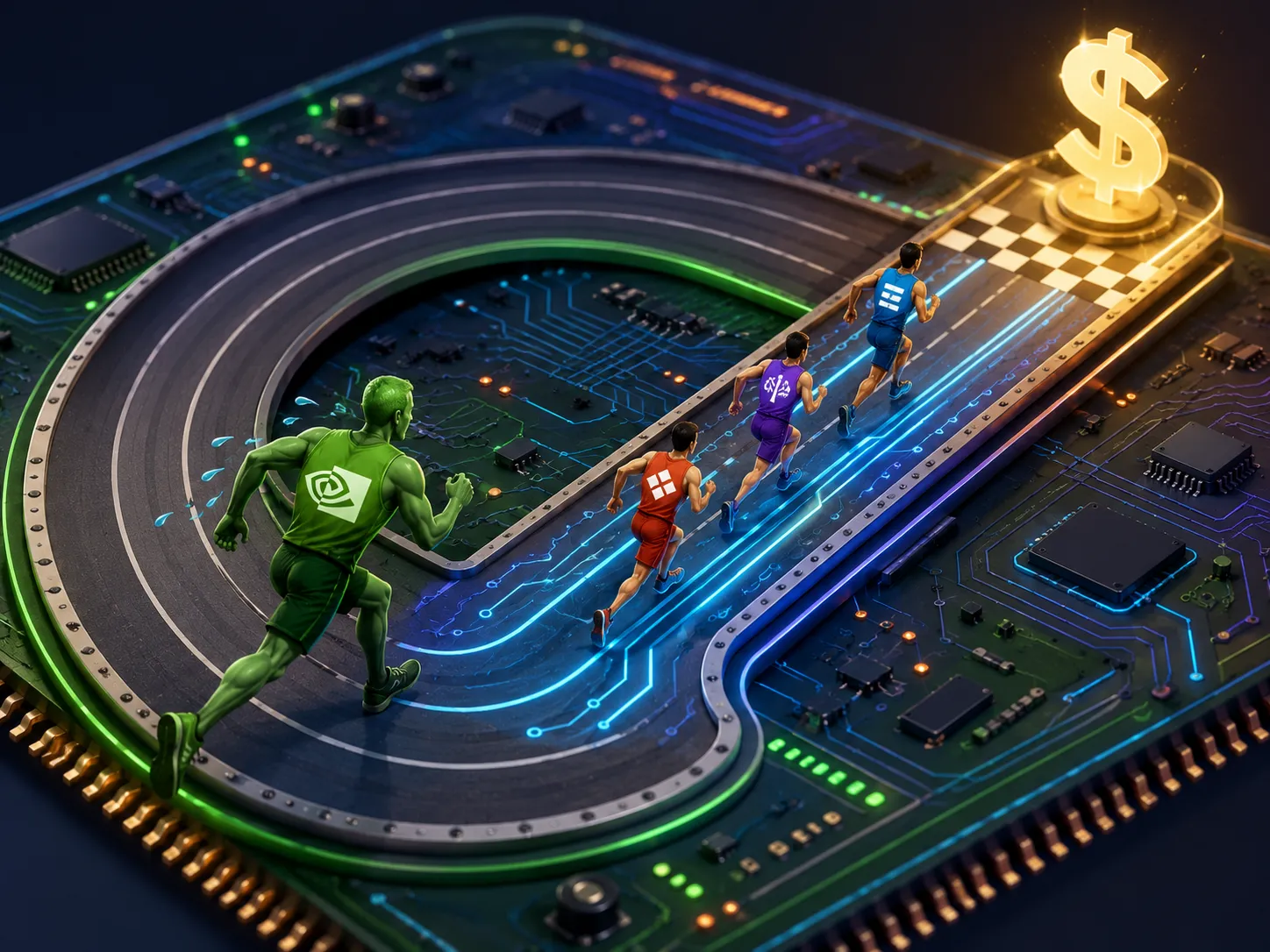
How a new wave of U.S. chip startups is finally breaking Nvidia’s stranglehold on AI
PORTLAND, Oregon – For the past three years, one name has haunted every AI hardware startup pitch meeting.
Nvidia.
The green‑badged giant commands over 80% of the AI chip market. Its H100 and H200 GPUs are the currency of the artificial intelligence revolution. If you want to train a large language model, you write a check to Jensen Huang’s empire. There is no alternative.
Or there wasn’t, until now.
A quiet insurgency is taking shape across America’s chip design labs. From Portland to Austin to Pittsburgh, a new generation of semiconductor startups is attacking the one place Nvidia has seemed invincible: inference – the process of actually running AI models, not just training them.
And the money is following.
This week alone, two announcements sent shockwaves through the industry. Fractile, a UK‑based startup that just opened its U.S. headquarters in Austin, raised $220 million for its next‑generation inference chip, which it claims delivers 10x lower latency than Nvidia’s best. Meanwhile, San Jose‑based HrdWyr quietly closed a $13 million seed round for its AI‑native edge processor – a chip designed to run powerful models on a battery the size of a hearing aid cell.
“Nvidia won the training war,” says Dr. Priya Mehta, a former Intel architect who now leads Efficient Computer in Pittsburgh. “But inference is a completely different battlefield. And the rules are changing.”
The Inference Problem: Why Nvidia Isn’t the Answer
To understand why investors are suddenly pouring billions into non‑Nvidia chips, you have to look at where AI is actually being used.
Training a model like GPT‑5 takes months and costs hundreds of millions of dollars. That is a job for a data center full of H100s. But once that model is trained, it needs to be used – millions of times per second, on everything from ChatGPT queries to self‑driving car decisions to factory robots. That is inference.
And inference is a different beast.
Latency matters. Power efficiency matters. Cost per token matters. Nvidia’s GPUs are brute‑force instruments – incredibly powerful, but also hot, hungry, and expensive. For a real‑time voice assistant or an autonomous drone, a 100‑millisecond delay is a failure. For a battery‑powered security camera, a 5‑watt chip is a non‑starter.
“Nvidia built a sledgehammer,” says Mark Chen, general partner at AI Hardware Syndicate in Palo Alto. “But many AI workloads need a scalpel. That’s the opening.”
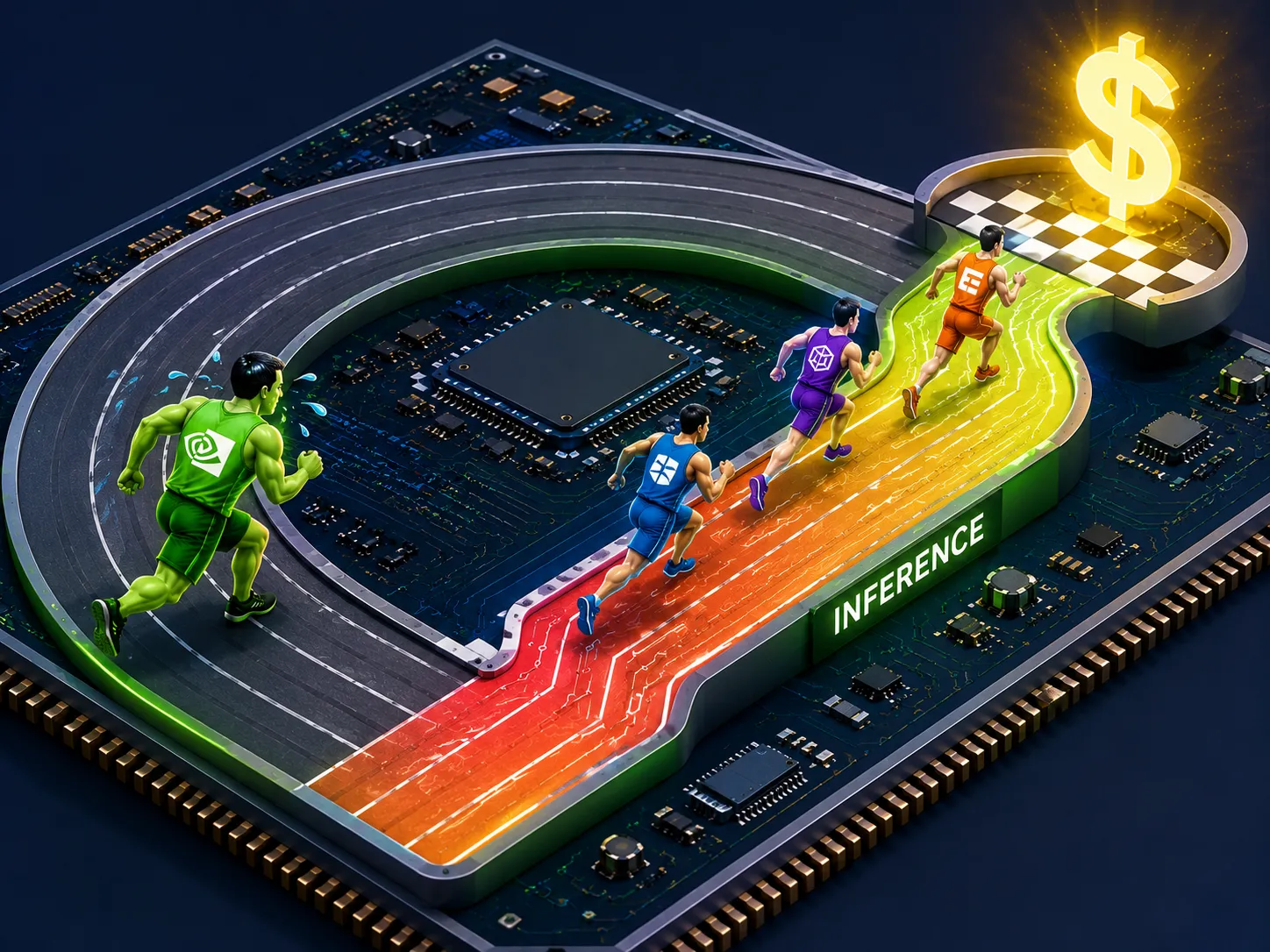
The New Challengers: Three Startups to Watch
Across the country, a handful of startups are now racing to fill that opening. Here are three that VCs are betting on.
1. Fractile (Austin / London) – The Inference Supercharger
Fractile’s $220 million raise – led by Index Ventures and a16z – is the largest inference‑dedicated round in history. The company’s secret is a novel digital in‑memory compute architecture that essentially performs matrix multiplication inside the memory cells themselves, rather than shuttling data back and forth.
The result, according to independent benchmarks leaked to The Information, is a 10x reduction in latency and a 15x improvement in energy efficiency compared to Nvidia’s H200 on large language model inference.
“We are not trying to beat Nvidia at their own game,” says Fractile CEO Walter Ledingham. “We are playing a different game. They optimize for throughput. We optimize for response time. In the world of agentic AI, response time is everything.”
2. HrdWyr (San Jose) – The Edge AI Specialist
While Fractile targets cloud data centers, HrdWyr is going small – very small. Its newly unveiled “Wyr‑1” chip is designed for edge devices: smart cameras, wearables, industrial sensors, and medical implants. The chip consumes just 50 milliwatts while running a 7‑billion‑parameter model – enough for real‑time speech recognition or object detection.
“The cloud is great, but the edge is where the data lives,” says HrdWyr founder Elena Vasquez, a former Apple silicon engineer. “You cannot stream every security camera feed to the cloud. You need intelligence on the device. That is what we built.”
The $13 million seed round included Eclipse Ventures and Spark Capital. The company expects to tape out in Q1 2027.
3. Efficient Computer (Pittsburgh) – The Sub‑Milliwatt Marvel
Perhaps the most radical approach comes from Efficient Computer, a Carnegie Mellon spinout that just emerged from stealth. Its “Fabric” architecture abandons the von Neumann model entirely, using a dataflow approach that eliminates most of the energy wasted on instruction fetching and decoding.
The result is a chip that can run useful AI models – think keyword spotting, anomaly detection, vibration analysis – on less than 1 milliwatt. That is low enough to be powered by a coin cell battery for years, or even scavenged energy from ambient heat or vibration.
“The trillion‑sensor future requires intelligence everywhere,” says Dr. Priya Mehta, the company’s CTO. “But you cannot put a GPU on a bridge sensor or a cow collar. You need a new kind of computer.”
Efficient Computer is currently raising a Series A round expected to exceed $50 million.
The CHIPS Act Effect: Uncle Sam Opens His Wallet
This startup boom is not happening in a vacuum. The CHIPS and Science Act, passed in 2022, has already allocated over $15 billion to domestic semiconductor R&D and manufacturing. But the second wave of funding, announced just last week by the Department of Commerce, specifically targets “specialized AI accelerators” – a clear nod to inference and edge chips.
Five billion dollars has been set aside for a new “AI Hardware Accelerator Program,” with grants ranging from $10 million to $500 million for startups that can demonstrate a path to commercial production on U.S. soil.
“We cannot let Nvidia be the only game in town,” said Commerce Secretary Gina Raimondo at a press conference in Portland. “Semiconductor diversity is national security. These startups are not just building companies. They are building resilience.”
Already, Fractile has applied for a $200 million grant to build a pilot fab in Oregon. HrdWyr is seeking $30 million for a packaging line in San Jose. And Efficient Computer has submitted a proposal for a low‑volume manufacturing facility in Pittsburgh.
What the Incumbents Say: Nvidia, AMD, and Intel Respond
Not everyone is cheering the insurgents.
Nvidia declined to comment for this article, but the company’s recent product roadmap suggests it is paying attention. The upcoming B200 “Blackwell Ultra” GPU includes new “inference optimization” features, including lower‑precision arithmetic and on‑chip compression. Meanwhile, AMD is pushing its MI300X as an inference alternative, and Intel is quietly developing a dedicated inference chip called “Falcon Shores.”
But skeptics argue that the incumbents face a classic innovator’s dilemma. “Nvidia’s architecture is optimized for training, and that is a multi‑billion‑dollar business,” says Ravi Sastry, a semiconductor analyst at Linley Group. “To truly optimize for inference, they would need to cannibalize themselves. Startups have nothing to lose.”
The Road Ahead: Three Predictions for 2027–2029
So where is this all heading? Based on conversations with a dozen investors, founders, and analysts, here are three predictions.
1. Inference will be a $100 billion market by 2029
According to a new forecast from Dell’Oro Group, the AI inference chip market will grow from $15 billion in 2025 to over $100 billion in 2029, surpassing training for the first time. That is a huge opportunity for non‑Nvidia players.
2. At least two inference startups will go public by 2028
Fractile is already rumored to be eyeing a 2027 IPO. Efficient Computer and HrdWyr are likely a few years behind. “The public markets are hungry for AI hardware stories that are not just ‘we also make GPUs,’” says Sarah Kim, a tech IPO banker at Goldman Sachs.
3. The winner will be the one that wins the software stack
Hardware alone is not enough. Nvidia’s moat is CUDA – the software ecosystem that makes its chips easy to program. Every startup is now racing to build its own developer tools. Fractile has released an open‑source compiler. Efficient Computer is offering a free SDK. HrdWyr has partnered with TinyML foundation.
“Whoever builds the easiest‑to‑use software will win,” says Mehta. “Hardware is hard. But software is harder.”
The Bottom Line
For the first time in a decade, the semiconductor industry is seeing real, credible competition to Nvidia’s AI dominance. The inference market – larger than training by volume, if not by dollar value – is up for grabs. And a new generation of American startups, backed by patient capital and federal support, is sprinting toward it.
They may not slay the green giant overnight. But they are finally giving the industry something it has desperately needed: a choice.
“Nvidia is a great company,” says Vasquez of HrdWyr. “But monopoly is never healthy. We are not here to destroy them. We are here to give the world an alternative. And that alternative is finally ready.”


