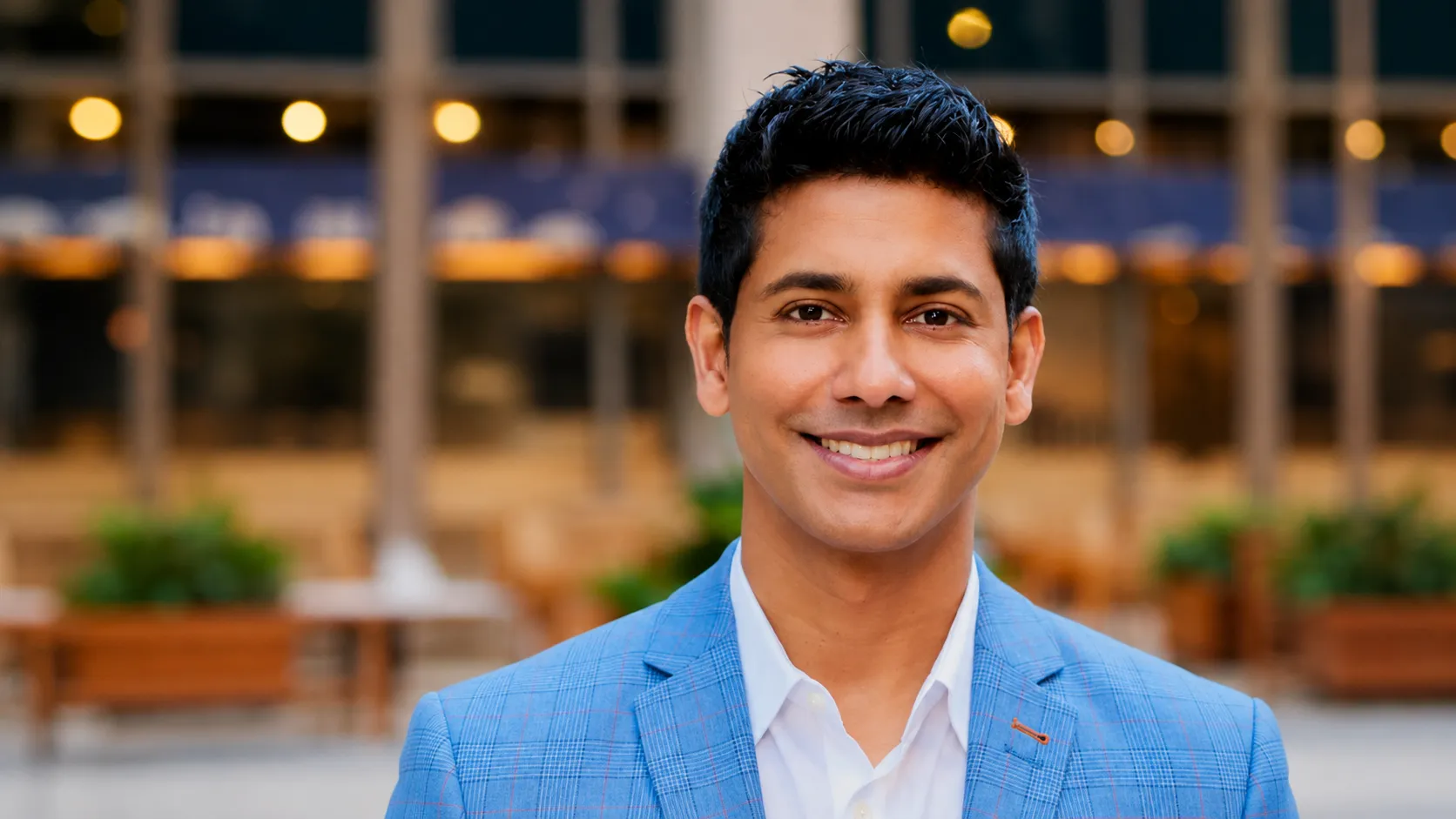
Mews, the hospitality technology company that describes itself as the operating system for the hospitality industry, has appointed veteran technology executive and legal strategist Kirupa Pushparaj as its new Chief Legal Officer, positioning the global platform for its next phase of international expansion across more than 85 countries. Pushparaj, whose career traces back to his technical and legal education rooted in Tamil Nadu, brings more than two decades of combined experience spanning both law and technology engineering — a genuinely unusual dual background that Mews founder Richard Valtr has specifically credited as central to the company's decision to bring him on board following what he described as an intentionally long and deliberate executive search.
In his new role, Pushparaj will report directly to Valtr and will oversee Mews' global legal, regulatory compliance, and policy functions as the company continues expanding its payments infrastructure and cloud-based operating system serving more than 15,000 hotel and lodging customers worldwide. That scale of operation — spanning dozens of distinct national regulatory regimes, currencies, and payment systems simultaneously — places Pushparaj at the centre of an unusually complex legal and compliance mandate, even by the standards of senior legal leadership roles at large, internationally operating technology companies.

Valtr, introducing the appointment, described the Chief Legal Officer position as a defining leadership role for Mews, one that will shape how the company navigates some of the most important and complex challenges ahead of it. He characterised Pushparaj as precisely the kind of business-first legal leader the company had been searching for — someone who has spent his career enabling category-defining products within highly regulated environments, rather than a more traditionally risk-averse legal executive whose instincts might run toward caution over enablement.
Pushparaj's professional background spans an unusually broad range of technology sectors, including fintech, artificial intelligence, digital assets, and consumer hardware — a breadth that reflects a career built through several of the more consequential and fast-evolving segments of the American technology industry over the past two decades. He spent more than eight years at Square, the payments company now known as Block Inc., serving as deputy general counsel and guiding the company through its 2015 initial public offering alongside the rollout of numerous new financial products during a period of rapid company growth and evolving fintech regulatory scrutiny.
Following his tenure at Square, Pushparaj served as Chief Legal Officer at Step, a fintech unicorn where he managed a genuinely broad portfolio of responsibilities spanning legal affairs, regulatory compliance, human resources, government affairs, and strategic partnerships, continuing in that comprehensive role through the company's eventual acquisition by Beast Industries. That kind of expansive, multi-functional executive mandate — extending well beyond conventional legal department responsibilities into HR and government affairs — reflects the kind of broad operational trust growth-stage technology companies increasingly place in senior legal executives who can credibly operate across multiple adjacent functional areas simultaneously.
Earlier in his career, Pushparaj worked as legal counsel at Amazon Lab126, the consumer hardware research and development division behind products including the Kindle and Echo device families, and spent six years working as a hardware engineer at Intel before transitioning into law — a career sequencing that means Pushparaj built genuine, hands-on hardware engineering experience before ever entering the legal profession, giving him a technical fluency that has evidently proven valuable across his subsequent legal career advising technology companies operating at the frontier of hardware, fintech, and AI innovation simultaneously.
Beyond his executive responsibilities, Pushparaj maintains active advisory and board roles across a range of artificial intelligence and legal-technology organisations, reflecting continued engagement with the evolving frontier of how legal practice itself is being reshaped by AI tools. He also serves as an adjunct professor at both Stanford Law School and the University of California, Davis School of Law, extending his professional engagement into legal education and reflecting what Mews itself has described as his deep, sustained commitment to technical and legal education throughout his career.
That educational commitment traces back to Pushparaj's own roots, having earned a Bachelor of Science in Electrical Engineering from PSG College of Technology in Coimbatore, Tamil Nadu, before pursuing his subsequent graduate education and legal training in the United States — a trajectory reflecting a familiar and well-established pathway for many Indian-origin technology and legal executives who have gone on to build significant careers across American technology and finance, beginning with rigorous engineering training in India before transitioning into specialised graduate study and professional practice in the United States.
For Mews specifically, Pushparaj's appointment lands at what the company has described as a pivotal moment in its growth trajectory, as it continues scaling payments infrastructure across an increasingly complex global regulatory environment spanning more than 85 countries. The company's platform spans property management systems, point-of-sale systems, revenue management systems, housekeeping coordination, and payments processing, positioning Mews as attempting to help hoteliers transition from traditional property management toward what the company describes as more comprehensive profit management — an ambitious platform strategy that inherently requires exactly the kind of sophisticated, multi-jurisdictional legal and regulatory expertise Pushparaj's varied career has been building toward.
Mews has been recognised as Best Property Management System for three consecutive years, 2024 through 2026, alongside being named Best Point of Sale system in 2026 and appearing among the Best Places to Work in Hotel Tech for six consecutive years, according to Hotel Tech Report — accolades that reflect the company's established market position even as it continues navigating the kind of rapid international expansion that has made this particular Chief Legal Officer hire such a consequential one for its continued growth trajectory.
For Pushparaj personally, the appointment also carries a note of genuine personal resonance beyond its professional significance, with the executive noting that hospitality has always been part of his own life, and describing the opportunity to join a company actively redefining what an operating system for the hospitality industry can look like as a genuine, personally meaningful opportunity — a sentiment that, alongside his substantial technical and legal credentials, appears to have factored into what both he and Valtr have each separately described as a deliberately careful, extended mutual evaluation process before this appointment was finalised.

Legal industry observers have noted that Pushparaj's appointment reflects a broader trend among fast-scaling technology companies of seeking Chief Legal Officers with direct engineering backgrounds, given the increasingly technical nature of the regulatory and compliance challenges facing companies operating complex, software-driven payment and operational infrastructure across dozens of simultaneous international jurisdictions.
Mews' continued expansion across its 85-plus country footprint is expected to bring an accelerating cadence of new regulatory complexity, particularly around payments licensing and data protection requirements, making Pushparaj's combined fintech and hardware regulatory experience an increasingly central asset to the company's next phase of international growth.
For now, Pushparaj's arrival gives Mews a legal leadership profile matched to the genuine scale and technical complexity of its global ambitions, a fit both he and Valtr have each independently signalled they view as the product of a deliberately unhurried, carefully considered search.