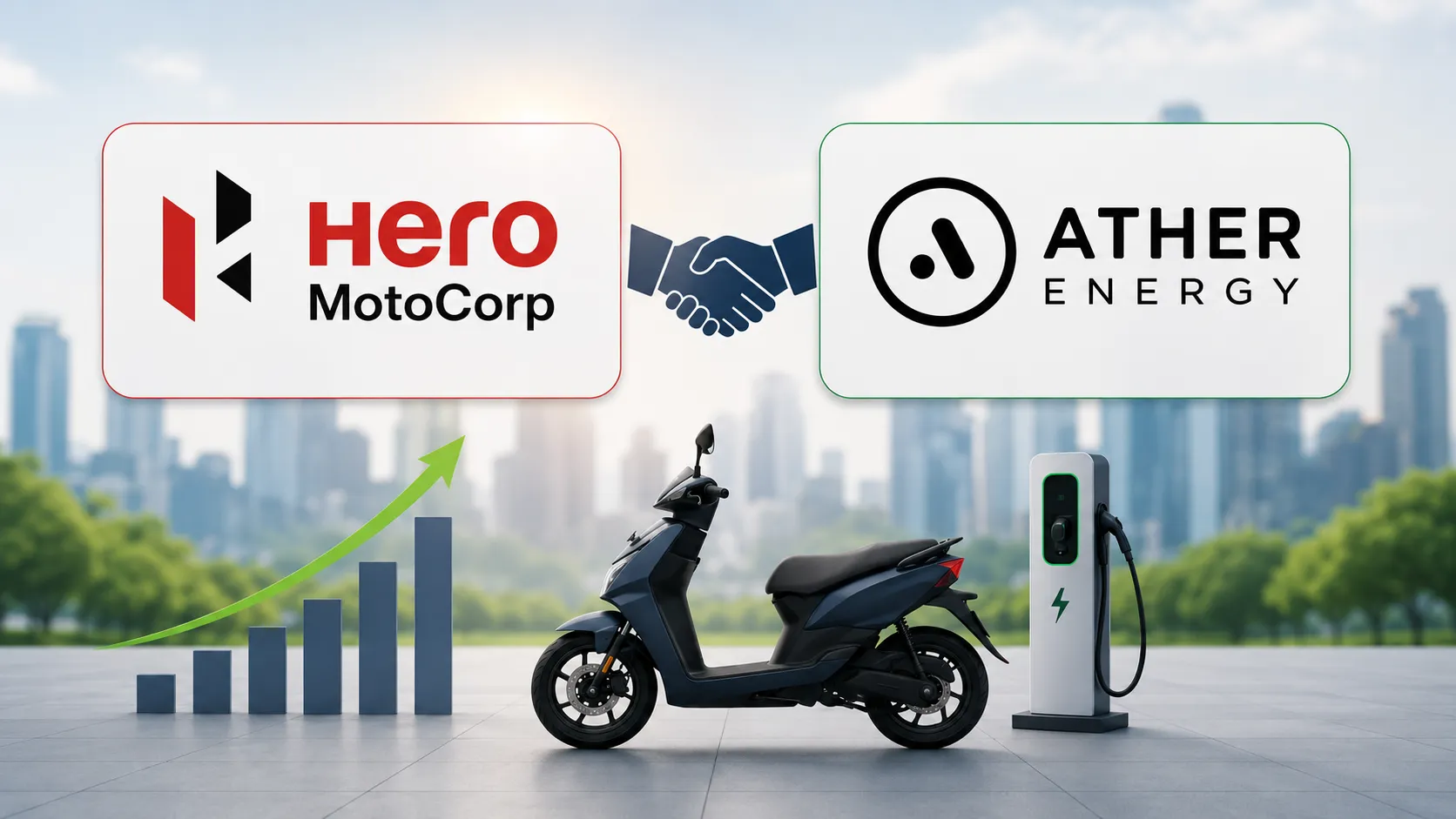
India's largest two-wheeler manufacturer just made its clearest statement yet about how seriously it is taking the electric vehicle transition. Hero MotoCorp's Committee of Directors has approved an additional investment of up to ₹1,000 crore in Ather Energy Limited, the Bengaluru-based electric two-wheeler maker in which Hero already holds a significant strategic stake, according to a stock exchange filing dated July 14. The announcement sent Ather Energy's shares soaring more than 9 percent to an all-time high of ₹1,313.8 on the National Stock Exchange, lifting the company's market capitalisation to approximately ₹49,750 crore, or roughly $5.23 billion, as of Wednesday morning trade.
The mechanics of the deal are relatively straightforward, even if the strategic implications are considerably more layered. Hero MotoCorp will subscribe to equity shares or other eligible securities — potentially including compulsorily convertible preference shares and warrants — issued by Ather Energy on a preferential allotment basis, with the entire transaction to be executed in cash. Hero currently holds a 29.48 percent stake in Ather on a fully diluted basis as of June 30, 2026, and while the company has not disclosed exactly how much this fresh infusion will move that ownership figure, it has indicated that the final shareholding change will depend on the pricing and structure of the preferential issue once finalised. The transaction is expected to close within 15 days of Ather receiving all necessary regulatory approvals, and notably, Hero itself does not require any separate government clearance to make the investment.
WHY THIS ROUND LOOKS DIFFERENT FROM EARLIER FUNDING
Hero has been a strategic backer of Ather since relatively early in the EV maker's history, but market analysts tracking the relationship have been quick to note that the scale of this latest commitment marks a meaningful step up from previous incremental funding rounds. That jump in commitment size is being read across the market as a signal that Hero sees a materially higher valuation trajectory ahead for Ather, and that the two-wheeler giant is shifting from a passive minority-stakeholder posture toward a more assertive role as a strategic consolidator within India's electric mobility ecosystem.
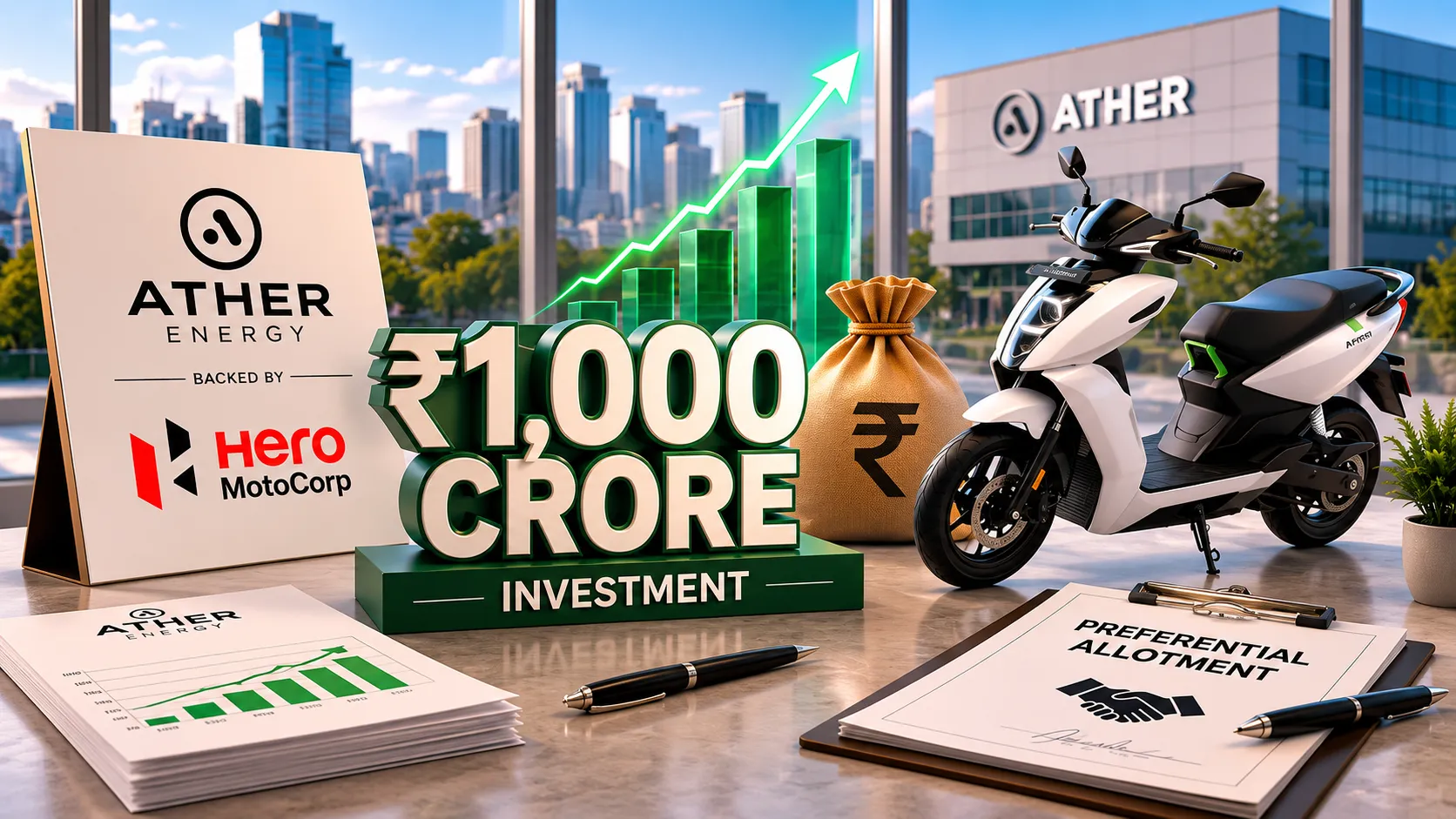
The timing is also notable. This latest infusion comes just weeks after Ather's own board approved plans to raise up to ₹2,500 crore through a qualified institutional placement, rights issue, preferential allotment, or other permissible fundraising routes, with the company stating the proceeds would fund business expansion, product development, investments in subsidiaries and other corporate purposes. Hero's ₹1,000 crore commitment effectively represents a substantial anchor contribution toward that broader ₹2,500 crore fundraising target, underscoring the depth of Hero's continued confidence in Ather's growth trajectory even as the EV maker continues to post net losses, albeit narrowing ones.
THE NUMBERS BEHIND ATHER'S GROWTH STORY
Ather's underlying financial performance offers useful context for why Hero is doubling down now rather than pulling back. The company's turnover has climbed sharply over the past three fiscal years, rising from ₹1,753.80 crore in the year ended March 2024, to ₹2,255 crore in the year ended March 2025, and further to ₹3,671.76 crore in the year ended March 2026 — more than doubling over that period. The most recent quarter for which detailed figures are available, the January-March 2026 quarter, showed operating revenue surging 74 percent year-on-year to ₹1,175 crore, while the company's net loss narrowed 57 percent to ₹100 crore, a trajectory that suggests Ather is moving steadily, if not yet fully, toward profitability.
On the sales front, Ather has held onto the third position in India's competitive electric two-wheeler market. According to Vahan registration data, the company registered 31,188 units in June, translating to a 16.12 percent market share and marking a 9.4 percent increase from the 28,512 units sold in May. That places Ather behind market leaders but firmly established as one of the segment's top players, competing directly against Ola Electric, TVS Motor's iQube range, and Hero's own in-house Vida brand.
THE STRATEGIC LOGIC: HEDGING ICE DOMINANCE WITH PREMIUM EV TECHNOLOGY
Industry analysts have framed Hero's escalating commitment to Ather as more than a simple financial bet — it is, in the words of several market commentators tracking the deal, a form of "moat construction" that serves both defensive and offensive purposes simultaneously. On the defensive side, Hero's balance sheet strength as India's dominant traditional two-wheeler manufacturer gives it the financial capacity to absorb the long gestation periods inherent to EV businesses without compromising its existing dividend payouts to shareholders — a luxury that pure-play EV startups competing for the same market do not enjoy. On the offensive side, by deepening its ownership stake in Ather, Hero secures closer access to what analysts describe as proprietary battery management systems and fast-charging intellectual property that currently outperforms the technology being developed in-house for Hero's own Vida electric scooter brand.
This dual-brand strategy — maintaining Vida as Hero's own mass-market electric offering while simultaneously backing Ather as a premium-positioned associate company — allows Hero to pursue what industry watchers describe as a multi-pronged approach to capturing India's electric two-wheeler market, addressing both the price-sensitive mass segment and the technology-forward premium segment without having to choose between the two positioning strategies within a single brand. Whether this creates internal tension or cannibalisation between Vida and Ather's own product lineup remains an open question that analysts flag as a genuine risk worth monitoring, even as the near-term market reaction to Wednesday's announcement was unambiguously positive for both companies.
WHAT THIS MEANS FOR THE COMPETITIVE LANDSCAPE
Hero's escalating commitment is likely to reverberate beyond just the Hero-Ather relationship. Competing traditional two-wheeler manufacturers, particularly TVS Motor and Bajaj Auto, both of which have their own electric vehicle ambitions and partnerships, may feel renewed pressure to accelerate their own venture capital deployment or acquisition activity in the EV space to avoid falling behind Hero's increasingly aggressive positioning. For the broader Indian EV startup ecosystem, Hero's willingness to write increasingly large cheques for an established, publicly listed player like Ather also reinforces a narrative that some market watchers have been building for months: that legacy automotive manufacturers, rather than being disrupted and displaced by electric vehicle startups, are instead successfully absorbing and integrating that disruption through strategic investment, potentially setting the stage for a re-rating of legacy OEM valuations as the market's perception of an "EV discount" on traditional manufacturers' stock prices gradually fades.
THE ROAD AHEAD AND RISKS WORTH WATCHING
For all the market enthusiasm around Wednesday's announcement, several risk factors remain squarely in view. The transaction itself remains subject to necessary regulatory and statutory approvals on Ather's side, meaning there is at least some possibility, however modest, of delay before the investment is finalised. Changes to government subsidy programmes under schemes like FAME-III could materially affect Ather's unit economics and, by extension, the value proposition of Hero's investment. And the question of potential cannibalisation between Hero's own Vida brand and Ather's product lineup remains genuinely unresolved, even as both companies continue to expand their respective footprints — Hero has grown its Vida charging network to more than 100 cities over the past 90 days alone, while Ather has broadened its own addressable market with the launch of its family-oriented Rizta scooter, aimed at customers beyond its original performance-focused enthusiast base.
Taken together, Wednesday's ₹1,000 crore commitment represents one of the clearest signals yet that India's largest traditional two-wheeler manufacturer views the electric transition not as a threat to be managed defensively from the sidelines, but as a growth opportunity worth aggressively capitalising, even if that means writing an increasingly large cheque to a company it does not yet fully control.
HOW THE MARKET IS PRICING THIS BET
Ather's sharp share price rally on the day of the announcement offers a useful window into how the market is interpreting Hero's move. A single-day gain of more than 9 percent, pushing the stock to a fresh all-time high, suggests investors are reading Hero's escalating commitment less as a routine top-up and more as a vote of confidence from the shareholder with arguably the deepest insight into Ather's operational trajectory, given Hero's board-level access to the company. That kind of market reaction also tends to be self-reinforcing in the near term: a higher share price ahead of the ₹2,500 crore fundraising round Ather's board previously approved improves the terms on which that capital can be raised, potentially reducing dilution for existing shareholders, Hero included, relative to what would have been possible at pre-announcement valuations.
It is also worth situating Hero's move against what rival EV maker Ola Electric has been doing in parallel. Ola recently completed its own ₹780 crore qualified institutional placement, with the issue attracting strong investor demand that pushed subscriptions well beyond its initial ₹500 crore target — evidence that institutional capital continues to flow into India's electric two-wheeler sector even as individual companies within it post continued losses. Ather's own fundraising, anchored by Hero's ₹1,000 crore commitment, is likely to be watched closely as a test of whether that same institutional appetite extends to a company with a strategic anchor investor already so deeply embedded in its capital structure and governance.
A TEST CASE FOR LEGACY MANUFACTURER STRATEGY IN INDIA'S EV TRANSITION
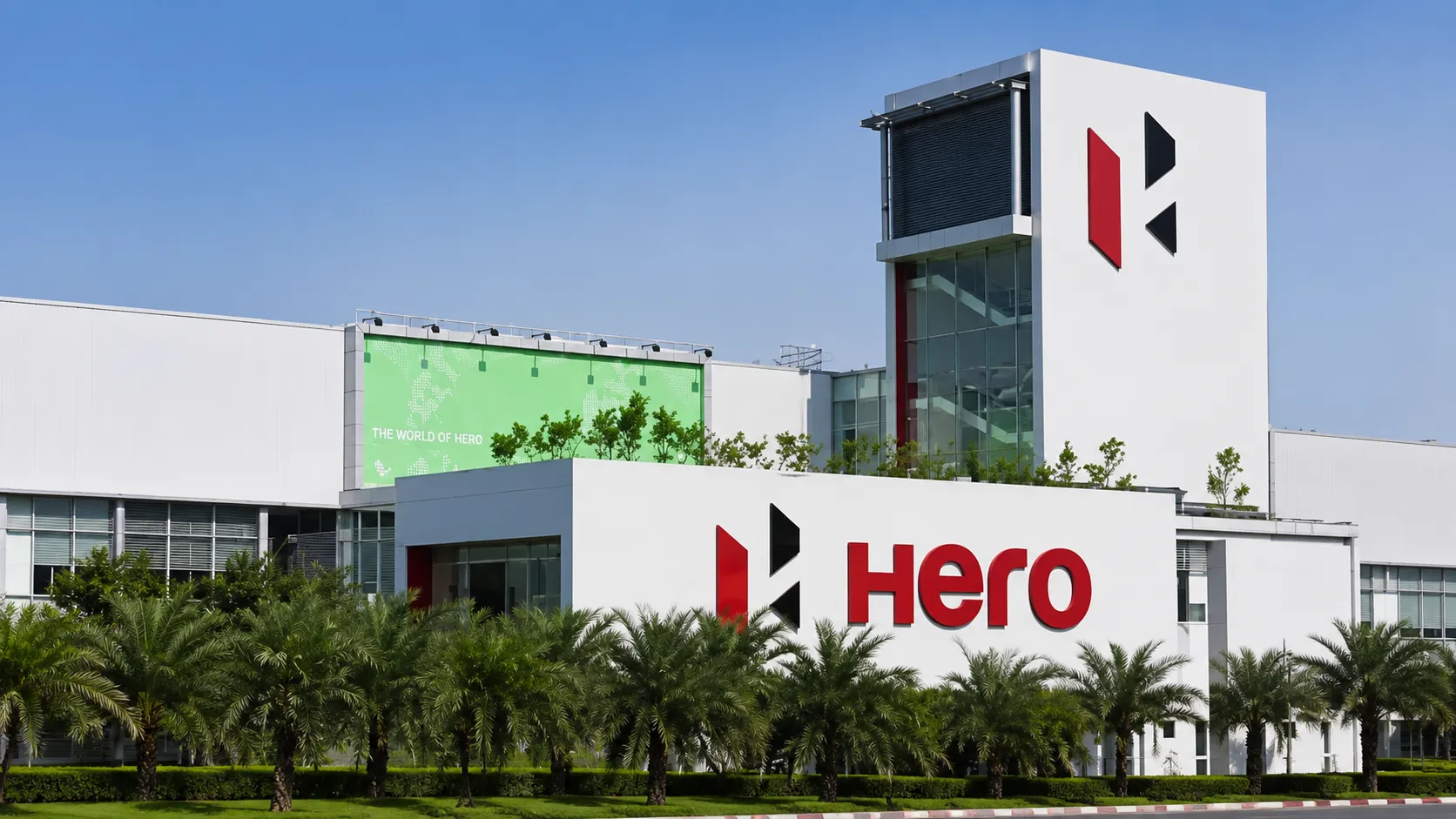
Beyond the immediate financial mechanics, Hero's move offers a genuinely interesting test case for how legacy Indian manufacturers navigate the broader global shift toward electric mobility. Rather than attempting to build every layer of EV technology entirely in-house — the approach taken by some competitors — Hero has opted for a hybrid strategy that combines organic investment in its own Vida brand with an increasingly large strategic stake in an independently operated, publicly listed associate company. If this approach proves successful, it could offer a template other legacy manufacturers, both within India's two-wheeler industry and in adjacent automotive segments, look to replicate: rather than choosing between building and buying EV capability, blend both approaches simultaneously, using the strategic investment to access technology and market positioning that would take considerably longer, and cost considerably more, to develop independently.
WHAT GLOBAL INVESTORS AND DIASPORA SHAREHOLDERS SHOULD WATCH
For NRI and global investors who track Indian equities as part of a broader emerging-markets or thematic clean-energy allocation, Hero's move offers a useful reminder that India's EV investment story extends well beyond the handful of pure-play EV startups that typically dominate international headlines. Hero MotoCorp itself, as one of India's largest and most widely held industrial stocks, offers indirect but meaningful EV exposure through precisely this kind of strategic stake-building, without requiring investors to take on the higher volatility and execution risk that comes with holding a pure-play, pre-profitability EV manufacturer directly. As Hero's ownership stake in Ather continues to grow with each successive funding round, the correlation between the two companies' fortunes is only likely to deepen further, making Hero's own quarterly results and management commentary an increasingly useful proxy for gauging sentiment across India's broader electric two-wheeler market as a whole. As the transaction moves through its remaining approval steps over the coming weeks, both companies' next quarterly results are likely to draw unusually close scrutiny from analysts trying to gauge whether Wednesday's enthusiastic market reaction reflects durable strategic logic or simply short-term momentum trading. Either way, the deal cements Hero-Ather as one of the more closely watched strategic relationships in Indian industry today, one that will likely serve as a template — for better or worse — for how other legacy manufacturers approach their own electric transitions in the years ahead. For now, the market's verdict on Wednesday's announcement was unambiguous: more capital, more confidence, and a record share price for the company on the receiving end of Hero's growing conviction.
---