On July 6, 2026, departments across the US federal government published a unified regulatory agenda for the year — a routine bureaucratic disclosure that, buried within its dense procedural language, signaled what could become the most consequential overhaul of America's employment and student visa system in years. The Department of Homeland Security and the Department of Labor are preparing a slate of changes targeting H-1B visas, F-1 student status, Optional Practical Training (OPT), and employment-based green card processing, with the bulk of the new rules expected to take effect around August 2026. For a country that sends more students and skilled workers to the United States than almost any other, and where H-1B visas, OPT employment, and F-1 study have functioned as a tightly interlinked pipeline from Indian classroom to American career, this regulatory agenda has landed like a genuine tremor across the Indian student and professional community.
The End of 'Duration of Status' for F-1 Students
Perhaps the single most consequential proposed change for current and prospective Indian students is the plan to move away from the long-standing 'Duration of Status' policy, which has historically allowed F-1 international students to remain in the United States for the full length of their academic program without needing to reapply for an extension, so long as they maintained their enrollment and academic standing. Under the proposed replacement, student visas would instead be issued with fixed, strict timelines. If a student's program runs longer than the initially granted window — whether due to a change of major, a research delay, a leave of absence, or simply a program that takes longer than the standard timeline to complete — they would be required to formally apply for an extension before their authorized stay expires.
This shift, while technical in its framing, carries real practical consequences. It introduces a recurring administrative and financial burden that does not currently exist for the majority of F-1 students, and it creates a new category of risk: students who miss an extension filing deadline, whether through bureaucratic delay, inadequate advising, or simple oversight, could fall out of lawful status through no fault of their academic performance. Immigration attorneys and university international student offices have flagged this as a change that will require significantly more proactive case management from institutions, and significantly more vigilance from students themselves, many of whom are managing a fixed-timeline visa process for the first time in their lives while also juggling coursework, research, and, in many cases, employment through OPT.
OPT and STEM OPT: The Bridge Gets Narrower
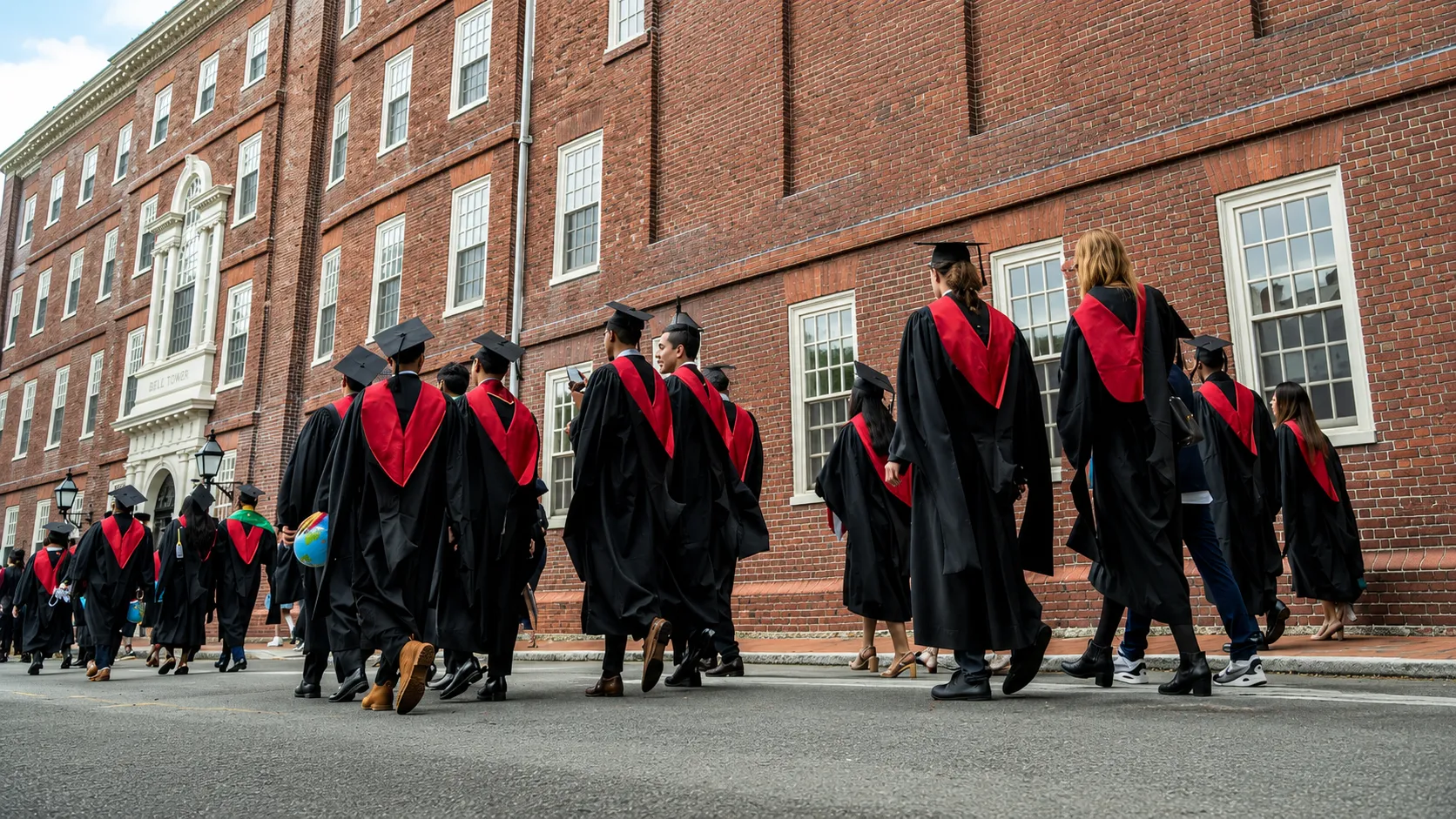
For Indian graduate students in particular, Optional Practical Training has functioned for years as the critical bridge between completing a degree and securing the kind of long-term employment authorization that eventually leads to an H-1B visa. Under current rules, F-1 students in STEM fields can work in the US for up to three years combined under standard OPT and the STEM OPT extension, providing a multi-year runway during which many students hope to be selected in the H-1B lottery and transition to longer-term status. The proposed changes are expected to tighten both eligibility criteria and employer compliance obligations for OPT and STEM OPT, alongside similar restrictions being considered for Curricular Practical Training (CPT), the related program that allows students to gain work experience while still enrolled.
Given that a substantial share of Indian graduate students specifically choose STEM fields — computer science, data science, engineering, and artificial intelligence among the most popular — partly because of the STEM OPT extension's additional runway, any meaningful tightening of this pathway has outsized implications for Indian enrollment decisions. Several immigration analysts have noted that OPT restrictions could prove more consequential for long-term Indian student interest in the US than headline-grabbing H-1B fee increases, precisely because OPT is the pathway nearly every Indian STEM graduate depends on regardless of whether they are ultimately selected in the H-1B lottery.