There is a particular kind of American story that Sridhar Vanka thought he was living: fourteen years, three major employers, a career built methodically across some of the biggest names in American technology — Tata Consultancy Services, Amazon, and finally Meta. Then, in May, he became one of roughly 8,000 employees swept up in Meta's latest round of layoffs, and the story he thought he was living turned out to have a hard stop built into it all along.
Vanka, a former technical program manager at Meta, detailed what happened next in a LinkedIn post that has since traveled far beyond his own professional network, surfacing on X and across Indian and American media as one of the more widely discussed individual case studies yet in the renewed national argument over H-1B visas. “Late to the game here but I was impacted by Meta's last round of layoffs in May this year,” he wrote. “The clock has now run out on my immigration status here in the US so I have had to make the difficult decision to move my family back to India.”
The mechanism that ended his American chapter is, by design, unforgiving and precise. Under current U.S. immigration rules, H-1B visa holders who lose their jobs are granted a grace period of up to 60 days to find a new employer willing to sponsor their status. Miss that window, and the visa holder is expected to leave the country — regardless of how many years they have lived, worked, paid taxes, and raised children on American soil. For Vanka, that 60-day countdown began the moment Meta's layoff notice landed, and despite what he described as several weeks of active job searching, it ran out before he found another sponsor.
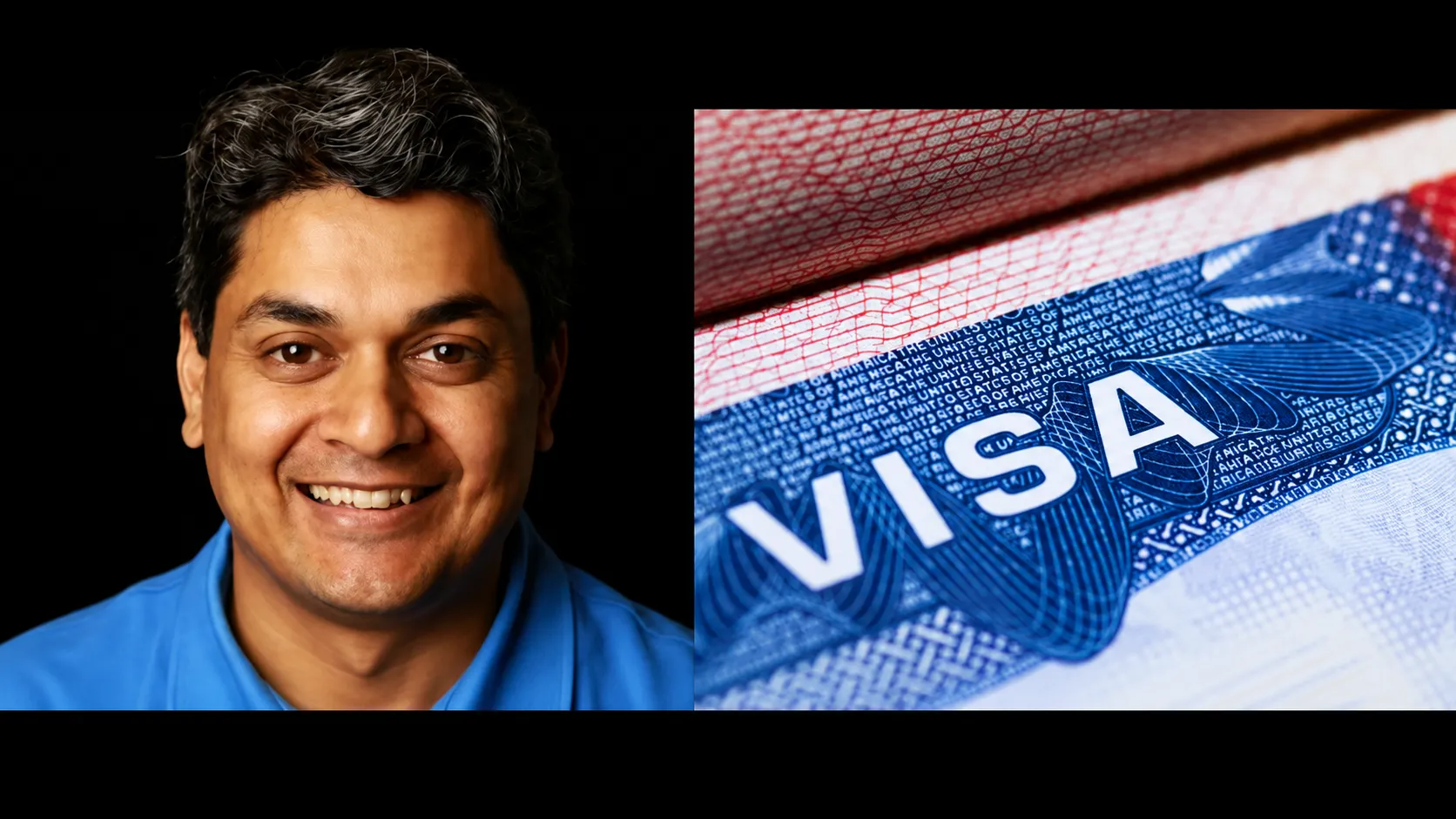
He characterized the seven weeks between the layoff and his decision to leave as an “emotional roller coaster,” filled with what he called hope, anxiety, uncertainty, and long waits — the texture of a job search conducted under a deadline that had nothing to do with his qualifications and everything to do with a visa category's built-in fragility. “My family is now wrapping up a life we built here in the US over the last 14 years and looking to start over in Hyderabad starting next week,” he wrote. “A lot of wonderful memories and friendships — these last couple of weeks have been gut-wrenching.” He added that his immigration status had become, in his words, a central complication in nearly every job conversation he had during the search — employers weighing not just his skills but the administrative burden and cost of sponsoring a new H-1B holder in an increasingly cautious hiring environment.
The post's reach expanded significantly after the account LayoffAI shared excerpts on X, framing Vanka's experience as illustrative of a structural problem rather than an isolated hardship. “Meta cut him in May. The 60-day clock did the rest. His family starts over in Hyderabad next week,” the account wrote, alongside a pointed observation: Vanka's résumé — TCS, Amazon, and Meta — traced a path through three of the largest H-1B sponsors in the country, companies that, according to LayoffAI's tally, have collectively filed more than 333,000 Labor Condition Applications since fiscal year 2015. Another widely shared commentary account, LayoffHedge, distilled the underlying tension even more bluntly: “a temporary visa that runs 14 years is not temporary.”
That framing points to the deeper structural bind at the center of Vanka's story, and thousands of stories like it. The H-1B program grants 85,000 new visas annually through its regular lottery and advanced-degree pool, but the far larger and more consequential bottleneck sits downstream, in the employment-based green card backlog — a queue that, for applicants born in India, can now stretch well beyond a decade due to per-country caps that were never designed for a labor market as dominated by Indian professionals as the American tech sector has become. The practical effect is a population of highly skilled workers who spend well over a decade in the United States on what is legally classified as a “temporary” visa, their entire ability to remain contingent, at every renewal cycle and every employer transition, on continued sponsorship.
Vanka's case landed in a moment when that fragility has been exposed at scale. Meta began notifying employees of its most recent layoffs on May 20, part of a broader plan to cut roughly 10 percent of its workforce, and it was hardly alone: according to data compiled by Layoffs.fyi and cited in subsequent coverage, more than 110,000 employees had already lost their jobs across 144 technology companies in 2026 by early summer, a wave that immigration attorneys and advocates say has disproportionately destabilized the H-1B population working at large tech employers. Reporting from The American Bazaar in the weeks following Vanka's post documented a pattern repeating across the industry: laid-off H-1B workers scrambling to secure new sponsorship within their 60-day window, some attempting to switch temporarily to B-2 visitor status to buy additional time, others simply beginning the process of winding down American lives built over a decade or more.
A parallel trend has emerged on the other side of that displacement. A recent survey conducted on Blind, the anonymous professional networking platform, of more than 1,270 verified professionals found that 53 percent had witnessed colleagues undertake what researchers are now calling “reverse migration” to India — workers pushed out of the U.S. job market finding re-employment in India, often through the country's rapidly expanding Global Capability Centers, but frequently at a fraction of their former American salaries. One H-1B professional, writing anonymously on the same platform, summarized the mood bluntly: “The 2026 visa changes and $100k fee have made staying in the U.S. feel like a trap.” That reference is to a proclamation imposing a steep new fee on new H-1B petitions, part of a broader tightening of the visa's terms that has coincided with the layoff wave to squeeze workers from both directions — fewer new entries, and less cushion for those already inside the system when they lose a job.
Vanka's story does not exist in isolation from the policy environment shaping it. It arrives amid a parallel federal push — detailed separately in the Trump administration's newly launched H-1B and PERM fraud investigation — to scrutinize the very visa category that built his career, even as individual cases like his illustrate the human cost when that category's built-in fragility collides with an ordinary corporate layoff. For every headline about fraud investigations or policy fights in Washington, there is a quieter, more granular version of the same story playing out in family kitchens: boxes being packed, schools being unenrolled from, and a 60-day clock ticking down to zero.
What makes Vanka's post resonate, according to those who have amplified it, is precisely its ordinariness. He was not, by his own account, at the center of any controversy — no fraud allegation, no performance dispute, simply a company-wide layoff intersecting with a visa category that offers almost no margin for that kind of disruption. For a large and largely invisible population of Indian professionals who have spent a decade or more building careers, homes, and families in the United States on H-1B status, his story functions less as an exception than as a preview: a reminder that in the current system, the difference between a stable American life and a sudden, forced departure can come down to nothing more than which two months a layoff happens to land in.


