SEO Title: Google Play Accelerator India 2026: Full List Of 20 Selected AI Startups And What It Means
Meta Description: Google has selected 20 AI-powered Indian startups for its 2026 Play Accelerator India cohort, spanning healthcare, agritech, gaming, fintech and education.
---
Every year, Google's decision on which startups to admit into its Play Accelerator India programme functions as something close to a weather vane for where the company believes India's next wave of app innovation is headed. For 2026, the signal is unambiguous: artificial intelligence is no longer a differentiator that a handful of ambitious founders bolt onto their pitch decks — it is now the baseline expectation across sectors as varied as agriculture, healthcare, gaming and small-business finance.
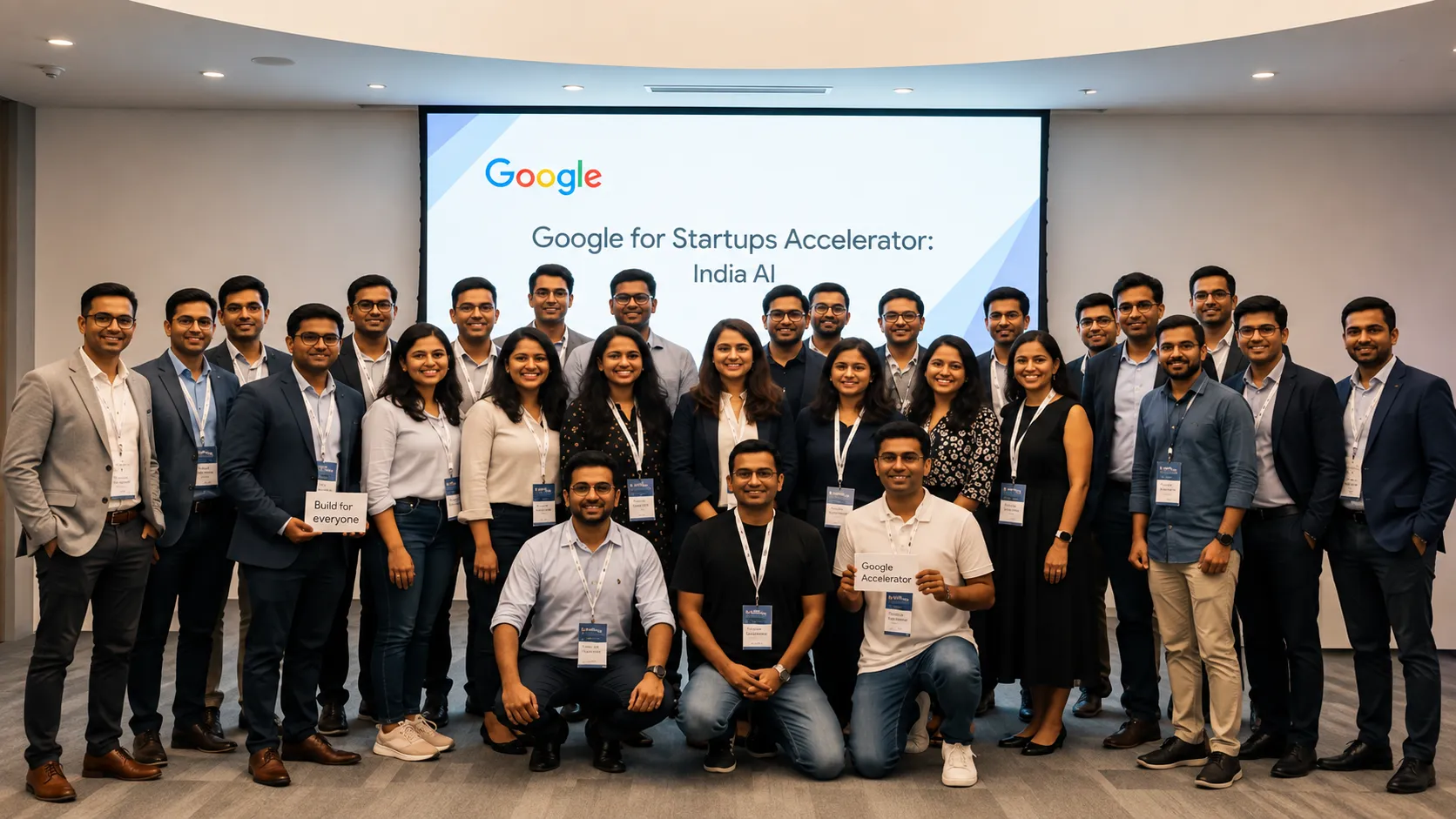
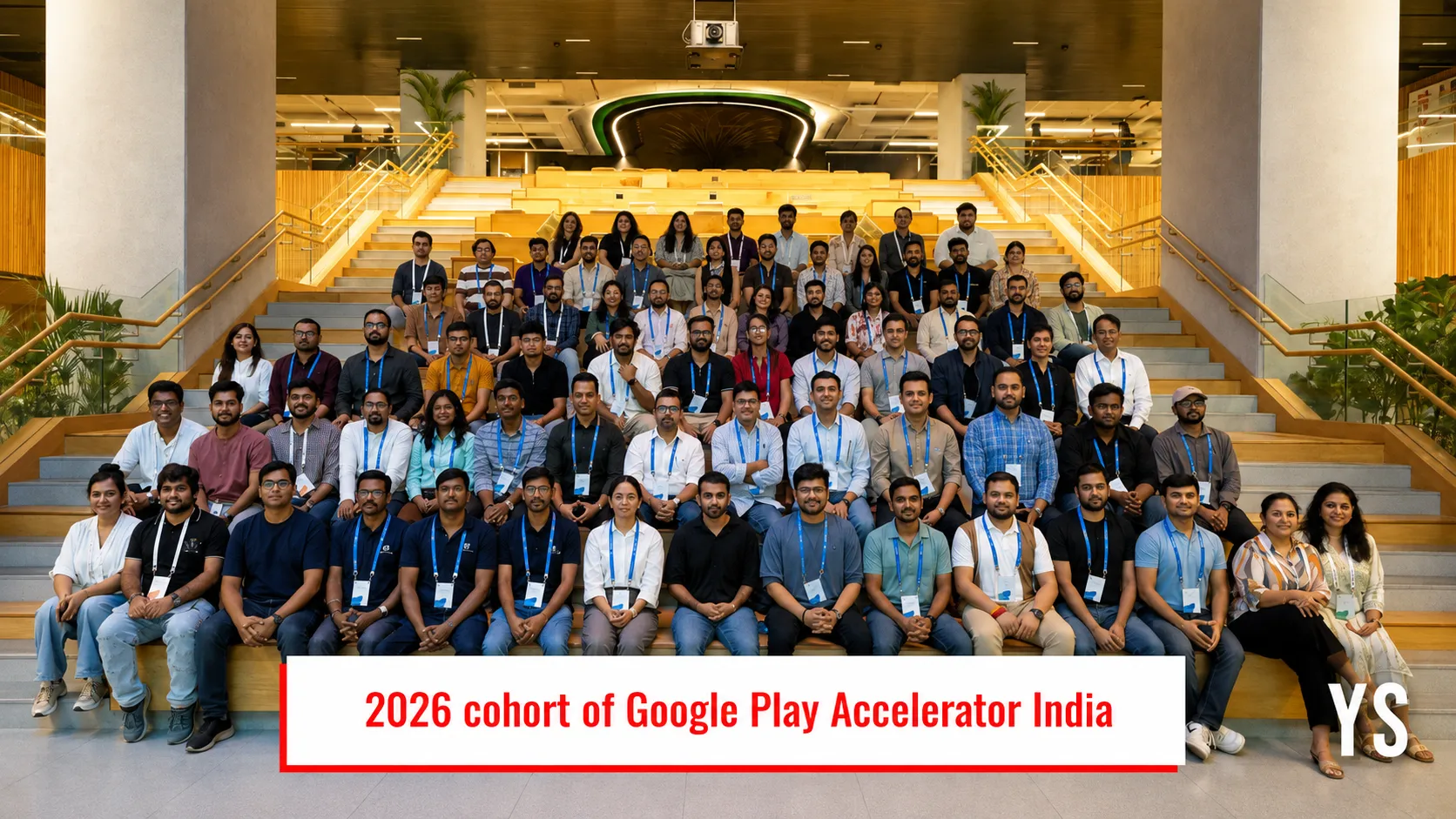
Google has announced the 2026 cohort of its Play Accelerator India programme, selecting 20 AI-powered startups for a three-month, equity-free initiative that will provide founders with hands-on mentorship in AI integration, app quality, security, growth and monetisation. The selected companies span sectors including education, healthcare, gaming, agriculture, finance, e-commerce, productivity, lifestyle and entertainment — a spread wide enough to function as a rough cross-section of where Indian technology entrepreneurship is currently placing its bets.
The Cohort, And What It Reveals
The 2026 class includes Chaupal, ChennaiGames, Dalvoy, Frontier Markets, GAPE Labs, Grape, HeyDoc AI, Kisanwala, Lingopanda, LUZO, Machaxi, MetaShot, MindYourLogic Studios, MrMed, Plutus Labs, Regain, Swipe, UrbanPro, Zave AI and Zet. Read closely, the list functions almost like a map of where founders believe AI can compress years of manual effort into something an app can do automatically: HeyDoc AI and MrMed target gaps in healthcare access; Kisanwala and Frontier Markets aim at agricultural and rural finance use cases; UrbanPro and Lingopanda are building in education; ChennaiGames and MetaShot represent the gaming and entertainment vertical; and fintech ventures Swipe and Zet are focused on helping small businesses get paid faster and more reliably.
According to Google, the selected startups are using AI to address practical, often unglamorous problems — improving access to chronic healthcare management, supporting farmers with decision-making tools, personalising exam preparation for students navigating India's brutally competitive testing culture, enhancing sports coaching, and speeding up digital payments for small merchants. That emphasis on practical utility over novelty is a deliberate framing choice by Google, and one that reflects a broader maturation in how AI-focused pitches are being evaluated by both accelerators and investors in 2026: the era of AI-as-buzzword has given way, at least at the more disciplined end of the ecosystem, to AI-as-measurable-efficiency-gain.
What The Programme Actually Offers
Unlike many accelerator programmes that trade mentorship for equity, Google Play Accelerator India remains structured as an equity-free initiative — participating founders give up no ownership stake in exchange for the three months of support, which is instead positioned as an extension of Google's broader strategic interest in strengthening the pipeline of high-quality apps built on its platform. The programme combines expertise from the Google Play team with access to the wider Google technology ecosystem, intended to help Indian developers build products that are not just functional for the domestic market but genuinely competitive on international app stores.
"Through Google Play Accelerator India, we want to support founders across the full journey, from product quality and AI integration to growth, security, monetisation and global scale," said Aditya Swamy, Managing Director of Google Play Partnerships. That framing — full journey rather than single-point intervention — reflects lessons Google appears to have absorbed from earlier cohorts of the programme, where founders reportedly found the greatest value not in any single mentorship session but in the compounding effect of structured guidance across product, security and monetisation simultaneously.
Paul Ravindranath, Regional Lead for Developer and Startup Programs at Google, framed the accelerator's purpose in terms of timing rather than just content. "Over the next three months, we will work closely with these founders on product quality, responsible AI integration, security, growth and monetisation, helping them strengthen their apps for users in India and global markets," Ravindranath said, describing the initiative as designed to provide practical support to high-potential app and gaming companies at what he called a critical stage of their growth journey. The implicit argument is that the accelerator is most valuable not at the earliest idea stage, nor after a startup has already achieved significant scale, but in the specific middle window where a product has found some traction and needs disciplined support to avoid the common failure modes of premature or poorly executed scaling.
Why "Responsible AI Integration" Is Doing A Lot Of Work In That Sentence
It is worth pausing on the specific phrase Google's executives used — "responsible AI integration" — because it signals an institutional awareness that AI adoption among smaller startups carries risks that go beyond simple product execution. As large language models and generative AI tools have become commodity infrastructure accessible to any developer with an API key, the barrier to bolting an AI feature onto an app has collapsed. What has not collapsed is the difficulty of doing so safely: managing hallucination risk in consumer-facing applications, protecting user data that AI systems ingest for personalisation, and avoiding the kind of overpromising that has burned early AI-native startups in other markets when their products failed to perform as advertised.
For an accelerator explicitly built around helping startups integrate AI, addressing that governance layer alongside the growth-and-monetisation layer is not incidental — it is close to the core value proposition. A healthcare startup like HeyDoc AI, for instance, operates in a domain where an AI system's errors carry meaningfully higher stakes than in, say, a gaming or entertainment context, and Google's stated emphasis on security and responsible integration suggests the mentorship structure is designed to differentiate its treatment of startups by the sensitivity of their use case rather than applying a single generic AI playbook across all twenty companies.
The Bigger Picture: India's App Economy At An Inflection Point
Zooming out from the specifics of this cohort, the 2026 Play Accelerator India selection sits within a broader story about the maturation of India's app economy. For much of the past decade, Indian app development has been characterised by two dominant modes: hyper-localised consumer apps chasing scale through aggressive user acquisition, and enterprise software increasingly built for export to Western markets. What the 2026 cohort suggests is the emergence of a third mode — AI-native applications built first for Indian-specific problems (rural credit access, vernacular exam preparation, hyperlocal healthcare gaps) but architected from the outset with an eye toward international relevance, leveraging AI's capacity to abstract away some of the localisation costs that previously made cross-border expansion prohibitively expensive for smaller teams.