Magazine10 MIN READ

From Wristwatches To ₹3.6 Lakh Crore: The Quiet Reinvention Of Titan Company

Once a modest Tata watchmaking venture, Titan has grown into the group's second most valuable company, crossing ₹50,000 crore in FY25 revenue and adding another ₹25,000 crore in FY26 as it expands...

By Nisha Omkumar · Author25 July 2026Feature
From Wristwatches To ₹3.6 Lakh Crore: The Quiet Reinvention Of Titan Company

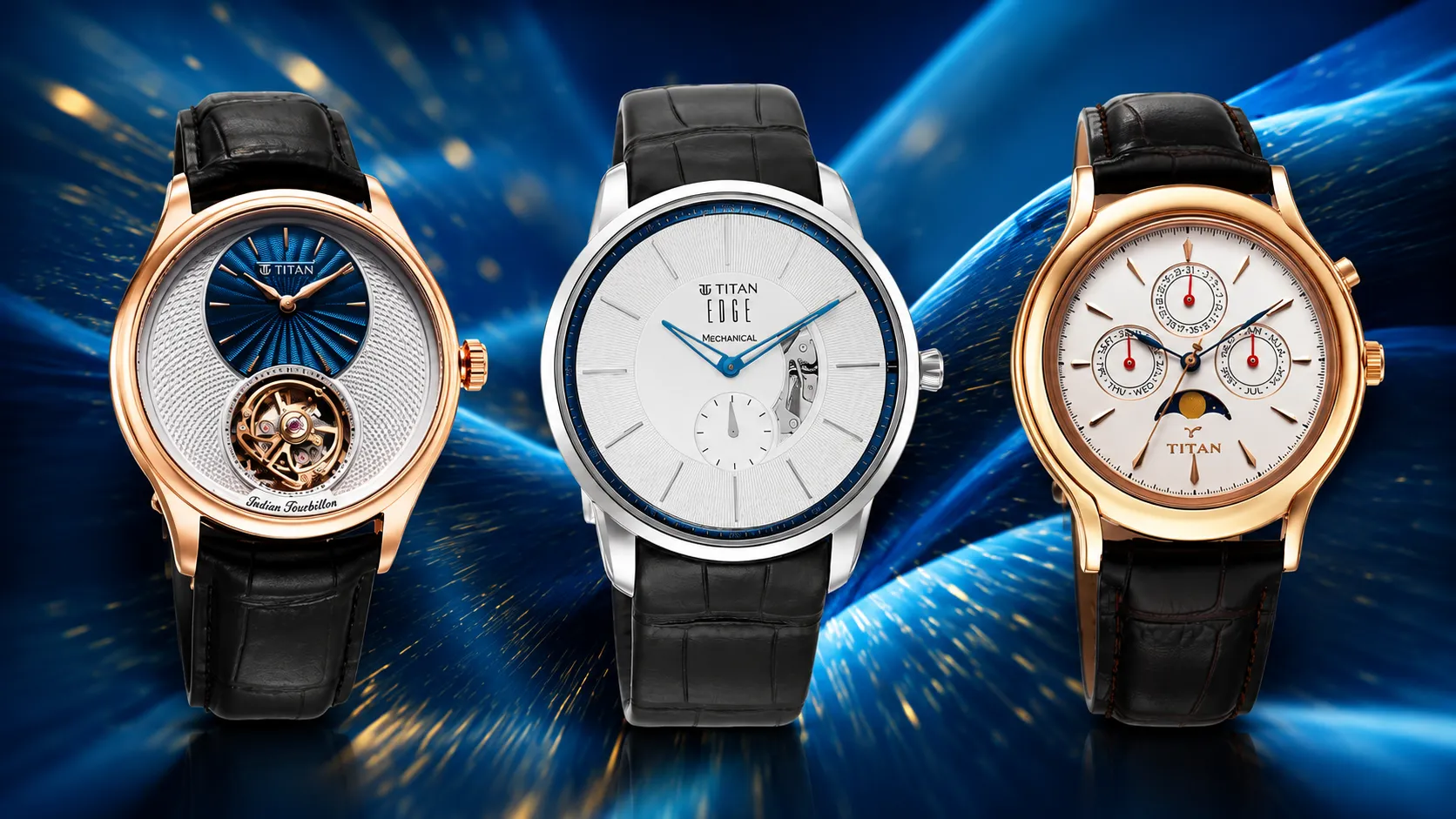
Somewhere between the launch of its very first quartz wristwatch in 1987 and its current standing as one of India's most valuable consumer companies, Titan quietly executed one of the more remarkable second acts in Indian corporate history — a transformation so thorough that the company's current identity, dominated by jewellery, eyewear, and lifestyle products, bears only a passing resemblance to the modest watchmaking joint venture between the Tata Group and Tamil Nadu Industrial Development Corporation that first put the Titan name on Indian wrists nearly four decades ago. Today, Titan stands as the Tata group's second most valuable listed company after Tata Consultancy Services, commanding a market capitalisation of nearly ₹3.6 lakh crore — a scale that places it firmly among India's most closely watched consumer businesses, and one that offers a genuinely instructive case study in sustained, disciplined corporate reinvention.

The numbers underpinning this current chapter of Titan's story are striking on their own terms. The company crossed ₹50,000 crore in revenue in FY25, and added another roughly ₹25,000 crore in FY26 alone — a pace of growth that would be remarkable for almost any large-cap Indian consumer company, let alone one whose origins lie in a product category, watches, that today represents only a modest fraction of its overall business. That divergence between Titan's origin story and its current revenue composition is, in many ways, the entire point of the Titan reinvention narrative: a company that built its initial brand trust and operational capability around one category, and then systematically, patiently redeployed that trust and capability across an expanding portfolio of adjacent consumer categories, each chosen with evident strategic discipline rather than opportunistic diversification.

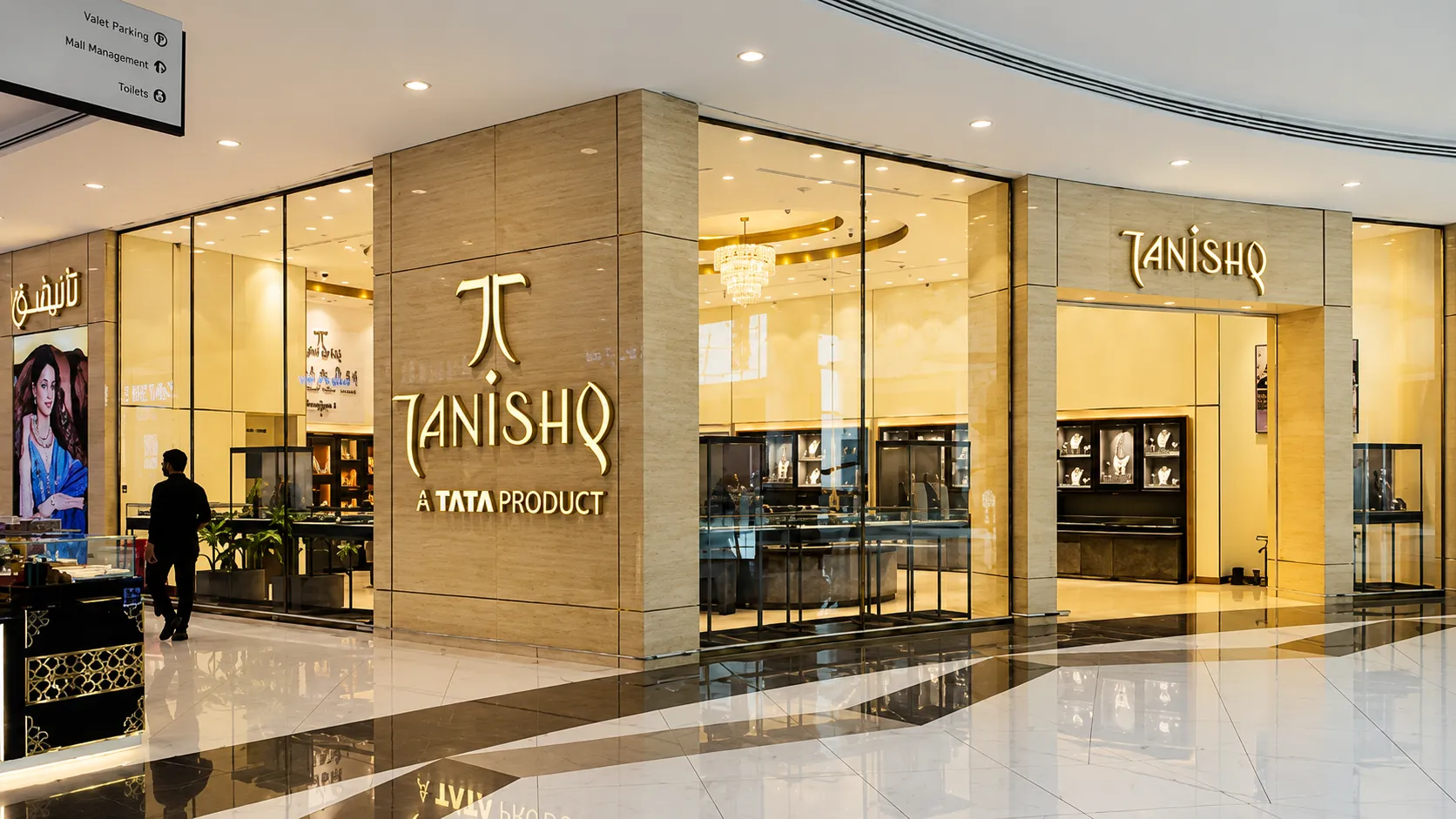
Jewellery, through the Tanishq brand and its associated sub-brands, has long been the primary engine of this transformation, and remains by a considerable margin the largest contributor to Titan's overall revenue base today. Tanishq's own history offers a useful window into how deliberately Titan has approached category expansion throughout its evolution: launched in the early 1990s at a moment when India's jewellery market remained overwhelmingly dominated by small, unbranded, often family-run local jewellers, Tanishq represented a genuinely novel proposition — branded, hallmarked, quality-assured jewellery backed by the trust of the Tata name, sold through a growing network of company-owned and franchised retail outlets that offered Indian consumers a fundamentally different jewellery buying experience than the traditional, relationship-driven local jeweller model that had dominated the market for generations. That proposition took years to gain full traction, requiring Titan to navigate the inherent challenge of asking Indian consumers, for whom jewellery purchases carry deep cultural, familial, and often multi-generational trust dynamics, to shift toward a corporate brand rather than a trusted family jeweller — but the eventual payoff has been a business that today stands as India's largest organised jewellery retailer by a significant margin, with Tanishq widely regarded as one of the most successful brand-building exercises in Indian retail history.

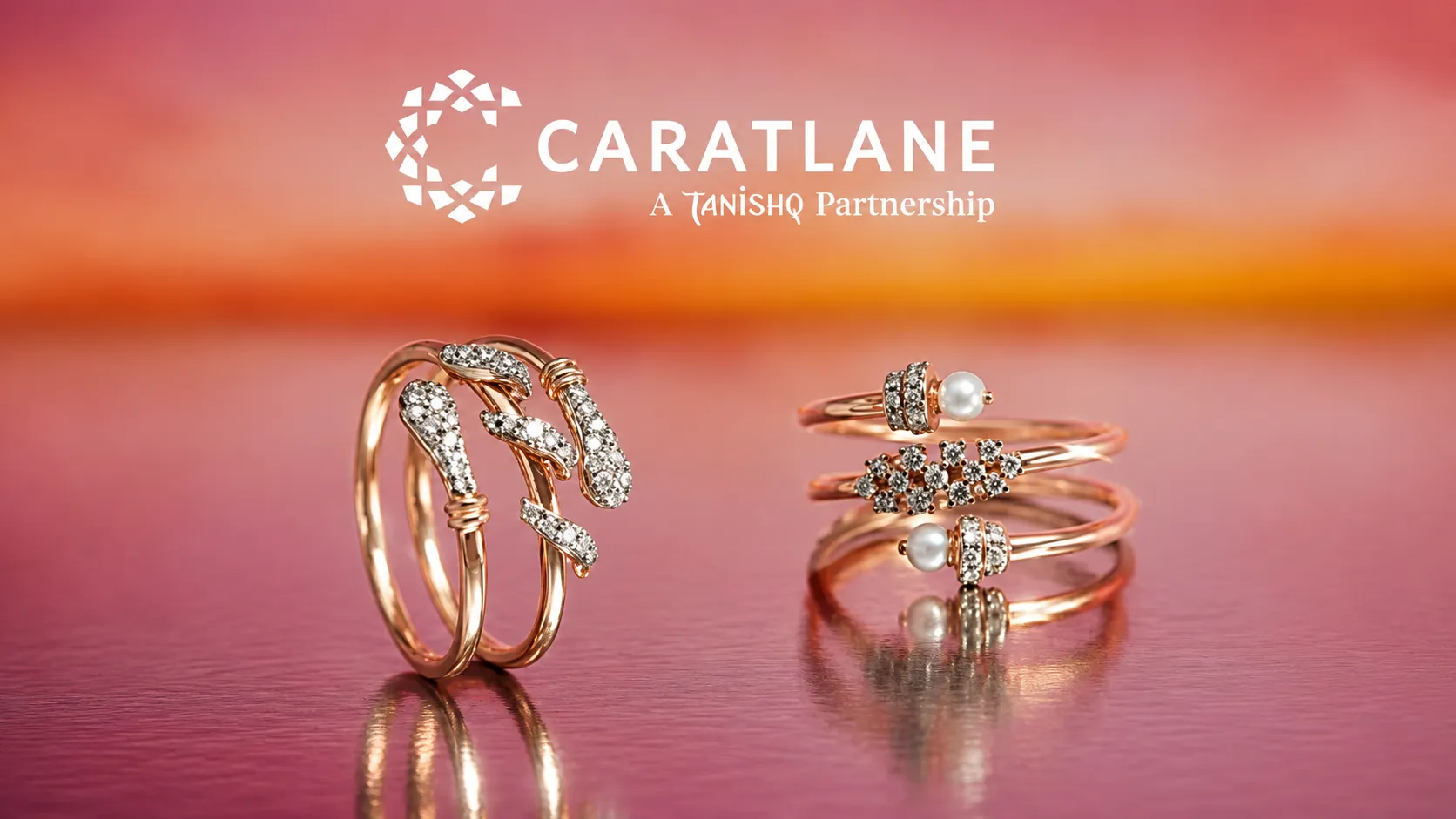
Beyond Tanishq itself, Titan's jewellery portfolio has continued to diversify into complementary sub-brands targeting distinct consumer segments and price points. Zoya, positioned at the premium, luxury end of the jewellery market, targets India's growing base of high-net-worth consumers seeking bespoke, design-forward fine jewellery. Mia, by contrast, targets younger, working professional women with more contemporary, workplace-appropriate jewellery designs at more accessible price points than Tanishq's core offering. CaratLane, acquired by Titan in stages beginning in the mid-2010s, has given the group a genuinely strong position in the omnichannel and digitally native segment of jewellery retail, combining an online-first customer acquisition model with an expanding network of physical stores designed to let customers experience products in person before or after browsing online — a hybrid retail model that has proven particularly effective in reaching younger, digitally comfortable Indian consumers who nonetheless still value the ability to physically examine jewellery before completing a significant purchase, and one that other Titan brands have since studied closely as they build out their own omnichannel capabilities across an increasingly digitally influenced Indian consumer journey, from initial product discovery through to final in-store purchase completion, a journey that Titan's brand teams now treat as a single, continuous experience rather than a set of disconnected touchpoints to be optimised in isolation, reflecting a broader shift in how India's most sophisticated consumer companies now think about customer engagement, treating every single channel not as a separate business line to be measured on its own terms but as one thread in a single, unified brand relationship with the Indian consumer.
ChatGPT Image Jul 25, 2026, 05_20_20 PM.png

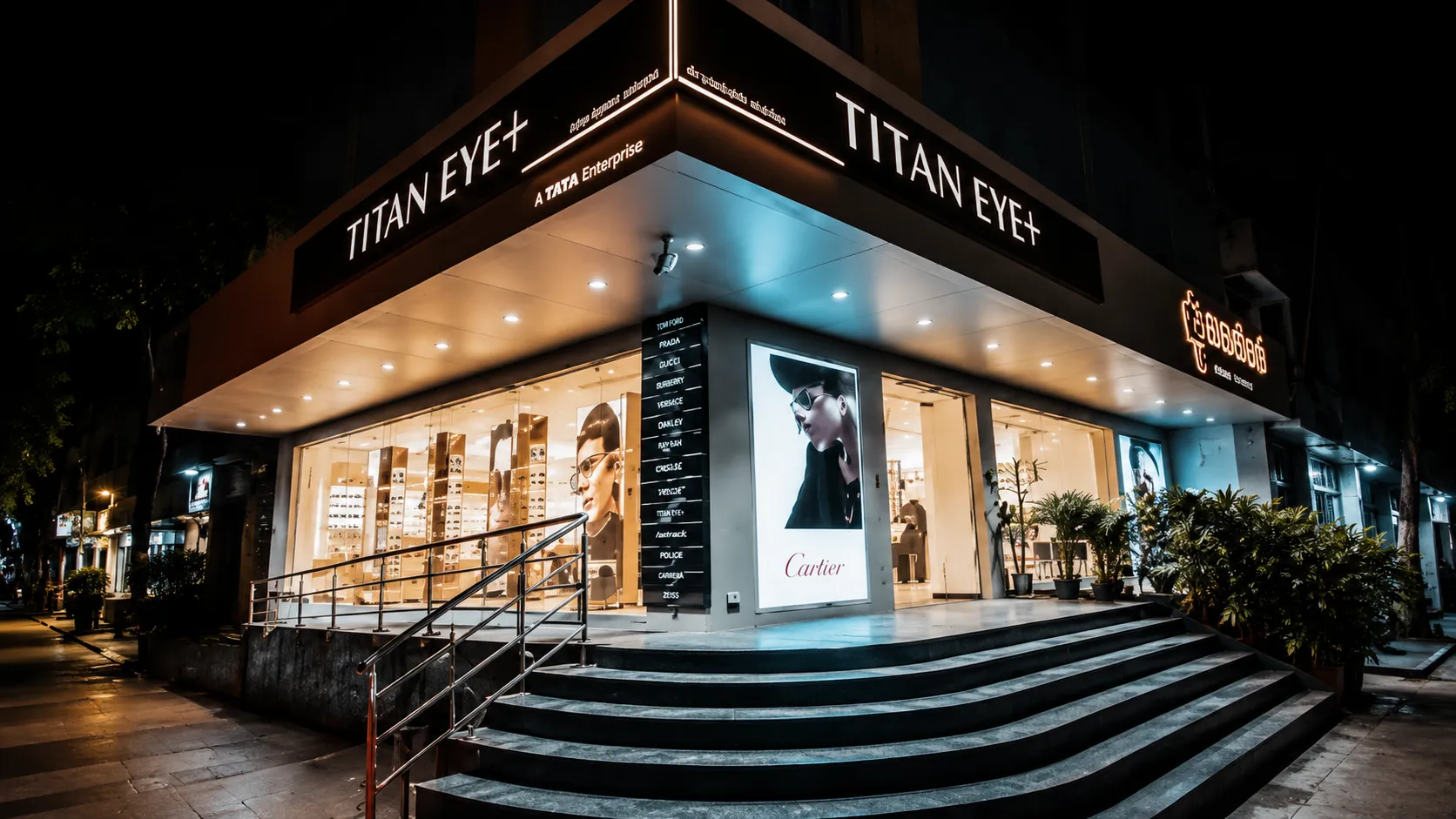
Titan's diversification beyond jewellery has followed a similarly deliberate, adjacency-driven logic. Eyewear, through the Titan Eye+ brand, represented an early and successful expansion into a category that leveraged the company's existing retail infrastructure, brand trust, and consumer relationships built through its watch and jewellery businesses, while addressing a large, historically underserved Indian market for quality prescription eyewear and sunglasses. Fragrances represent a more recent expansion, tapping into Titan's brand equity in the broader personal accessories and lifestyle space to build a presence in India's growing premium and mass-premium fragrance market, a category that has seen increasing consumer interest as disposable incomes rise and Indian consumers increasingly embrace personal grooming and lifestyle products as part of broader aspirational consumption patterns. Ethnic wear and handbags represent further recent extensions of this same strategic logic, each chosen to leverage Titan's existing retail footprint, brand trust, and understanding of Indian consumer aesthetics and purchasing occasions, rather than representing a scattershot, opportunistic entry into unrelated categories.

Global market expansion adds a further dimension to Titan's current growth story, one that has become increasingly significant as the company's domestic Indian market, while still offering substantial room for continued growth, has matured to the point where international expansion offers an important additional avenue for sustained growth at the company's current scale. Titan has pursued international expansion primarily through markets with significant Indian diaspora populations — the Gulf states, parts of Southeast Asia, and other regions with substantial Indian expatriate communities who represent a natural, culturally aligned customer base for Titan's jewellery and watch offerings, given the deep cultural resonance these product categories carry within Indian and broader South Asian consumer traditions, even among diaspora populations who may be several generations removed from direct residence in India itself.
Beyond Tanishq itself, Titan's jewellery portfolio has continued to diversify into complementary sub-brands targeting distinct consumer segments and price points.
Magazine Desk

The broader strategic logic underpinning Titan's multi-decade reinvention offers genuinely instructive lessons for how large, established consumer companies can successfully navigate category expansion without diluting the core brand trust and operational discipline that made their original business successful in the first place. Rather than pursuing diversification through acquisition of unrelated businesses, a strategy that has proven challenging for many diversified conglomerates globally to execute successfully, Titan has consistently expanded into categories that share meaningful adjacencies with its existing capabilities — retail operations expertise, brand trust built over decades, design and merchandising capability, and deep understanding of Indian consumer purchasing occasions and cultural contexts — allowing each new category expansion to benefit from, and in turn reinforce, the company's existing strengths rather than requiring it to build entirely new organisational capabilities from scratch.

This disciplined approach to category expansion has also allowed Titan to maintain what analysts covering the stock consistently describe as unusually strong corporate governance and capital allocation discipline relative to many Indian consumer companies of comparable scale, a characteristic widely attributed to the broader Tata group's well-established governance culture and long-term orientation toward business building, in contrast to the more aggressive, short-term-oriented growth strategies that have characterised some other Indian consumer and retail companies over the same multi-decade period. This governance reputation has, in turn, supported Titan's consistently premium valuation multiple relative to many domestic and international consumer company peers, with investors generally willing to pay a premium for the combination of proven category expansion execution, strong brand equity, and the broader trust associated with Tata group ownership and oversight.

ChatGPT Image Jul 25, 2026, 05_21_42 PM.png

Titan's performance also carries broader significance for how analysts and investors think about India's consumption growth story more broadly, at a moment when India Inc. is navigating what business confidence surveys have characterised as a genuinely complex environment shaped by global uncertainty, volatile commodity prices, and shifting consumer behaviour patterns. Titan's continued strong growth through this environment — expanding revenue at a pace that has added tens of thousands of crores in incremental revenue across consecutive fiscal years — offers a data point suggesting that, notwithstanding near-term macro headwinds affecting specific sectors like energy-import-dependent industries or export-oriented businesses navigating trade policy uncertainty, India's underlying consumer discretionary spending growth story, particularly in premium and aspirational categories like the jewellery, eyewear, and fragrance segments Titan has built its current portfolio around, remains genuinely robust.

Titan's approach to retail infrastructure and store network expansion has itself evolved considerably alongside its category diversification, offering a further window into the company's disciplined execution culture. Rather than pursuing rapid, undisciplined store count expansion purely to chase headline growth metrics, Titan has generally favoured a more measured approach to physical retail expansion, prioritising store productivity, location quality, and format optimisation across its various brands over sheer store count, a discipline that has helped the company maintain healthy unit economics across its retail network even as it has expanded into an increasing number of tier-two and tier-three Indian cities where consumer purchasing power for premium jewellery, eyewear, and lifestyle products has grown substantially over the past decade, driven by broader income growth and the aspirational consumption patterns that have accompanied India's expanding middle class.

Digital transformation across Titan's various brands represents a further dimension of the company's ongoing evolution, with the CaratLane acquisition in particular giving the broader group meaningful capability and learning in omnichannel retail execution that has since been extended, to varying degrees, across the Tanishq, Titan Eye+, and other brand portfolios, as the company has worked to ensure its digital and physical retail channels function as complementary, integrated parts of a unified customer journey rather than as separate, competing sales channels — an integration challenge that has proven genuinely difficult for many traditional, physical-retail-first companies globally to execute successfully, but one Titan appears to have navigated with reasonable success relative to comparable Indian retail peers.

Looking ahead, Titan's next phase of growth will likely continue to test the company's core strategic playbook of disciplined, adjacency-driven category expansion combined with deepening international presence, even as the company navigates an increasingly competitive Indian jewellery and lifestyle retail landscape that has, in recent years, attracted growing competition from other organised jewellery retailers seeking to replicate elements of Tanishq's successful branded jewellery model, alongside continued evolution in how Indian consumers, particularly younger, digitally native shoppers, discover and purchase jewellery, eyewear, and lifestyle products across an increasingly fragmented and digitally mediated retail landscape. The forthcoming India's Most Sustainable Companies special coverage, in which Titan has itself been spotlighted as one of India's most remarkable long-term corporate success stories, has framed the company's next phase of reinvention around exactly these questions of continued execution discipline: whether the demerger-adjacent focus that has served older-economy conglomerates like Vedanta well in unlocking shareholder value has any lessons for how Titan itself structures its expanding, multi-brand portfolio going forward, and whether the company's next chapter will be defined more by continued organic category expansion of the kind that has served it so well for four decades, or by an increasing willingness to pursue acquisitions and strategic partnerships as the more organic, adjacency-driven playbook faces diminishing returns in an Indian consumer retail landscape that has grown considerably more organised and competitive since Titan first began building Tanishq into a household name.

ChatGPT Image Jul 25, 2026, 05_23_29 PM.png

Whether Titan can sustain its multi-decade track record of successful category expansion into this next, more competitively contested phase of growth will likely determine whether the company's remarkable four-decade reinvention story continues to be told in similarly impressive terms a decade from now, or whether the easier phase of that reinvention — building genuinely differentiated positions in categories with comparatively less organised competition — gives way to a harder, more incrementally fought battle for continued market share gains in an Indian consumer retail landscape that Titan itself has played a significant role in professionalising and organising over the past several decades.

TagsTitanCompanyTataGroupTanishqCaratLaneTitanEyewearIndianJewelleryConsumerBrandsIndiaBusinessTransformationTataInvestmentsRetailIndia

Reader reviews

Sign in to rate and review this article.
Loading reviews…


