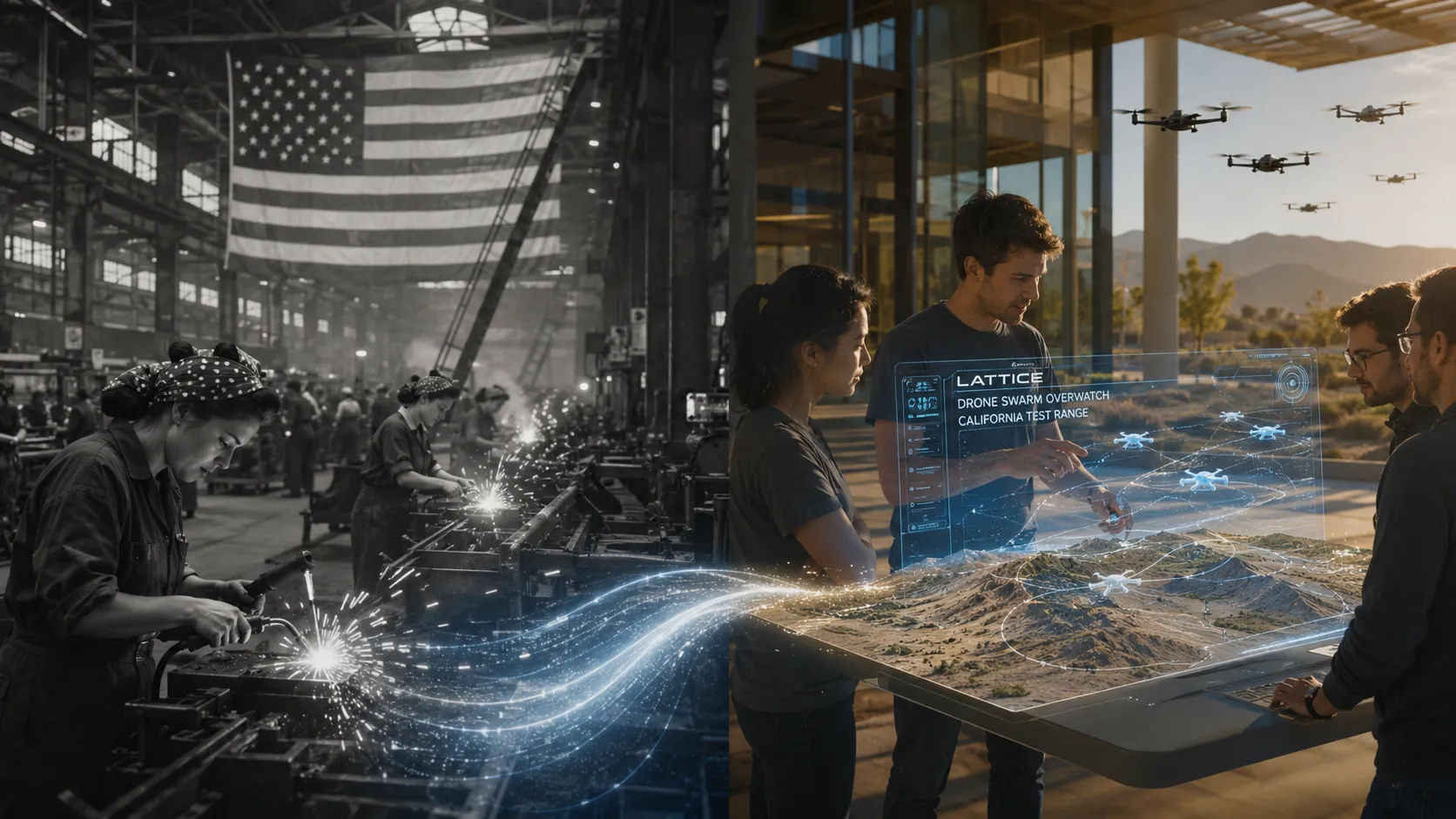
From Software to Security: How Anduril Is Reinventing the Modern Defense Business
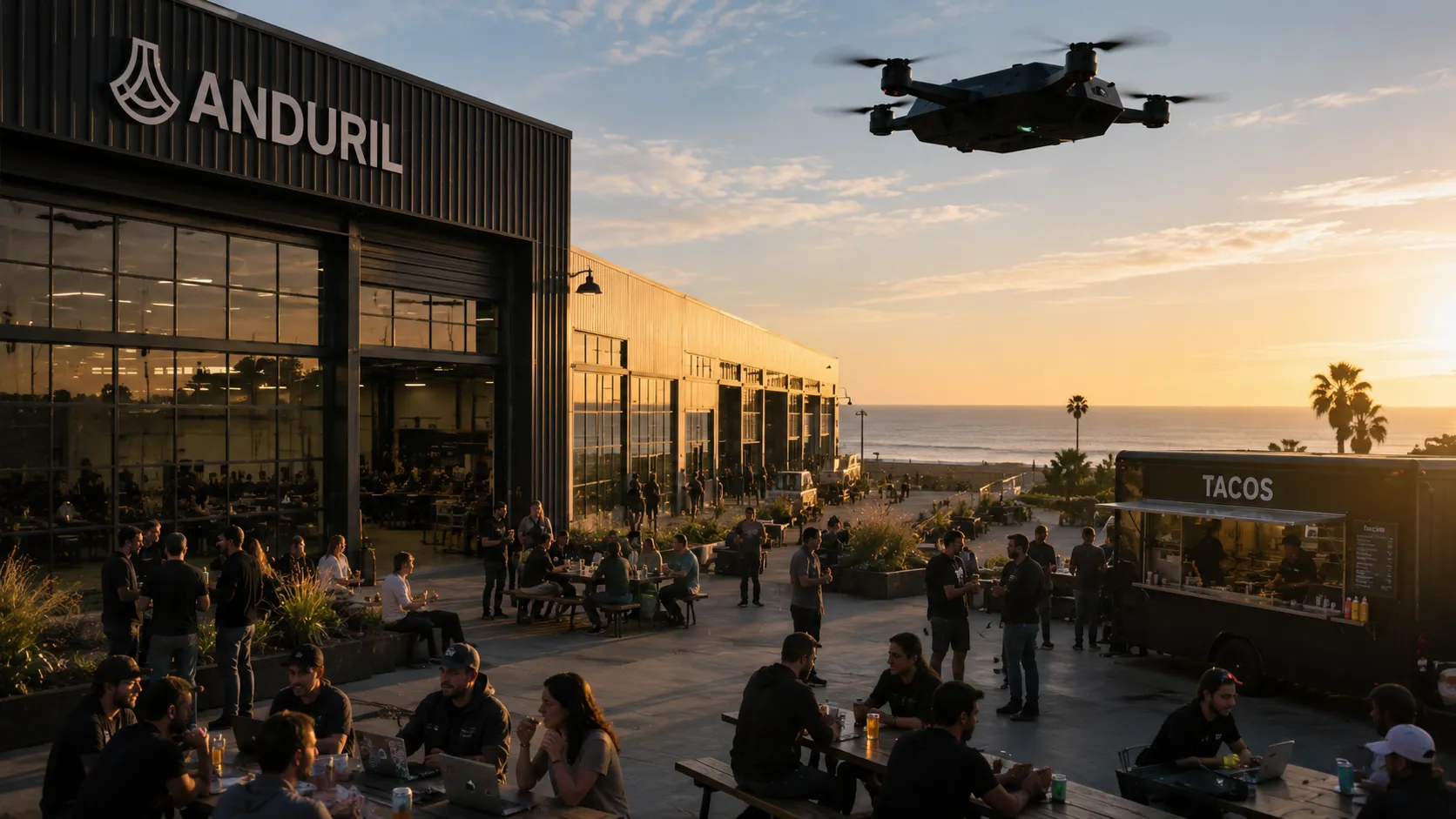
COSTA MESA, CALIF. — May 2026 – The first thing you must understand about the new arsenal of democracy is that it smells like sea salt and espresso. It is housed in a converted aerospace warehouse a five-minute bike ride from the Pacific Ocean. Engineers in flip-flops and Patagonia vests huddle over laptops in a courtyard where autonomous drones hang from the ceiling like sculptures. A taco truck is permanently stationed near the entrance. On any given morning, the sharp tang of saltwater drifts through open bay doors and mingles with the quiet hum of code compiling. This is not your grandfather’s defense contractor. This is Anduril Industries. And in the spring of 2026, it just became the most valuable private defense technology company in American history, closing a $5 billion funding round that valued the firm at $61 billion. The round, led by Thrive Capital with heavy participation from Andreessen Horowitz, was not merely a capital raise. It was a declaration that the business of national security has been permanently, perhaps irrevocably, rewritten.
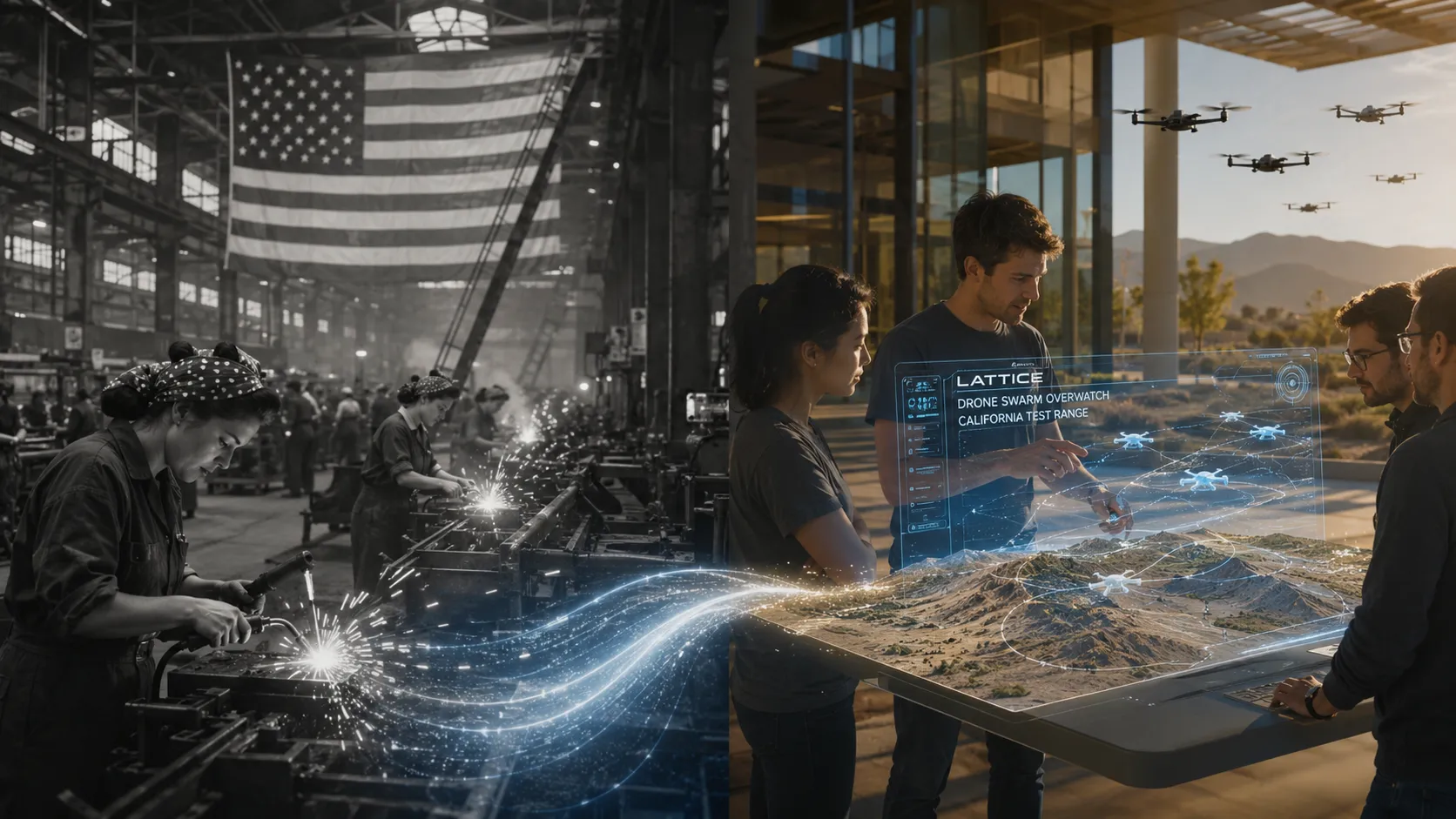
The Surfers Who Took On The Pentagon
Anduril was born from a question so audacious it sounded like science fiction: What if a startup, not a government program, built the next generation of American defense? The founders—Palmer Luckey, the homeschooled virtual reality prodigy who sold Oculus to Facebook for $2 billion, and Trae Stephens, a venture capitalist with a background in intelligence and a fluency in Arabic—shared a conviction that the Pentagon’s procurement system was broken. It was slow. It rewarded complexity over capability. It delivered weapons systems decades late and billions over budget, while adversaries moved at software speed. Their response was not to write a white paper or lobby Congress. It was to build a surveillance tower. The first Anduril product was a slender, solar-powered sentinel that used AI to scan borders for intruders. It cost a fraction of the legacy systems in use, and it worked. Customs and Border Protection purchased it. The Marines requested a portable version. Suddenly, a company staffed by surfers, rock climbers, and ex-Navy SEALs had a foothold inside the most bureaucratic customer on Earth.
That foot-in-the-door strategy holds a lesson that echoes far beyond the Mojave Desert. Anduril did not win its first contracts by promising a grand vision of networked warfare. It won by solving an immediate, specific, and visible problem. For any founder trying to sell into a slow-moving, risk-averse industry—healthcare, logistics, energy, government—the lesson is crystalline: ship a product that works today, solve a pain point that is bleeding right now, and let that real-world proof become your marketing department.
Code Is The Weapon
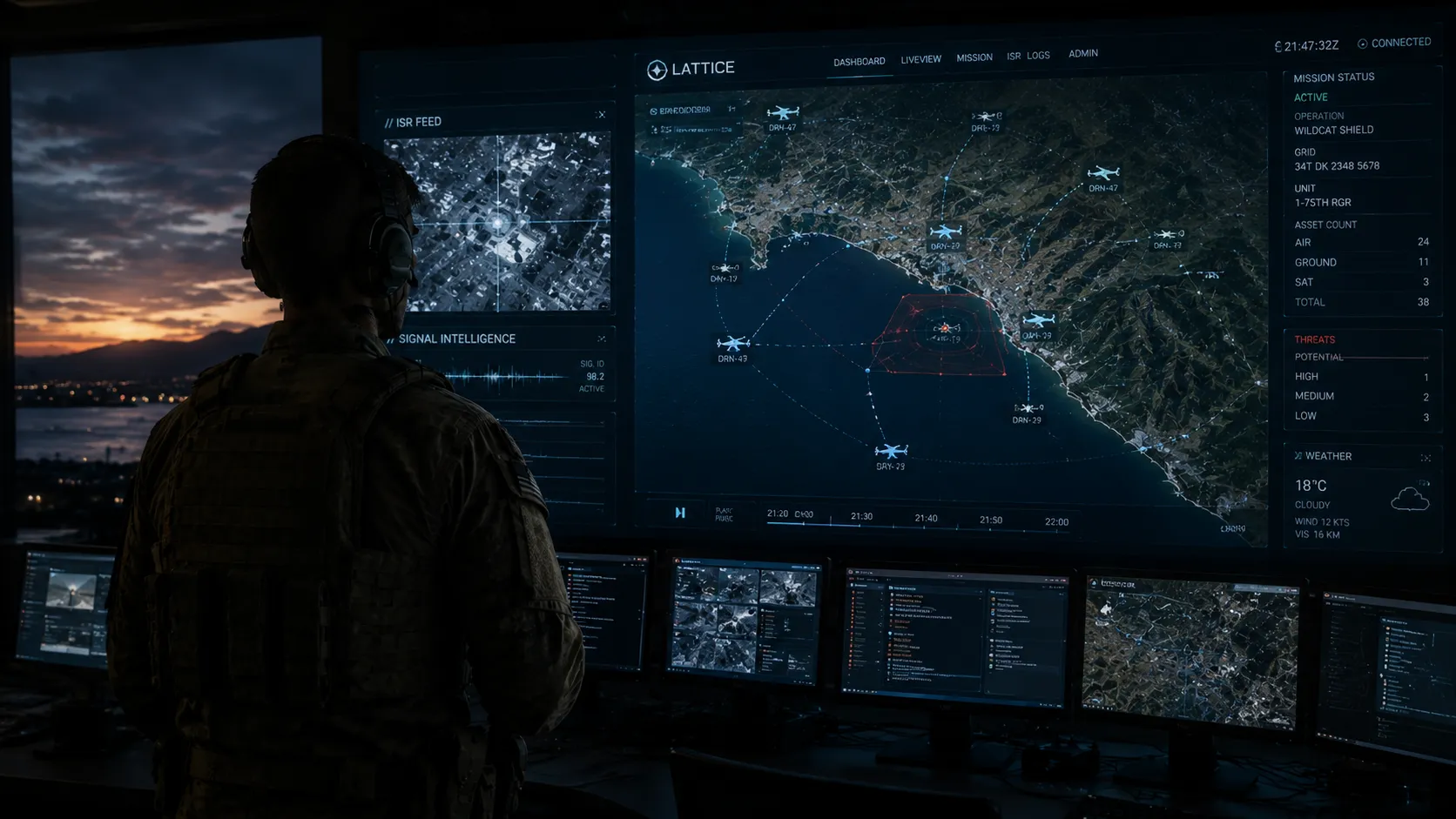
What most people miss when they look at Anduril is that the company is not fundamentally a hardware business. Yes, it builds drones. It builds autonomous submarines. It builds missile interceptors and surveillance towers and flying wings. But the core product, the gravitational center around which everything else orbits, is a software platform called Lattice. Lattice is an AI-powered operating system for the battlefield. It connects every sensor, every vehicle, and every weapon in a combat theater into a single, intelligent network. A soldier holding a tablet can identify a threat, confirm it with an autonomous drone, and neutralize it without ever pulling a trigger. The interface is designed to be as intuitive as a consumer app because, in Anduril’s philosophy, the user experience of warfare should be no more complicated than checking a weather forecast. The machine handles the complexity. The human makes the decision. Here, finally, is the business model insight that explains the $61 billion valuation. Anduril sells Lattice as a recurring subscription. The Pentagon does not purchase a one-time software license and then wait years for an upgrade. It pays for continuous access to real-time intelligence, for over-the-air updates that improve the system while it is already deployed, for the ability to iterate faster than any adversary on the planet. In an industry historically defined by lump-sum contracts for physical hardware, Anduril has introduced the economics of Salesforce and Netflix to the Department of Defense.
This is the SaaS-ification of national security. Venture capitalists are not betting on the gross margins of drone manufacturing. They are betting on the lifetime value of a software subscription that becomes more embedded, more essential, and harder to rip out with every passing year. The multiple that public markets assign to recurring revenue is 3x to 5x higher than the multiple assigned to one-time hardware sales. Anduril understood this before the primes did.
The Golden Dome and the New Calculus of Power
In 2026, the U.S. Army signed a contract worth up to $20 billion for integrated air and missile defense, with Anduril at the center of the architecture. Around the same time, the company began delivering components for the Golden Dome, a proposed shield against hypersonic missiles and drone swarms—the most ambitious American defense project since the Cold War. To put the scale in perspective, the total cost of the original Manhattan Project, adjusted for inflation, was roughly $30 billion. A single startup, not even a decade old, is now entrusted with building the defensive backbone of the world’s most powerful military. The significance of this shift cannot be overstated. For decades, the defense-industrial complex was a closed loop. A handful of prime contractors—Lockheed Martin, Raytheon, Boeing—divided the Pentagon’s budget in a comfortable, predictable rhythm. They built exquisite, gold-plated platforms that took a decade to design and another decade to field. The idea that a venture-backed startup could not only enter this market but redefine its economics was, until recently, unthinkable.
Anduril’s success has cracked that consensus wide open. Total defense-tech venture funding surged to approximately $13.6 billion in the early months of 2026, with Anduril’s round accounting for more than a third of that total. A wave of new startups—some building autonomous submarines, others AI-powered logistics systems, others cyber-defense platforms—is following the path Anduril blazed. The Pentagon, long viewed by Silicon Valley as an unapproachable, impossibly slow customer, is now a legitimate addressable market for venture-scale returns.
What This Means For The American Entrepreneur
The Anduril story is not primarily a story about war. It is a story about the boundary between the possible and the impossible, and how quickly that boundary can move when the right business model meets the right moment. The lessons are transferable. First, recurring revenue transforms industries. Whether you are selling drones to the Pentagon or software to a construction firm, a subscription model creates enterprise value that one-time sales cannot match. It aligns incentives, funds continuous improvement, and builds a moat that deepens over time. Second, the fastest way into a walled garden is through the smallest gate. Anduril did not begin with a billion-dollar program of record. It began with a single surveillance tower on a border. It proved itself in the margins before it was invited to the center. Startups that try to win a massive enterprise contract before they have a single reference customer almost always fail. Those that land a small, undeniable win and expand from it can end up owning the entire account.
Third, software is eating the physical world. The most valuable companies of the next decade will not be pure software plays or pure hardware plays. They will be companies that build physical products and wrap them in intelligent, continuously improving software layers. Anduril is the proof of concept. Tesla, Rivian, and a new generation of robotics companies are built on the same thesis. The pattern is established. The window is open.
The Risks Beneath the Surface
No story of this magnitude comes without shadows. Anduril’s rise concentrates an enormous amount of defense capability in a single, privately held company. Autonomous weapons raise ethical questions that are far from resolved. The revolving door between Silicon Valley and the Pentagon unsettles traditional norms of oversight and public accountability. There are serious people asking serious questions about whether a startup should be entrusted with the infrastructure of national survival. Anduril’s response to these concerns is characteristically direct: the technology exists, the threats are real, and if America does not build the most advanced, most ethical weapons systems, others will. The only way to ensure responsible use, the company argues, is to lead.
Whether one finds this argument persuasive or not, the strategic logic is consistent. Anduril is betting that the defining contests of the 21st century will be won not by the largest armies, but by the fastest software. It has positioned itself at the intersection of technology and national power with a clarity of purpose that few companies, in any industry, ever achieve.
The Promise
Back in Costa Mesa, the waves keep hitting the shore. The espresso machine keeps hissing. Another cohort of engineers, many of them veterans who served on the very systems Anduril is replacing, walks through the doors of the converted warehouse. They are not building weapons in the old sense of the word. They are building an operating system for deterrence—a platform that, if it works as intended, will prevent wars rather than fight them.
That, at its core, is the argument Anduril makes to its investors, its customers, and the country it serves. The arsenal of democracy was never meant to be a museum piece. It was meant to be remade by each generation, with the tools and the thinking of its time. This time, the tools are code, and the thinking is borrowed from Silicon Valley. The valuation is $61 billion. The work is just beginning.