From Scraps to Sustainable: The $300 Billion Opportunity in India's Circular Fashion Revolution
The Hook: The Patchwork Jacket That Launched a Movement
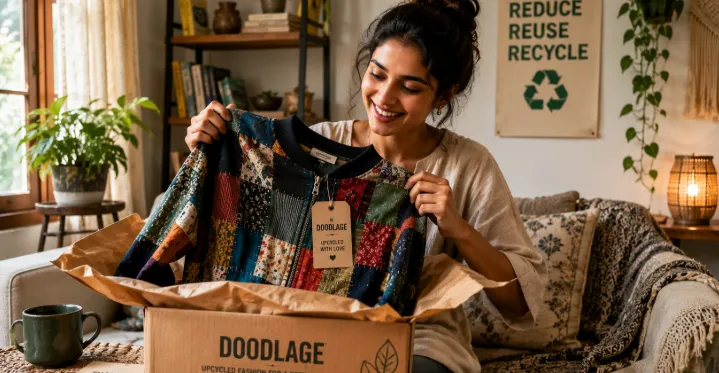
In a modest workshop tucked behind a bustling Delhi market, a pile of discarded fabric scraps — offcuts from export garment factories — waits to be reborn. Under the hands of skilled artisans, these scraps are sorted by colour, texture, and size, then meticulously stitched into patchwork jackets, dresses, and bags. Each piece is unique. Each piece is a protest.
This is Doodlage, a brand founded in 2016 by Kriti Tula and her team. What began as a small experiment in waste management has grown into a beloved D2C label, worn by conscious consumers in Mumbai, New York, and London. Doodlage now sources waste from over 15 factories, employs 50+ artisans, and ships to 12 countries.
Doodlage is not alone. Across India, a new generation of D2C fashion brands is proving that sustainability and profitability can coexist. And they are riding a wave of consumer consciousness that has fundamentally altered the Indian retail landscape.
The Numbers That Cannot Be Ignored
For years, sustainability was dismissed as a Western luxury — something for affluent consumers in San Francisco or Stockholm, not for price‑sensitive Indian shoppers. The data tells a different story.
According to a 2025 Nielsen‑FICCI report, 89% of Indian consumers have tried sustainable products, and 67% said they would pay a premium for eco‑friendly options.
The Indian D2C market is projected to grow from $100 billion in 2025 to $300 billion by 2030, according to a Redseer‑Bain analysis. The fastest‑growing segment within D2C is sustainable and ethical fashion, growing at over 40% year‑on‑year.
The global circular fashion market is expected to reach $77 billion by 2030 (Grand View Research), and Indian brands are already capturing a significant share of export demand.
What explains this shift? Three factors: awareness (social media has made fast fashion's environmental cost visible), access (D2C platforms make sustainable brands discoverable), and affordability (Indian brands have cracked the code of keeping prices competitive).
The Brand Builders: India's Circular Fashion Champions
Doodlage: The Waste Warrior
Doodlage remains the most visible symbol of India's circular fashion movement. The brand uses post‑industrial waste (fabric scraps from export houses), post‑consumer waste (discarded garments), and deadstock fabric. Its production process generates zero new waste — every scrap is either used or composted.
In 2025, Doodlage crossed ₹25 crore in annual revenue and turned profitable. The brand has opened two experience stores in Delhi and Mumbai, but 80% of sales still come through its D2C website and marketplaces like Tata Cliq and Nykaa Fashion.
The8W: From Bottles to Luxury
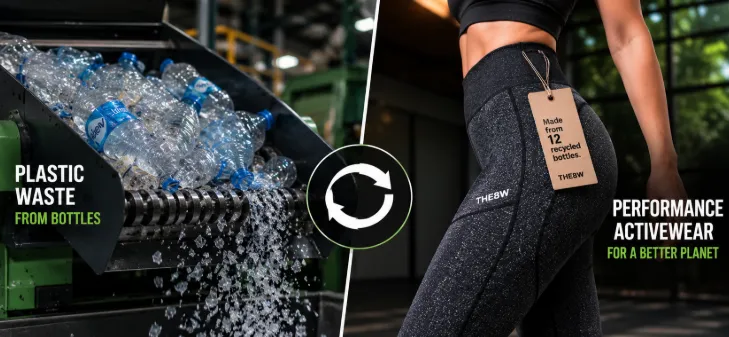
The8W (pronounced "The Infinite Waste") takes circularity to a different level. The brand converts recycled plastic bottles (PET) and up‑cycled cotton into premium activewear, loungewear, and accessories. Each product comes with a QR code that tells the story of exactly how many bottles were diverted from landfills.
Founded in 2020, The8W raised $3 million in Series A in 2024 and is on track to cross ₹30 crore revenue in FY26. The brand exports to the UK, Germany, and Australia, where sustainability regulations are even stricter. Its activewear is priced competitively with global brands like Lululemon — but with a fraction of the carbon footprint.
No Nasties: The Organic Pioneer
No Nasties, based in Goa, has been selling 100% organic cotton clothing since 2011 — long before sustainability was fashionable. The brand is certified by GOTS (Global Organic Textile Standard) and Fair Trade, and its entire supply chain is vertically integrated from farm to finished garment.
No Nasties remains bootstrapped and profitable, with estimated annual revenue of ₹15‑20 crore. Its customer base is unusually loyal: the average customer has made 6+ purchases, and the brand's email open rate exceeds 50%.
Grassroot by Anita Dongre: The Heritage Hybrid
Grassroot is the sustainable diffusion line of Anita Dongre, one of India's most celebrated designers. The brand works with over 1,500 artisans across Rajasthan, Gujarat, and West Bengal, preserving traditional crafts like block printing, bandhani, and handloom weaving while using only natural dyes and organic fibres.
Grassroot operates through a hybrid model: a D2C website, flagship stores in Delhi and Mumbai, and international wholesale partnerships with Anthropologie and Matches Fashion. Annual revenue is estimated at ₹80‑100 crore, making it one of the largest sustainable fashion brands in India.
VIRGIO and Caslay: The New Entrants
VIRGIO, a sustainable footwear brand, raised $1.5 million in early 2025 and has grown 6x in two years. Its shoes are made from recycled rubber, organic cotton, and corn‑based polymers. Caslay, a men's loungewear brand, launched in 2024 with a zero‑plastic supply chain and has already acquired 50,000+ customers.
The Circular Supply Chain: How It Works
The secret sauce of India's sustainable D2C brands is not just consumer demand — it is a reimagined supply chain.
Traditional fashion supply chain:
Farm → Fibre → Spinning → Weaving → Dyeing → Cutting → Sewing → Finishing → Wholesale → Retail → Consumer → Landfill
Circular fashion supply chain (Doodlage model):
Post‑industrial waste → Sorting → Sterilising → Designing → Stitching → D2C website → Consumer → Compost or upcycle again
The efficiency gains are enormous. Circular brands typically save:
70‑80% on raw material costs (using waste instead of virgin fabric)
50‑60% on water consumption (no new dyeing or washing)
40‑50% on carbon emissions (shorter supply chains, less transport)
These savings allow brands to price their products competitively — a Doodlage jacket costs ₹3,000‑5,000, comparable to Zara or H&M, but with a radically lower environmental footprint.
The Policy Push: EPR and Textile Waste Rules
The Indian government has also stepped in. In 2025, the Ministry of Textiles introduced draft Extended Producer Responsibility (EPR) rules for the textile sector, requiring brands to take back post‑consumer waste and recycle a percentage of their production volume. The rules are expected to become mandatory in 2027, creating a massive market for circular logistics and recycling startups.
Additionally, the Production Linked Incentive (PLI) scheme for textiles has been expanded to include sustainable manufacturing practices, offering subsidies of up to 15% for units that use organic fibres, recycled materials, or water‑efficient processes.
The Global Indian Opportunity
For the diaspora, India's circular fashion boom offers three clear entry points.
First, invest in emerging funds. Funds like Aavishkaar Capital (which has backed several sustainable brands), Sixth Sense Ventures, and Anicut Capital are actively deploying capital in this sector. Early‑stage valuations remain attractive, with most brands under $50 million.
Second, build cross‑border partnerships. Indian sustainable brands need distribution in the US and Europe, where consumer appetite for eco‑fashion is even stronger. Diaspora professionals with retail connections can become exclusive distributors or marketplace partners.
Third, launch your own brand. The barriers to entry are lower than ever. A diaspora entrepreneur can source fabric from Indian waste streams, contract manufacturing from certified units, and sell via a Shopify store — all while living in Boston or London. Several successful US‑based D2C brands (e.g., Reformation, Everlane) already source partially from India; there is room for diaspora‑led brands to own the "Made in India, sustainably" story.
The Challenges: Greenwashing, Scale, and Consumer Trust
No revolution is without growing pains. India's sustainable fashion movement faces three major hurdles.
First, greenwashing. Many brands claim sustainability without credible certifications. Consumers are becoming savvy, but the lack of a mandatory standard (like the EU's Eco‑label) makes it hard to separate genuine circular brands from impostors.
Second, scale. Most sustainable brands remain small — under ₹50 crore in revenue. Scaling requires access to larger waste streams, more skilled artisans, and capital for marketing. The funding is coming, but slowly.
Third, consumer trust. A single scandal — a brand caught using virgin polyester while claiming recycled content — could damage the entire sector. Industry bodies are working on a "Circular Fashion Seal" to address this.
The Final Word
The patchwork jacket from Doodlage, the plastic‑bottle activewear from The8W, the organic cotton kurta from No Nasties — these are not isolated examples. They are evidence of a structural shift in Indian consumer behaviour and manufacturing capability.
India produces enormous textile waste — an estimated 1.2 million tonnes per year from domestic production alone. The circular fashion movement is not just about saving the planet; it is about turning a liability into an asset. And with 89% of consumers already on board, the runway is vast.
The $300 billion D2C market by 2030 will not be dominated by fast fashion. It will be built by brands that treat waste as a resource, artisans as partners, and the planet as a stakeholder. The revolution is already stitching itself together — one scrap at a time.
CHART: “India’s Circular Fashion Revolution – At a Glance (2026)”
Metric | Data | Source |
|---|---|---|
Indian consumers who have tried sustainable products | 89% | FICCI‑Nielsen, 2025 |
Consumers willing to pay premium for eco‑friendly | 67% | FICCI‑Nielsen, 2025 |
India D2C market (2025) | $100 billion | Redseer‑Bain |
Projected D2C market (2030) | $300 billion | Redseer‑Bain |
Sustainable fashion D2C growth rate | 40%+ YoY | Industry estimates |
Global circular fashion market (2030) | $77 billion | Grand View Research |
Doodlage annual revenue (FY25) | ~₹25 crore | Industry reports |
The8W Series A funding | $3 million (2024) | Inc42 |
The8W FY26 revenue target | ~₹30 crore | Company disclosure |
No Nasties annual revenue | ~₹15‑20 crore (bootstrapped) | Industry estimates |
Grassroot annual revenue | ~₹80‑100 crore | Industry reports |
VIRGIO funding (2025) | $1.5 million | Inc42 |
Indian textile waste (annual) | ~1.2 million tonnes | Ministry of Textiles |
EPR rules for textiles | Expected mandatory 2027 | Ministry of Textiles |
PLI textile scheme for sustainable manufacturing | Up to 15% subsidy | Government notification |


