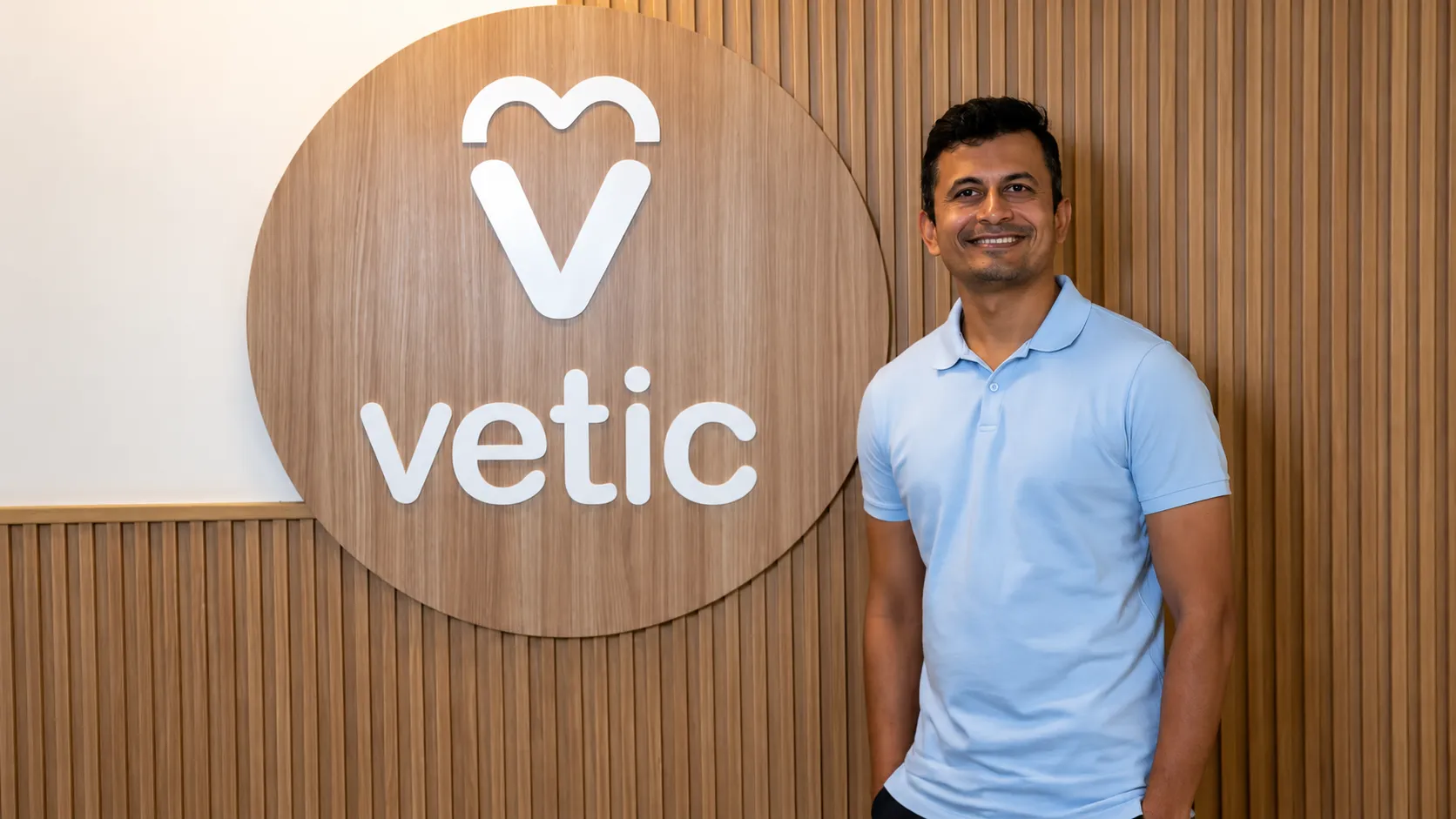
Most startup origin stories begin with a market gap on a spreadsheet. Vetic's began with a sick dog named Simba and a system that let his owner down when it mattered most. Today, that frustration has scaled into a $40 million funding round and a clinic network spanning 11 Indian cities — proof that India's pet care industry has quietly become one of the country's most closely watched consumer healthcare bets.
Gurugram-based Vetic has secured the fresh capital in a round led by existing backer Bessemer Venture Partners, with continued participation from Greenoaks Capital, Lachy Groom and JSW Family Office — all of whom had already backed the company in earlier rounds, a signal of conviction that matters as much as the headline number itself.
The Backstory: A Founder, A Dog, And A Broken System
Vetic was founded in 2022 by Gaurav Ajmera, formerly the chief business officer at healthcare unicorn Pristyn Care, who has been candid about why he built the company in the first place: his own pet, Simba, didn't get quality care when it was needed most. That personal frustration mirrors what Vetic says is a structural problem across India's pet care landscape — a fragmented, unorganised system that leaves pet parents anxious every time their animal falls ill, needs diagnostics, requires steady medication, or simply needs grooming.
What Vetic Has Actually Built
Vetic today runs over 65 clinics across 11 cities, including 15 round-the-clock emergency facilities, backed by a network of more than 250 veterinarians delivering in-clinic OPD consultations, advanced diagnostics and complex surgeries. Around that clinical core, the company has layered a vet-at-home service, an e-pharmacy capable of delivering more than 300 medicines across over 700 pincodes within 60 minutes, and a quick-commerce arm stocking more than 600 pet products. The platform currently counts over 60,000 subscribed members.
Underneath all of that sits what Vetic calls its proprietary operating system — a record-keeping layer that captures a longitudinal health history for every pet from their very first visit and standardises care protocols across the entire network. The company has also been leaning on AI across multiple touchpoints: triaging pet parents from the first sign of a symptom, supporting veterinarians with diagnostic intelligence, and delivering personalised, proactive guidance through the Vetic app across an animal's entire life. The pitch, in short, is to move pet healthcare in India from reactive crisis management toward continuous, always-on care.

Where The $40 Million Will Actually Go
The fresh capital has four clearly stated destinations. First, scaling the clinic network and veterinary team — in-clinic, home and virtual care combined — to roughly double current capacity, taking the vet headcount toward 500. Second, rolling out Vet at Home services nationally within the next two fiscal quarters, after testing the model in select markets. Third, deepening pet insurance and wellness plan offerings, an area increasingly seen as the next big unlock for recurring revenue in the category. And fourth, a significant fresh investment in technology and AI to make every layer of the pet health journey smarter, more connected and more proactive.
This is not Vetic's first institutional check. The company raised $26 million in a Series C round last year, and Bessemer Venture Partners has backed Vetic across multiple earlier rounds as well — the kind of repeat conviction from a single investor that tends to say more about a company's trajectory than any single fundraising headline.
The Numbers Behind The Growth Story
Vetic's most recent annual financial filings paint the picture of a company still firmly in build-and-scale mode rather than profitability mode. In FY25, pet care services such as vaccination, consultation and grooming made up just over half of revenue, with the sale of pet food and accessories contributing most of the rest. On the cost side, employee benefits were the single largest expense, rising sharply year-on-year, followed by the cost of materials and professional payments to veterinarians on the platform; marketing spend more than doubled over the same period.
That spending outpaced revenue growth, and losses widened by roughly 63% year-on-year. On a unit basis, the company has been spending a little over two rupees to earn one rupee of operating revenue — a ratio that is common, even expected, for a healthcare network still in its capacity-building phase, but one that makes the next stage of execution, and how efficiently this new capital is deployed, the real test for Vetic's growth story.
A Much Bigger Market Story Than One Startup
Vetic's raise lands inside a genuinely booming category. India's overall pet care market is projected to reach roughly Rs 2.1 lakh crore by 2032, driven by a clear shift in how Indian households treat their pets — increasingly as family members whose wellbeing deserves the same seriousness as a human family member's. Investors have taken notice well beyond Vetic alone: rival Supertails raised $30 million in a Series C round earlier this year, and competitor Dr Paws closed its own funding round in December, part of a broader wave of capital flowing into organised petcare players across consultations, diagnostics, insurance, food and supplies.
Why This Matters Beyond The Funding Headline
For the Impactful Global Indian reader, Vetic's $40 million round is a useful marker of how quickly India is building organised, technology-led infrastructure around categories that used to run entirely on informal, doctor-led trust networks. The same pattern that transformed human healthcare delivery in India over the past decade — standardised protocols, digital records, app-based access, insurance layered on top — is now being applied, clinic by clinic, to the country's pets. Whether Vetic can convert this capital into the kind of consistent, scaled care its founder once wished existed for his own dog will be the real story to watch over the next two quarters.


