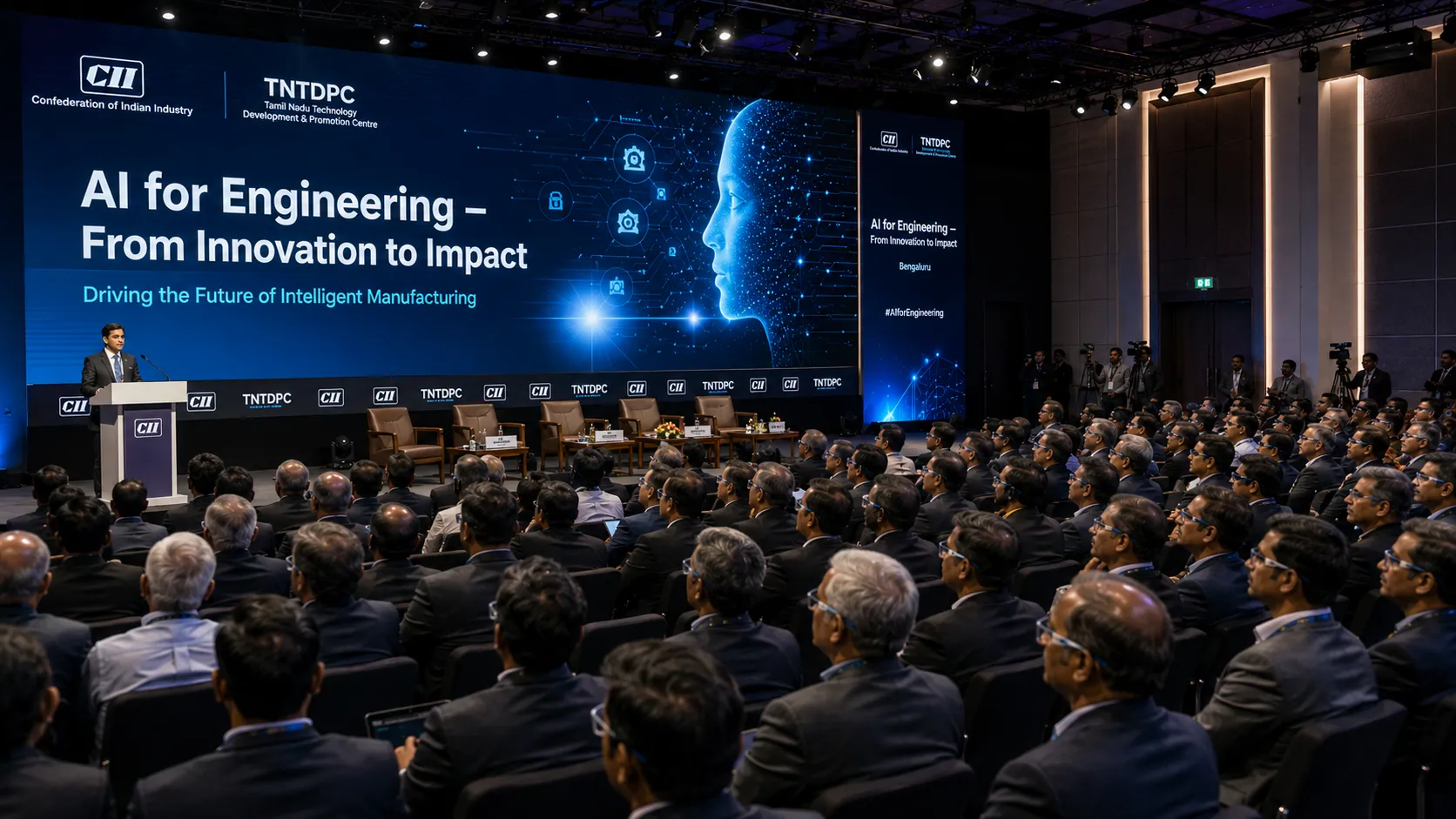
The 3rd Edition AI Powered Summit (Southern Region) kicked off today with a single, urgent message for India's manufacturers: stop playing with AI and start deploying it. ₹18,600 crore deals and 8,200 jobs are waiting.
The CEO of a $2 billion automotive components company stood at the podium, looked at a room full of engineers, and said something that made everyone uncomfortable. "We have spent the last two years talking about AI pilots," she said. "We have fourteen of them. Some work. Some don't. But none of them have changed our bottom line. Today, I am not here to talk about pilots. I am here to talk about production." Then she sat down to a silence that lasted exactly three seconds before the room erupted in applause.
That was the opening session of the 3rd Edition AI Powered Summit (Southern Region), held today, June 16, 2026, in Bengaluru. Organised by the Confederation of Indian Industry (CII) and the Tamil Nadu Technology Development and Promotion Centre (TNTDPC), the summit has a deliberately unsexy theme: "AI for Engineering – From Innovation to Impact." The organisers wanted to move the conversation from PowerPoint slides to factory floors. By the look of the attendee list — senior vice presidents of manufacturing, chief technology officers of industrial giants, plant managers from auto and electronics clusters — they succeeded.
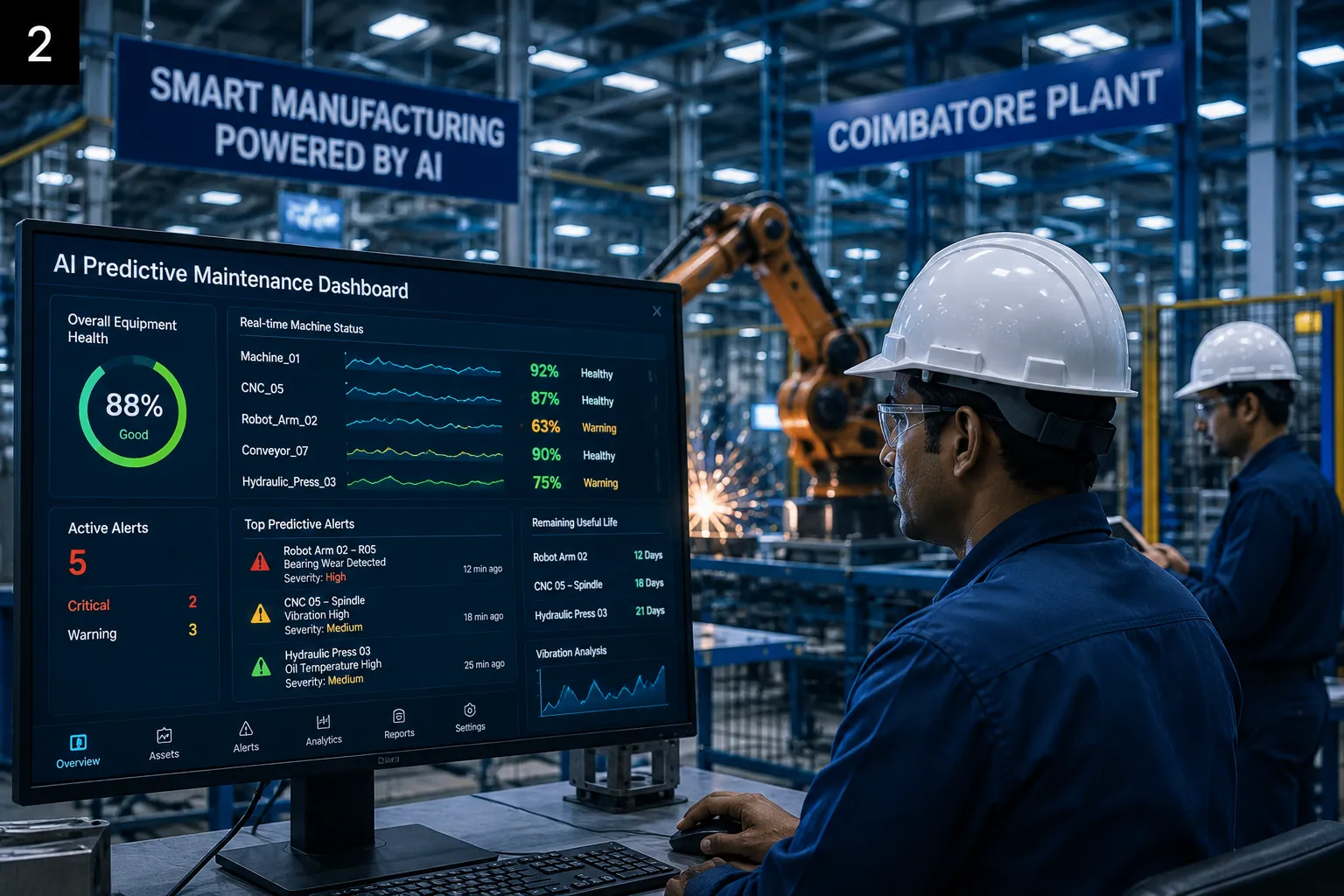
The timing is not accidental. On June 4, just twelve days before the summit, Larsen & Toubro (L&T) signed a memorandum of understanding with the Tamil Nadu government to invest ₹18,600 crore in three key industrial projects. An electronics and electrical systems manufacturing unit in Coimbatore. A data centre expansion in Kanchipuram. A major upgrade to the Kattupalli shipyard in Chennai. The investment is expected to create approximately 8,200 direct jobs. And every single one of those projects — every factory, every server, every ship — will be designed around AI.
"The L&T deal is not an outlier," said the summit's keynote speaker, a senior official from the Ministry of Electronics and Information Technology. "It is a signal. Tamil Nadu alone has attracted over ₹40,000 crore in industrial investment in the last six months. Every large investor is asking the same question: does this state have the AI talent and infrastructure to support advanced manufacturing? The answer, increasingly, is yes."
The summit's focus on the "southern region" — Tamil Nadu, Karnataka, Andhra Pradesh, Telangana, Kerala, and Puducherry — is itself a recognition of a shifting economic geography. Southern India now accounts for more than 35 percent of the country's industrial output, up from 28 percent a decade ago. The region is home to India's largest electronics manufacturing clusters (Sriperumbudur), automotive hubs (Chennai, Bengaluru, Hosur), and defence production corridors (Tamil Nadu's defence corridor). AI is not a luxury for these industries. It is a necessity.
The agenda reflects that urgency. Morning sessions covered AI-driven predictive maintenance in automotive assembly lines — a technology that can reduce unplanned downtime by up to 45 percent, saving large manufacturers hundreds of crores annually. Afternoon sessions focused on computer vision for quality inspection, where AI systems can detect defects that human eyes miss, at speeds no human can match. A dedicated track on AI for supply chain optimisation drew a standing‑room‑only crowd, as companies grapple with post‑pandemic volatility and the need to localise supply chains.
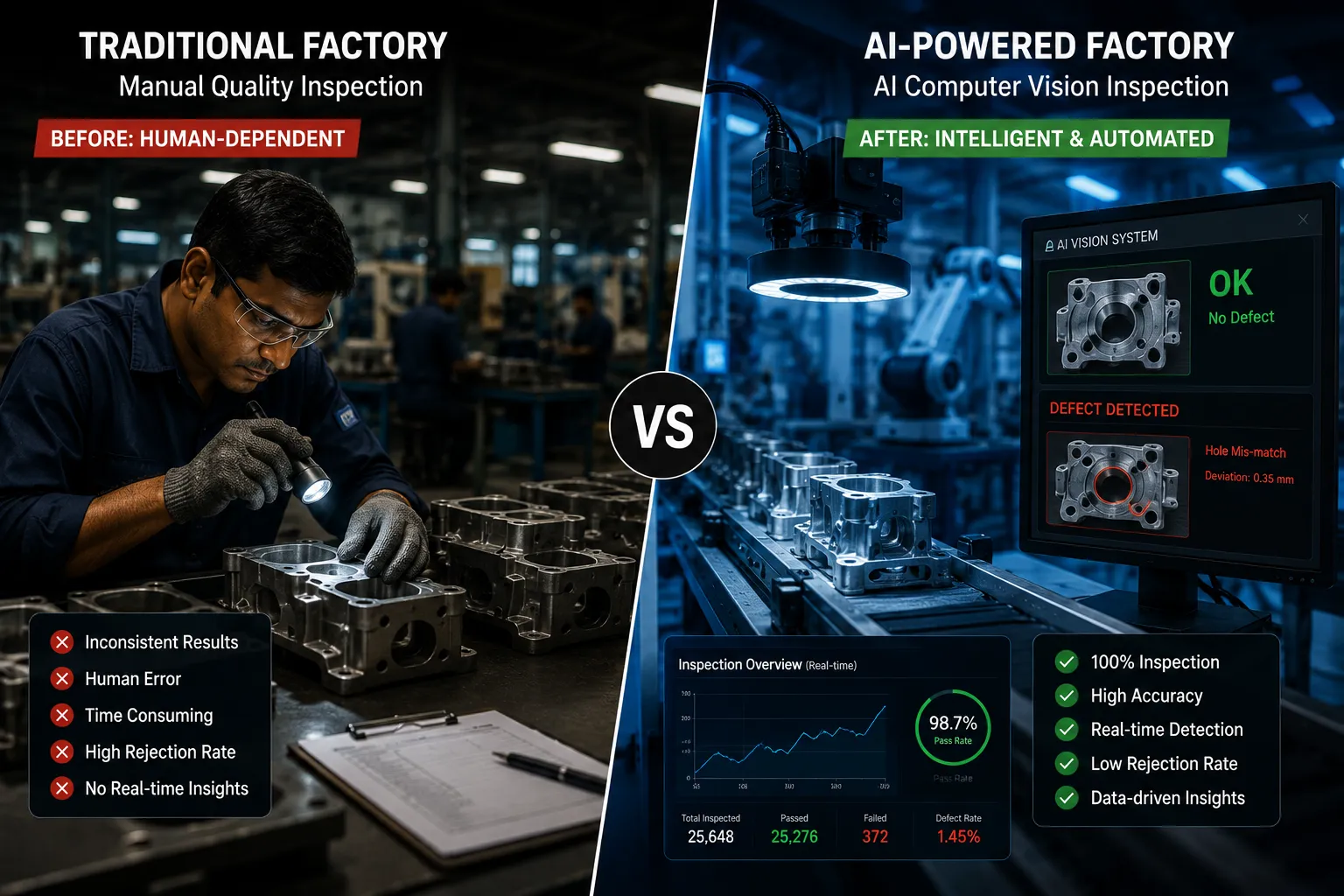
"We are moving from AI as a buzzword to AI as a business metric," said the director of a Bengaluru‑based industrial AI startup that has deployed its systems in six factories across Tamil Nadu. "Our clients don't ask about algorithms anymore. They ask about uptime. They ask about yield. They ask about return on investment. If you can't answer those questions, you don't get the contract."
The summit is also a stage for talent. TNTDPC, the co‑organiser, announced a new initiative to train 10,000 industrial engineers in AI over the next 18 months, with a focus on practical, hands‑on skills rather than theoretical knowledge. The programme will be delivered through existing engineering colleges and polytechnics, with industry partners providing real‑world datasets and use cases.
"We have enough computer science graduates who can build AI models," said a TNTDPC official. "What we lack is mechanical engineers who can integrate those models into a production line. Electrical engineers who can instrument a factory for data collection. Civil engineers who can design AI‑ready facilities. That is the gap we are filling."
The presence of large industry bodies like CII gives the summit weight. CII's southern region has been aggressively pushing for industrial AI adoption, organising factory visits, benchmarking studies, and policy submissions. The summit is the culmination of that work — a signal to both industry and government that the region is serious about AI-led industrial transformation.
The challenges remain significant. Legacy equipment in many factories lacks the sensors and connectivity needed for AI deployment. Retrofitting is expensive. The talent shortage is real, despite the training initiatives. And the cultural resistance to AI — the fear of job loss, the mistrust of "black box" algorithms — is not limited to shop floors. Senior managers, accustomed to decision‑making by intuition, are often the hardest to convince.
But the momentum is undeniable. The L&T investment, the TN SPARK education programme, the CMDA's high‑rise approval reforms, the Chief Minister's $1.5 trillion economy vision — all of these are pieces of a larger puzzle. And the AI Powered Summit is where the pieces come together.
As one attendee put it, walking out of a session on AI for precision manufacturing: "For years, we have been told that AI is the future. Today, I saw demos of systems that are working in factories right now — in Coimbatore, in Hosur, in Sriperumbudur. The future is not coming. It is already here. We just need to catch up."
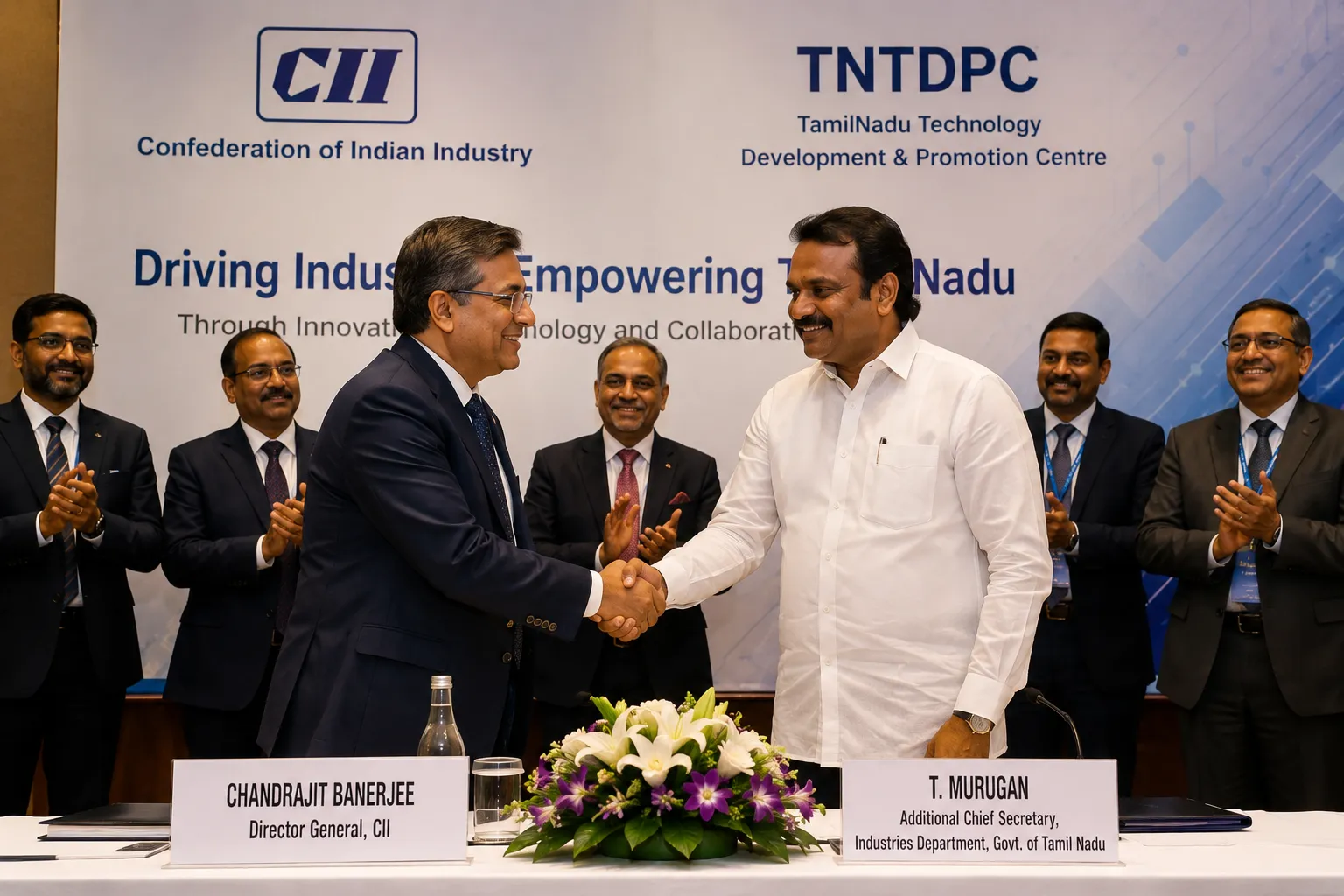
The summit continues through the evening, with networking sessions that are likely to generate more partnerships than formal agreements. But the message of the day is already clear: India's industrial AI moment has arrived. And the southern region is leading it.


