A Sixteen-Dollar Beginning
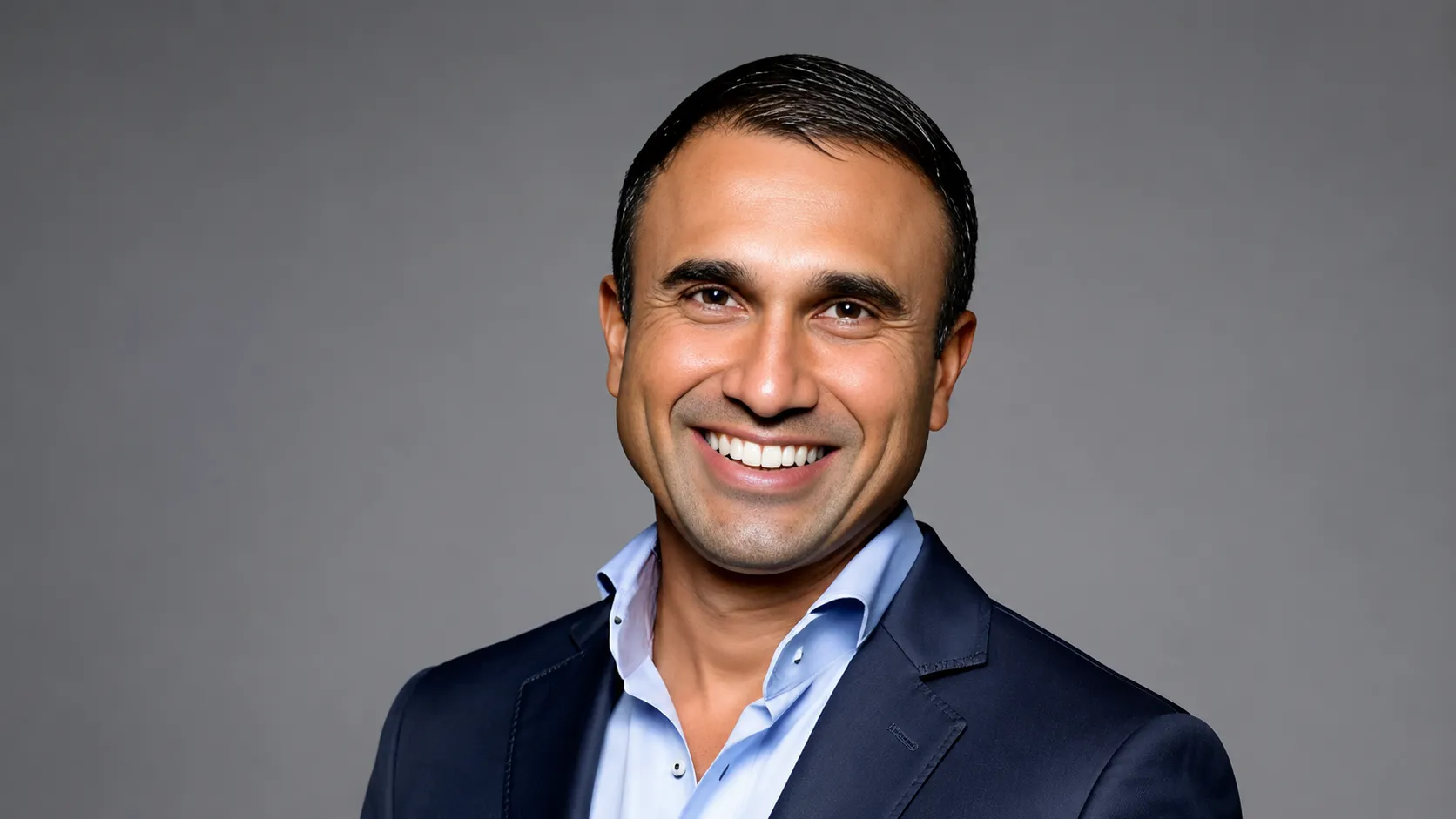
Some of the most powerful founder stories in Silicon Valley are not really about the founder at all — they begin a generation earlier. According to a detailed profile of Indian-founded American unicorns, Munjal Shah's father arrived in the United States by steamship carrying just sixteen dollars, traveling to attend graduate school at UC Berkeley. It is the kind of origin detail that, decades later, becomes a defining touchstone for a son who has spent his own career building and selling technology companies across e-commerce, insurance, and now, most ambitiously, artificial intelligence for healthcare — an industry his father's own generation could scarcely have imagined would one day be reshaped by software built by an Indian-American entrepreneur raised in Silicon Valley.
Shah's own academic path took him to UC San Diego, where he graduated in 1995 with a foundation that would eventually connect artificial intelligence and healthcare — the two fields that have defined the entirety of his adult career. His very first job was at Agouron Pharmaceuticals in San Diego, where he used neural networks to help design novel HIV drugs — remarkably early, hands-on exposure to applying machine learning inside the life sciences, years before either field became mainstream.
Company One: Andale, and the Birth of Cloud Software
Shah's entrepreneurial career began in 1999 with Andale Inc., one of the very first cloud-based software-as-a-service companies built for small businesses, providing cloud-based e-commerce management software for online merchants and auction sellers on platforms like eBay and Amazon Marketplace. It was an audacious bet on cloud software at a time when the category itself barely existed as a recognized term. Andale was acquired by Vendio in 2004, and its underlying technology was later absorbed into Alibaba — giving Shah, at a strikingly young stage of his career, his first taste of building and successfully exiting a company.
Company Two: Like.com and an Early Bet on Computer Vision
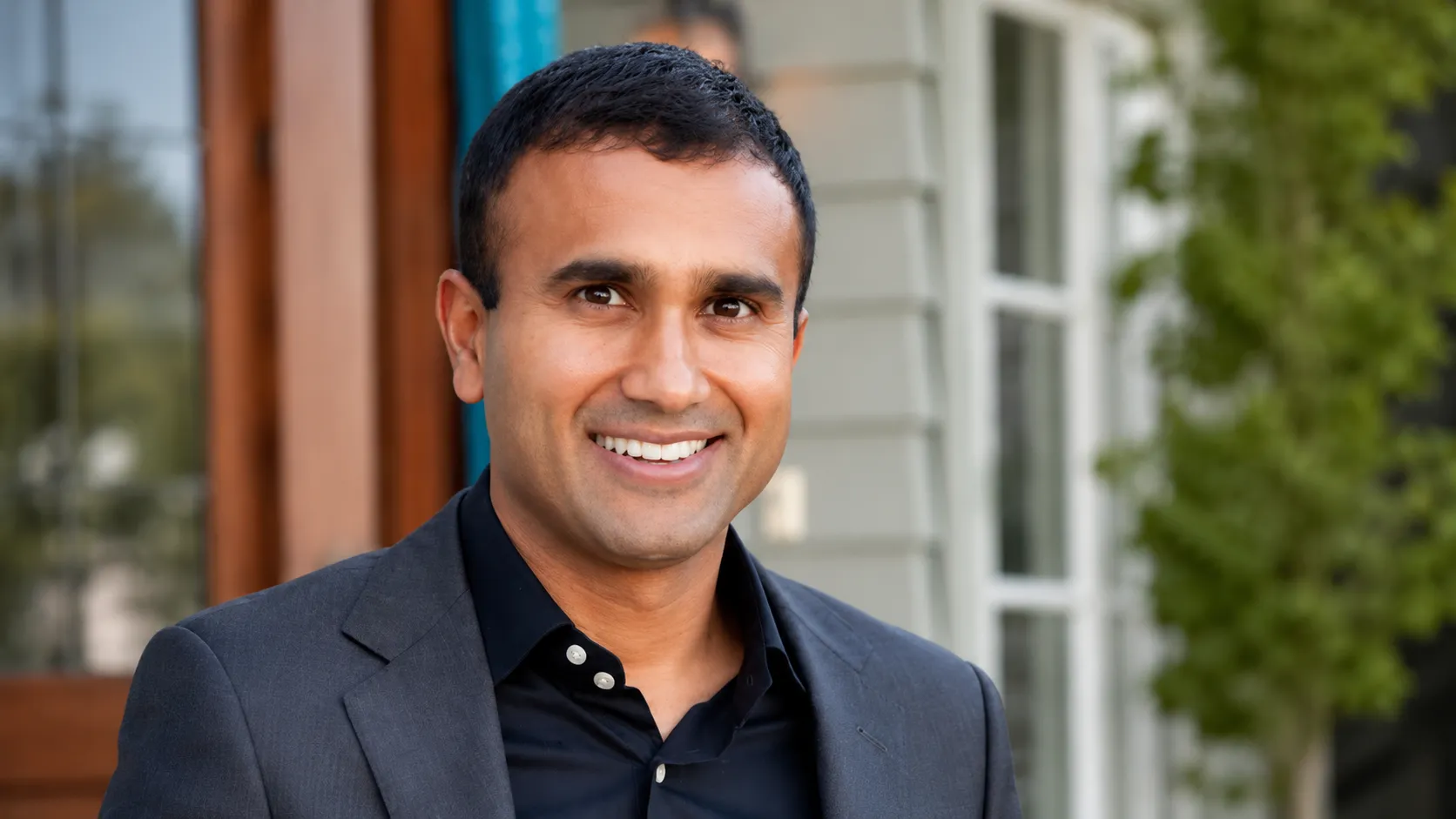
Shah's second venture, like.com, pushed even further into technical territory that would not become mainstream for another decade and a half. Like.com was among the very first consumer-facing companies to use AI-powered computer vision and machine learning to allow users to search inside digital photographs — essentially visual search, years before it became a standard feature on major e-commerce and social platforms. The company was eventually acquired by Google, cementing Shah's reputation as a founder with an unusually reliable instinct for identifying which obscure, early-stage AI capabilities would eventually become mainstream consumer expectations.
Company Three: Health IQ, and a First Real Foray Into Healthcare
In 2013, Shah founded Health IQ, marking his formal entry into the healthcare industry. Health IQ initially focused on providing discounted life insurance to health-conscious individuals, using machine learning algorithms to assess risk based on healthy lifestyle behaviors rather than purely traditional actuarial factors. The company later expanded its mission to help seniors identify optimal Medicare Advantage plans through a proprietary tool it called the Precision Medicare algorithm — giving Shah deep, direct exposure to the American healthcare and insurance system's genuine complexity, inefficiency, and bureaucratic friction, insight that would directly inform his next and most ambitious venture yet.
Company Four: Hippocratic AI and the Bet on Generative AI for Healthcare
In 2023, inspired by the sudden, rapid emergence of powerful generative AI models, Shah founded Hippocratic AI, built around a specific, urgent thesis: the world is facing a severe and growing shortage of healthcare workers, and safety-focused generative AI systems, purpose-built for healthcare rather than adapted from general-purpose consumer chatbots, could meaningfully expand access to care, improve patient outcomes, and reduce costs, without replacing the human clinicians at the center of the system. Founded by a team combining generative AI researchers, hospital administrators, practicing physicians, and Medicare policy experts, Hippocratic AI has developed what it describes as the first safety-focused large language model purpose-built to deliver non-diagnostic healthcare services — meaning the system is explicitly designed to support and augment care, such as patient communication, chronic disease monitoring, and pre- and post-visit support, without making the kind of independent diagnostic decisions reserved for licensed physicians.
Outperforming GPT-4 on More Than a Hundred Medical Exams
The technical credibility of Hippocratic AI's approach has been validated in strikingly concrete terms: the company's large language model has outperformed OpenAI's GPT-4 on 105 of 114 healthcare exams and professional certifications — a rigorous, quantifiable benchmark in an industry where credentialing and precision genuinely matter, and where a general-purpose AI model's fluency can mask dangerous gaps in the kind of specialized medical knowledge that safety-focused, purpose-built healthcare AI is explicitly designed to close.
That technical performance, combined with Shah's proven track record across three prior successful ventures, has attracted serious institutional backing. Hippocratic AI has raised a total of $278 million in funding, backed by a roster of prestigious investors including General Catalyst, Andreessen Horowitz, Premji Invest, Kleiner Perkins, and SV Angel — a group that reflects deep confidence not just in the underlying technology, but in Shah's demonstrated, repeated ability to correctly identify emerging technology inflection points years ahead of the broader market.
Building a Company Employees Actually Want to Work For
Beyond its technical achievements, Hippocratic AI has also earned recognition for its internal culture. In 2025, the company was named to Newsweek's list of America's Greatest Startup Workplaces, an honor evaluated through publicly available data and third-party performance indicators assessing employee experience alongside sustainable business growth. Reflecting on the recognition, Shah framed it as a direct extension of the company's founding philosophy: 'At Hippocratic AI, we've always believed that building a transformative company starts with building a great team,' he said. 'This recognition by Newsweek is a reflection of our commitment to a culture where mission-driven innovation, patient safety, and care for one another go hand in hand. I'm incredibly proud of the team we've assembled and the environment we've created to pursue healthcare abundance together.'
The Recurring Thread Across Four Companies
What connects Shah's four ventures — cloud commerce software, AI-powered visual search, health-conscious life insurance, and now safety-focused generative AI for healthcare — is a consistent, almost prescient instinct for identifying which emerging, still-unproven technical capability is about to become commercially essential, years before that becomes conventional wisdom. Each of his companies has, in its own era, made an early, contrarian bet on a technology category widely dismissed as too immature or too niche to matter: cloud software in 1999, visual search in the mid-2000s, machine-learning-driven insurance underwriting in 2013, and safety-focused generative AI for clinical support in 2023. Three of his four companies have directly applied artificial intelligence to solve tangible, real-world commercial and social problems, well before AI became the default framing for nearly every new startup pitch in Silicon Valley.
Why Hippocratic AI's 'Safety-First' Positioning Matters
Shah's decision to position Hippocratic AI explicitly around non-diagnostic, safety-focused applications, rather than racing to build a general-purpose medical AI capable of independent diagnosis, reflects a deliberate, carefully considered strategic choice in an industry where regulatory scrutiny and patient safety concerns can end a company's credibility overnight. By focusing the platform on tasks like patient communication, chronic condition monitoring, and pre- and post-visit support — areas where AI can meaningfully reduce the burden on an overstretched healthcare workforce without displacing the clinical judgment of licensed physicians — Shah has built a company positioned to expand access to care within existing regulatory frameworks, rather than one perpetually fighting to justify autonomous diagnostic decisions to skeptical regulators and malpractice insurers. That distinction has proven commercially significant: it has allowed Hippocratic AI to move relatively quickly from founding to substantial revenue-generating partnerships with hospital systems, at a pace that companies pursuing more aggressive, diagnosis-focused AI applications have generally struggled to match given the far higher regulatory bar those applications require.
The Compounding Advantage of Being a Fourth-Time Founder
There is a specific, often underappreciated advantage that accrues to founders building their fourth company rather than their first: the ability to recognize, almost immediately, which operational problems are genuinely novel and which are simply familiar challenges wearing a new disguise. Shah has spoken about how his experience navigating the regulatory complexity of Health IQ's insurance business gave him direct, practical grounding in how conservative, risk-averse industries like healthcare actually evaluate and adopt new technology — knowledge that proved directly transferable when he later needed to convince hospital administrators and health system executives to trust Hippocratic AI's platform with real patient interactions. That accumulated pattern recognition, built across two decades and three prior companies before Hippocratic AI's founding, is arguably as valuable to the company's current trajectory as any specific technical innovation in its underlying AI model.
Recruiting Physicians, Not Just Engineers
One of the more distinctive elements of how Shah has built Hippocratic AI is the composition of its founding and early leadership team, which deliberately includes practicing physicians, hospital administrators, and Medicare policy experts alongside its generative AI researchers, rather than assembling a purely technical team and treating clinical expertise as an outside advisory function. That structural choice reflects a lesson Shah appears to have carried directly from his earlier ventures: technology built for a heavily regulated, high-stakes industry like healthcare cannot be designed purely from the outside looking in, however sophisticated the underlying machine learning may be. By embedding genuine clinical and regulatory expertise directly into the company's core team from its earliest days, Shah positioned Hippocratic AI to anticipate the practical, on-the-ground objections and safety concerns that hospital systems would inevitably raise, rather than discovering those objections only after a product was already built and ready to sell — a sequencing choice that has likely accelerated the company's path toward genuine, revenue-generating hospital system partnerships.
An Entrepreneur Whose Companies Have Been Acquired by Both Google and Alibaba
It is a genuinely rare distinction for a single entrepreneur's companies to have been acquired by two of the largest, most consequential technology companies in the world, based on opposite sides of the globe — Google, the dominant force in American consumer internet technology, and Alibaba, the dominant force in Chinese e-commerce and cloud infrastructure. That both like.com and the underlying technology behind Andale found their way into the portfolios of these two giants, years apart and through entirely separate transactions, reflects the genuinely global relevance of the technical problems Shah chose to work on across his early career — visual search and cloud-based e-commerce tools were never niche, regionally-specific ideas, but foundational capabilities valuable to internet companies operating at massive scale anywhere in the world.
The UC San Diego Trustee Who Never Forgot Where He Started
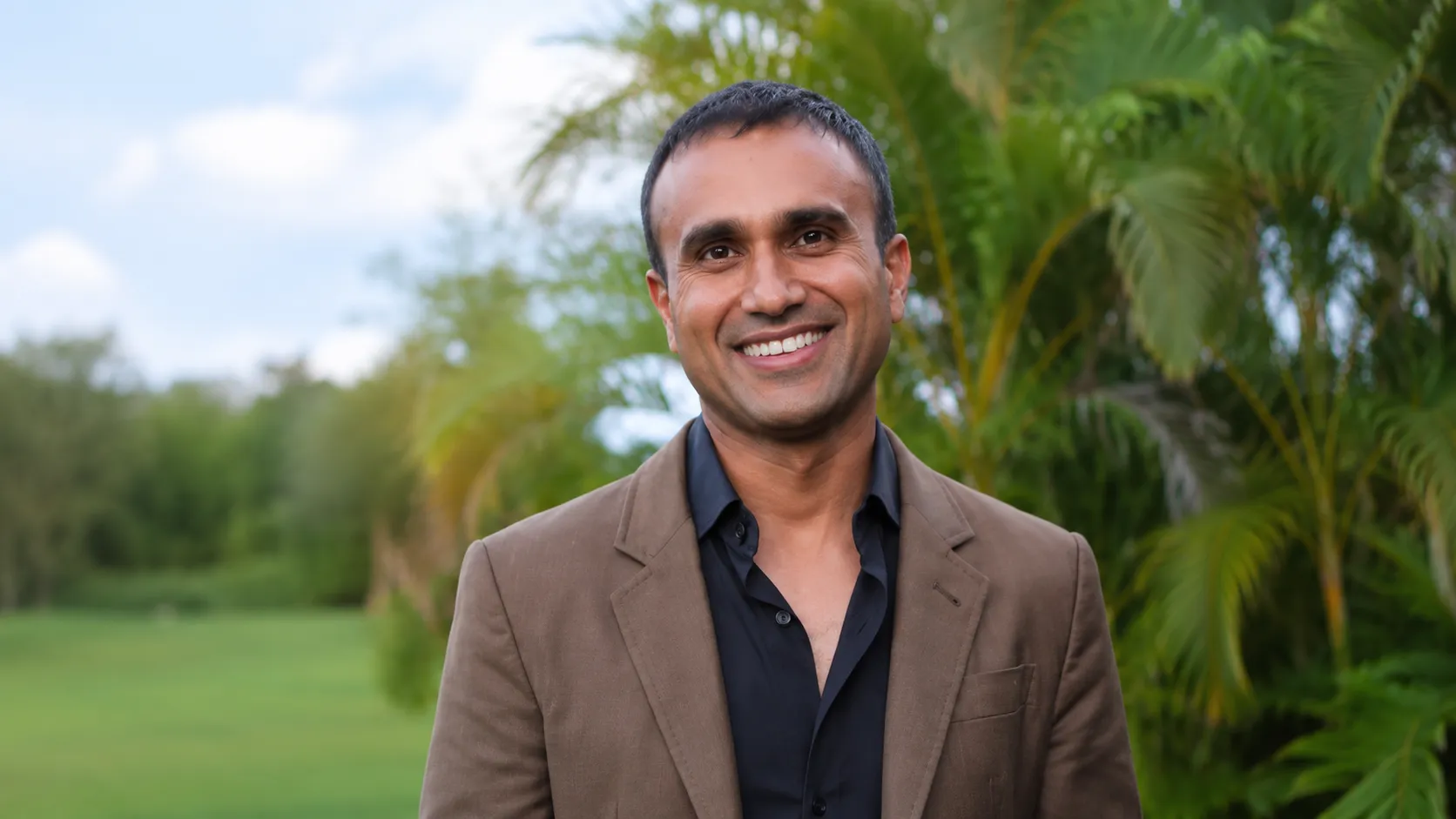
Shah's continued involvement with his alma mater, UC San Diego, where he now serves on the university's board of trustees and supports the Shah Fellows entrepreneurial education program, reflects a pattern common among the most successful members of the Indian-American diaspora: a deliberate choice to reinvest time and resources back into the specific educational institutions that provided their own initial opportunity. Rather than treating his UC San Diego degree as a distant, formative memory, Shah has structured an ongoing relationship with the university explicitly designed to help train the next generation of entrepreneurial students, a form of giving back that operates quietly alongside his more publicly visible work building Hippocratic AI.
What Munjal Shah's Journey Means for the Global Indian Community
Shah's career offers the diaspora a distinctly generational story: a father who arrived in America with sixteen dollars to pursue graduate education at Berkeley, and a son who has spent more than two decades building, selling, and rebuilding technology companies at the frontier of artificial intelligence, ultimately arriving at a mission explicitly designed to expand and improve healthcare access for millions of people. It is a story less about a single dramatic breakthrough and more about sustained, repeated entrepreneurial courage — the willingness, four separate times across a quarter-century career, to identify an unproven technology trend early, build a real company around it, and see it through to a successful outcome, before starting the entire process over again in pursuit of an even more ambitious mission — a template that a growing number of second-generation Indian-American entrepreneurs, now building their own first companies, increasingly look to as a working, real-world example of long-term entrepreneurial reinvention rather than a single, one-time lucky break. That combination of technical foresight and entrepreneurial persistence continues to define his approach as Hippocratic AI enters its next chapter.
As generative AI models continue to mature in clinical accuracy and regulatory acceptance, the safety-first, non-diagnostic positioning Shah chose for Hippocratic AI, informed directly by decades of navigating regulated industries, increasingly looks less like caution and more like the deliberate, forward-looking strategy of a founder who has already seen, three times over, how quickly unregulated hype in an emerging technology category can collapse without a durable trust foundation underneath it.


